Chef Juliette
Ordinary or White Consommé
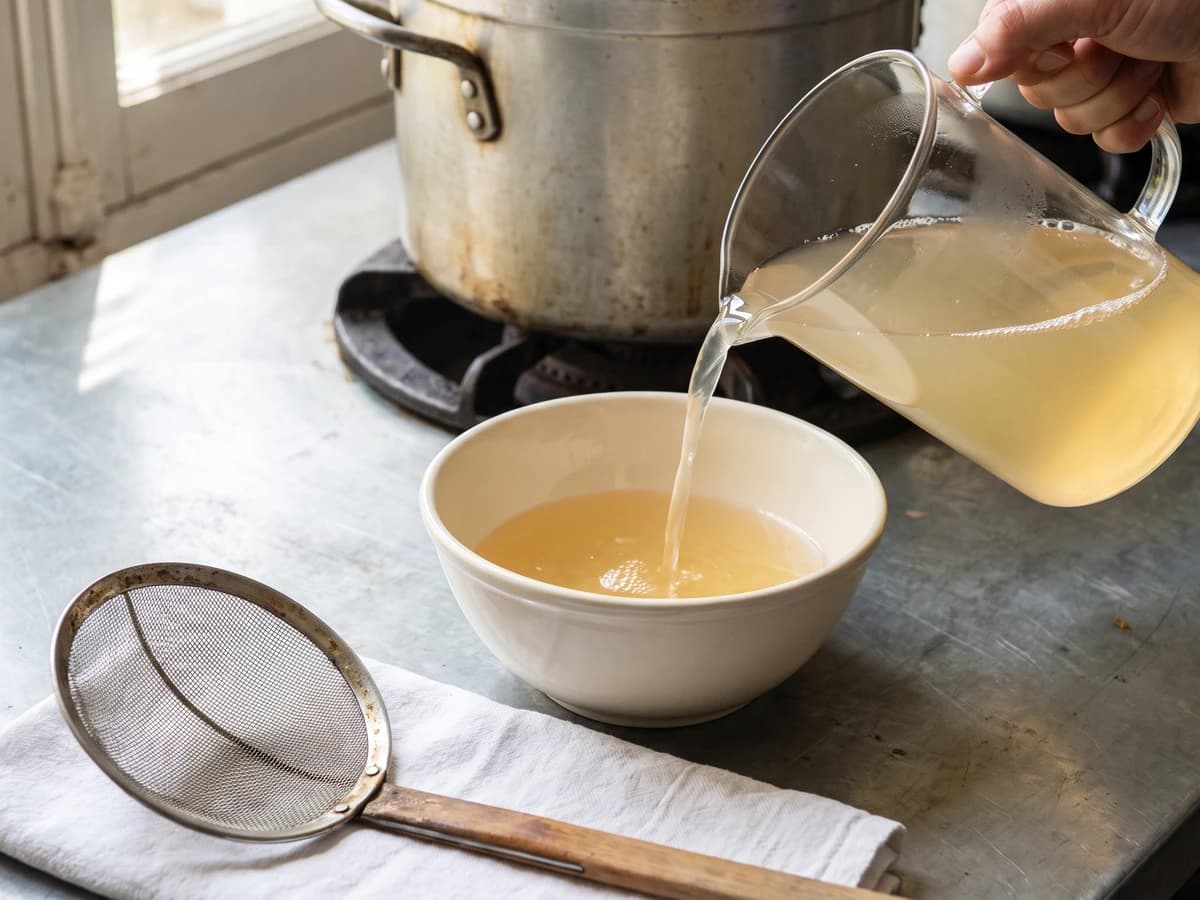
Beef shin, lean beef, and fowl begin in cold water and rise slowly toward a tremble. Skim before the boil, and you learn the quiet discipline that gives every clear French broth its backbone.
A cooking platform built around craft, culture, and the stories behind what we eat.
Created by Chef Juliette
Based on No. 131, Green Sauce, from Le Guide Culinaire (1907) by Auguste Escoffier
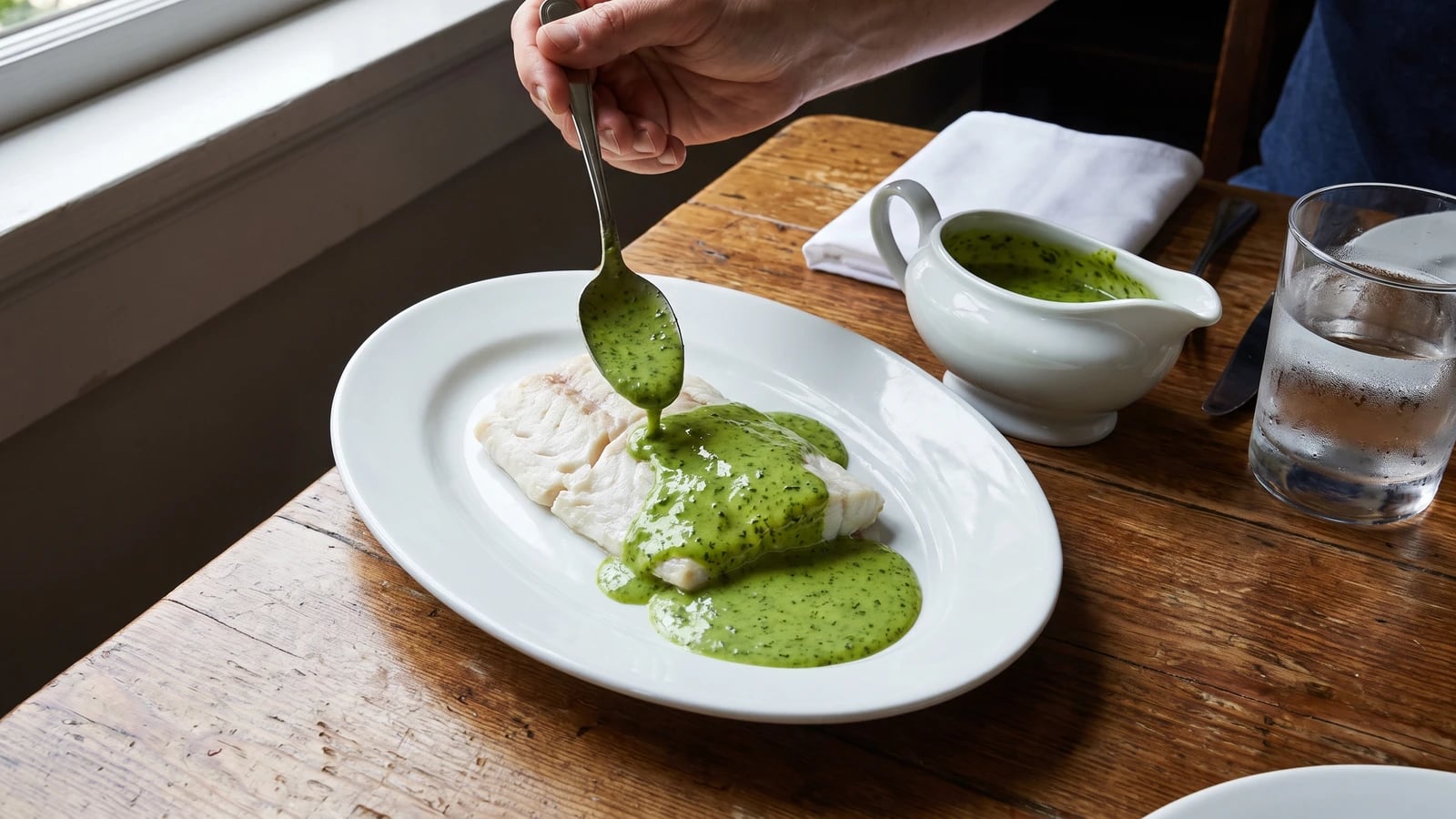
Sauce verte is an emulsion lesson in one bowl: begin with mayonnaise stiffer than you want, then add vivid herb juice in the classical three-to-one proportion for cold fish and shellfish.
Sauce verte (green sauce) teaches one essential lesson about mayonnaise derivatives: begin thicker than you mean to finish. The herb juice brings color, freshness, and enough water to loosen the emulsion, so a merely creamy mayonnaise becomes a thin sauce. Start very stiff, add the green gradually, and the finished Sauce verte will fall from a spoon in a broad, glossy ribbon.
The original kitchen assumed a saucier, a basin of stiff Mayonnaise, and the green preparation from Vincent Sauce (No. 132) already waiting for service. Its copper bowl and tammy belong to that separate preparation and needn't be dragged through this entry again. At home, one stainless-steel bowl and a balloon whisk finish the sauce. The brigade's open-ended quantity was scaffolding; fixing the batch at two quarts makes it measurable, while the three parts mayonnaise to one part herb juice remain the dish itself. One cook, one stove, one evening.
Reserve some of the mayonnaise before the green goes in. If the sauce loosens too quickly or beads with oil, that reserve becomes the firm foundation from which you rebuild it. Ça se rattrape. The stiffness of the mayonnaise before the first addition is the step that decides everything.
Sauce verte belongs to the Parisian grand-kitchen family of cold mayonnaise derivatives, where cooks varied color and seasoning while leaving the emulsion as the foundation. Unlike the loose herb sauces found elsewhere at French tables, this one is governed by a precise proportion: one part prepared herb juice to three parts stiff mayonnaise. Its cross-reference to Vincent Sauce (No. 132) shows the canon's working grammar, with one carefully prepared green element serving several related sauces.
Quantity
6 cups (1.44 L / 1.25 kg)
well chilled
Quantity
1 tablespoon (15 ml / 14 g), or to taste
fine salt with ground white pepper and a restrained pinch of cayenne
| Ingredient | Quantity |
|---|---|
| very stiff Mayonnaisewell chilled | 6 cups (1.44 L / 1.25 kg) |
| strained herb juicewell chilled | 2 cups (480 ml / 480 g) from Vincent Sauce (No. 132) |
| spicy seasoning blendfine salt with ground white pepper and a restrained pinch of cayenne | 1 tablespoon (15 ml / 14 g), or to taste |
Bring the Mayonnaise and the strained herb juice prepared as specified in Vincent Sauce (No. 132) to the same cold temperature. Set a clean stainless-steel bowl and whisk in the cold for ten minutes as well. Matching temperatures help the emulsion accept the added liquid evenly.
Put 5 cups of the very stiff Mayonnaise into the chilled bowl and keep the remaining 1 cup cold. The mayonnaise in the bowl should mound firmly and hold the track of the whisk; if it flows flat on its own, it isn't stiff enough for the herb juice. Whisk in half the spicy seasoning, keeping the cayenne quiet. The sauce should taste lively, not hot.
Whisk the herb juice into the mayonnaise in four additions, incorporating each completely before adding the next. Work steadily without beating in unnecessary air. The sauce will soften from a mound to a heavy ribbon and turn a clear herb green. If watery liquid or beads of oil appear at the edge, stop immediately. Put the reserved stiff mayonnaise into a clean cold bowl, then whisk the slack sauce into it one spoonful at a time until smooth. Ça se rattrape.
Fold in any reserved mayonnaise not used for the rescue, followed by the remaining seasoning to taste. The finished Sauce verte should coat the back of a spoon, then fall in a broad ribbon rather than pour like cream. Cover it directly at the surface and chill for thirty minutes so the texture settles and the seasoning becomes clear.
Stir the Sauce verte gently before serving, without thinning it. Spoon it generously beside cold poached or roasted fish, crab, lobster, prawns, or other cold shellfish. Keep the serving bowl nested over ice during a long dinner, and return the sauce to the cold promptly. À table!
1 serving (about 27g)
Culinary guides, cultural storytelling, and the editorial depth that makes cooking meaningful.
Discover Culinary ExplorerChef Juliette
Beef shin, lean beef, and fowl begin in cold water and rise slowly toward a tremble. Skim before the boil, and you learn the quiet discipline that gives every clear French broth its backbone.
Chef Juliette
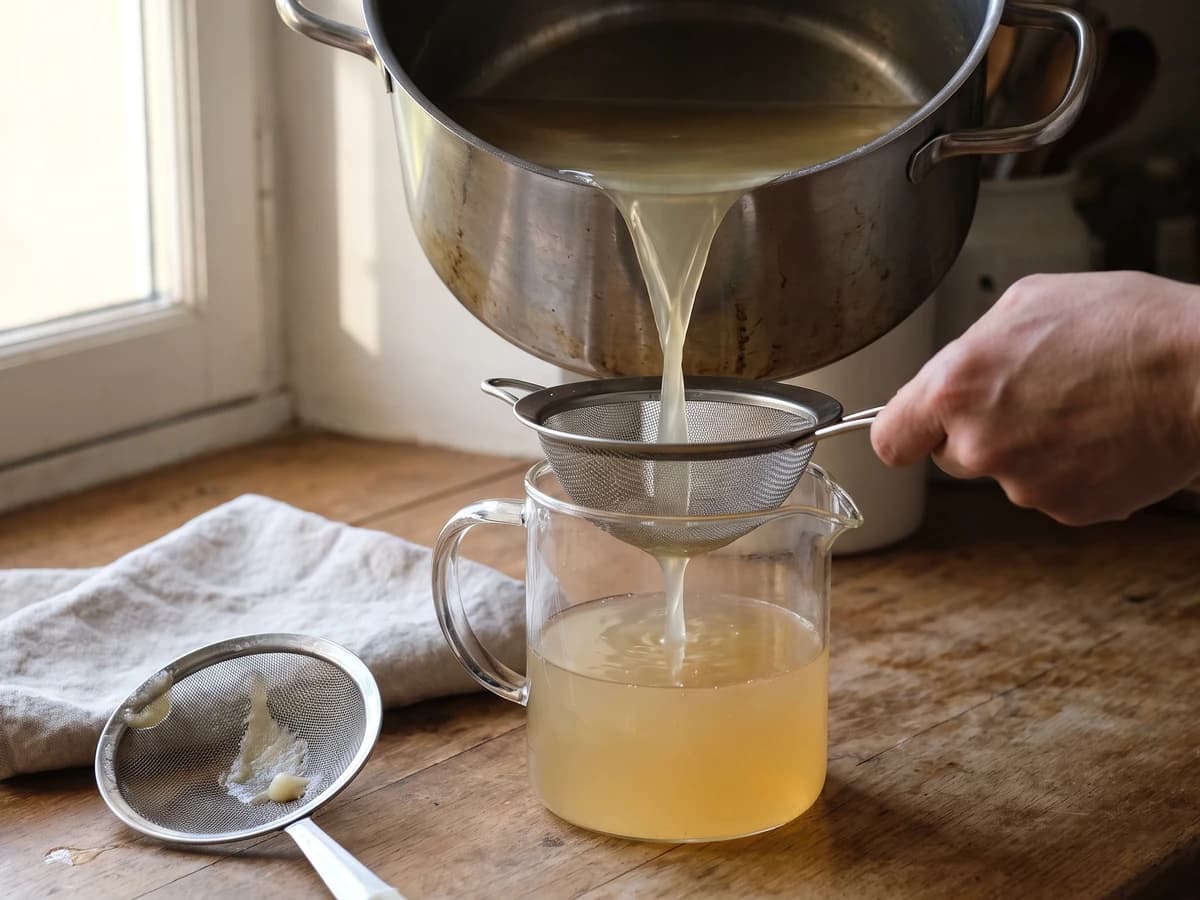
Break the veal bones small, then give them eight hours at a bare tremble. This pale, gelatinous fond becomes the quiet foundation beneath velouté, blanquette, and every sauce that must stay light.
Chef Juliette
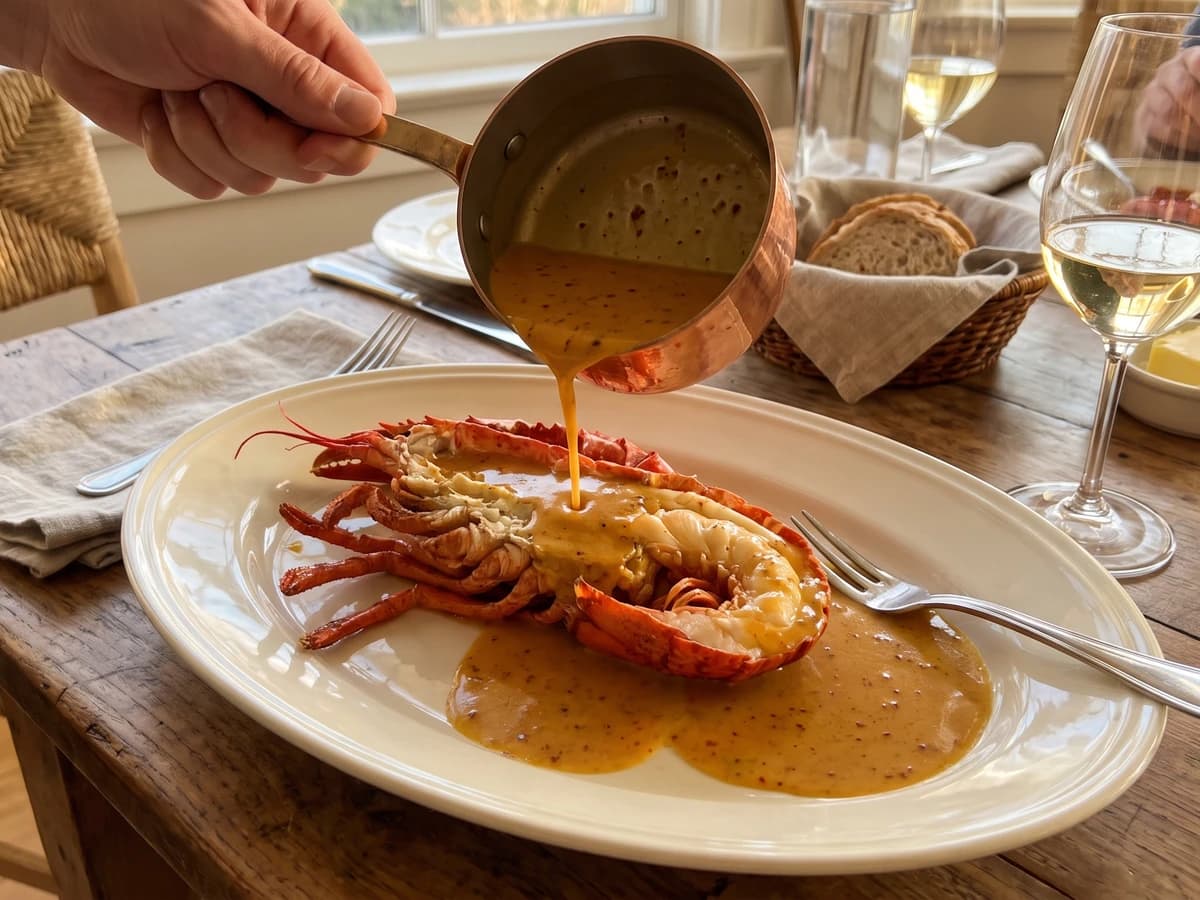
Sauce Orientale concentrates lobster-rich American Sauce with curry, then folds in cream away from the fire: a glossy, gently spiced derivative made for lobster, crayfish, and firm fish.
Chef Juliette
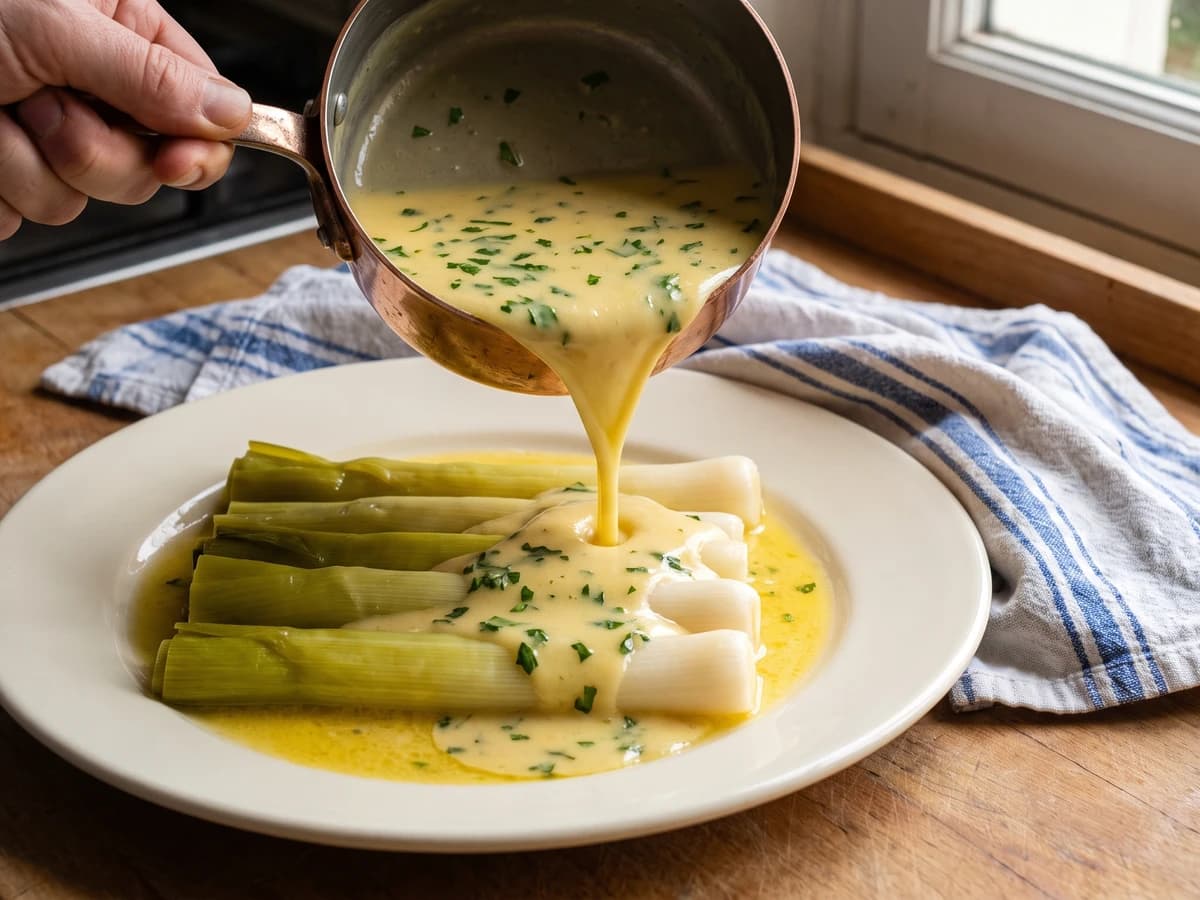
An old lesson in sauce families: Sauce Allemande takes mushroom liquor, then butter, lemon, and parsley, becoming a glossy Poulette for sheep's trotters, leeks, cauliflower, and anything needing gentle richness with a bright edge.