Chef Juliette
Ordinary or White Consommé
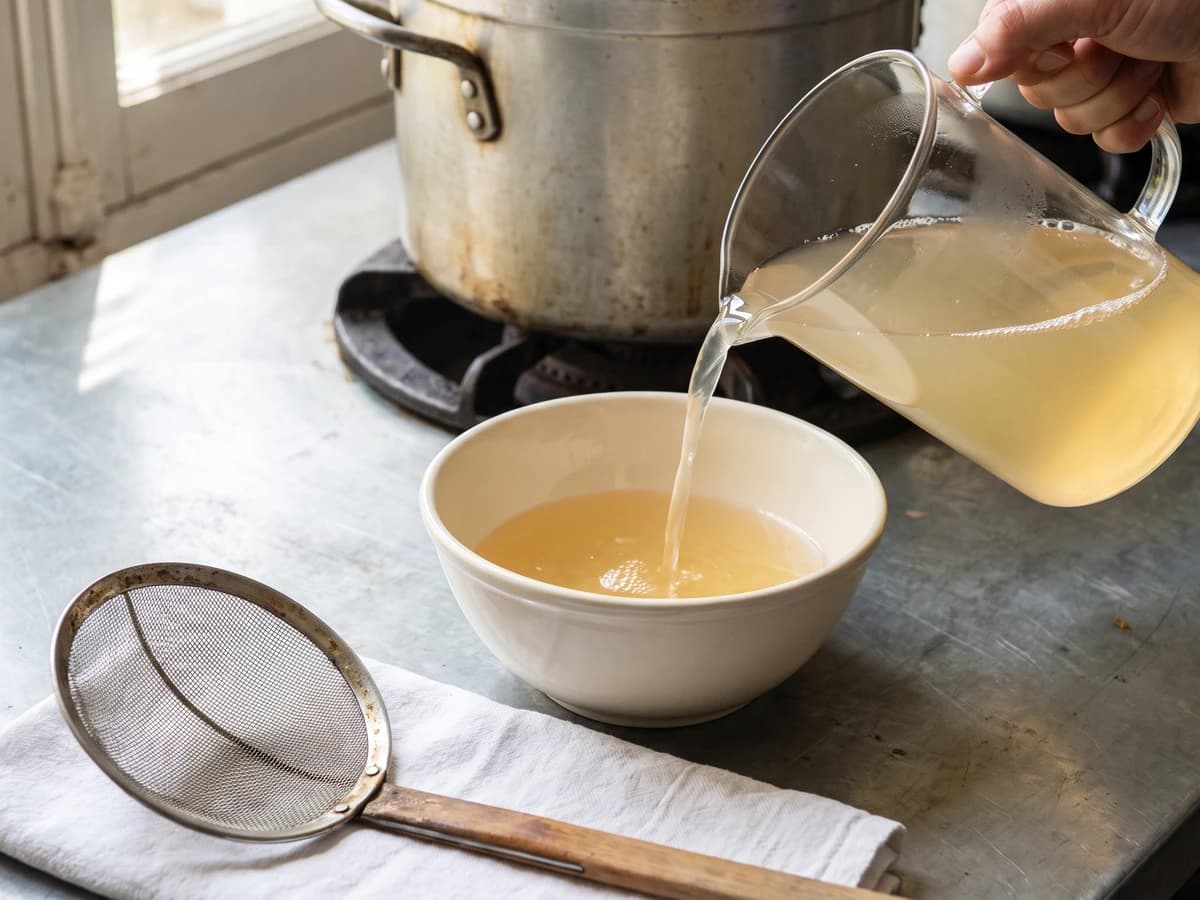
Beef shin, lean beef, and fowl begin in cold water and rise slowly toward a tremble. Skim before the boil, and you learn the quiet discipline that gives every clear French broth its backbone.
A cooking platform built around craft, culture, and the stories behind what we eat.
Created by Chef Juliette
Based on No. 127, Cleared Mayonnaise Sauce, from Le Guide Culinaire (1907) by Auguste Escoffier
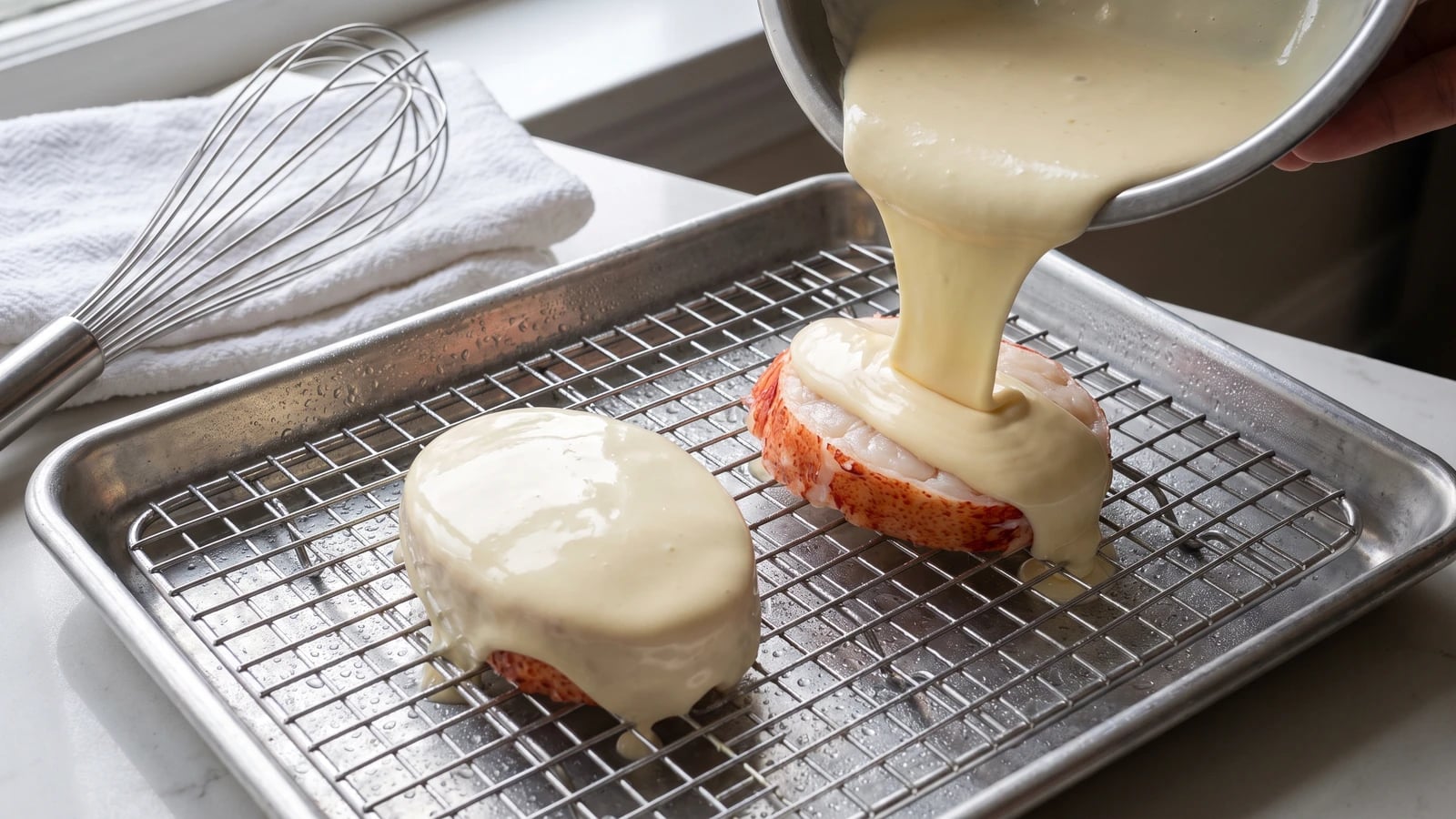
Mayonnaise collée is the cold-coating lesson: barely fluid aspic whisked into true mayonnaise, then poured at once so chilled fish or lobster wears a smooth ivory film that sets cleanly.
Mayonnaise collée (cleared mayonnaise sauce) teaches that two cold structures can be joined only while one of them is still moving. The aspic must be cool enough to spare the emulsion and just fluid enough to disappear into it. That is the one true thing to know before touching the pan.
The original formula assumed a saucier nearby, a stockpot never off the fire for aspic, and a garde-manger supplied with mayonnaise and jelly in service quantities. It needed no salamander, because this belonged entirely to the cold kitchen. At home, a bowl over warm water, a thermometer, and an ordinary refrigerator do the same work. The professional ratio becomes one measured two-quart batch for one cook, while the mayonnaise and aspic remain finished components rather than recipes hidden inside this one.
Clarifying stock and maintaining a sauce station were brigade scaffolding, so they stay outside this entry. The three-to-one proportion, gradual addition, and immediate coating are the dish and must remain. The decisive moment comes when the melted aspic is barely fluid: add it then, and the sauce flows into an even ivory film; wait too long, and it sets in the bowl before it reaches the fish.
Mayonnaise collée belongs to the classical Parisian garde-manger, where it coated cold entrées and relevés of fish, fillets, lobster, and other carefully shaped pieces. The English title can mislead: the sauce is not clarified, because collée means that aspic has given the mayonnaise enough body to set. Its handsome coating carried a weakness, since shrinking gelatine could squeeze oil from the emulsion, and kitchens therefore came to prefer Lent Chaud-Froid Sauce (No. 76) when a firmer, longer-held finish mattered.
Quantity
6 cups (1.42 L / 1.38 kg)
cool but not refrigerator-cold
Quantity
2 cups (480 ml / 480 g)
use Lenten white fish aspic for fish or shellfish, or ordinary aspic as appropriate
Quantity
8 cups (1.9 L / approximately 1.9 kg) Lent Chaud-Froid Sauce (No. 76)
use as a complete alternative, not an addition, when a longer-held coating is required
| Ingredient | Quantity |
|---|---|
| prepared plain Mayonnaisecool but not refrigerator-cold | 6 cups (1.42 L / 1.38 kg) |
| cold, rather firm melting aspic jellyuse Lenten white fish aspic for fish or shellfish, or ordinary aspic as appropriate | 2 cups (480 ml / 480 g) |
| Lent Chaud-Froid Sauce (optional)use as a complete alternative, not an addition, when a longer-held coating is required | 8 cups (1.9 L / approximately 1.9 kg) Lent Chaud-Froid Sauce (No. 76) |
Chill the cooked fish fillets, escalopes, or lobster pieces until firm, then blot every surface completely dry. Arrange them on a wire rack over a rimmed tray so excess sauce can fall away cleanly. A wet surface dilutes the first contact and makes the coating slide; cold and dry gives the Mayonnaise Collée something to hold.
Cut the firm aspic into pieces and place it in a heatproof bowl over barely simmering water. Stir only until it becomes completely fluid, then remove it from the heat and cool it to 80 to 85°F (27 to 29°C). It should feel cool and pour in a narrow ribbon, with the first suggestion of thickening at the edge. Never boil it, because hard heat weakens gelatine and leaves you with a coating that refuses to set.
Place 5½ cups of the measured Mayonnaise in a large nonreactive bowl and reserve the remaining ½ cup for the finish and any necessary rescue. The mayonnaise should be about 65 to 70°F (18 to 21°C), supple under the whisk but still cool. Refrigerator-cold mayonnaise makes the aspic seize into threads; warm mayonnaise loosens the emulsion before the jelly can support it.
Whisk the barely fluid aspic into the Mayonnaise one small ladleful at a time, incorporating each addition before the next. Once the first third is smooth, continue in a thin, steady stream, whisking calmly so you build no unnecessary bubbles. Fold in the reserved Mayonnaise at the end. If gelatine threads appear, the aspic has cooled too far; set the bowl over warm water for three seconds, whisk, and repeat only if needed. If beads of oil appear, stop. In a clean bowl, whisk two tablespoons of the reserved Mayonnaise smooth, then rebuild the broken sauce into it first by teaspoons and then by spoonfuls. Ça se rattrape.
Spread a teaspoon of sauce across a chilled saucer and refrigerate it for two minutes. It should form an opaque, flexible film that stays in place without turning rubbery. If the sauce runs, rest the bowl over ice for a minute and whisk again; if it mounds instead of flowing, warm the bowl for a few seconds over the water bath. Temperature is the correction. Do not disturb the source's three-to-one ratio.
Pour the Mayonnaise Collée over each chilled piece from the centre outward, letting it cover the top and sides in one smooth pass. Work at once, because the aspic is already close to setting. If the sauce begins to stiffen in the bowl, return it briefly to the warm water and whisk until barely fluid again. Chill the coated pieces for about twenty minutes, until the surface is set and satin-smooth. If the food must endure a long hold, reach instead for finished Lent Chaud-Froid Sauce (No. 76), using it as a complete substitution rather than mixing it into this sauce. Trim any set drips from the base and serve cold. À table!
1 serving (about 30g)
Culinary guides, cultural storytelling, and the editorial depth that makes cooking meaningful.
Discover Culinary ExplorerChef Juliette
Beef shin, lean beef, and fowl begin in cold water and rise slowly toward a tremble. Skim before the boil, and you learn the quiet discipline that gives every clear French broth its backbone.
Chef Juliette
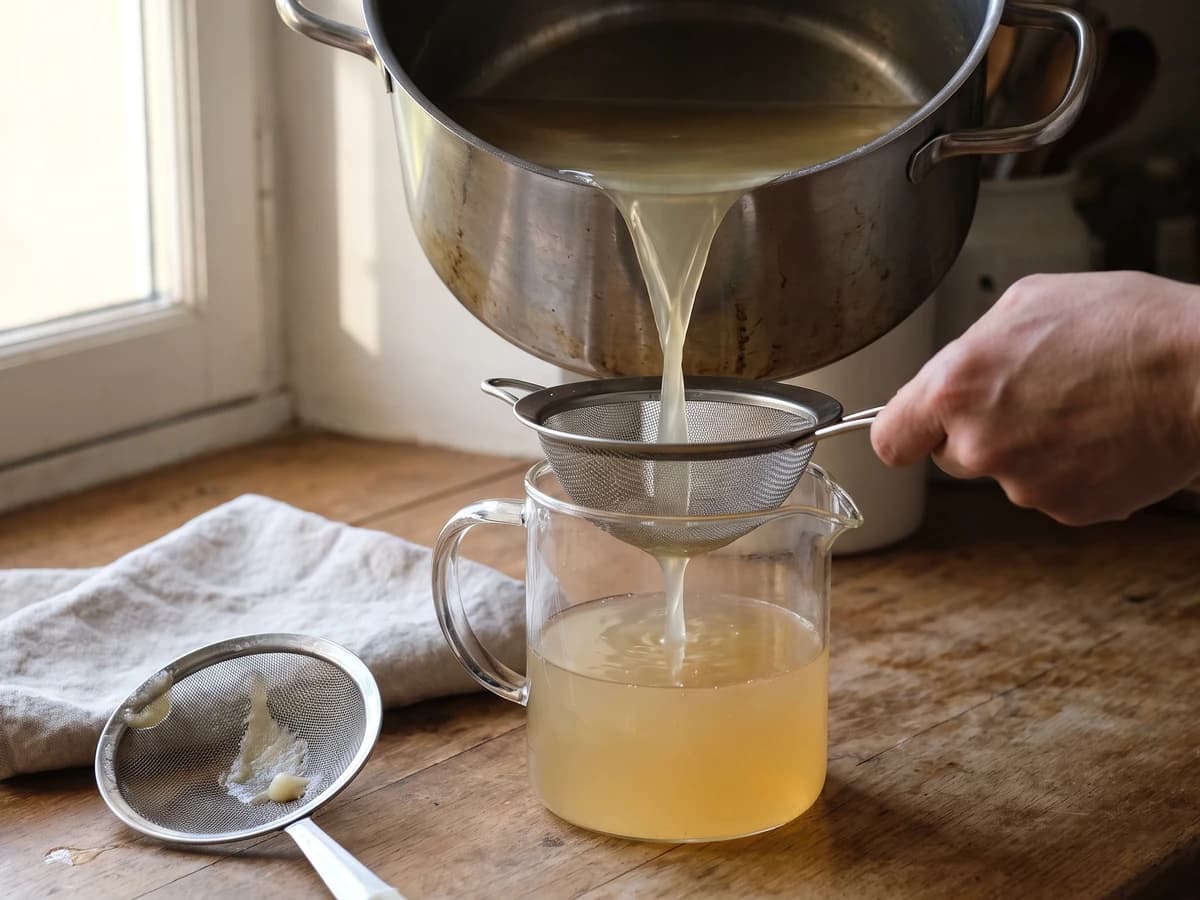
Break the veal bones small, then give them eight hours at a bare tremble. This pale, gelatinous fond becomes the quiet foundation beneath velouté, blanquette, and every sauce that must stay light.
Chef Juliette
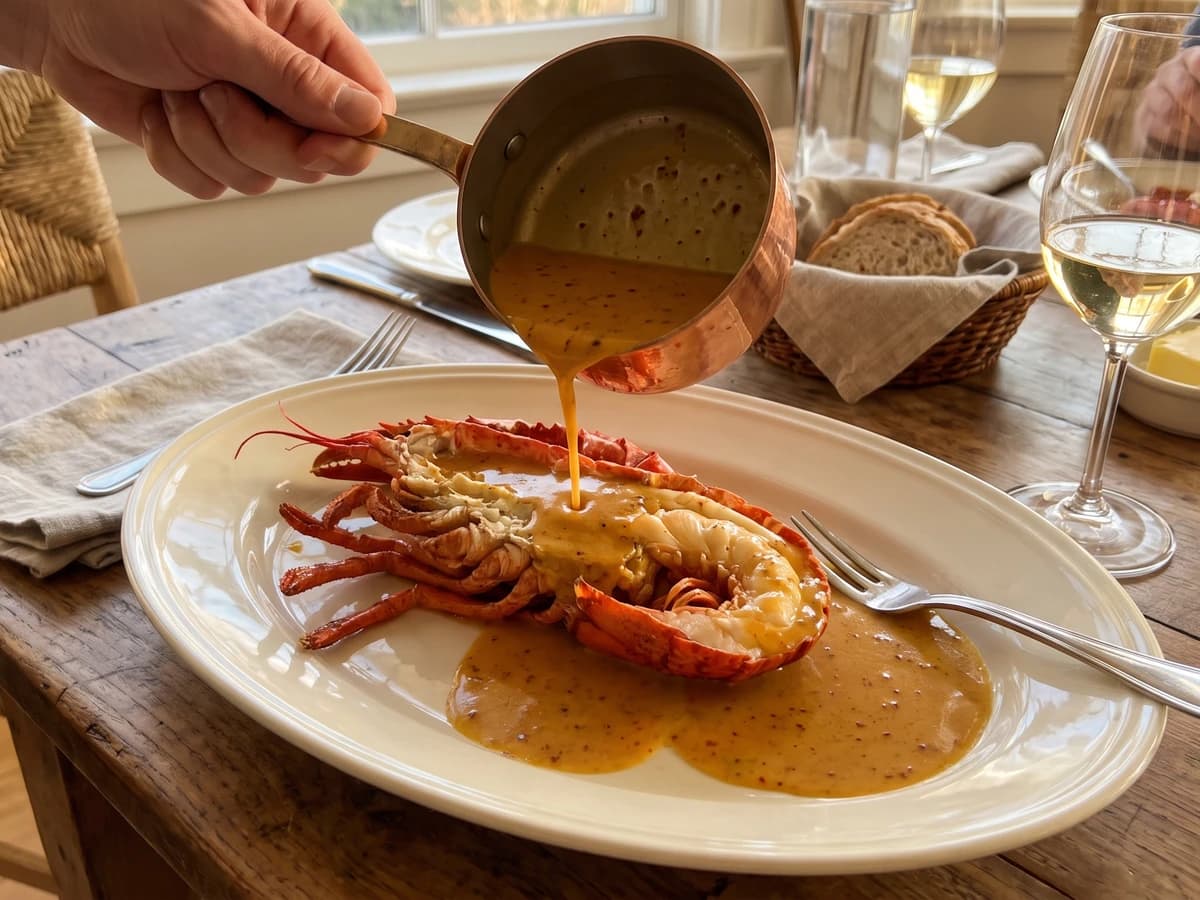
Sauce Orientale concentrates lobster-rich American Sauce with curry, then folds in cream away from the fire: a glossy, gently spiced derivative made for lobster, crayfish, and firm fish.
Chef Juliette
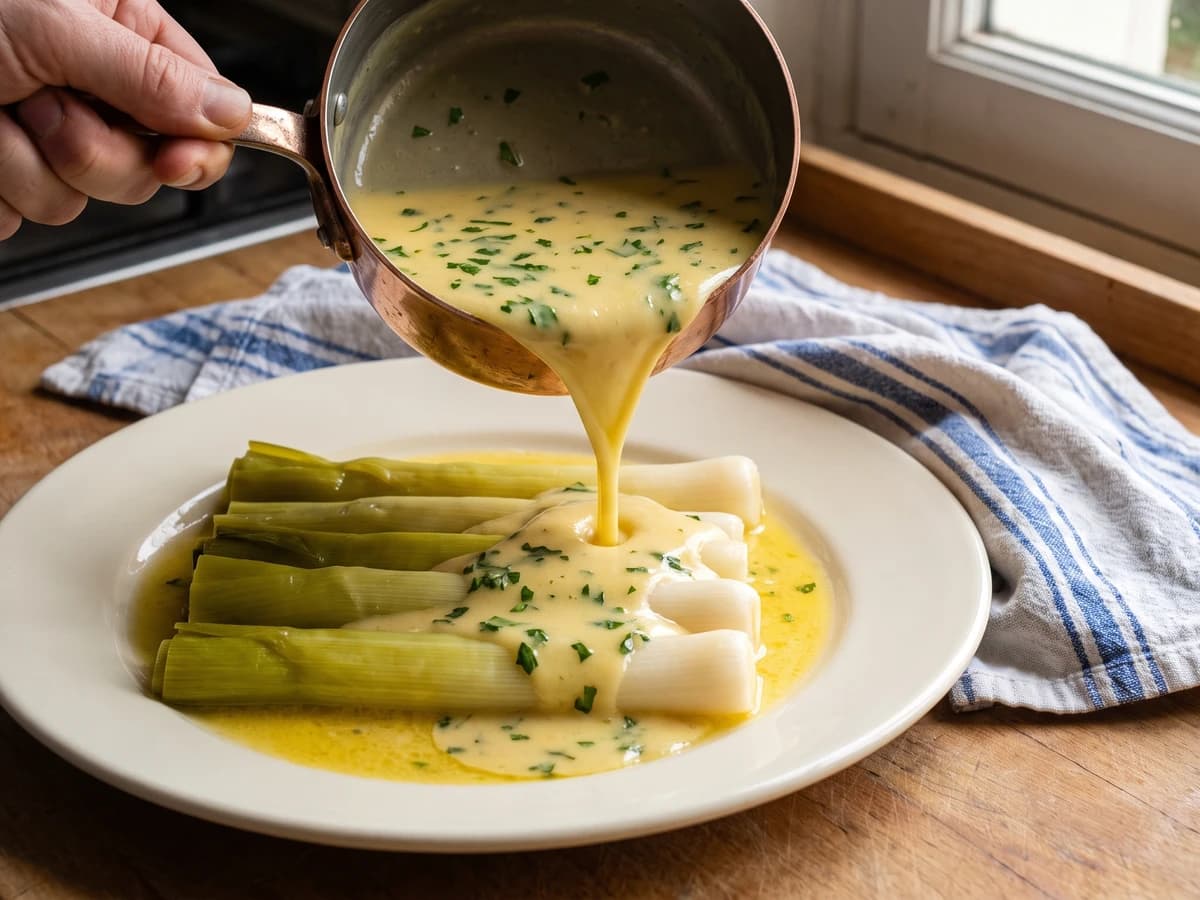
An old lesson in sauce families: Sauce Allemande takes mushroom liquor, then butter, lemon, and parsley, becoming a glossy Poulette for sheep's trotters, leeks, cauliflower, and anything needing gentle richness with a bright edge.