Chef Juliette
Ordinary or White Consommé
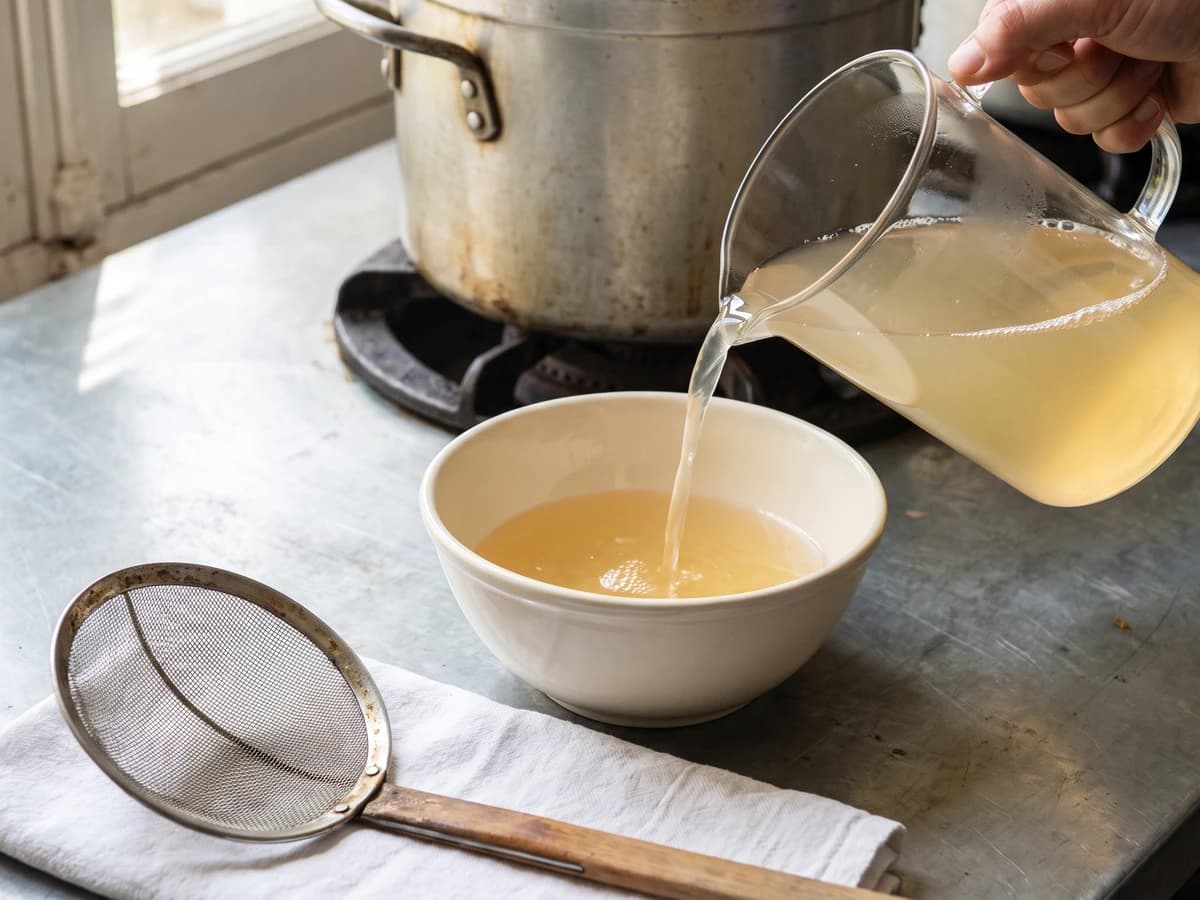
Beef shin, lean beef, and fowl begin in cold water and rise slowly toward a tremble. Skim before the boil, and you learn the quiet discipline that gives every clear French broth its backbone.
A cooking platform built around craft, culture, and the stories behind what we eat.
Created by Chef Juliette
Based on No. 76, Lent Chaud-Froid Sauce, from Le Guide Culinaire (1907) by Auguste Escoffier
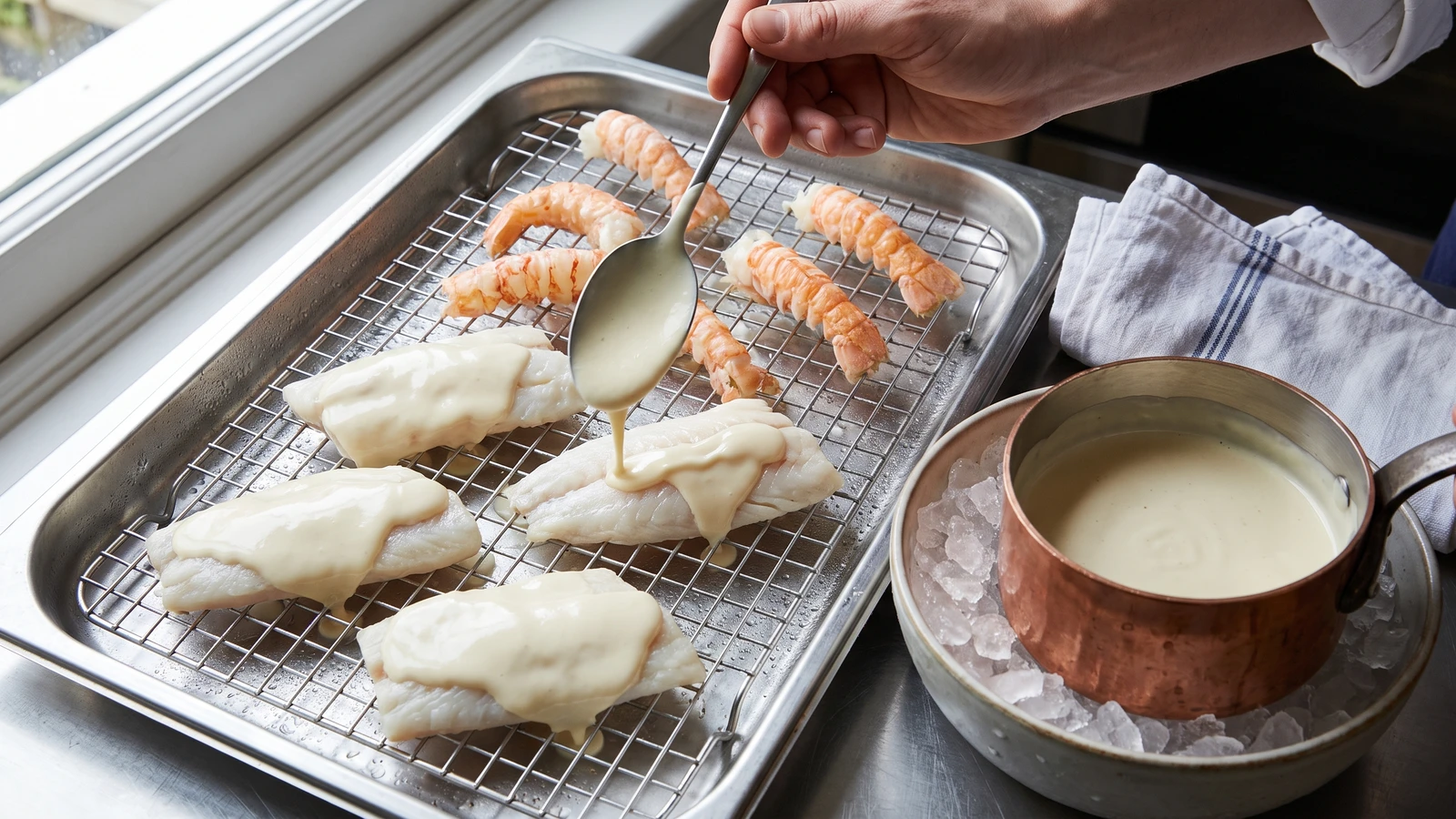
Fish velouté and white fish jelly, reduced, enriched, and cooled to the precise point where an ivory sauce clings smoothly to cold fillets and shellfish without shedding oil.
Sauce chaud-froid maigre (Lenten cold-glazing sauce) teaches one true thing: temperature, not thickness alone, decides the finish. Used too warm, the sauce runs from cold fish; allowed to set in the pan, it lands in ridges. At the proper glazing point it flows in an even ivory sheet, then settles into a smooth, delicate coat.
The original preparation assumed a saucier on staff, fish velouté and white fish jelly ready in quantity, a tamis for straining, and a crushed-ice station for cooling. Your honest equivalents are finished fish velouté and white fish jelly, one broad saucepan, a fine sieve, and a bowl of ice water. The brigade quantity becomes about two quarts, enough depth for glazing a generous dinner-party platter, while the reductions and proportions remain intact. One cook, one stove, one evening.
The dedicated ice station and tamis were brigade scaffolding, so they can go. Reducing the velouté, enriching it with real cream, adding the fish jelly, and stirring as it cools are the dish and must stay. Give your full attention to that final cooling: stop when the sauce coats a cold spoon smoothly but still flows.
Chaud-froid belongs to the classical Parisian garde-manger and the formal cold table; its name describes the central contradiction, a sauce prepared hot and served cold over cooked meat, fish, or shellfish. The maigre form replaced ordinary velouté with fish velouté and poultry jelly with white fish jelly for fish-day service. This version also answered a practical flaw in cleared mayonnaise, whose oil could seep away as its gelatine coating contracted, while chaud-froid remained stable and carried a more pronounced flavor.
Quantity
4 cups (960 ml / 960 g)
Quantity
2 cups (480 ml / 480 g)
well strained
Quantity
2 cups (480 ml / 480 g)
Quantity
4 cups (960 ml / 960 g)
gently melted
Quantity
up to ½ teaspoon (2.5 ml / 3 g), or as needed
| Ingredient | Quantity |
|---|---|
| finished fish velouté | 4 cups (960 ml / 960 g) |
| mushroom cooking liquorwell strained | 2 cups (480 ml / 480 g) |
| heavy cream | 2 cups (480 ml / 480 g) |
| finished white fish jellygently melted | 4 cups (960 ml / 960 g) |
| fine salt (optional) | up to ½ teaspoon (2.5 ml / 3 g), or as needed |
Set a broad bowl of ice water beside the stove and place a clean saucepan or metal bowl inside to check that it sits steadily. Melt the white fish jelly over the gentlest heat only until fluid, then keep it barely warm. Prolonged boiling weakens its setting power, so treat it as something to melt, not something to cook.
Combine the fish velouté and mushroom cooking liquor in a broad, heavy saucepan. Bring them to a steady uncovered simmer and reduce from 6 cups to 4 cups, stirring across the pan floor and into the corners so the velouté cannot catch. Check the volume in a heatproof measure rather than trusting the clock; this first reduction concentrates the fish and mushroom foundation without making it pasty.
Add the cream gradually, whisking until the sauce is completely smooth. Return it to a gentle simmer and reduce the mixture from 6 cups to 4 cups, stirring frequently, until it reaches nappage, meaning it coats the back of a spoon in an even layer. If it thickens before reaching the proper volume, lower the heat and whisk in hot water a spoonful at a time to replace what evaporated too quickly. If the bottom begins to catch, pour the sauce into a clean pan without scraping the scorched layer. Ça se rattrape, provided the burnt taste hasn't entered the sauce.
Pass the hot sauce through a fine-mesh sieve into a clean saucepan, pressing gently but never forcing any browned residue through. Off the heat, whisk in the melted white fish jelly until no streaks remain. Taste and add salt only if needed, seasoning a shade more firmly than you would for a warm sauce because chilling quiets flavor.
Set the pan in the ice-water bowl and stir continuously with a flexible spatula, sweeping the bottom and sides. The sauce will pass from fluid and glossy to lightly thickened, then begin coating the spatula in an opaque ivory film. Test a spoonful on an ice-cold plate: it should settle smoothly without racing toward the rim. If it becomes grainy or sets around the edges, lift it from the ice and whisk; if it has gone too firm, warm it gently over barely warm water until fluid and begin cooling again. Ça se rattrape.
Arrange thoroughly chilled, dry cooked fish fillets, escalopes, or shellfish on a rack over a tray. Spoon or ladle the chaud-froid over each piece in one thin, complete coat, letting the excess fall away. Chill until the surface is set, then add a second fine coat where fuller coverage is wanted. If the sauce firms while you work, loosen it over barely warm water, never direct heat, and return it to the glazing point.
Transfer the glazed fish to its serving platter and chill until the coating is fully set. Keep it properly cold until it reaches the table, particularly when shellfish is involved. The finished glaze should be smooth, pale, and supple under the fork, with the flavor of fish velouté more pronounced than any cleared mayonnaise could manage. À table!
1 serving (about 60g)
Culinary guides, cultural storytelling, and the editorial depth that makes cooking meaningful.
Discover Culinary ExplorerChef Juliette
Beef shin, lean beef, and fowl begin in cold water and rise slowly toward a tremble. Skim before the boil, and you learn the quiet discipline that gives every clear French broth its backbone.
Chef Juliette
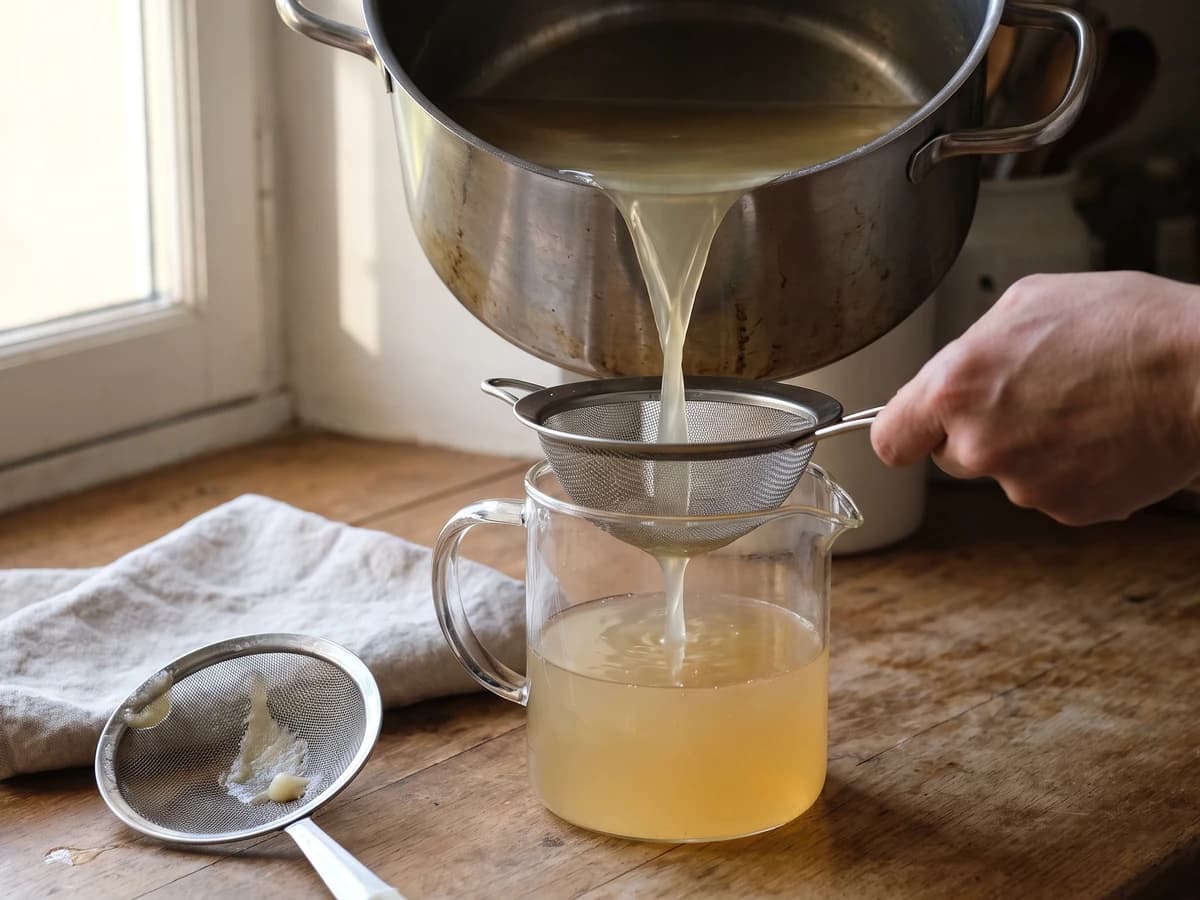
Break the veal bones small, then give them eight hours at a bare tremble. This pale, gelatinous fond becomes the quiet foundation beneath velouté, blanquette, and every sauce that must stay light.
Chef Juliette
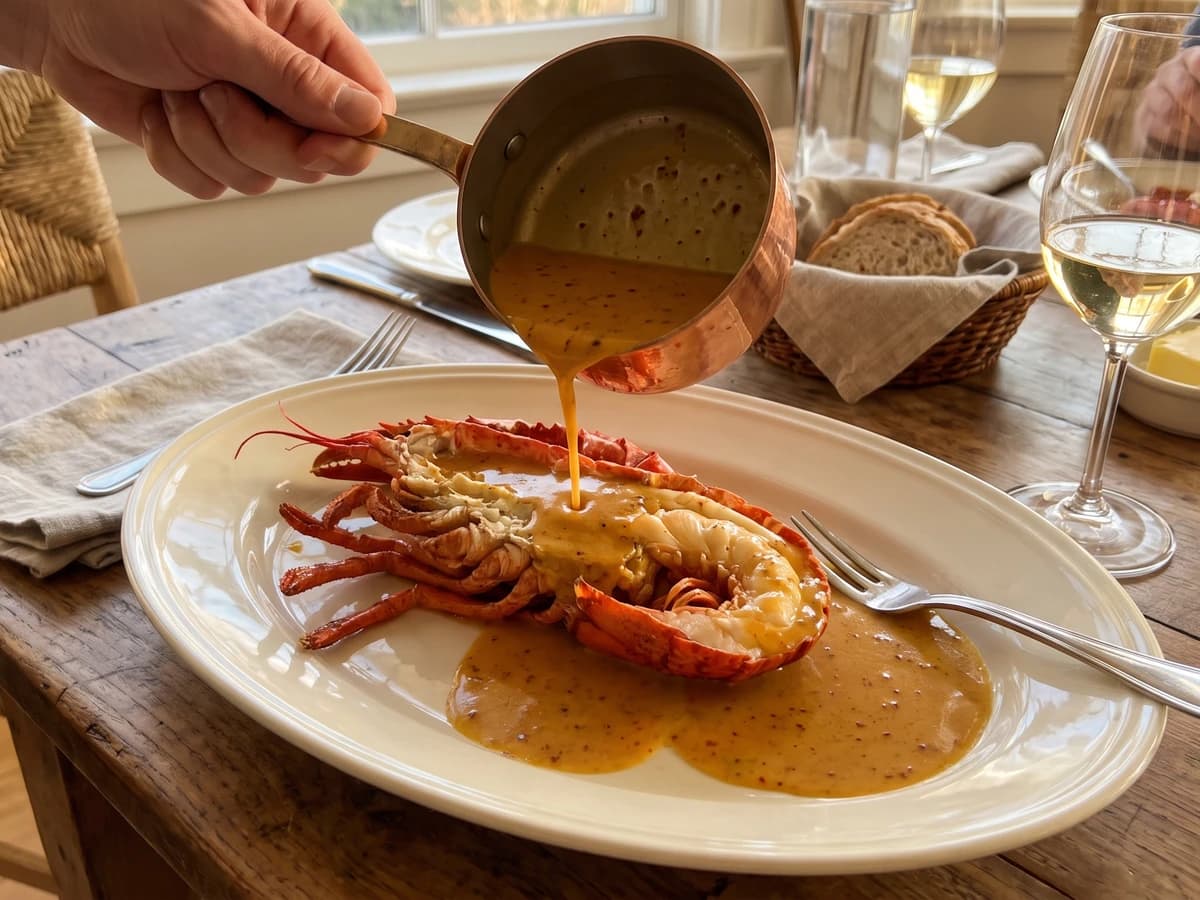
Sauce Orientale concentrates lobster-rich American Sauce with curry, then folds in cream away from the fire: a glossy, gently spiced derivative made for lobster, crayfish, and firm fish.
Chef Juliette
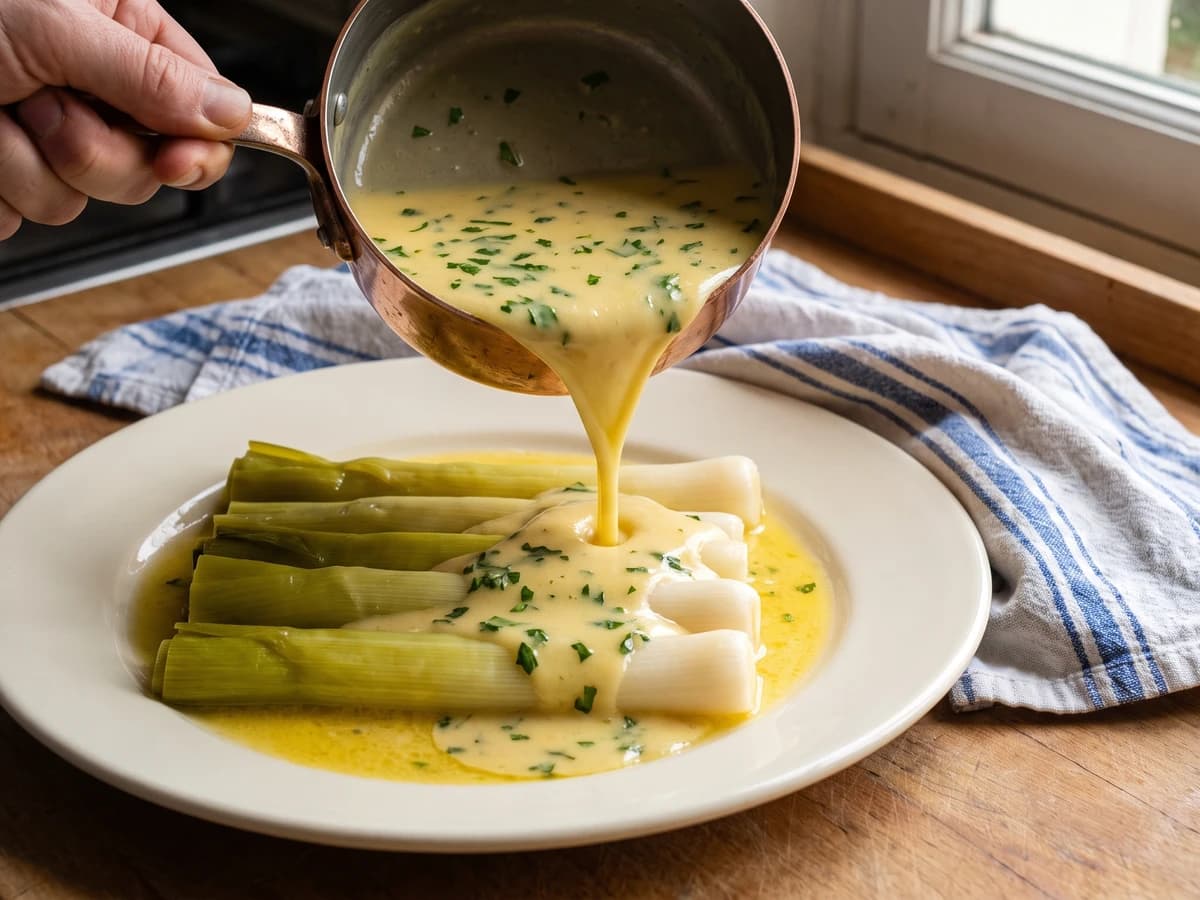
An old lesson in sauce families: Sauce Allemande takes mushroom liquor, then butter, lemon, and parsley, becoming a glossy Poulette for sheep's trotters, leeks, cauliflower, and anything needing gentle richness with a bright edge.