Chef Juliette
Ordinary or White Consommé
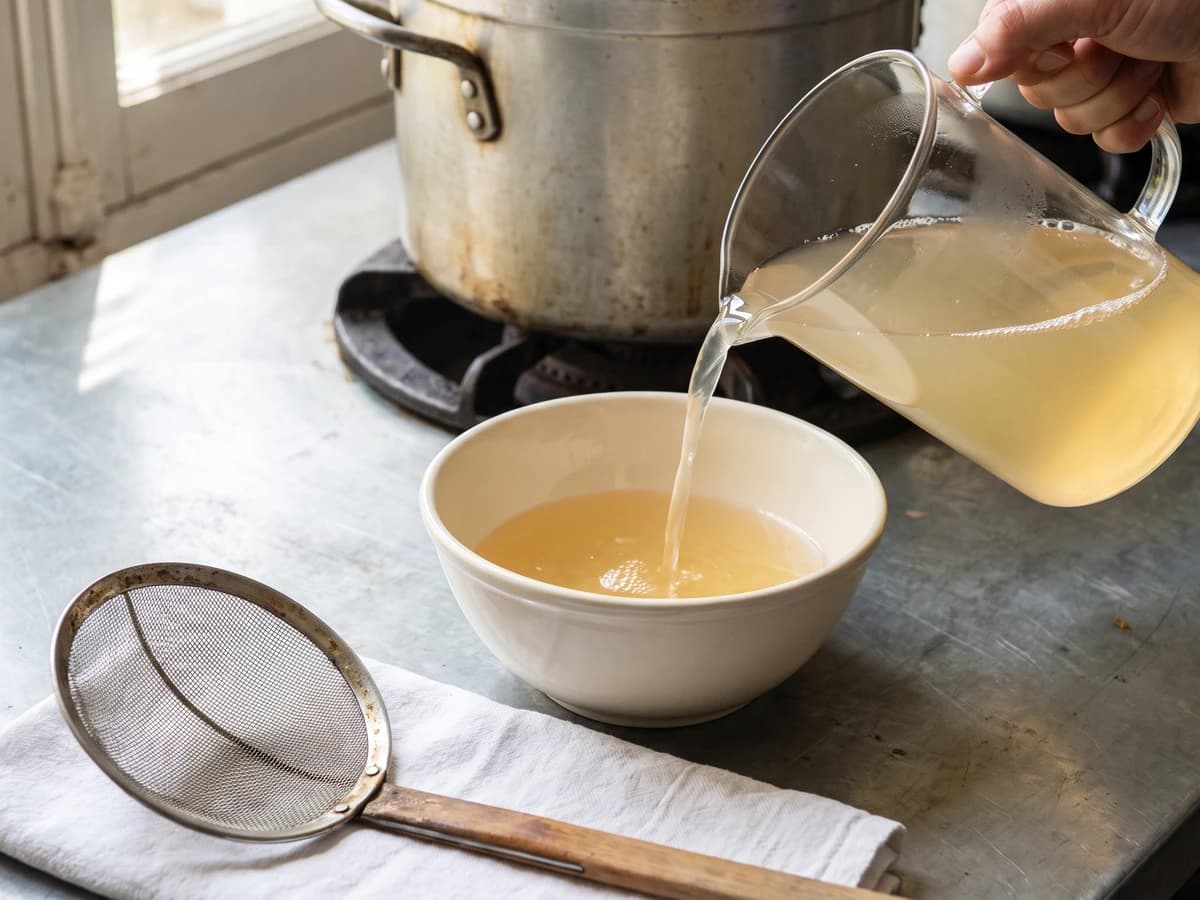
Beef shin, lean beef, and fowl begin in cold water and rise slowly toward a tremble. Skim before the boil, and you learn the quiet discipline that gives every clear French broth its backbone.
A cooking platform built around craft, culture, and the stories behind what we eat.
Created by Chef Juliette
Based on No. 122, Andalouse Sauce, from Le Guide Culinaire (1907) by Auguste Escoffier
Sauce Andalouse teaches the discipline of every cold derivative sauce: begin with a stable emulsion, add deep tomato in measured stages, then fold in fine capsicum without sacrificing its clean gloss.
Sauce Andalouse (mayonnaise reddened with concentrated tomato and fine capsicum) teaches one true principle: a derivative sauce can only be as sound as its foundation. The tomato purée must be cool, deeply concentrated, and thick enough to hold the track of a spoon. Thin purée turns a clean emulsion into coral soup.
The original formula assumed a saucier with pints of Mayonnaise Sauce (No. 126) already standing by, not a stockpot or a salamander. Your honest home equivalent is the same finished sauce in a wide bowl, scaled to about two quarts for a dinner party or picnic crowd. The great basin is brigade scaffolding and can go; the quarter-volume proportion of tomato and the final capsicum julienne are the dish, so both remain untouched. One cook, one stove, one evening.
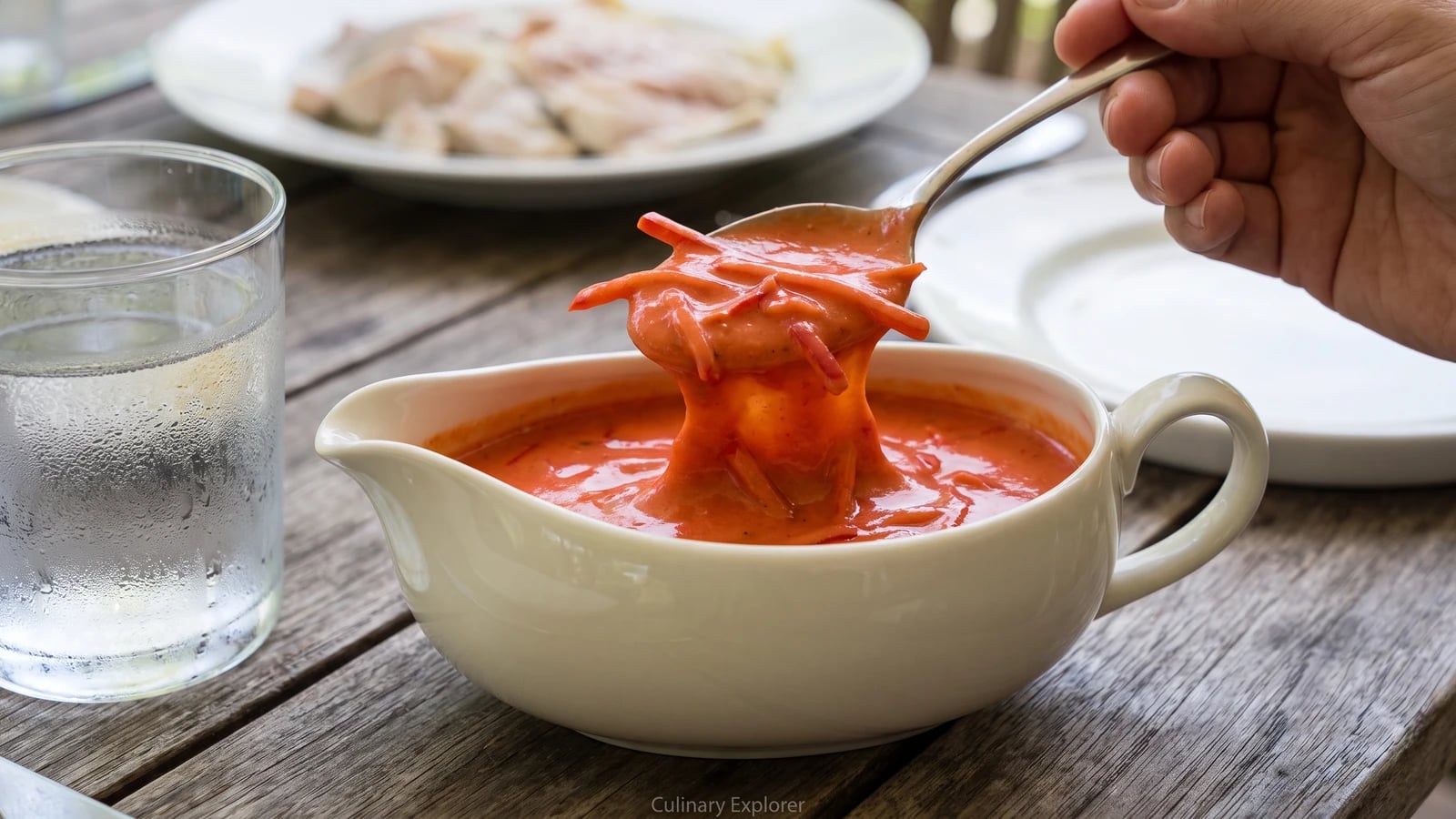
When it is right, Andalouse is rosy-red, cool, glossy, and threaded with crisp scarlet matchsticks. Add the purée gradually so the emulsion has time to accept it, and keep a little mayonnaise in reserve because, if the sauce turns oily, ça se rattrape. Check the purée before it meets the mayonnaise: cool, thick, brilliantly red, and holding a clean spoon track. That is the step that decides the sauce.
Sauce Andalouse belongs to the French grand-kitchen family of cold mayonnaise derivatives, in which one stable base became many distinct sauces through measured additions and precise cutting. Its name gestures toward Andalusia through tomato and capsicum, ingredients French sauce nomenclature associated with Spain, but this formula is not a traditional sauce of an Andalusian regional table. It traveled naturally from the cold buffet to the bourgeois dining table and picnic basket, accompanying eggs, cold fish, shellfish, and poultry.
Quantity
6⅖ cups (1.51 L / 1.45 kg) Mayonnaise Sauce (No. 126)
Quantity
1⅗ cups (380 ml / 415 g)
cooled completely
Quantity
2 loosely packed cups (475 ml / 225 g)
seeded and cut into very fine julienne
| Ingredient | Quantity |
|---|---|
| Mayonnaise Sauce | 6⅖ cups (1.51 L / 1.45 kg) Mayonnaise Sauce (No. 126) |
| very red, double-concentrated tomato puréecooled completely | 1⅗ cups (380 ml / 415 g) |
| red capsicum (sweet red pepper)seeded and cut into very fine julienne | 2 loosely packed cups (475 ml / 225 g) |
Measure the Mayonnaise Sauce (No. 126) into a wide nonreactive bowl, reserving ¼ cup (60 ml / 55 g) in a second clean bowl for possible rescue. Let the sauce and tomato purée stand for about 15 minutes so they reach the same cool kitchen temperature. Drag a spoon through the purée: the track should remain clean and open. If the purée runs back into it, simmer the purée gently in a small pan until it holds that track, then cool it completely before proceeding. Warm or watery purée loosens the emulsion.
Add the tomato purée to the Mayonnaise Sauce (No. 126) in four additions, folding each one through with a flexible spatula before adding the next. Use broad, deliberate strokes until the colour is even and the sauce regains its gloss. The quarter-volume proportion is not brigade scaffolding; it is the character of Andalouse. If the sauce becomes oily or curdled, stop. Whisk the broken sauce into the reserved mayonnaise one spoonful at a time until it comes back together, then continue slowly. Ça se rattrape. If no rescue is needed, fold the reserved mayonnaise back in now.
Remove every seed and strip of white pith from the capsicum, then cut it julienne-fashion, into very fine matchstick rods about 2.5 cm long. Blot the cut capsicum dry; surface water has no place in a finished emulsion. Fold it through the tomato mayonnaise only after the sauce is completely uniform, preserving the book's sequence and giving every spoonful a little crispness.
Cover the Andalouse directly against its surface and chill it for at least 30 minutes. The rest lets the capsicum settle through the sauce without surrendering its bite. Taste it as it stands, but don't add lemon, vinegar, sugar, or extra oil; the Mayonnaise Sauce already carries its seasoning, and the source formula asks for no correction beyond tomato and capsicum.
Let the sauce stand outside the refrigerator for 10 minutes so it becomes supple, then spoon it into a sauceboat and serve with cold poached fish, shellfish, eggs, or sliced poultry. For a picnic, keep the covered sauce nested over ice until the moment of serving. Bring it out generous and visibly threaded with capsicum. À table!
1 serving (about 30g)
Culinary guides, cultural storytelling, and the editorial depth that makes cooking meaningful.
Discover Culinary ExplorerChef Juliette
Beef shin, lean beef, and fowl begin in cold water and rise slowly toward a tremble. Skim before the boil, and you learn the quiet discipline that gives every clear French broth its backbone.
Chef Juliette
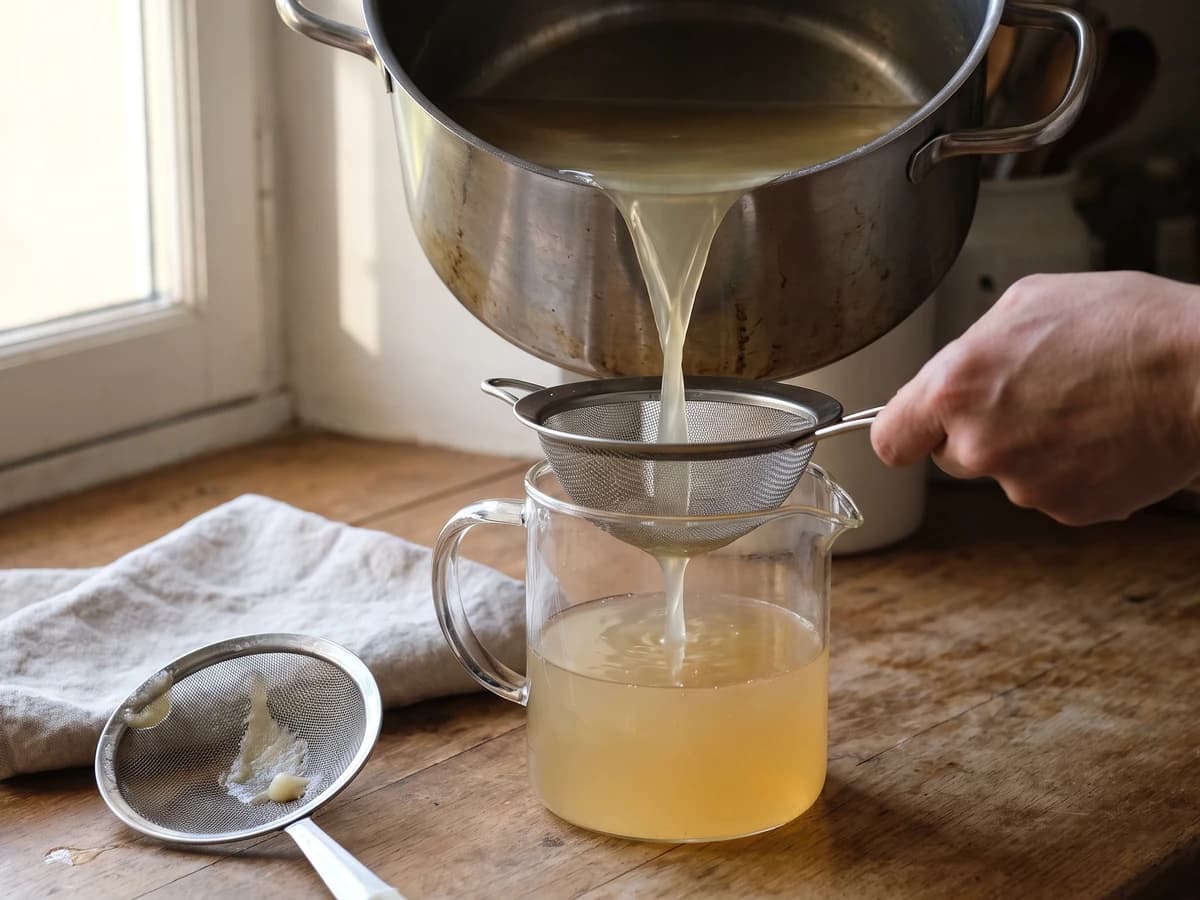
Break the veal bones small, then give them eight hours at a bare tremble. This pale, gelatinous fond becomes the quiet foundation beneath velouté, blanquette, and every sauce that must stay light.
Chef Juliette
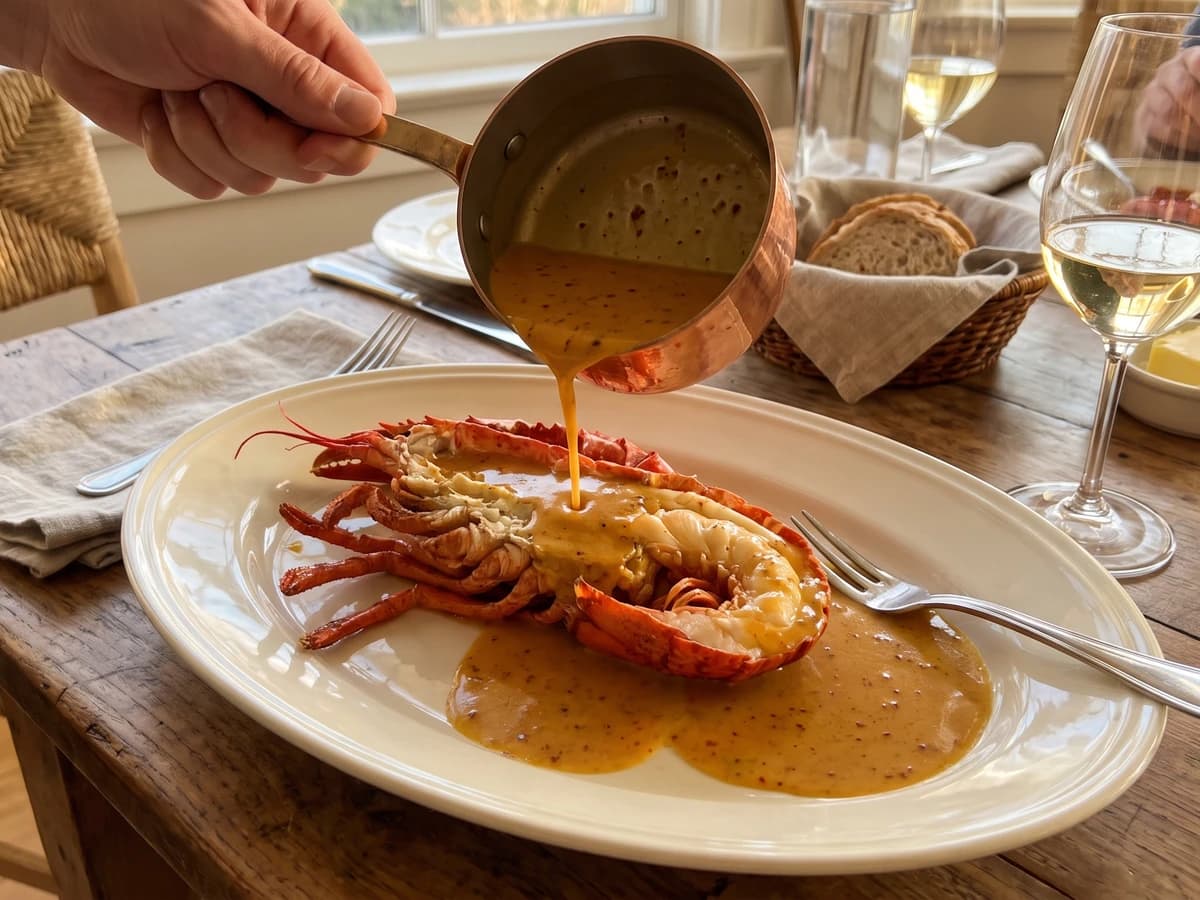
Sauce Orientale concentrates lobster-rich American Sauce with curry, then folds in cream away from the fire: a glossy, gently spiced derivative made for lobster, crayfish, and firm fish.
Chef Juliette
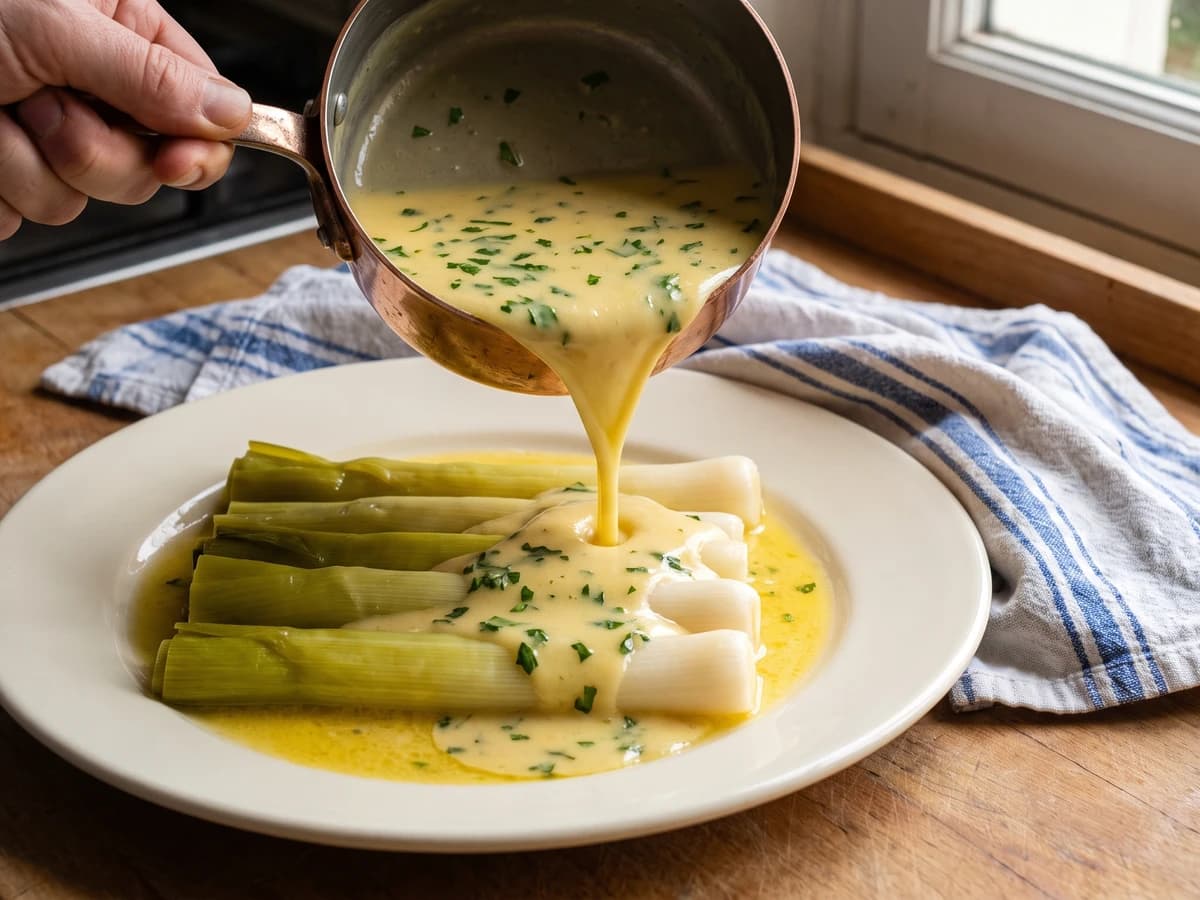
An old lesson in sauce families: Sauce Allemande takes mushroom liquor, then butter, lemon, and parsley, becoming a glossy Poulette for sheep's trotters, leeks, cauliflower, and anything needing gentle richness with a bright edge.