Chef Juliette
Ordinary or White Consommé
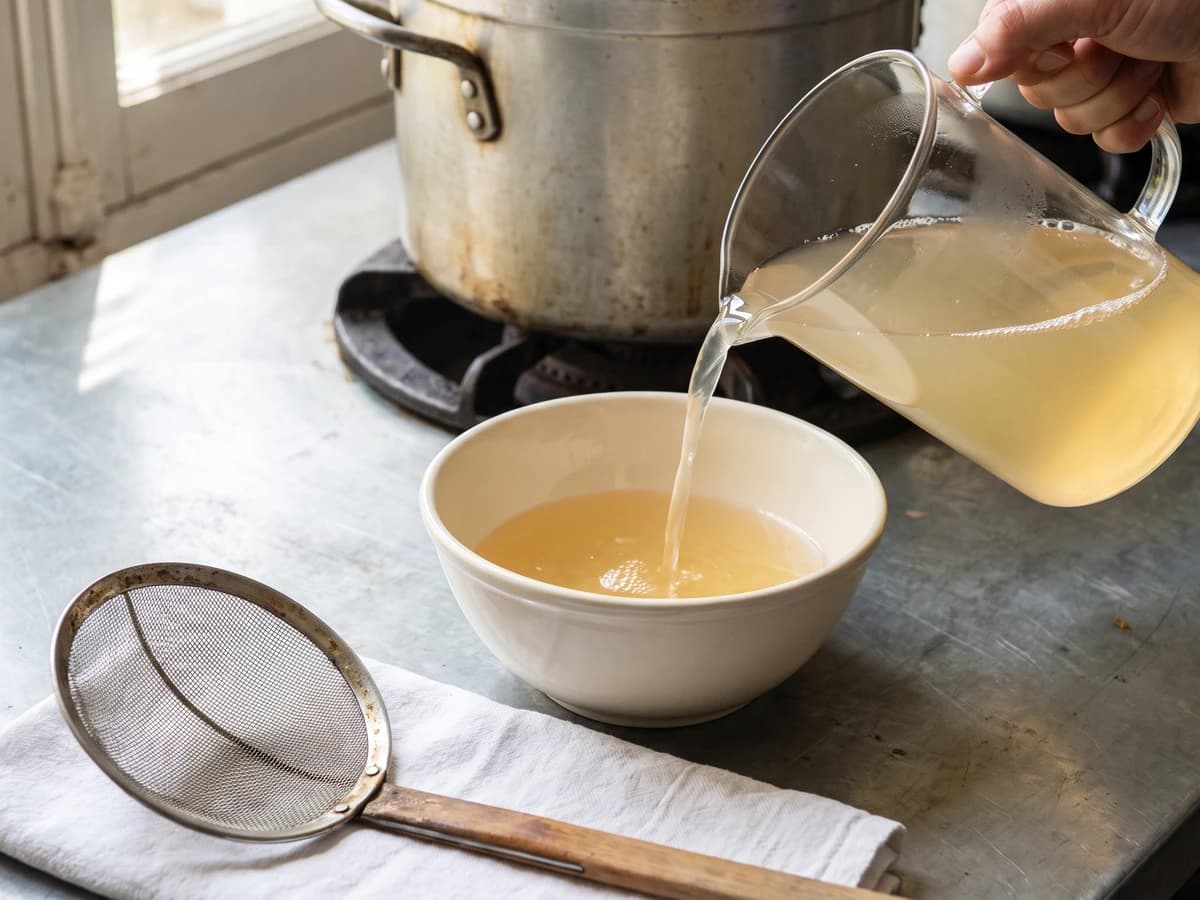
Beef shin, lean beef, and fowl begin in cold water and rise slowly toward a tremble. Skim before the boil, and you learn the quiet discipline that gives every clear French broth its backbone.
A cooking platform built around craft, culture, and the stories behind what we eat.
Created by Chef Juliette
Based on No. 126, Mayonnaise Sauce, from Le Guide Culinaire (1907) by Auguste Escoffier
Sauce Mayonnaise teaches the cold emulsion: vinegar into yolks, then room-temperature oil in a patient thread, finished with lemon and boiling water so it stays supple, coherent, and ready for the table.
Sauce Mayonnaise (the cold egg-yolk and oil emulsion) teaches one of the canon’s essential grammars: fat will join water willingly, but only when the yolks receive it at the proper pace. Vinegar goes into the yolks first, then the oil begins almost drop by drop. Once the emulsion catches, it becomes generous and strong.
The source formula assumed a saucier standing over six yolks and a quart of oil. Your home equivalent is half that batch in a bowl anchored with a damp towel: three yolks, two cups of oil, the same proportions, the same vinegar-first sequence, and the same finish of lemon and boiling water. The dedicated pair of hands was brigade scaffolding and can go; the gradual incorporation is the dish, so it stays. One cook, one stove, one evening, though the stove owes you only a spoonful of boiling water.
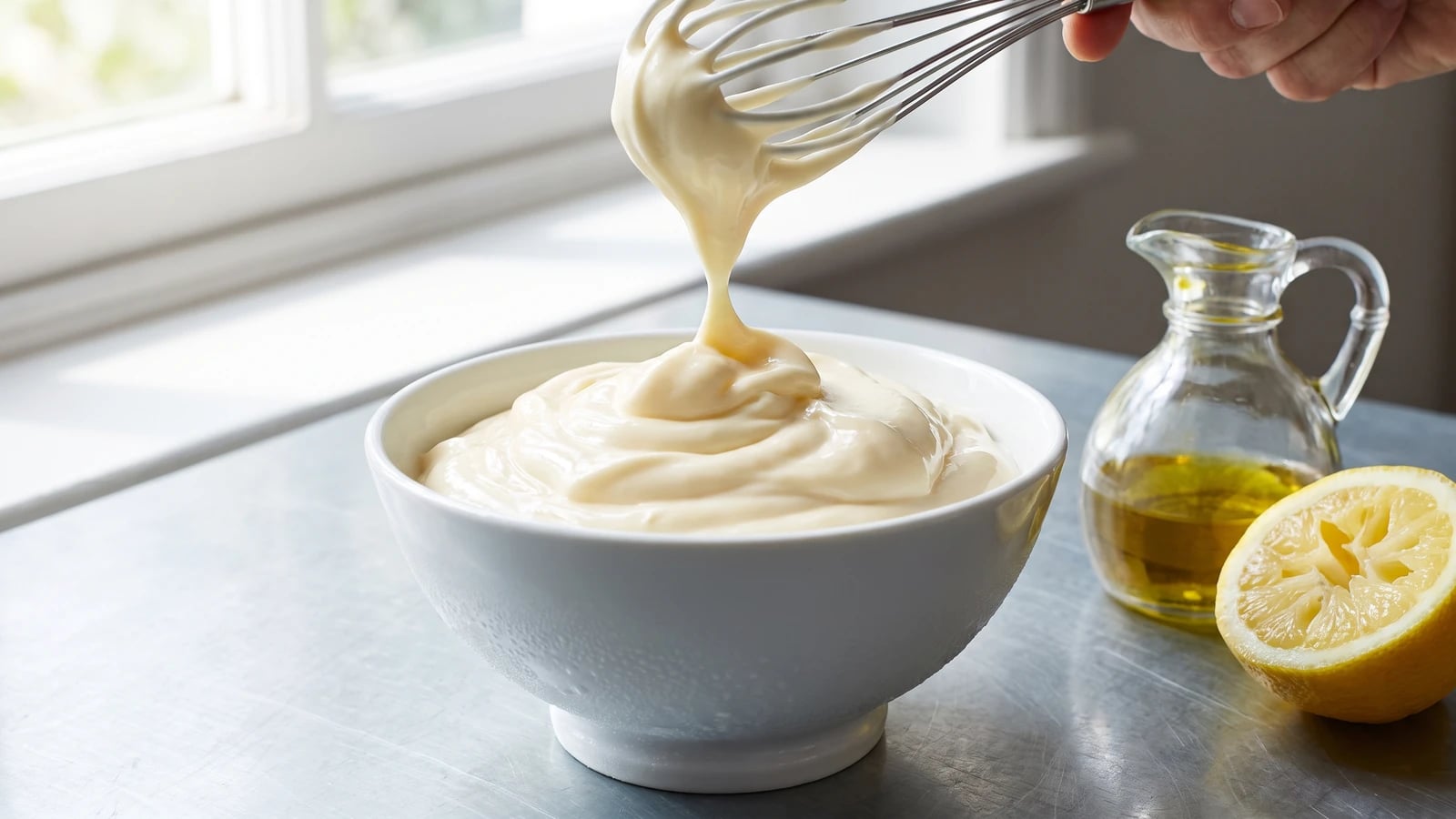
Finished mayonnaise should fall from the whisk in a glossy ribbon, soft enough to spoon and firm enough to hold a fold. Before you lift that whisk, know where your patience belongs: the first quarter cup of oil must enter in droplets and the finest possible thread. Hurry there and it may turn. Ça se rattrape, and the rescue waits in the method exactly where you’ll need it.
Within the French classical canon, Sauce Mayonnaise belongs to the Parisian cold-sauce repertoire, where sauce kitchens established it as a foundational emulsion for fish, eggs, cold meats, vegetables, and composed salads. Its name’s origin remains disputed: Mahón in Menorca carries the most famous claim, while Bayonne and older French word roots have their defenders, so a single neat birthplace is more legend than settled fact. What French practice settled is the method, yolks acidified first, oil incorporated gradually, and no bowl of ice, because cold oil works against the emulsion rather than protecting it.
Quantity
3 (about 54 g)
firm white chalaza strands removed
Quantity
1¼ teaspoons (7 g)
Quantity
1 small pinch
Quantity
3 tablespoons plus 1 teaspoon (50 ml / 50 g)
at room temperature
Quantity
2 cups (480 ml / 440 g)
at room temperature
Quantity
1½ tablespoons (22 ml / 22 g)
Quantity
1½ tablespoons (22 ml / 22 g)
Quantity
1 (about 18 g)
for rescuing a broken sauce
Quantity
1 teaspoon (5 ml / 5 g)
for rescuing a broken sauce
Quantity
½ teaspoon (2.5 ml / 3 g)
alternative for rescuing a small quantity
| Ingredient | Quantity |
|---|---|
| large pasteurized egg yolksfirm white chalaza strands removed | 3 (about 54 g) |
| fine table salt | 1¼ teaspoons (7 g) |
| cayenne pepper | 1 small pinch |
| white wine vinegarat room temperature | 3 tablespoons plus 1 teaspoon (50 ml / 50 g) |
| mild neutral oilat room temperature | 2 cups (480 ml / 440 g) |
| fresh lemon juice | 1½ tablespoons (22 ml / 22 g) |
| boiling water | 1½ tablespoons (22 ml / 22 g) |
| large pasteurized egg yolk (optional)for rescuing a broken sauce | 1 (about 18 g) |
| white wine vinegar (optional)for rescuing a broken sauce | 1 teaspoon (5 ml / 5 g) |
| Dijon mustard (optional)alternative for rescuing a small quantity | ½ teaspoon (2.5 ml / 3 g) |
Let the yolks, vinegar, and oil come to a moderate kitchen temperature for 20 to 30 minutes. If the oil feels cold, stand its jug briefly in lukewarm water, then dry the jug. Set a large nonreactive bowl on a folded damp towel so both hands remain free, and measure every ingredient before starting. Mayonnaise dislikes interruption almost as much as it dislikes cold oil.
Put the three yolks in the bowl with the salt and cayenne. Whisk until smooth, then add the vinegar gradually in three or four additions, whisking briskly until each addition is absorbed. The salt dissolves into this liquid foundation and helps the yolks cohere; it does not interfere with the emulsion. Continue until the mixture is even, fluid, and slightly paler.
Begin adding the oil while whisking constantly. For the first ¼ cup (60 ml), add only droplets or the thinnest possible thread, waiting until each addition disappears before giving the yolks more. The mixture will begin to thicken, lighten, and hold clear tracks from the whisk. That change means the emulsion has caught. If the bowl turns oily, grainy, or curdled, stop adding oil. Ça se rattrape: whisk the optional fresh yolk with the optional teaspoon of vinegar in a clean bowl, then add the broken mayonnaise to it one teaspoon at a time until the emulsion is firm again. For only a few tablespoons of broken sauce, the optional Dijon mustard can replace the rescue yolk. Once smooth, continue with the remaining oil in a fine thread.
Once the mayonnaise holds firm whisk marks, continue adding the remaining oil in a fine, steady thread while whisking across the whole bowl. You may pour a little faster now, but the oil should always vanish into the sauce as it lands. When all the oil is incorporated, the mayonnaise will look glossy and thick. Do not chase stiffness by adding extra oil; the yolks can hold only so much, and excess is another cause of turning.
Whisk in the lemon juice until fully absorbed. Add the boiling water gradually, about a teaspoon at a time, whisking after each addition. This loosens the mayonnaise into a supple ribbon while helping the emulsion remain coherent. It may look softer than expected. That is exactly right; the sauce thickens considerably as it rests.
Transfer the mayonnaise to a clean covered container and refrigerate it promptly for at least 2 hours. The source’s uncovered room-temperature rest is not kept here because raw-egg safety matters at a home table; cold is troublesome while building the emulsion, but necessary for storage afterward. Use within 3 days, keep it at or below 40°F (4°C), and whisk briefly before serving if the surface has settled. À table!
1 serving (about 15g)
Culinary guides, cultural storytelling, and the editorial depth that makes cooking meaningful.
Discover Culinary ExplorerChef Juliette
Beef shin, lean beef, and fowl begin in cold water and rise slowly toward a tremble. Skim before the boil, and you learn the quiet discipline that gives every clear French broth its backbone.
Chef Juliette
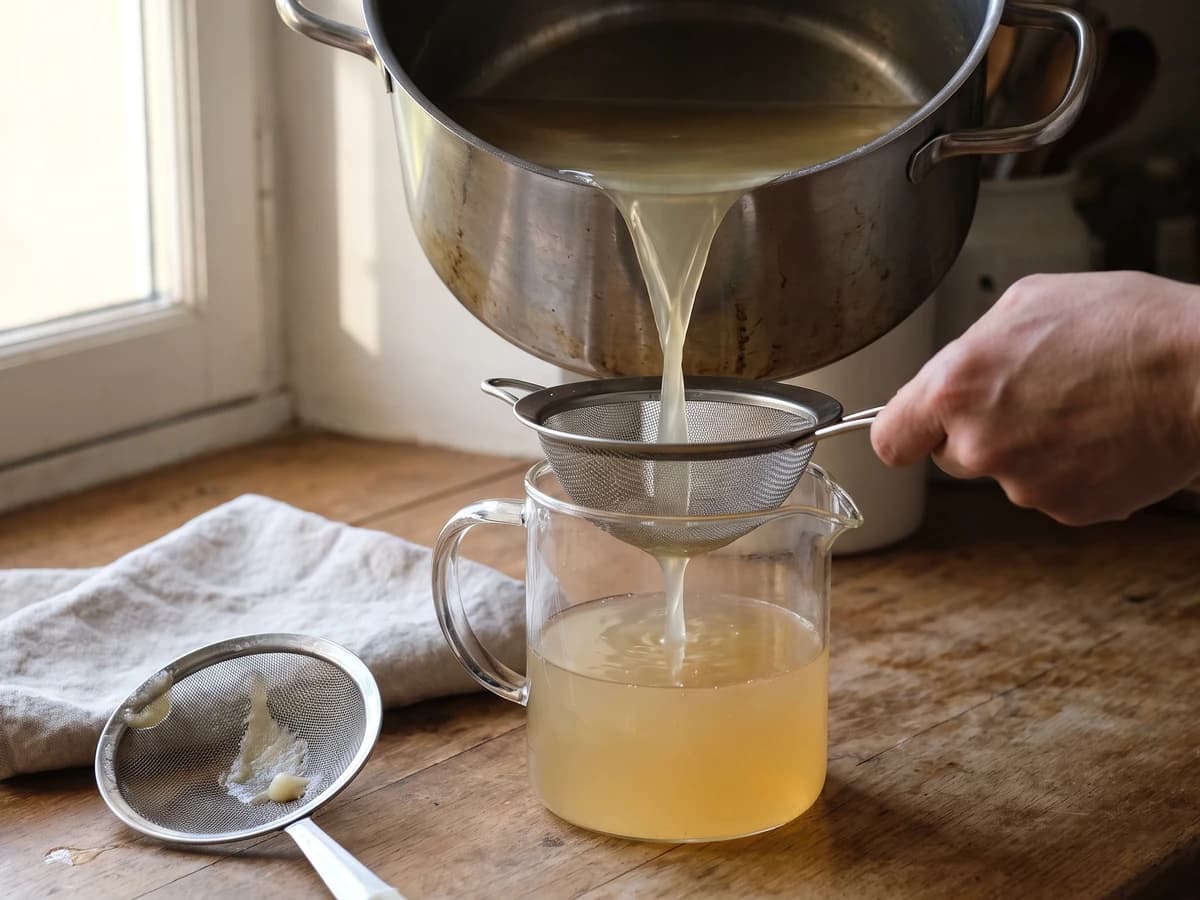
Break the veal bones small, then give them eight hours at a bare tremble. This pale, gelatinous fond becomes the quiet foundation beneath velouté, blanquette, and every sauce that must stay light.
Chef Juliette
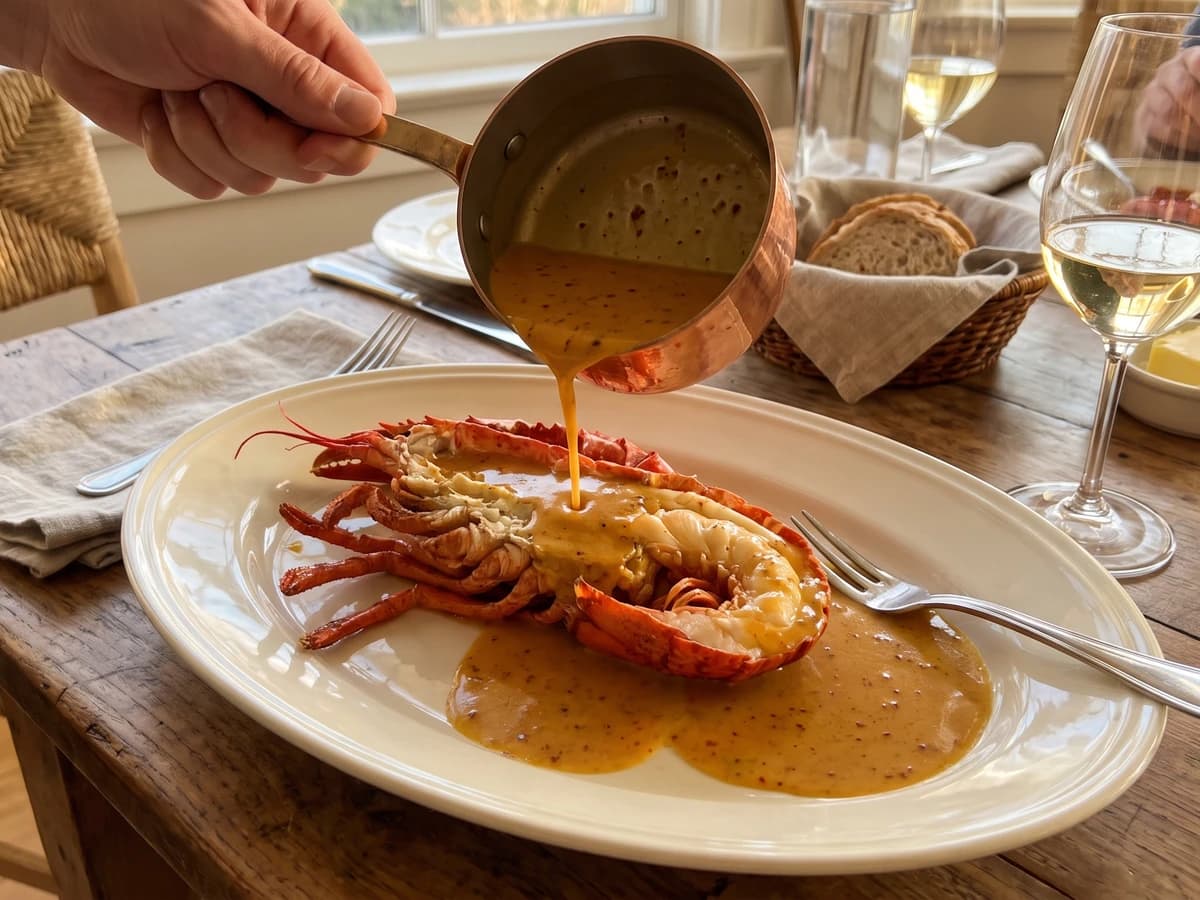
Sauce Orientale concentrates lobster-rich American Sauce with curry, then folds in cream away from the fire: a glossy, gently spiced derivative made for lobster, crayfish, and firm fish.
Chef Juliette
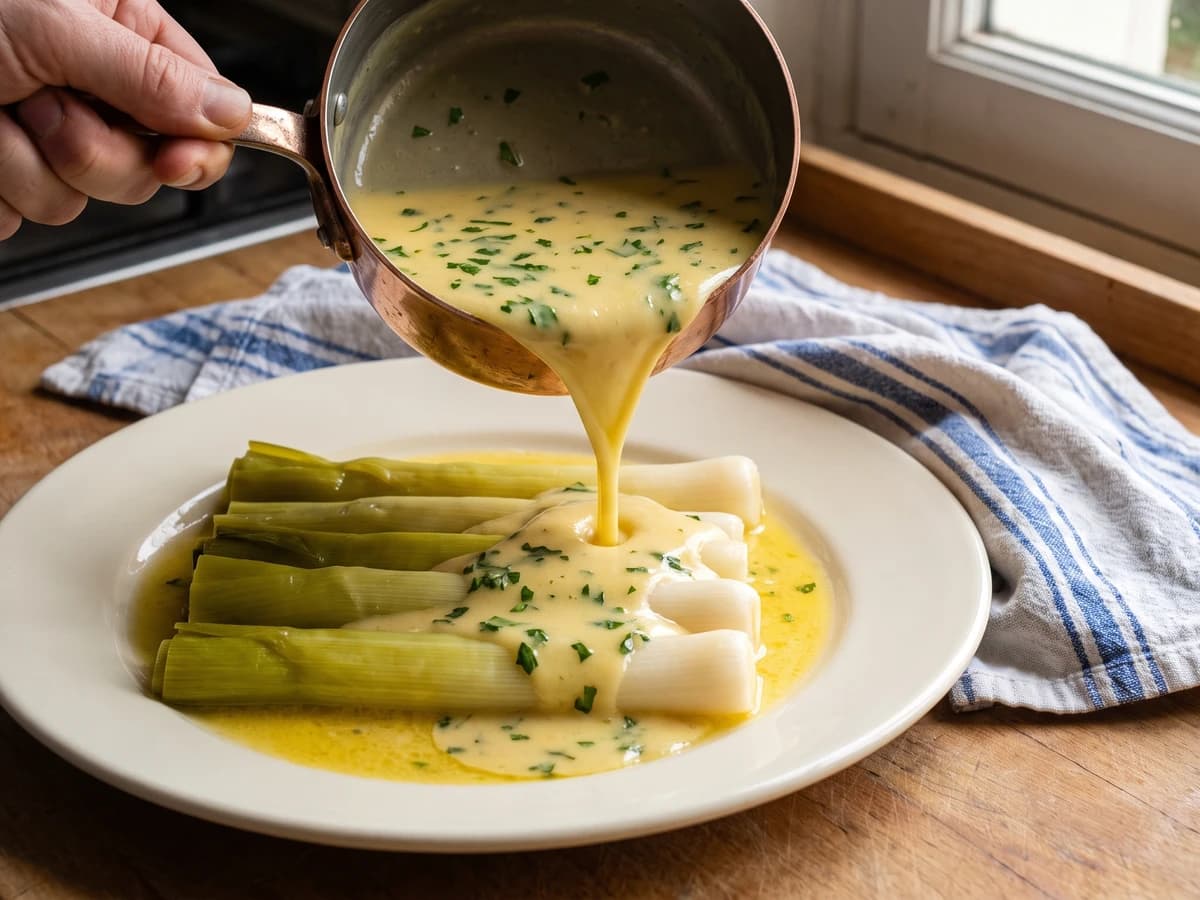
An old lesson in sauce families: Sauce Allemande takes mushroom liquor, then butter, lemon, and parsley, becoming a glossy Poulette for sheep's trotters, leeks, cauliflower, and anything needing gentle richness with a bright edge.