Chef Isabel
Abanico Ibérico a la Plancha
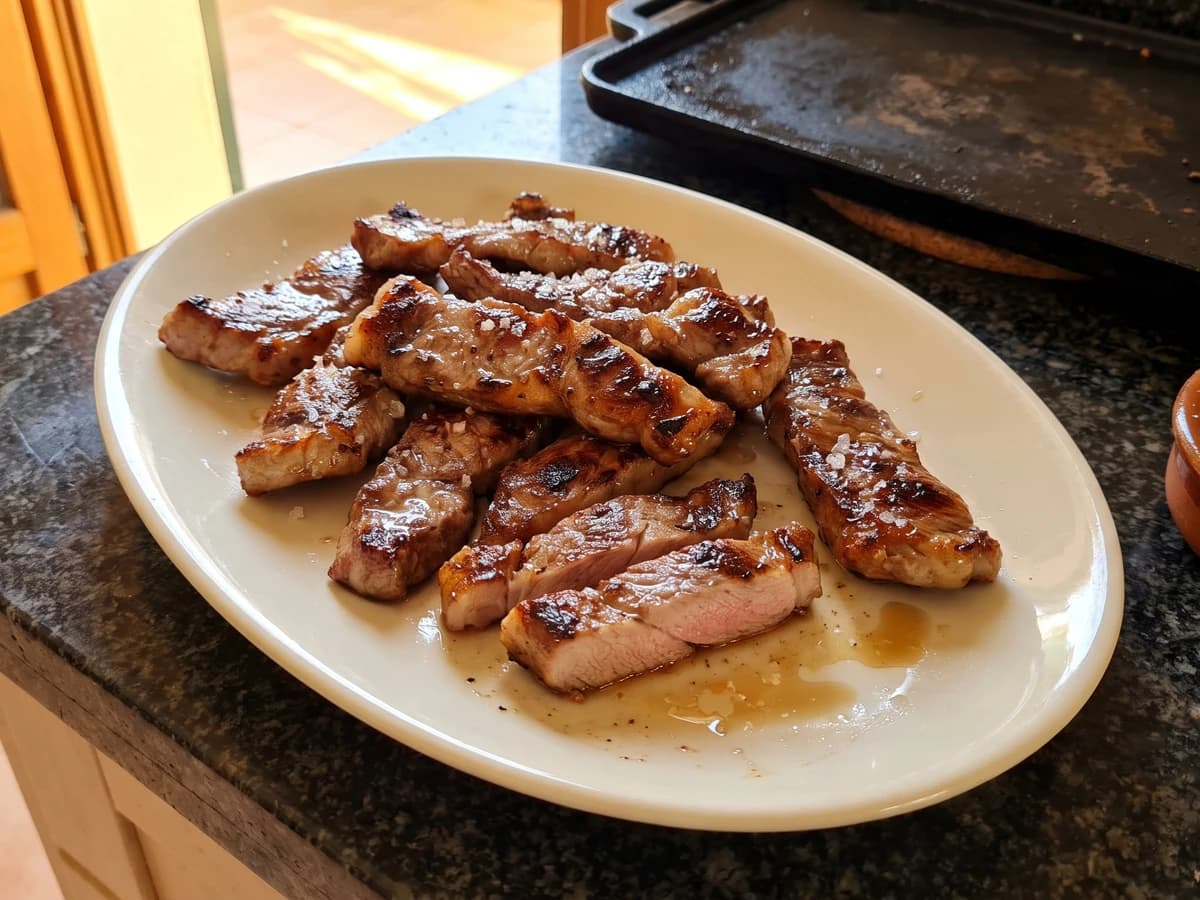
Extremadura's dehesa gives us this fan-shaped, marbled rib cut: salt it at the last moment, lay it on a fierce plancha, and count in seconds so the centre stays juicy.
A cooking platform built around craft, culture, and the stories behind what we eat.
Created by
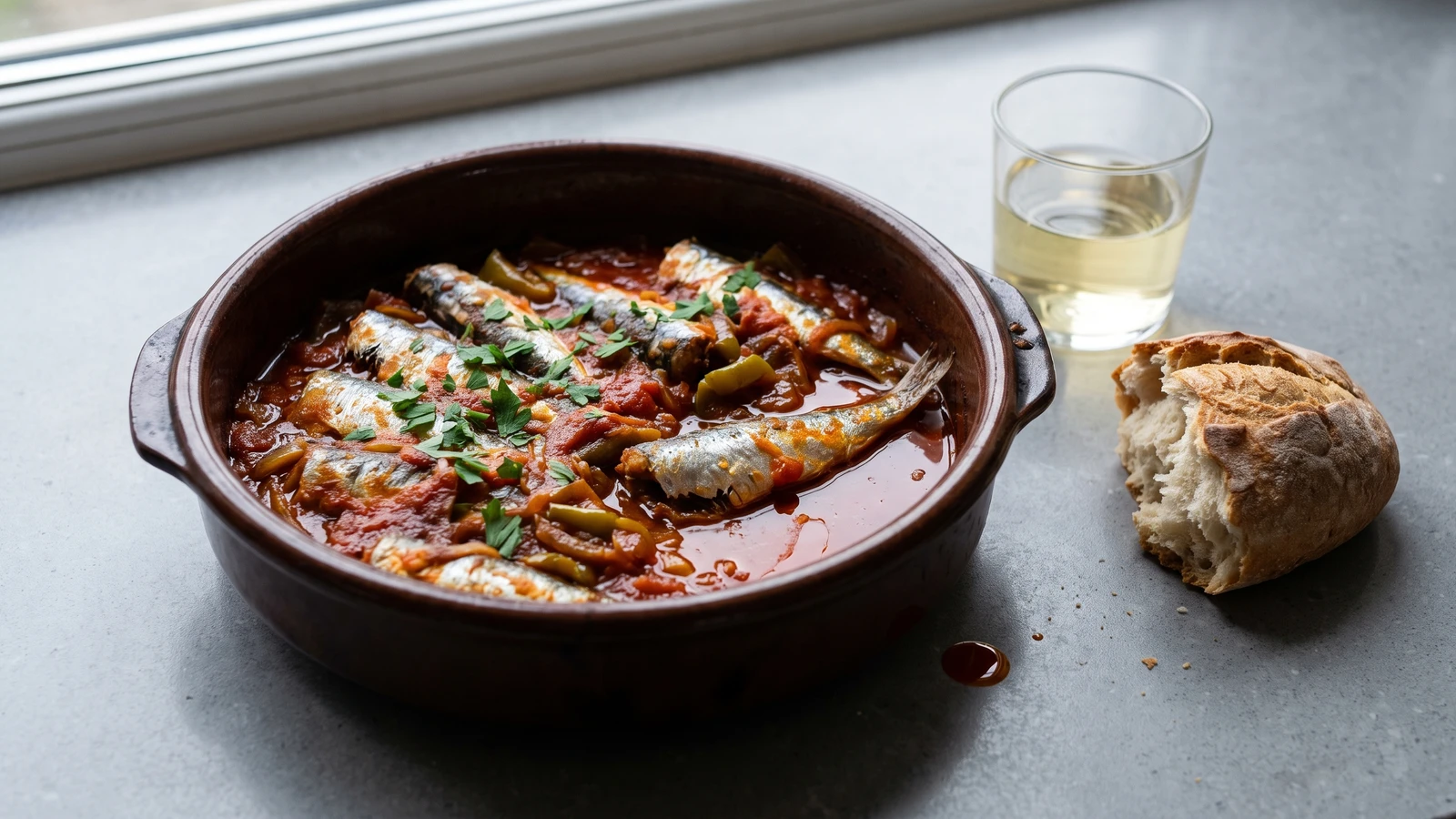
Galicia's small sardines settle beneath a dark, sweet onion and tomato sofrito, where gentle cooking leaves them tender and the pimentón-stained juices demand a thick piece of bread.
Xoubas afogadas are Galician, a summer cazuela from the fishing kitchens of the rías: little sardines tucked beneath onion, tomato, garlic, green pepper, and pimentón until their juices become part of the sauce. Afogadas means smothered. The fish aren't fried crisp or padded out with potatoes; they cook briefly under that soft vegetable cover and arrive tender enough to lift from the backbone, with bread waiting beside them.
The dish is decided before a sardine touches the cazuela. I cook the onion and pepper low until the onion is dark gold, collapsed, and sweet, then cook the tomato until the oil shows again. That is the sofrito, the slow vegetable base. Rush it and the tomato stays wet and sharp, and the delicate fish have nowhere to hide. Once the xoubas go in, eight or ten quiet minutes are enough. Shake the cazuela, don't stir it, or you'll turn them to scraps.
If xoubas don't reach your market, use the smallest fresh whole sardines you can find. Full-sized sardines give a stronger, bonier dish and need two or three minutes more; canned sardines don't belong in this cazuela. No hace falta haber pisado Galicia. My Margin says only, "build the bed slowly, cook the fish quickly." Siempre sale, si lo sigues.
Xouba is the Galician name for the small sardine landed along the Atlantic rías, and afogar describes the home-kitchen method of covering it with softened onions and garden vegetables so the fish cooks in their juices. Sardines are bound to the summer feast of San Xoán, when coastal fires burn and the saying "Por San Xoán, a sardiña molla o pan" promises a sardine fat enough to soak the bread. The cazuela turns that rich seasonal catch into a frugal main dish, with its sauce stretched by a loaf rather than by more fish.
Quantity
800g whole, about 600g cleaned
heads and innards removed, rinsed briefly and dried
Quantity
9g
divided
Quantity
75ml
Quantity
500g
thinly sliced into half-moons
Quantity
150g
cored and thinly sliced
Quantity
12g
finely chopped
Quantity
3g
Quantity
400g
halved and grated, skins discarded
Quantity
1
Quantity
100ml
Quantity
10g
finely chopped and divided
Quantity
30ml
Quantity
300g
thickly sliced, for serving
| Ingredient | Quantity |
|---|---|
| very fresh xoubas or other small whole sardinesheads and innards removed, rinsed briefly and dried | 800g whole, about 600g cleaned |
| fine sea saltdivided | 9g |
| extra virgin olive oil | 75ml |
| yellow onionsthinly sliced into half-moons | 500g |
| green peppercored and thinly sliced | 150g |
| garlicfinely chopped | 12g |
| sweet pimentón | 3g |
| ripe plum tomatoeshalved and grated, skins discarded | 400g |
| bay leaf | 1 |
| dry Ribeiro, Albariño, or other dry unoaked white wine | 100ml |
| flat-leaf parsleyfinely chopped and divided | 10g |
| water (optional) | 30ml |
| rustic country breadthickly sliced, for serving | 300g |
Remove each sardine's head, pulling gently downward so the innards come with it. Run a thumb along the belly to clear anything left inside, rinse the fish very briefly under cold water, and dry them well. Leave the backbone and tail in place. Season inside and out with 6g of the salt, then refrigerate while you build the sofrito.
Put the olive oil, onions, green pepper, and remaining 3g salt into a wide, heavy cazuela or sauté pan. Set it over medium-low heat. Cover and cook for 8 minutes to draw out the moisture, then uncover and cook for another 17 to 20 minutes, stirring every few minutes, until the onion is dark gold, collapsed, and sweet without becoming crisp. Add the garlic and cook for 2 minutes.
Take the cazuela off the heat, sprinkle in the pimentón, and stir for 10 seconds. Don't let it scorch or it turns bitter. Return the cazuela to low heat and add the grated tomato, bay leaf, and half the parsley. Cook uncovered for 12 to 15 minutes, stirring now and then, until the tomato is thick and the oil shows around the edges. Pour in the wine and cook for 4 minutes, until its raw smell is gone. The sofrito should be spoonable, not watery.
Spoon about two-thirds of the sofrito into a bowl, leaving a thin bed in the cazuela. Lay in half the xoubas, snugly and in alternating directions. Cover them with half the reserved sofrito, add the remaining fish, then spoon over the rest so they are almost hidden. If the base is very dry, trickle the 30ml water around the edge. Don't pour it over the fish.
Cover the cazuela and set it over low heat. Cook small xoubas for 8 to 10 minutes, giving the pan two gentle shakes by its handles instead of stirring. Full-sized sardines need 11 to 13 minutes. They are ready when the flesh is opaque beside the backbone and separates cleanly when nudged. Take the pan off the heat before the fish begins to split.
Leave the xoubas covered for 5 minutes so they finish in the retained heat and the juices settle into the sofrito. Remove the bay leaf and scatter over the remaining parsley. Carry the cazuela to the table and lift out portions with a wide spoon, keeping the fish as whole as you can. Serve with thick bread for the onion-rich sauce.
1 serving (about 420g)
Culinary guides, cultural storytelling, and the editorial depth that makes cooking meaningful.
Discover Culinary ExplorerChef Isabel
Extremadura's dehesa gives us this fan-shaped, marbled rib cut: salt it at the last moment, lay it on a fierce plancha, and count in seconds so the centre stays juicy.

Chef Isabel
Aletría Murciana is Murcia's humble noodle guiso: fine fideos, pork ribs, potato, saffron, and a dark sweet sofrito. Get that base right and the pot knows where it's going.
Chef Isabel
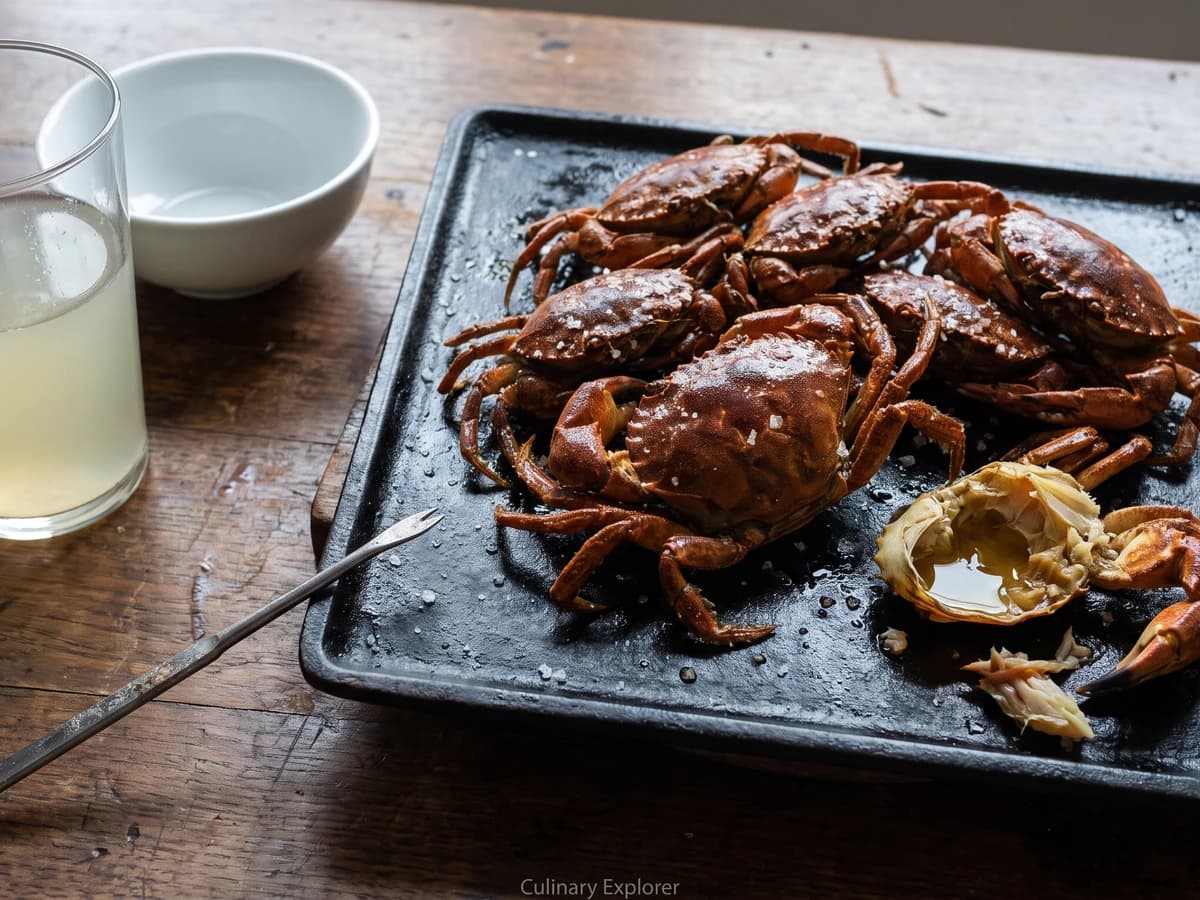
Asturias puts its small velvet crabs straight on a fierce plancha with salt and oil, keeping the shell liquor sweet and briny. Dry them well, cook them fast, and bring plenty of napkins.

Chef Isabel
Andrajos are Andalucía's dough-rag stew from Jaén and Granada: a slow rabbit guiso thickened with torn sheets of flour dough, rolled thin so they cook tender instead of gummy.