
Chef Isabel
Aletría Murciana
Aletría Murciana is Murcia's humble noodle guiso: fine fideos, pork ribs, potato, saffron, and a dark sweet sofrito. Get that base right and the pot knows where it's going.
A cooking platform built around craft, culture, and the stories behind what we eat.
Created by
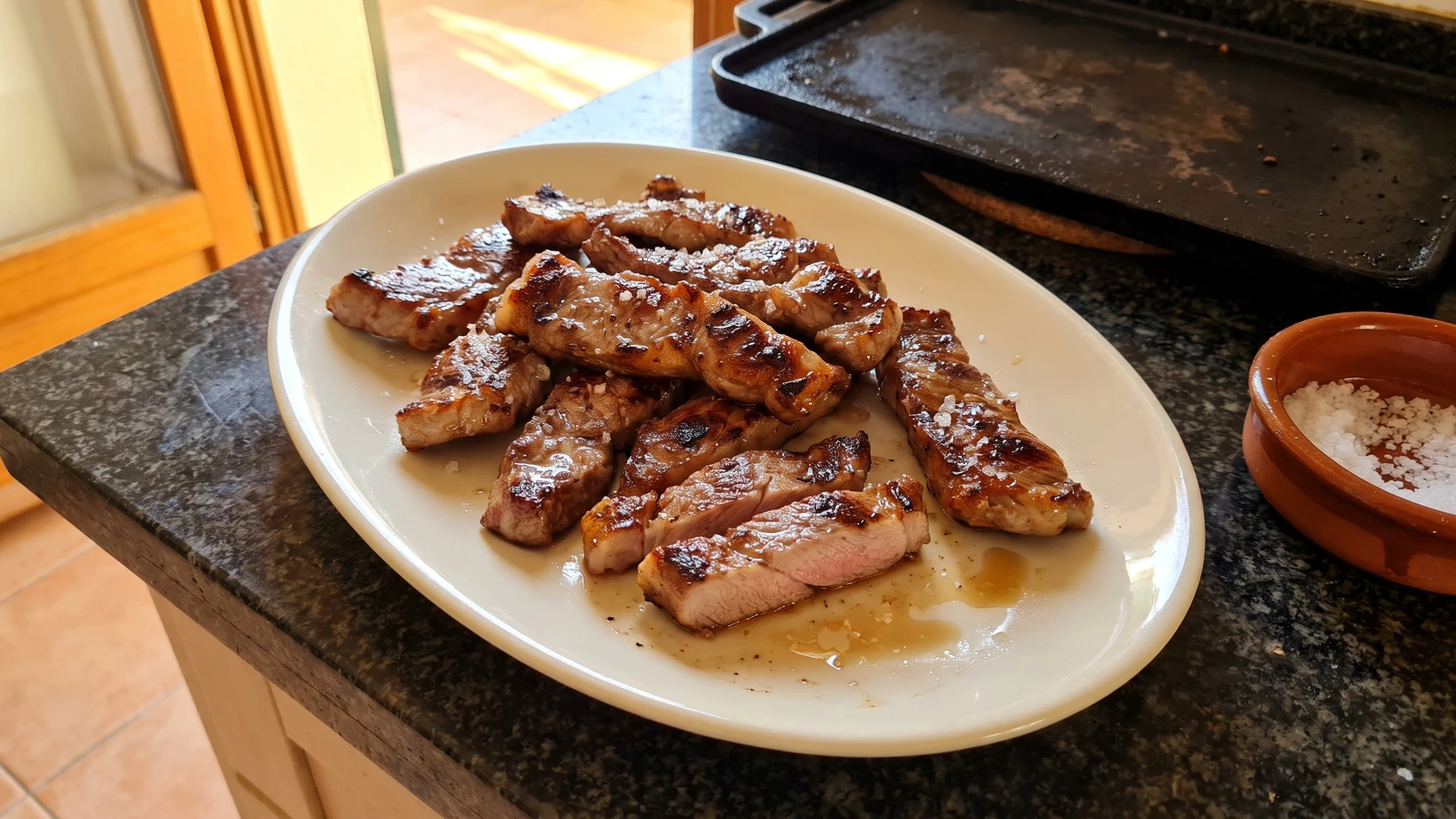
Extremadura's dehesa gives us this fan-shaped, marbled rib cut: salt it at the last moment, lay it on a fierce plancha, and count in seconds so the centre stays juicy.
Abanico ibérico a la plancha belongs to the dehesa belt of Extremadura and western Andalucía. It is the thin, fan-shaped sheet of meat covering the outside of the Iberian pig's ribs, crossed with fine seams of fat and cooked on iron with coarse salt. This isn't a pork chop beaten flat, and it doesn't need a marinade. It is one of the fresh cuts that shows why the Ibérico animal matters before a single leg is cured.
The method that decides it is fierce heat for very little time. I dry the meat well, heat the plancha until the oil shimmers at once, and count in seconds. Those seams of fat must brown before the lean muscle has time to tighten. A lukewarm pan slowly renders the fat, boils the surface in its own juices, and leaves the cut dry. The extra minute is the danger here, not the missing sauce.
If you cannot find abanico, ask for well-marbled cabecero de lomo, pork collar, and have it sliced across the grain to 8-10mm. It will be firmer and less deeply flavoured, but it takes the same quick plancha treatment honestly. No hace falta haber pisado España, you don't need to have set foot in Spain. The Margin beside mine says, "Set the table first." The meat waits for nobody. Siempre sale, si lo sigues, it turns out if you follow it.
Abanico is a butcher's name rather than an old stew or feast-day recipe: lifted from the outside of the Iberian pig's ribs, the thin, marbled muscle opens like a hand fan. The cut belongs especially to the dehesa belt of Extremadura, continuing into the Sierra de Huelva, where oak pasture and, for bellota animals, the montanera acorn-feeding season shape the meat. Fresh cuts cooked quickly over iron or coals represent the immediate side of the matanza, the household pig slaughter that also supplied the salted and cured larder for the year.
Quantity
600g
tough silverskin removed, divided into 4 pieces about 8-12mm thick
Quantity
7g
divided into 5g for cooking and 2g for finishing
Quantity
5ml
| Ingredient | Quantity |
|---|---|
| abanico ibéricotough silverskin removed, divided into 4 pieces about 8-12mm thick | 600g |
| coarse sea saltdivided into 5g for cooking and 2g for finishing | 7g |
| extra virgin olive oil | 5ml |
Take the abanico from the refrigerator 15 minutes before cooking. Remove only the tough silverskin from the underside and leave every seam of creamy fat where it is. Divide along the natural seams into four roughly equal pieces, then pat every surface thoroughly dry. Water cools the iron and gives you grey pork instead of a proper brown crust.
Set a heavy iron plancha or 30cm cast-iron skillet over high heat for a full 5 minutes. Rub the 5ml olive oil over the meat rather than pouring it into the pan. The oil should shimmer the instant the first edge touches the iron. This heat is what lets the marbled surface brown before the thin meat dries.
Sprinkle the meat evenly with 5g of the coarse salt immediately before it goes onto the plancha. Lay the pieces flat and press each one with the tongs for just 5 seconds to establish contact. Sear without moving for 60 to 75 seconds, until dark brown patches form and the fat at the edges turns clear and glossy. If your skillet cannot hold all four pieces without crowding, cook two at a time and let the iron recover for 30 seconds between batches.
Turn each piece once and sear the second side for 45 to 60 seconds. Insert an instant-read thermometer horizontally into the thickest part and remove the meat as soon as it reaches 63°C or 145°F. Begin checking after 35 seconds if your pieces are closer to 8mm thick. Don't chase a darker crust once the centre is ready. Abanico forgives many things, but not an extra minute.
Rest the meat uncovered on a warm platter for 3 minutes. Serve the pieces whole or cut them across the grain into strips about 2cm wide, then scatter over the remaining 2g coarse salt. Put it on the table at once, with the juices and rendered fat still glistening. It needs no sauce and no marinade.
1 serving (about 120g)
Culinary guides, cultural storytelling, and the editorial depth that makes cooking meaningful.
Discover Culinary ExplorerChef Isabel
Aletría Murciana is Murcia's humble noodle guiso: fine fideos, pork ribs, potato, saffron, and a dark sweet sofrito. Get that base right and the pot knows where it's going.

Chef Isabel
Andrajos are Andalucía's dough-rag stew from Jaén and Granada: a slow rabbit guiso thickened with torn sheets of flour dough, rolled thin so they cook tender instead of gummy.
Chef Isabel
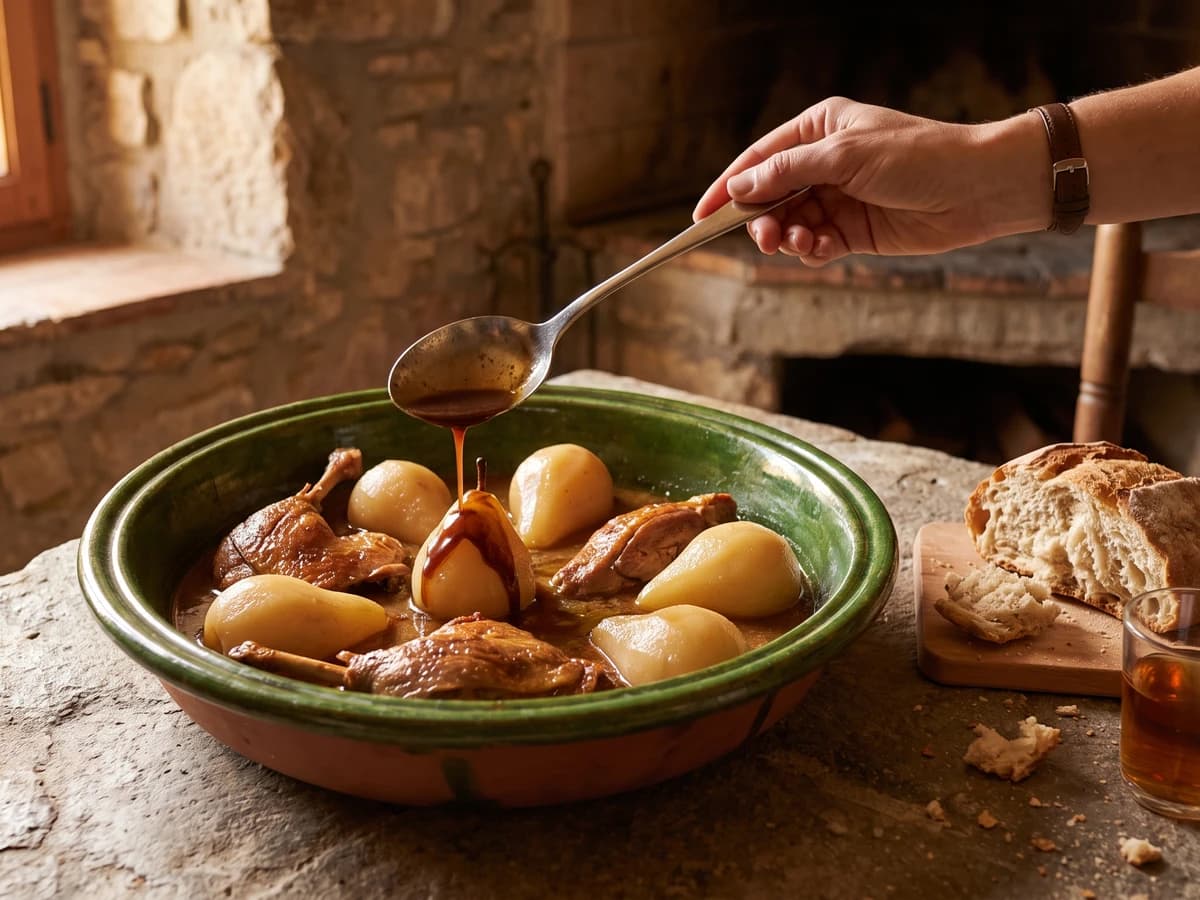
Ànec amb peres is Catalan celebration cooking: duck braised in a dark sofregit, firm autumn pears added near the end, and an almond-garlic picada that turns the juices into a close, glossy sauce.

Chef Isabel
Catalonia's casserole rice is cooked in a cassola, not a paella pan: rabbit, chicken, and pork rib over a dark sofregit, finished juicy with a small picada.