Chef Isabel
Abanico Ibérico a la Plancha
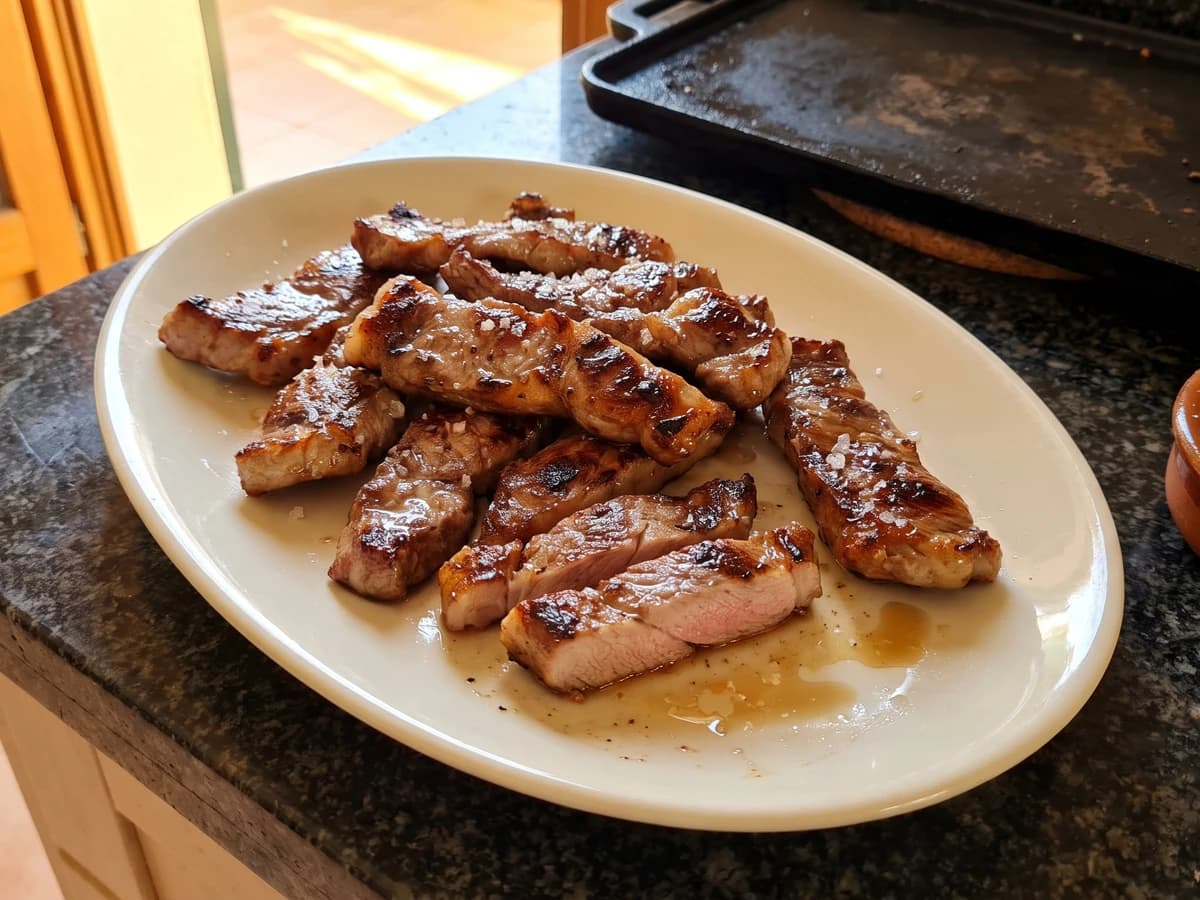
Extremadura's dehesa gives us this fan-shaped, marbled rib cut: salt it at the last moment, lay it on a fierce plancha, and count in seconds so the centre stays juicy.
A cooking platform built around craft, culture, and the stories behind what we eat.

Created by
Aletría Murciana is Murcia's humble noodle guiso: fine fideos, pork ribs, potato, saffron, and a dark sweet sofrito. Get that base right and the pot knows where it's going.
Aletría Murciana belongs to Murcia, and it is cocina de cuchara, spoon food: fine fideos cooked in a brothy guiso with costillejas, small pork ribs, potato, saffron, and the deep red murciano touch of ñora. It is not a dry fideuà and it is not a soup with noodles thrown in at the end. The noodles finish in the broth and drink its flavour. That is the dish.
The step that decides it is the sofrito, the slow onion and tomato base. Cook it low until the onion turns dark gold, the tomato loses its water, and the oil comes back red and glossy around the edges. Rush it and the stew tastes thin, however good the ribs are. Give it the time and the saffron has somewhere to land.
If you are far from Murcia, use thin fideos or broken vermicelli, no hace falta haber pisado España. For the ñora, use a small dried sweet red pepper if you must, but add a little sweet pimentón de la Vera and know the flavour will be less round. Costillejas are simply chopped pork spare ribs. Ask the butcher to cut them small, because this is a spoon dish, not a knife-and-fork lunch.
The noodles cook quickly, so have the table ready before they go in. They should be tender but still loose in a golden-red broth, not swollen into paste. My Margin has only one warning here: fideos wait for nobody. Serve it as soon as it rests its few minutes. Siempre sale, si lo sigues.
Aletría is one of Murcia's old noodle dishes, its name tied to the Arabic al-itriyya, the word for dried thread-like pasta that travelled through the southeast and stayed in the home larder. Murcia's huerta shaped the pot with tomato, onion, potato, pepper, and saffron, while small cuts of pork such as costillejas made a modest stew taste full without making it costly. Unlike the dry noodle dishes of the coast, this one belongs to the inland spoon table, brothy enough to eat with a spoon and sturdy enough to feed a household.
Quantity
600g
chopped into 4cm pieces
Quantity
220g
Quantity
500g
peeled and cracked into bite-size chunks
Quantity
1 large
finely chopped
Quantity
2
grated
Quantity
1
chopped
Quantity
2
Quantity
3 cloves
2 sliced and 1 left whole
Quantity
1 teaspoon
Quantity
1 generous pinch
Quantity
1
Quantity
1.4 litres
Quantity
60ml
Quantity
8g, plus more to taste
Quantity
2 tablespoons
chopped
| Ingredient | Quantity |
|---|---|
| pork costillejaschopped into 4cm pieces | 600g |
| fine fideos or broken vermicelli | 220g |
| waxy potatoespeeled and cracked into bite-size chunks | 500g |
| onionfinely chopped | 1 large |
| ripe tomatoesgrated | 2 |
| green Italian frying pepperchopped | 1 |
| dried ñoras | 2 |
| garlic2 sliced and 1 left whole | 3 cloves |
| sweet pimentón de la Vera | 1 teaspoon |
| saffron threads | 1 generous pinch |
| bay leaf | 1 |
| hot water or light unsalted pork stock | 1.4 litres |
| extra virgin olive oil | 60ml |
| salt | 8g, plus more to taste |
| flat-leaf parsleychopped | 2 tablespoons |
Put the dried ñoras in a bowl and cover them with hot water for 20 minutes. When soft, split them open, scrape out the red flesh with the back of a knife, and discard the skins and seeds. Pound that flesh with the whole garlic clove and the parsley to make a small majado, a pounded seasoning. Keep it beside the stove.
Heat the olive oil in a wide heavy pot over medium heat. Salt the costillejas with about half the salt, add them to the pot, and brown them patiently on all sides, 10 to 12 minutes. You want golden edges and a little pork fat in the oil, not scorched black bits. Lift the ribs to a plate.
Lower the heat and add the onion, green pepper, and sliced garlic to the same oil. Cook slowly for 15 minutes, stirring often, until the onion is dark gold and soft. Add the grated tomato and cook another 12 to 15 minutes, until the water has gone and the oil shows red at the edges. This is the step that decides the stew: the sofrito, the slow base, must turn sweet before the broth goes in.
Stir in the pimentón for only a few seconds, off the strongest heat, so it smells warm but does not burn. Return the ribs to the pot with the bay leaf, saffron, the remaining salt, and 1.4 litres hot water or light stock. Scrape the base of the pot, bring it to a gentle boil, then lower to a steady simmer for 30 minutes.
Add the cracked potatoes and the ñora, garlic, and parsley majado. Simmer 15 to 18 minutes, until the potatoes are just tender at the edges but not falling apart. Taste the broth now; it should be a little more seasoned than a soup, because the fideos will drink it.
Add the fine fideos and stir once to spread them through the pot. Cook 5 to 7 minutes, depending on their thickness, until tender but not swollen. Keep the stew loose and spoonable; add a splash of hot water if the noodles take more broth than expected. Turn off the heat and rest 3 minutes, no longer.
Serve the aletría in deep bowls with ribs, potato, and noodles in each one, the broth golden-red and glossy from the sofrito. This is a pot that should arrive hot and generous, not tidy. Fideos wait for nobody, so call people before you finish them.
1 serving (about 650g)
Culinary guides, cultural storytelling, and the editorial depth that makes cooking meaningful.
Discover Culinary ExplorerChef Isabel
Extremadura's dehesa gives us this fan-shaped, marbled rib cut: salt it at the last moment, lay it on a fierce plancha, and count in seconds so the centre stays juicy.
Chef Isabel
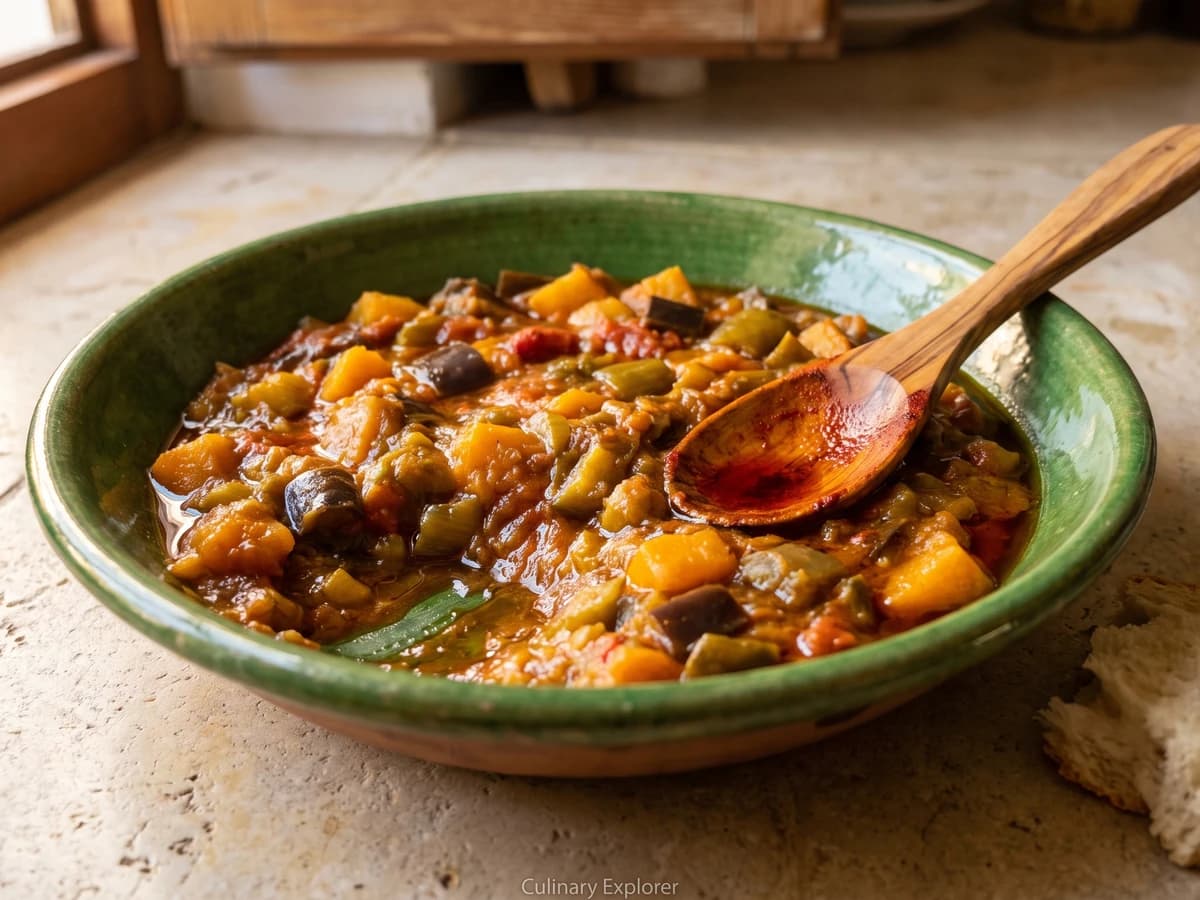
Alboronía is Andalucía's old pumpkin and aubergine stew, deepened with tomato, pimentón, and cumin, then cooked without hurry until the vegetables settle into a glossy, sweet, spoon-soft whole.
Chef Isabel
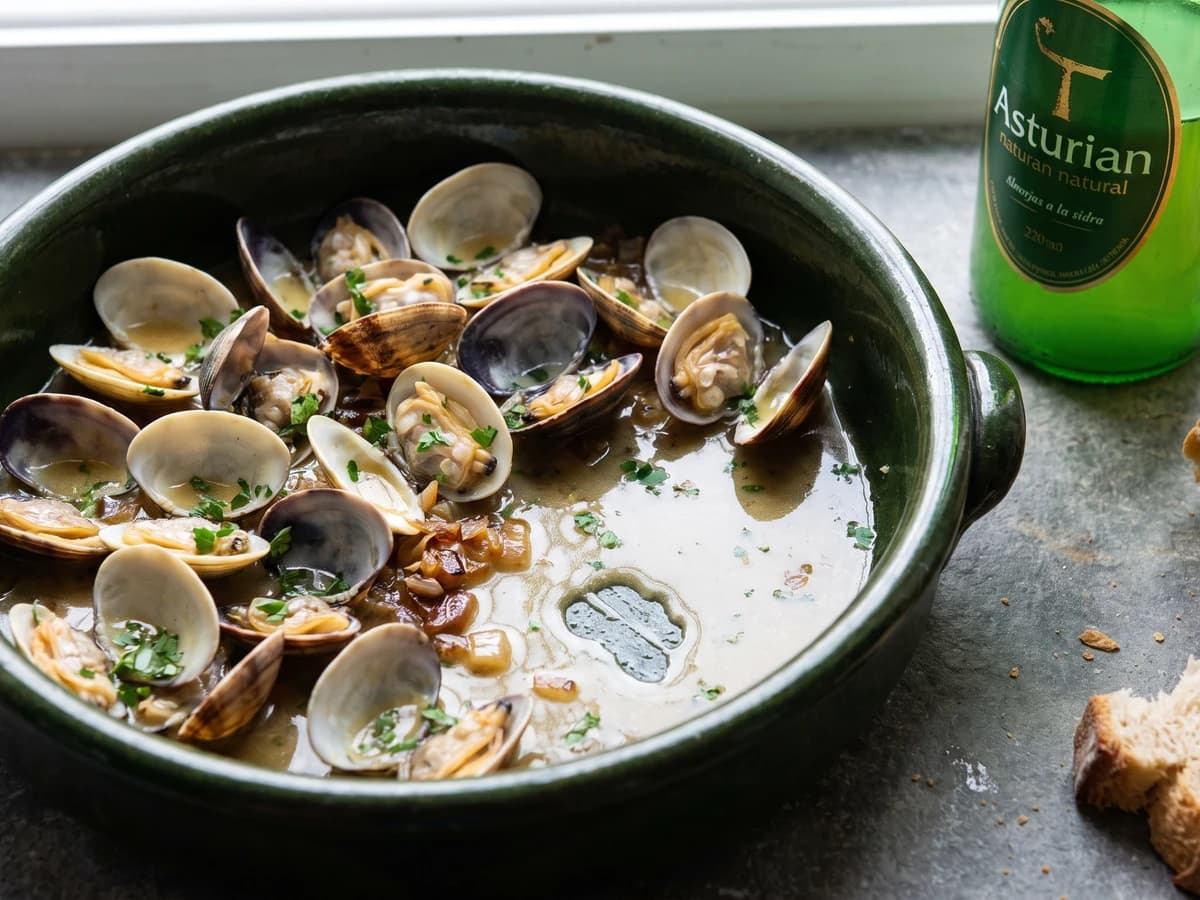
Asturias opens clams in tart natural cider over a slow onion and garlic sofrito, making a bright, briny sauce that asks for bread and rewards one rule: lift each clam as it opens.
Chef Isabel
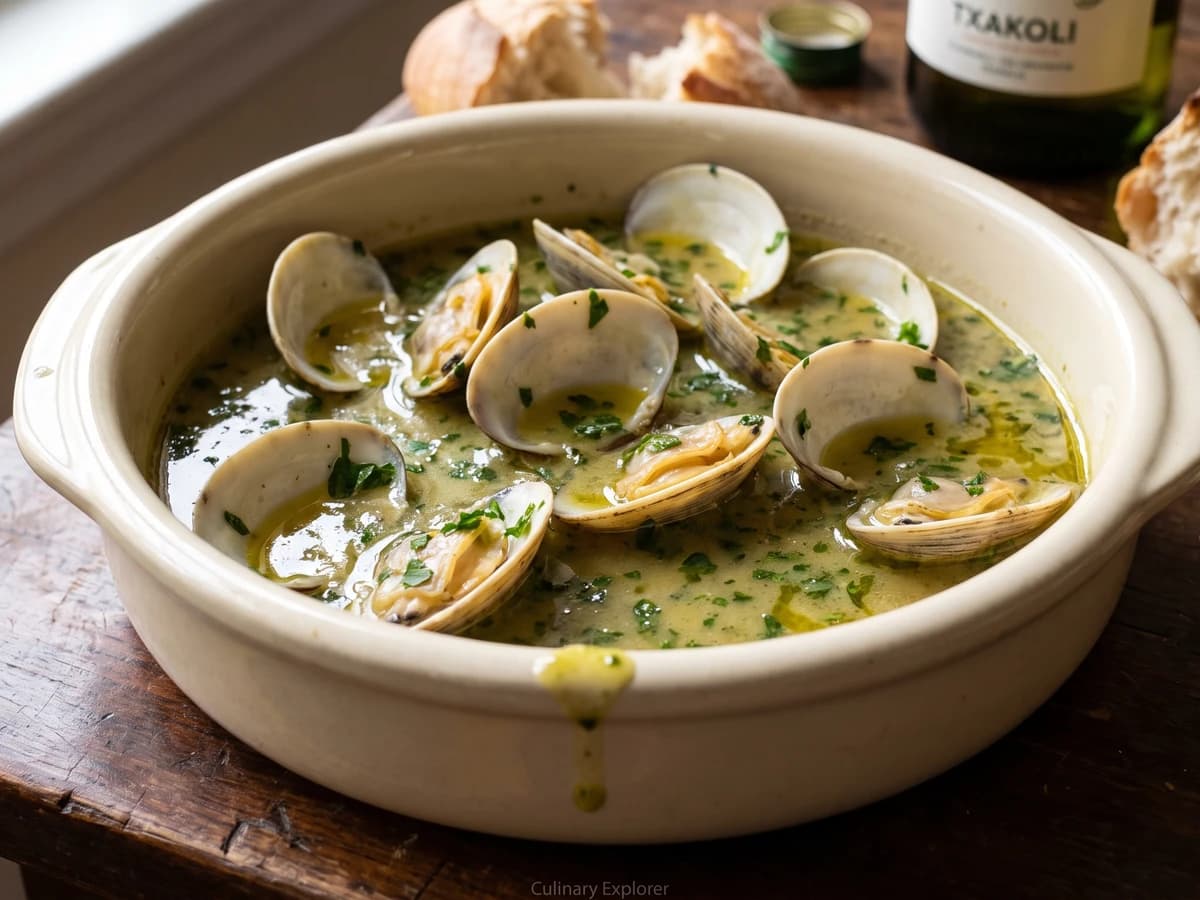
Almejas en salsa verde belong to the Basque coast: briny clams, garlic, parsley and txakoli in a pale green sauce that thickens when you shake the cazuela, never when you fuss with a spoon.