Chef Isabel
Abanico Ibérico a la Plancha
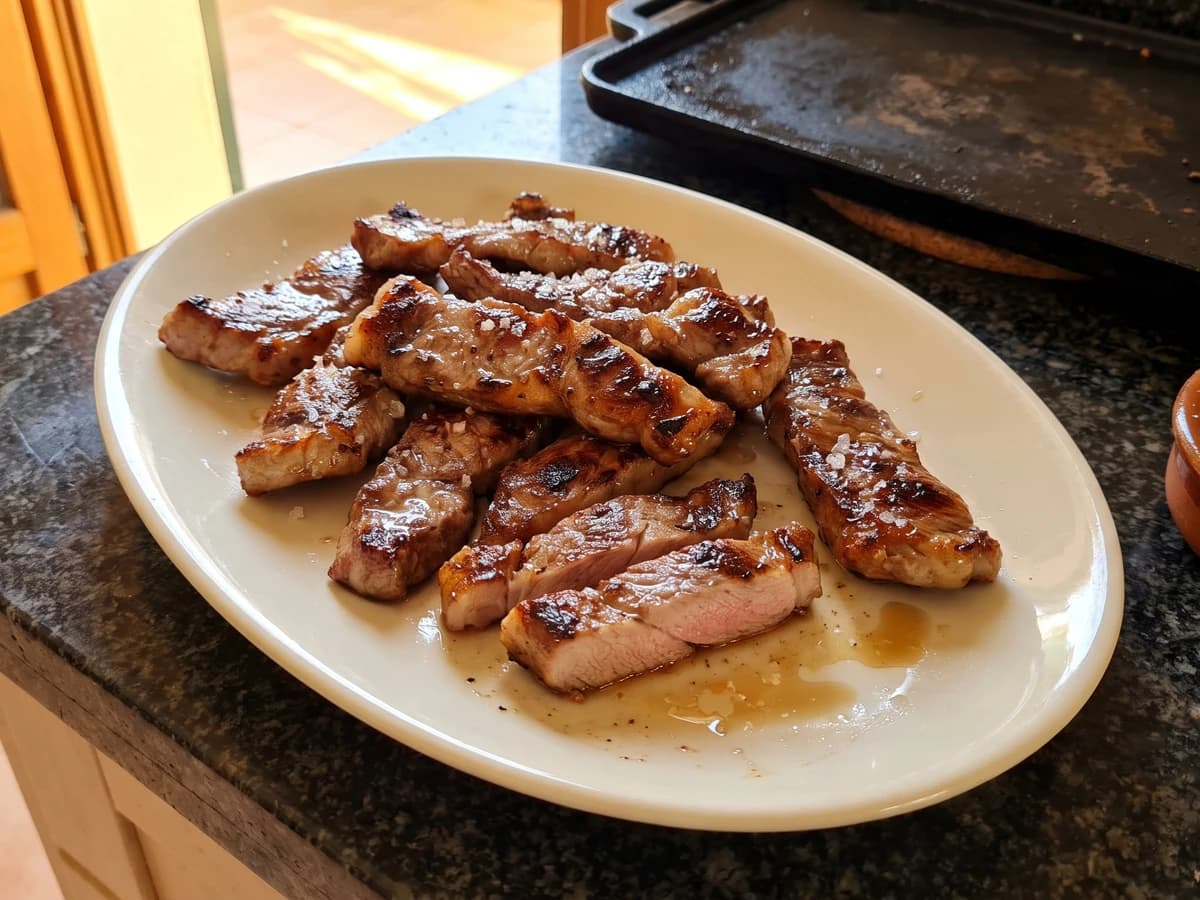
Extremadura's dehesa gives us this fan-shaped, marbled rib cut: salt it at the last moment, lay it on a fierce plancha, and count in seconds so the centre stays juicy.
A cooking platform built around craft, culture, and the stories behind what we eat.
Created by
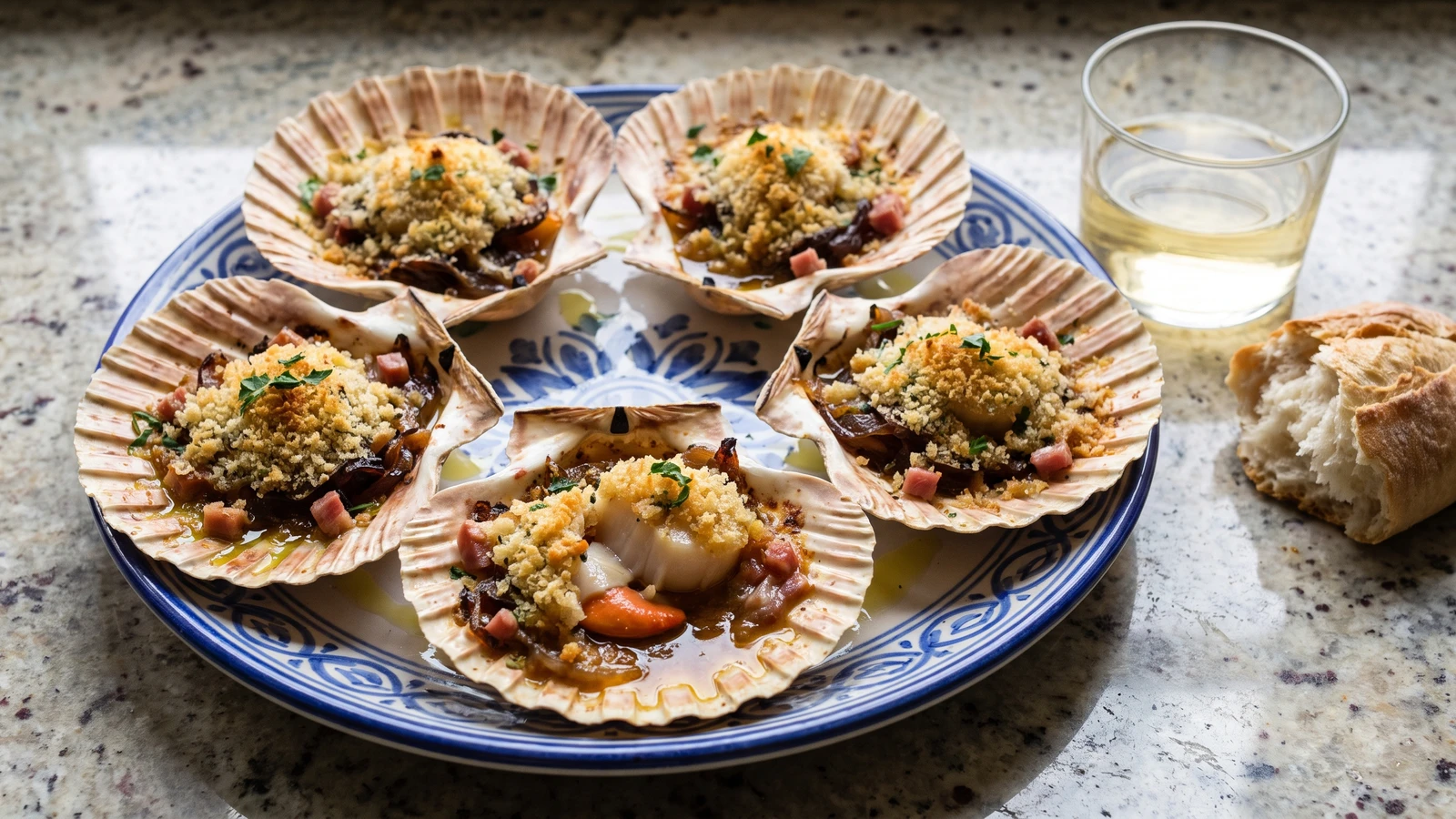
Vieiras al horno are Galicia's festive scallops: sweet shellfish baked in their cupped shells beneath dark-gold onion, jamón, Albariño, and a thin breadcrumb crust that protects the meat without smothering it.
Vieiras al horno belong to Galicia, especially the Rías Baixas, where the scallop is baked in its own deep shell beneath a slow onion-and-jamón sofrito, a little tomato, Albariño, and a thin coat of breadcrumbs. The orange coral stays beside the white muscle when the scallop brings one. This is Christmas and celebration food, rich enough without cream and properly browned without cheese.
The sofrito, the slow onion base, decides the dish. I cook the onion low until it turns dark gold, sweet, and almost jammy, then reduce the tomato and wine until a spoon drawn through the pan leaves a clean trail. Leave the sauce loose and it soaks the crumbs while the scallop overcooks underneath. Get it thick, spread it lightly, and the shellfish stays tender beneath a crisp golden lid.
Far from Galicia, use large dry-packed sea scallops and cleaned reusable scallop shells. Four shallow 120ml ramekins will also do, though you lose the shell liquor and the mineral taste of the coral, so the result is a little less of the sea. Godello is the nearest Spanish substitute for Albariño; a dry, unoaked white wine works at a pinch but brings less saline freshness. The Margin beside this one says only, "thin crumbs, hot oven." Siempre sale, si lo sigues.
The scallop beds of the Rías Baixas made the vieira one of Galicia's defining shellfish, reserved in many homes for Christmas and other tables where ordinary food was expected to become a feast. Its ridged shell became the emblem of the Camino de Santiago and the recognized sign of pilgrims arriving in Galicia. Baking the scallop in that shell with preserved jamón, local white wine, onion, and breadcrumbs joins the coastal catch to the inland larder without hiding either one.
Quantity
12, yielding about 450g cleaned meat and coral
scrubbed, shucked, and cleaned
Quantity
60ml
50ml for the sofrito and 10ml for the breadcrumbs
Quantity
500g
cut into a fine 4mm dice
Quantity
8g
finely minced
Quantity
2g
Quantity
100g
finely diced
Quantity
2g
Quantity
150g
Quantity
150ml
Quantity
48g
Quantity
8g
finely chopped
| Ingredient | Quantity |
|---|---|
| large whole scallops in their shellsscrubbed, shucked, and cleaned | 12, yielding about 450g cleaned meat and coral |
| extra virgin olive oil50ml for the sofrito and 10ml for the breadcrumbs | 60ml |
| yellow onionscut into a fine 4mm dice | 500g |
| garlicfinely minced | 8g |
| fine sea salt | 2g |
| jamón serranofinely diced | 100g |
| sweet pimentón | 2g |
| tomate triturado or canned crushed tomato | 150g |
| Albariño | 150ml |
| fine dry breadcrumbs | 48g |
| flat-leaf parsleyfinely chopped | 8g |
Heat the oven to 220°C conventional, 200°C fan, or 425°F, with a rack in the upper third. Crumple two sheets of foil over a rimmed baking tray to make twelve shallow nests. The shells must sit level or their good juices end up on the tray.
Keep the scallops cold while you work. Discard any with a broken shell or any live scallop that does not close when tapped. Hold each one with the flat shell uppermost, slide a scallop knife along its underside, and cut through the muscle attaching it to that shell. Lift off the flat shell, loosen the meat from the deep shell, and remove the frill, dark stomach, and feathery gills. Keep the round white muscle and sound orange coral. Rinse them very briefly under cold water, pat completely dry, scrub the deep shells, and return one muscle and its coral to each shell.
Put 50ml olive oil, the onions, and 2g salt into a wide frying pan. Cook over medium-low heat for 25 to 30 minutes, stirring every few minutes, until the onion is dark gold, collapsed, and almost jammy. Add the garlic for the final 2 minutes. Keep the heat patient. Pale wet onion gives a thin filling, while this slow cook brings the sweetness the scallop needs.
Add the diced jamón and cook for 2 minutes. Take the pan off the heat, stir in the sweet pimentón for 10 seconds, then add the crushed tomato before the spice can scorch. Return the pan to medium-low heat and cook for 8 to 10 minutes, until the tomato is dark and thick. Pour in the Albariño and simmer for 6 to 8 minutes. The sofrito is ready when a spoon drawn through it leaves a trail that stays open. Let it cool for 5 minutes.
Set the filled shells level in their foil nests. Divide the sofrito among them, about 35g per shell, spreading it over the muscle and coral without packing it down. Mix the breadcrumbs with the parsley and remaining 10ml olive oil. Sprinkle exactly 4g over each shell in a thin, even coat. More bread is not generosity here; it insulates the scallop and turns supper into stuffing.
Bake for 8 to 10 minutes, checking at 8. The crumbs should be golden, the sauce should glisten at the edges, and the scallop should be milky and just firm, reaching 63°C or 145°F at its thickest point. If the scallop is ready but the crumbs are pale, place the tray under a fully heated grill for 20 to 30 seconds and watch without looking away.
Rest the shells on the tray for 2 minutes, then transfer three to each plate with a folded napkin or shell holder beneath them so they stay level. Serve at once, with plain bread for the onion-rich juices. The shell remains very hot after the scallop is ready, so warn the table before someone learns it with a fingertip.
1 serving (about 260g)
Culinary guides, cultural storytelling, and the editorial depth that makes cooking meaningful.
Discover Culinary ExplorerChef Isabel
Extremadura's dehesa gives us this fan-shaped, marbled rib cut: salt it at the last moment, lay it on a fierce plancha, and count in seconds so the centre stays juicy.

Chef Isabel
Aletría Murciana is Murcia's humble noodle guiso: fine fideos, pork ribs, potato, saffron, and a dark sweet sofrito. Get that base right and the pot knows where it's going.
Chef Isabel
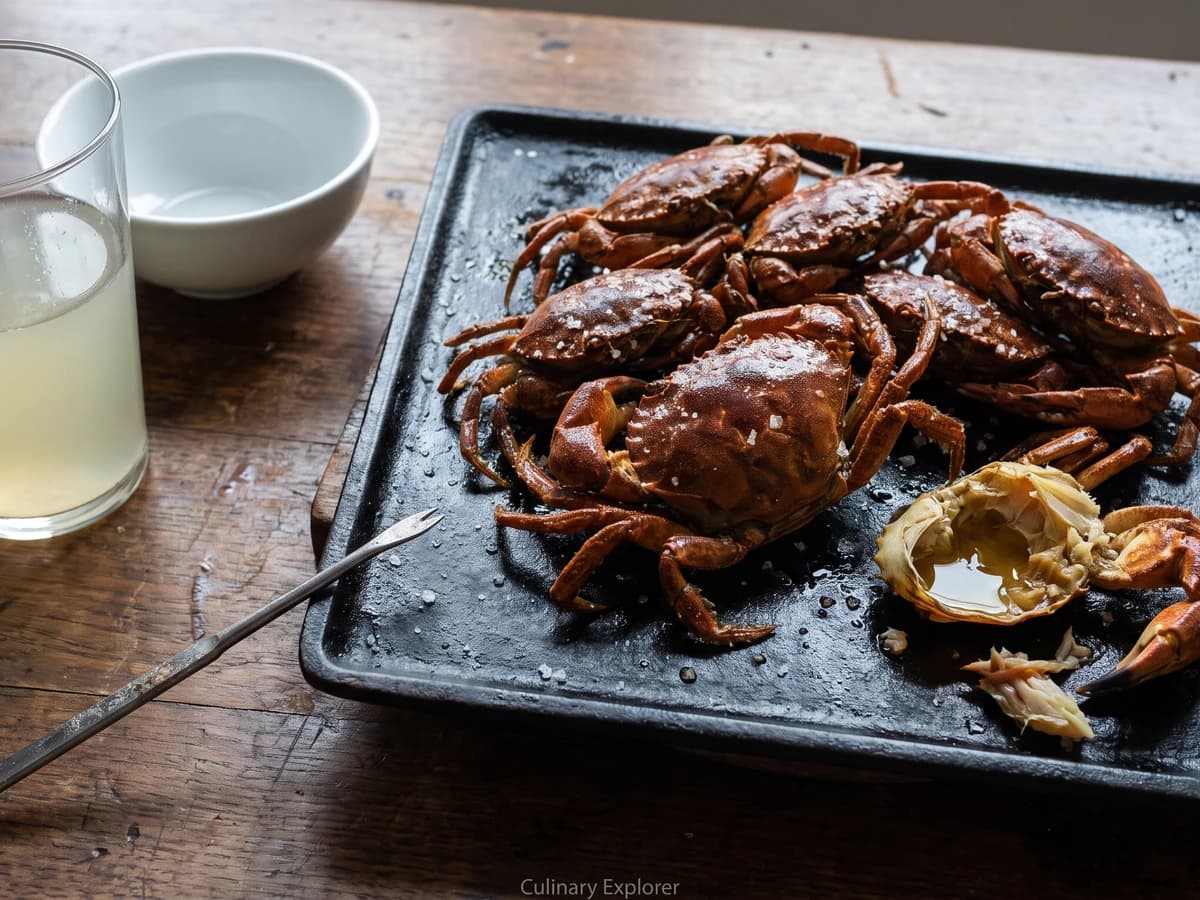
Asturias puts its small velvet crabs straight on a fierce plancha with salt and oil, keeping the shell liquor sweet and briny. Dry them well, cook them fast, and bring plenty of napkins.

Chef Isabel
Andrajos are Andalucía's dough-rag stew from Jaén and Granada: a slow rabbit guiso thickened with torn sheets of flour dough, rolled thin so they cook tender instead of gummy.