Chef Isabel
Abanico Ibérico a la Plancha
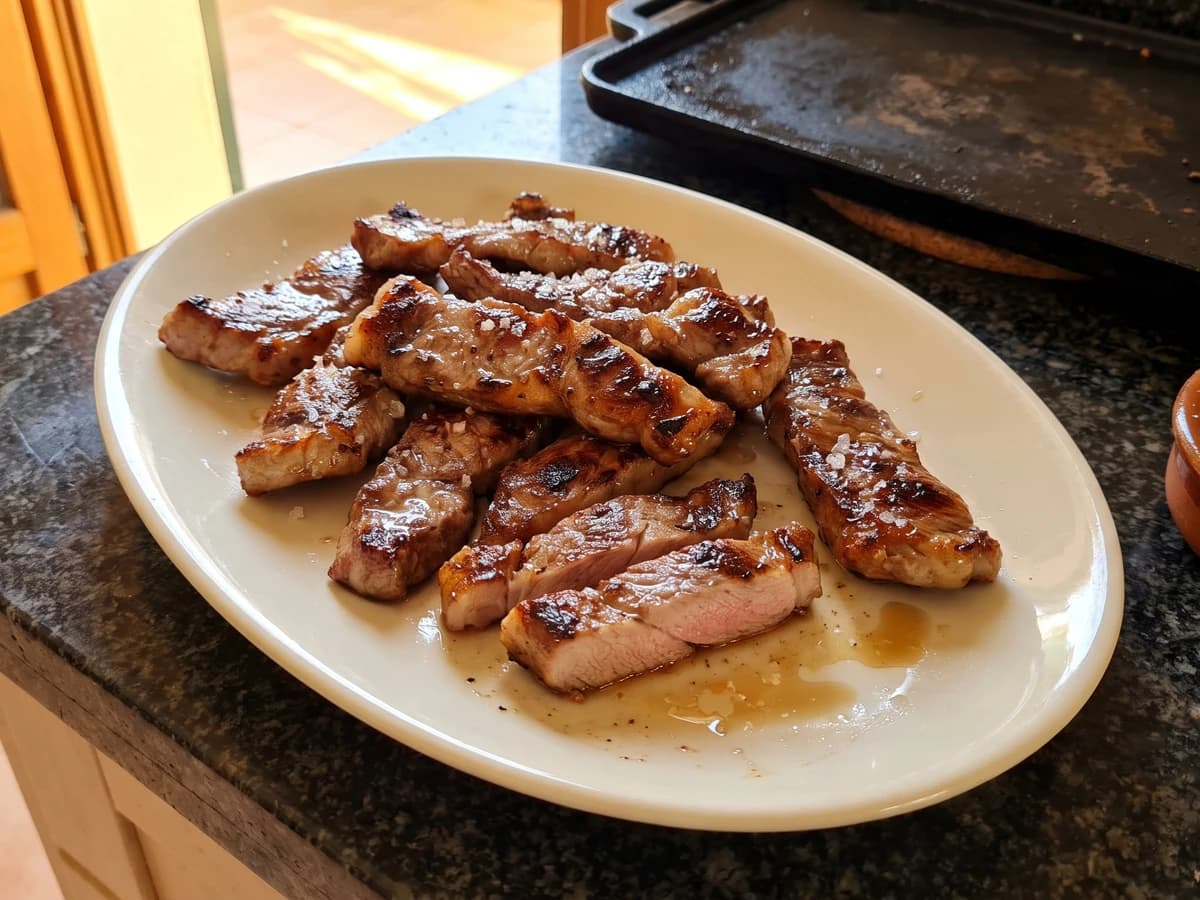
Extremadura's dehesa gives us this fan-shaped, marbled rib cut: salt it at the last moment, lay it on a fierce plancha, and count in seconds so the centre stays juicy.
A cooking platform built around craft, culture, and the stories behind what we eat.
Created by
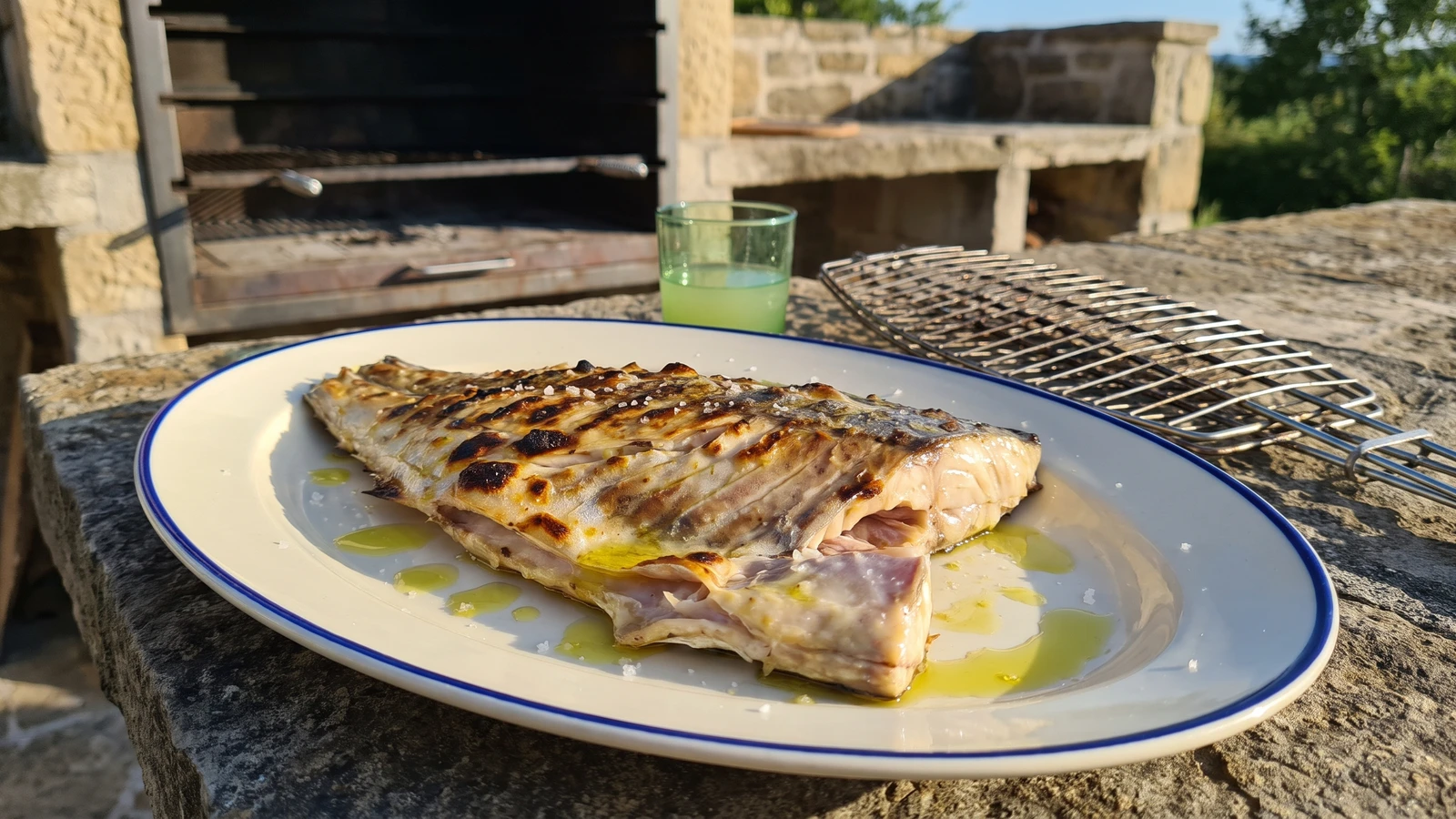
The Basque coast's prized belly cut, grilled over fierce coals only until its pearly layers set, then rested and dressed with olive oil so its own fine fat remains the sauce.
Ventresca de bonito a la parrilla belongs to the grill cooking of the Basque coast, where summer brings bonito del norte, albacore tuna, into the Cantabrian ports. Ventresca is its fan-shaped belly, richer and more delicate than the loin because fine seams of fat run between the layers. Good charcoal, salt, and olive oil are enough. A sweet glaze or a heavy sauce would only hide the fish you paid to taste.
The one thing that decides it is when you take it off the parrilla, the grill. Ventresca keeps cooking after it leaves the coals, so I remove it while the thickest part is only just set and still pearly inside. Give it three minutes to rest and its own fat settles through the flesh. Leave it on the grate until it looks thoroughly cooked and it turns chalky. There is no clever rescue for that.
Far from the Cantabrian coast, ask for skin-on albacore tuna belly, fresh or properly frozen. Yellowfin belly is the honest substitute when albacore isn't available, though it is darker, stronger, and a little less delicate. A lean tuna loin is not the same cut and won't stay as succulent. The Margin beside this dish says only, "sácalo antes," take it off sooner. Follow that and it comes out.
Along the Cantabrian coast, the costera del bonito is the summer fishery that follows migrating albacore into the Bay of Biscay, traditionally taking the fish one by one with hook and line to avoid bruising the flesh. Basque parrilla cooking gives prized fish and individual cuts direct heat with very little seasoning, letting the quality of the catch carry the meal. Ventresca, the fatty fan of belly meat, has long been separated from the lean loins by fishmongers and preserving houses because its tenderness and richness make it the most prized part.
Quantity
800g
skin on, rib bones and pin bones removed
Quantity
25ml
divided
Quantity
8g
divided
| Ingredient | Quantity |
|---|---|
| ventresca de bonito del norte (albacore tuna belly)skin on, rib bones and pin bones removed | 800g |
| extra virgin olive oildivided | 25ml |
| sea saltdivided | 8g |
Light the charcoal and let it burn until the coals glow red beneath a thin grey coating. Arrange a hot zone and a cooler zone, then set the clean grate 8 to 10cm above the coals. The heat should be fierce enough to brown the fish quickly, but there must be no flames licking the grate. Ventresca carries plenty of fat, and dripping fat can flare.
Pat the ventresca completely dry, especially around the thin folds of the belly. Check once more for bones with your fingertips. Brush both sides with 10ml of the olive oil and season evenly with 6g of the salt. Pésalo, no lo adivines. Leave it for five minutes while the grate finishes heating.
Place the ventresca skin-side down, with its thickest part over the hot zone and the tapering edge toward the cooler side. Grill uncovered for four to five minutes. Don't press it. The skin should brown and blister in places while the edges of the flesh change from translucent to pearly ivory.
Turn the belly once, in one committed movement, and grill the flesh side for two to three minutes. Move it immediately to the cooler zone if dripping fat causes flames. Take it off when the thickest part reaches 50 to 52°C and the flesh separates into moist, glossy layers under light pressure. It will rise several degrees while resting. This is the step that decides the dish: wait until it looks fully done over the coals and it will be dry at the table.
Set the ventresca skin-side down on a platter and rest it for three minutes. Ease it into portions along its natural fan-shaped seams rather than cutting across them. Spoon over the remaining 15ml olive oil and finish with the remaining 2g salt. Serve at once, while the surface is browned and the centre remains juicy. Siempre sale, si lo sigues.
1 serving (about 155g)
Culinary guides, cultural storytelling, and the editorial depth that makes cooking meaningful.
Discover Culinary ExplorerChef Isabel
Extremadura's dehesa gives us this fan-shaped, marbled rib cut: salt it at the last moment, lay it on a fierce plancha, and count in seconds so the centre stays juicy.
Chef Isabel
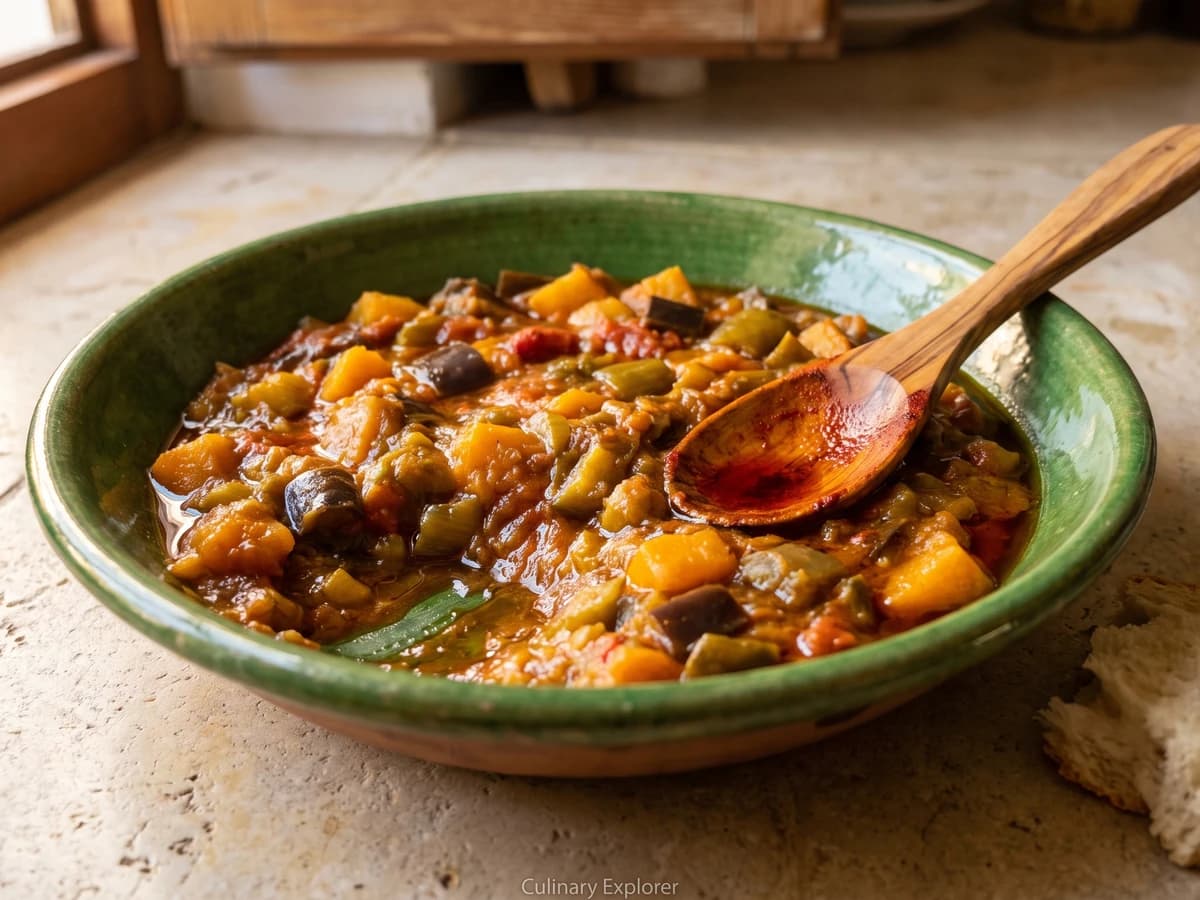
Alboronía is Andalucía's old pumpkin and aubergine stew, deepened with tomato, pimentón, and cumin, then cooked without hurry until the vegetables settle into a glossy, sweet, spoon-soft whole.

Chef Isabel
Aletría Murciana is Murcia's humble noodle guiso: fine fideos, pork ribs, potato, saffron, and a dark sweet sofrito. Get that base right and the pot knows where it's going.
Chef Isabel
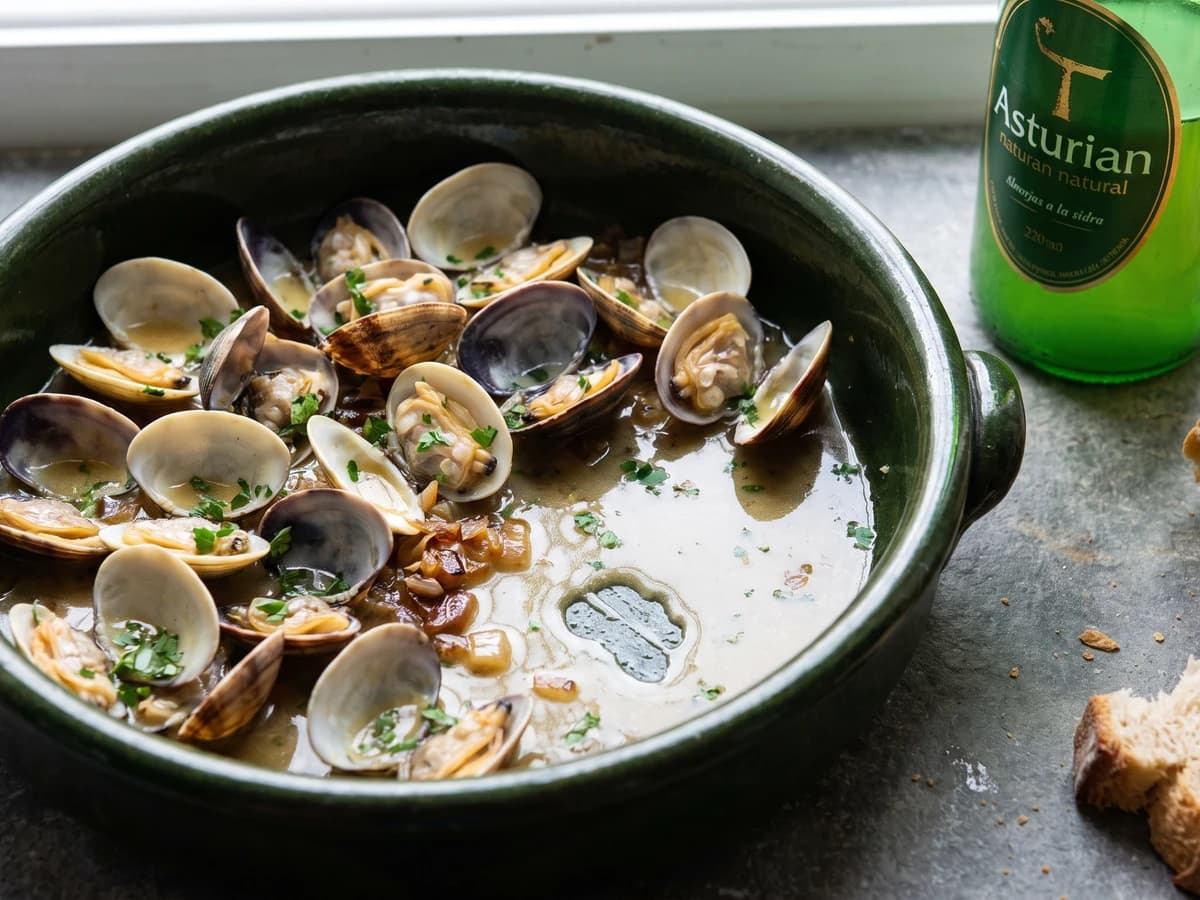
Asturias opens clams in tart natural cider over a slow onion and garlic sofrito, making a bright, briny sauce that asks for bread and rewards one rule: lift each clam as it opens.