Chef Isabel
Abanico Ibérico a la Plancha
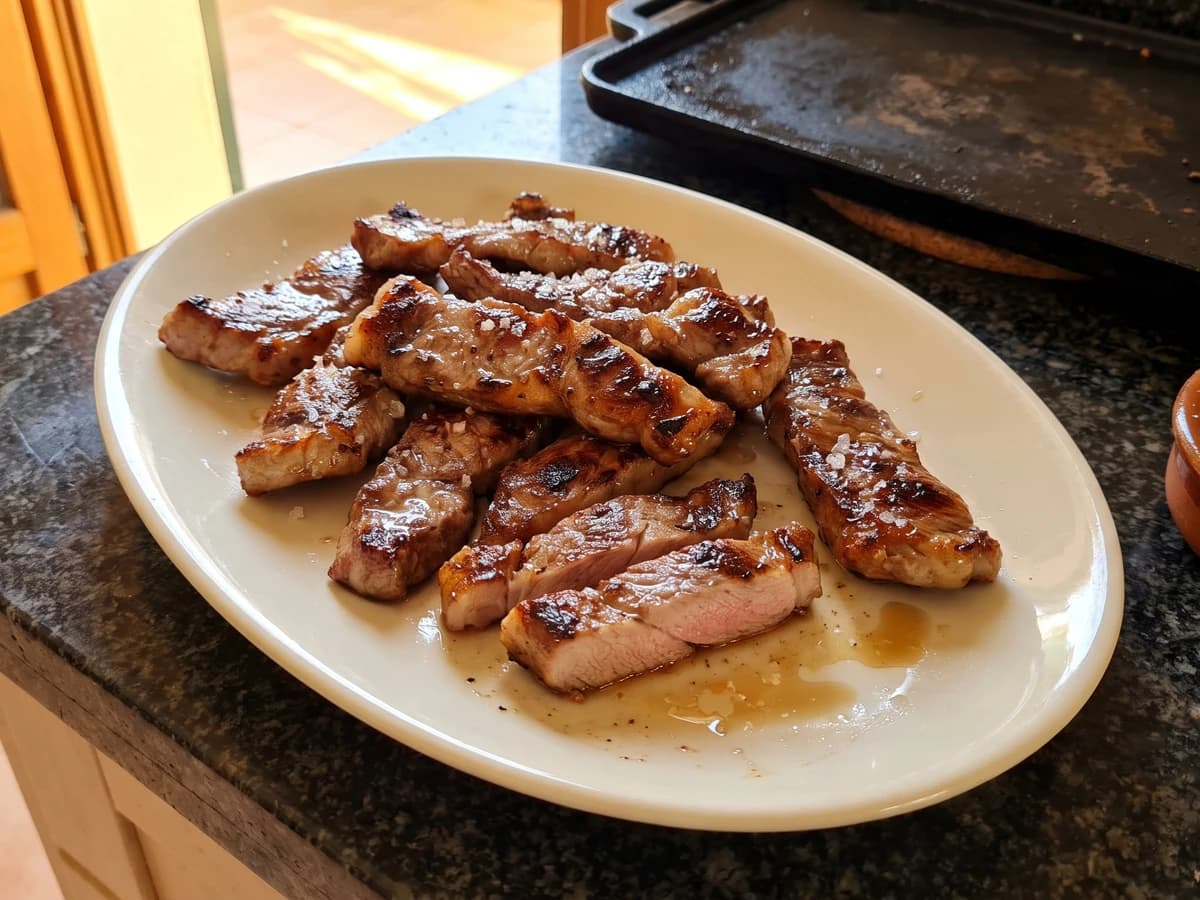
Extremadura's dehesa gives us this fan-shaped, marbled rib cut: salt it at the last moment, lay it on a fierce plancha, and count in seconds so the centre stays juicy.
A cooking platform built around craft, culture, and the stories behind what we eat.
Created by
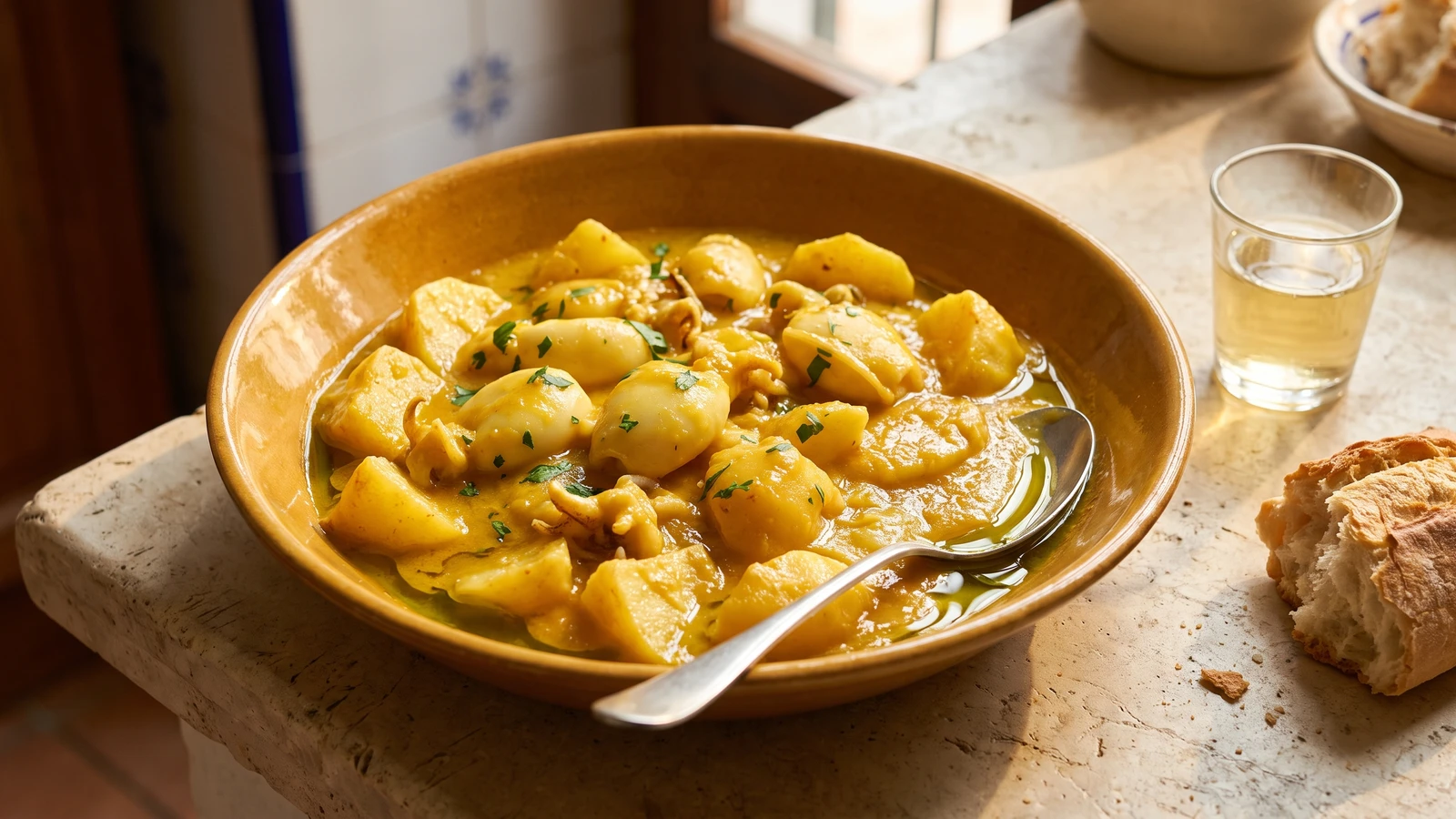
Cádiz cooks cuttlefish with potatoes in a saffron-yellow sauce, its body coming from a majado of fried bread, garlic, and almonds. Pound it smooth and let the pot simmer gently until the sepia yields.
Sepia en amarillo is an Andalusian coastal stew, especially at home in Cádiz and Huelva, where cuttlefish is choco and the sauce is yellow from saffron. Potatoes make it a full pot. There is no tomato and no ink here; the golden sauce and its nutty, garlicky body are what separate it from the neighbouring cuttlefish stews.
The part I won't let you rush is the majado, the pounded mixture of fried bread, garlic, almonds, parsley, and saffron. Pound it until no almond grit remains, then loosen it with warm stock before it goes into the pot. That is why the sauce clings to the sepia instead of sitting underneath it as thin broth. Add the majado near the end and keep the simmer gentle, because a bread-thickened sauce catches if you bully it.
Fresh cuttlefish is lovely, but properly thawed frozen cuttlefish works very well and is often easier to find far from Andalucía. If there is no cuttlefish, use thick pieces of large squid rather than small rings. Squid shrinks more and gives a lighter, less sweet sauce, so begin testing it for tenderness ten minutes earlier. No hace falta haber pisado España, you don't need to have set foot in Spain.
Let the cuttlefish become tender before judging it; halfway through, it will still feel stubborn. My Margin says only, "fuego bajo y majado fino," low heat and a smooth majado. Follow those two things and the pot behaves itself. Siempre sale, si lo sigues.
Along the Gulf of Cádiz, cuttlefish has long been sold and cooked as choco, and people from Huelva are known as choqueros, a nickname tied to the local catch. En amarillo belongs to an Andalusian family of yellow stews coloured with saffron and given body by a majado rather than flour. Fried bread and almonds allowed coastal households to turn the cooking liquid from an everyday catch into a substantial sauce fit for potatoes and bread.
Quantity
1kg
fresh or fully thawed, patted dry and cut into 3cm pieces
Quantity
700g
peeled and cracked into 4cm pieces
Quantity
180g
finely chopped
Quantity
4 cloves
peeled and left whole
Quantity
40g
crust included, cut into 2 thick pieces
Quantity
35g
Quantity
10g
chopped, with 2g reserved for serving
Quantity
0.15g
about 1/2 teaspoon loosely packed
Quantity
75ml
Quantity
125ml
Quantity
600ml
warmed
Quantity
1
Quantity
8g
divided
| Ingredient | Quantity |
|---|---|
| cleaned cuttlefishfresh or fully thawed, patted dry and cut into 3cm pieces | 1kg |
| waxy potatoespeeled and cracked into 4cm pieces | 700g |
| onionfinely chopped | 180g |
| garlicpeeled and left whole | 4 cloves |
| day-old country breadcrust included, cut into 2 thick pieces | 40g |
| raw blanched almonds | 35g |
| flat-leaf parsleychopped, with 2g reserved for serving | 10g |
| saffron threadsabout 1/2 teaspoon loosely packed | 0.15g |
| extra virgin olive oil | 75ml |
| manzanilla, fino, or dry white wine | 125ml |
| light unsalted fish stockwarmed | 600ml |
| bay leaf | 1 |
| fine sea saltdivided | 8g |
Check that the hard beak, transparent quill, innards, and ink sac have been removed. Pat the cuttlefish very dry and cut the body and tentacles into sturdy 3cm pieces. Thin scraps tighten before the larger pieces become tender, so keep the cut even. Warm the fish stock in a separate saucepan and hold it below a simmer.
Heat the olive oil in a wide casserole over medium heat. Fry the bread for 60 to 90 seconds on each side, until crisp and deep gold, then lift it into a mortar. Fry the almonds for about 2 minutes, stirring until pale gold, and add them to the mortar. Fry the whole garlic cloves for another 1 to 2 minutes, just until golden without any dark edges, and lift them out. Pound the saffron with 2g of the salt, then work in the garlic, almonds, fried bread, and 8g of the parsley. Pound until you have a smooth, thick paste with no coarse almond pieces. Stir in 100ml of the warm stock and leave it to soften for 5 minutes.
Return the casserole and its remaining oil to medium-low heat. Add the onion with 2g of the salt and cook for 12 to 15 minutes, stirring regularly, until soft, reduced, and deep gold. Don't hurry it. This slow sofrito, the cooked onion base, supplies the sweetness that balances the saffron and the sea.
Raise the heat to medium-high and add the cuttlefish. Cook for 6 to 8 minutes, turning it through the onion, until it releases its liquid and most of that liquid cooks away. Pour in the wine and bubble for 2 minutes, scraping the bottom clean. Add the bay leaf, 400ml of the warm stock, and 3g of the salt. Bring it just to a simmer, cover loosely, lower the heat, and cook for 18 minutes. The liquid should tremble gently, not boil hard.
Peel the potatoes and crack them into 4cm pieces by cutting partway in and snapping each piece away from the knife. The rough broken edges release enough starch to help the sauce. Add them to the casserole with the remaining 100ml stock. The liquid should come about three-quarters of the way up the contents. Cover loosely and simmer for 12 minutes, shaking the casserole once or twice rather than stirring hard.
Stir the loosened majado into the casserole, working gently so the potatoes stay whole. Simmer uncovered over low heat for 8 to 12 minutes, shaking the pot often, until a knife enters the potatoes easily, the thickest cuttlefish piece yields without springing back, and the golden sauce coats a spoon. Add the final 1g salt only if needed. Remove the bay leaf, rest the stew for 10 minutes, and finish with the reserved parsley.
1 serving (about 550g)
Culinary guides, cultural storytelling, and the editorial depth that makes cooking meaningful.
Discover Culinary ExplorerChef Isabel
Extremadura's dehesa gives us this fan-shaped, marbled rib cut: salt it at the last moment, lay it on a fierce plancha, and count in seconds so the centre stays juicy.
Chef Isabel
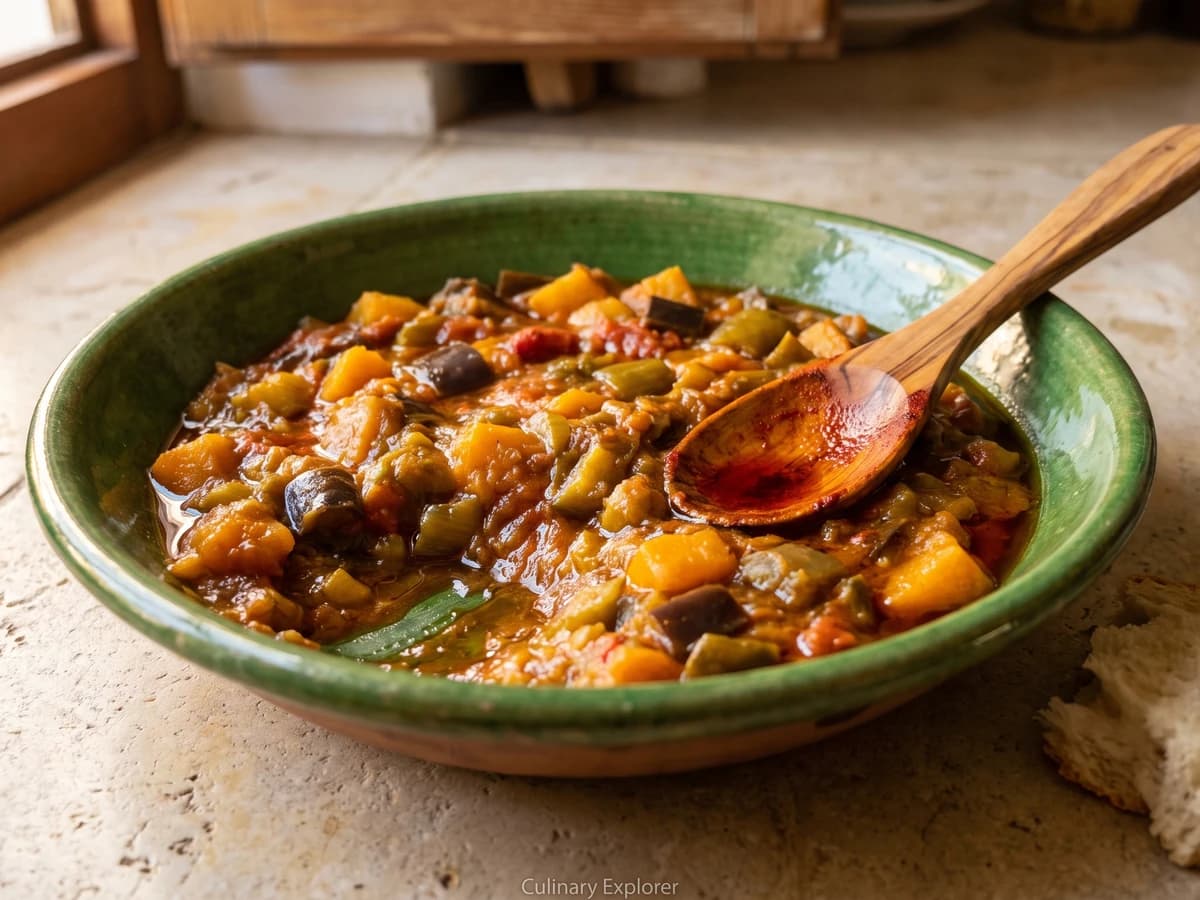
Alboronía is Andalucía's old pumpkin and aubergine stew, deepened with tomato, pimentón, and cumin, then cooked without hurry until the vegetables settle into a glossy, sweet, spoon-soft whole.

Chef Isabel
Aletría Murciana is Murcia's humble noodle guiso: fine fideos, pork ribs, potato, saffron, and a dark sweet sofrito. Get that base right and the pot knows where it's going.
Chef Isabel
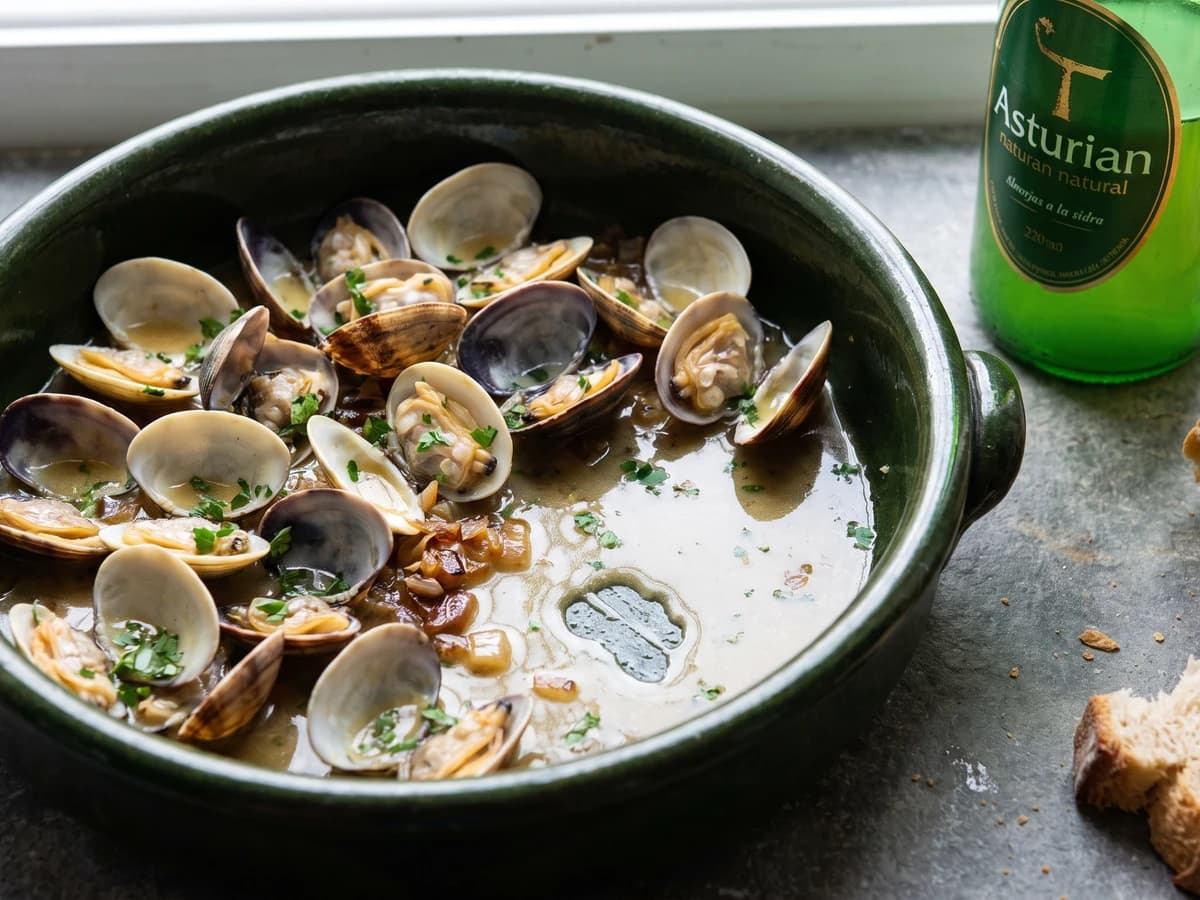
Asturias opens clams in tart natural cider over a slow onion and garlic sofrito, making a bright, briny sauce that asks for bread and rewards one rule: lift each clam as it opens.