Chef Isabel
Abanico Ibérico a la Plancha
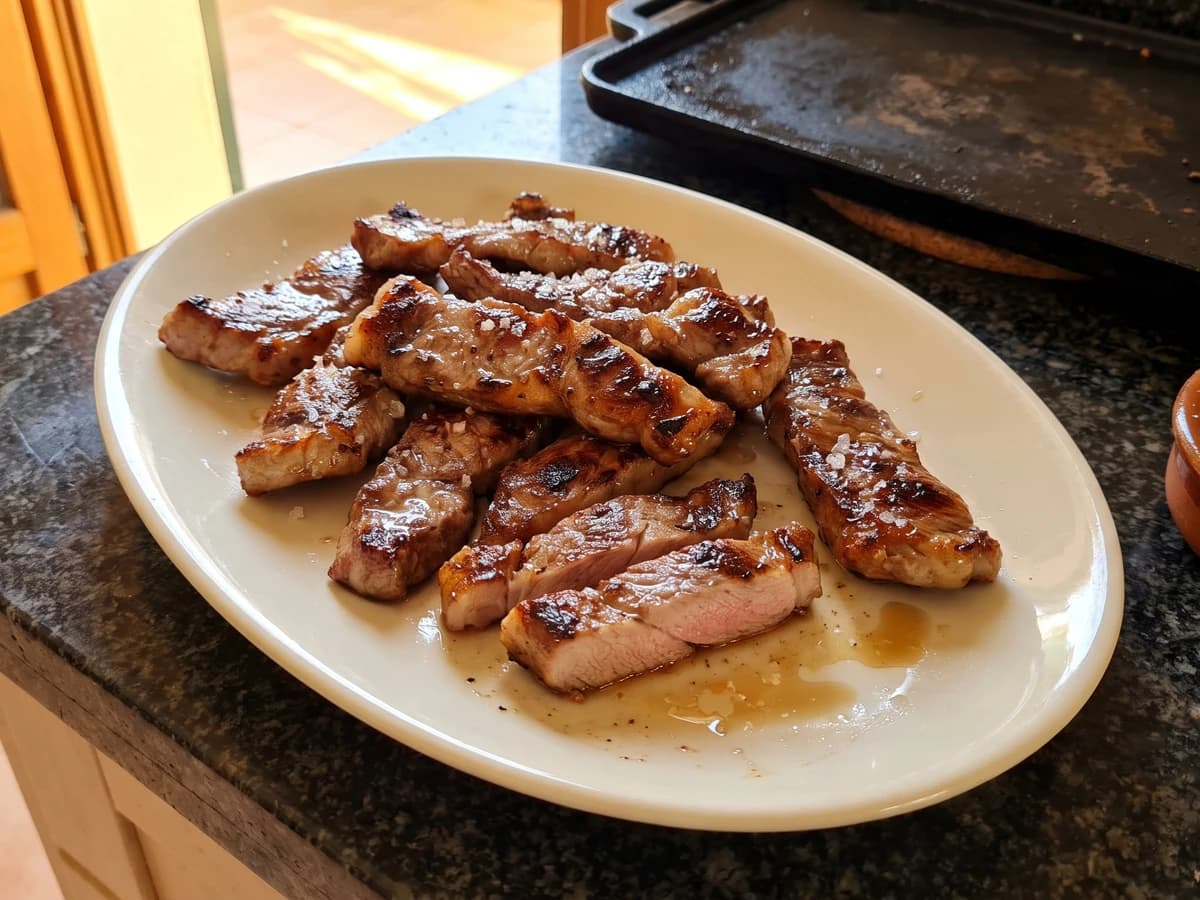
Extremadura's dehesa gives us this fan-shaped, marbled rib cut: salt it at the last moment, lay it on a fierce plancha, and count in seconds so the centre stays juicy.
A cooking platform built around craft, culture, and the stories behind what we eat.
Created by
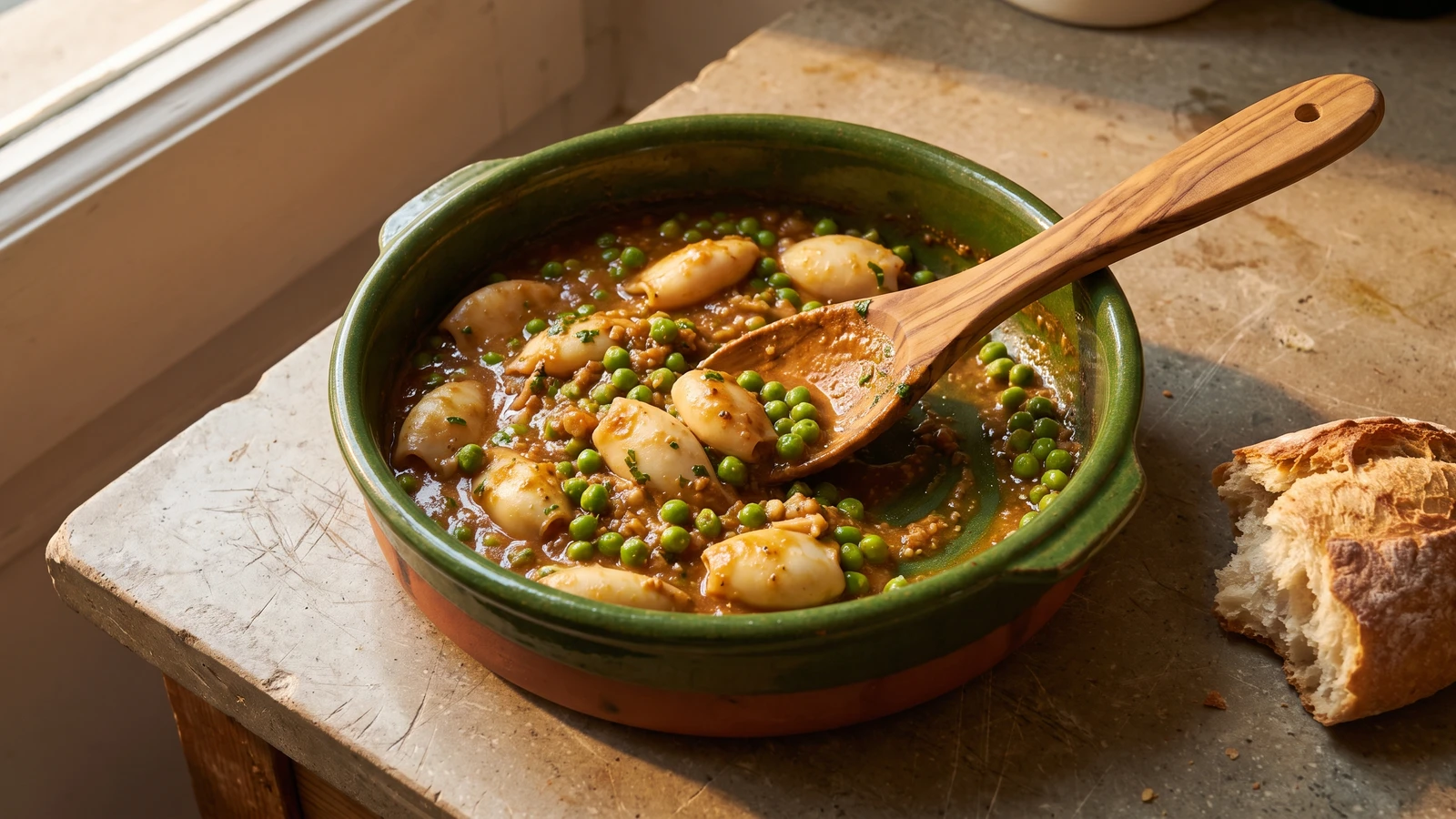
On the Catalan coast, cuttlefish and sweet peas meet a dark sofregit and an almond picada; a quiet, steady braise turns the sepia tender and leaves enough glossy sauce for bread.
Sepia con guisantes, sèpia amb pèsols in Catalan, belongs to coastal Catalonia, where cuttlefish from the fishing ports meets the sweet peas of the spring market. What marks it as Catalan is the foundation beneath them: a dark, patient sofregit, the slow onion-and-tomato base, followed by a picada of almonds, garlic, parsley, and fried bread that binds the cooking juices into sauce.
The cuttlefish decides whether the dish succeeds. Once browned, it needs a low, steady braise until the flesh yields easily to a knife. Halfway there it can seem firmer than when it entered the pot. Don't turn up the heat and don't pull it out in defeat; steady cooking is what takes it through that stubborn stage and makes it tender. I wait until it is ready before adding the peas, because peas forgive waiting badly.
Fresh peas are worth using when they are young and sweet. At other times, frozen peas are the honest choice and usually the better one. Frozen cleaned cuttlefish also works very well. If cuttlefish cannot be found, use thick pieces of cleaned squid and begin checking them after 25 minutes; the flavor will be lighter and the bite less firm, but the method remains sound. No hace falta haber pisado España.
The line in my Margin for this one is short: finish cooking the cuttlefish, then trust the peas. Keep that order, reduce the sauce until it clings, and serve it with bread. Siempre sale, si lo sigues.
Sèpia amb pèsols belongs especially to the Catalan coast north of Barcelona, where the fishing ports and the market gardens of the Maresme put cuttlefish and spring peas within reach of the same kitchen. The region's prized pèsol garrofal, a notably sweet pea associated with towns such as Sant Andreu de Llavaneres, is traditionally cooked briefly so it keeps its fresh character. The finishing picada reflects an old Catalan habit of thickening and seasoning a braise with ingredients crushed in a mortar rather than with flour.
Quantity
1kg
body cut into 3cm pieces and tentacles separated
Quantity
500g
leave frozen peas unthawed
Quantity
300g
finely chopped
Quantity
250g
crushed by hand
Quantity
300g
grated, skin discarded
Quantity
3 cloves
1 finely chopped, 2 reserved for the picada
Quantity
60ml
Quantity
100ml
Quantity
350ml, plus up to 100ml more if needed
Quantity
1
Quantity
30g
Quantity
20g
Quantity
10g
Quantity
9g
divided; use less if the stock is salted
| Ingredient | Quantity |
|---|---|
| cleaned cuttlefishbody cut into 3cm pieces and tentacles separated | 1kg |
| shelled fresh peas or frozen peasleave frozen peas unthawed | 500g |
| yellow onionfinely chopped | 300g |
| canned whole peeled tomatoescrushed by hand | 250g |
| ripe tomatoes (optional)grated, skin discarded | 300g |
| garlic1 finely chopped, 2 reserved for the picada | 3 cloves |
| extra virgin olive oil | 60ml |
| dry white wine | 100ml |
| unsalted light fish stock or water | 350ml, plus up to 100ml more if needed |
| bay leaf | 1 |
| raw blanched almonds | 30g |
| day-old rustic bread | 20g |
| flat-leaf parsley leaves | 10g |
| fine sea saltdivided; use less if the stock is salted | 9g |
Pat the cuttlefish very dry with kitchen paper. Check that no hard beak or pieces of cuttlebone remain, then cut the body into even 3cm pieces and leave small tentacles whole. Even pieces matter because they must become tender at the same time.
Heat the olive oil in a wide, heavy casserole over medium heat. Fry the bread for 60 to 90 seconds per side until crisp and deep gold, then lift it out. Add the almonds and cook for about 2 minutes, stirring, until lightly toasted. Remove them before they darken.
Raise the heat to medium-high. Add the cuttlefish in two batches so the casserole is not crowded. Cook each batch for 6 to 8 minutes, stirring only now and then. It will release liquid first; let most of that liquid evaporate and wait for a few edges to turn faintly golden. Transfer each batch to a bowl, keeping every drop of juice.
Lower the heat to medium-low and add the onion with 4g of the salt. Cook for 25 to 30 minutes, stirring often and scraping up the browned juices, until the onion is dark gold, soft, and nearly jammy. Add the chopped garlic clove and cook for 1 minute. Stir in the tomato and cook for another 15 to 20 minutes, until it is brick-red, dense, and leaves a clean trail when the spoon crosses the casserole. This slow sofregit is where the sauce gets its sweetness; rush it and the whole pot tastes thin.
Pour in the wine, raise the heat, and bubble for 2 to 3 minutes while scraping the bottom. Return the cuttlefish and its juices, then add the bay leaf and 350ml of stock or water. Bring it just to a simmer, lower the heat, and cover with the lid slightly ajar. Cook gently for 30 minutes before testing a thick piece with a small knife. Continue for up to 15 minutes more if it still resists. Add a little of the extra liquid only if the casserole threatens to dry out.
While the cuttlefish braises, put the fried bread, toasted almonds, the remaining 2 garlic cloves, parsley, and 1g of salt in a mortar. Pound to a coarse, damp paste. When the cuttlefish is nearly tender, loosen the paste with about 60ml of hot liquid from the casserole. A small processor works, but stop before it becomes almond butter.
When the cuttlefish is tender, stir in fresh peas and simmer uncovered for 10 to 12 minutes. Frozen peas need only 6 to 8 minutes. Stir in the loosened picada for the final 5 minutes, moving it through the sauce gently so the peas stay whole. The finished sauce should be glossy and thick enough to coat the back of a spoon, not dry and not soupy.
Remove the bay leaf. Taste the sauce and add the remaining salt gradually, stopping sooner if the stock was seasoned. Rest the casserole off the heat for 5 minutes so the picada settles into the cooking juices. Take it to the table in the casserole and serve with plain crusty bread for the sauce.
1 serving (about 500g)
Culinary guides, cultural storytelling, and the editorial depth that makes cooking meaningful.
Discover Culinary ExplorerChef Isabel
Extremadura's dehesa gives us this fan-shaped, marbled rib cut: salt it at the last moment, lay it on a fierce plancha, and count in seconds so the centre stays juicy.
Chef Isabel
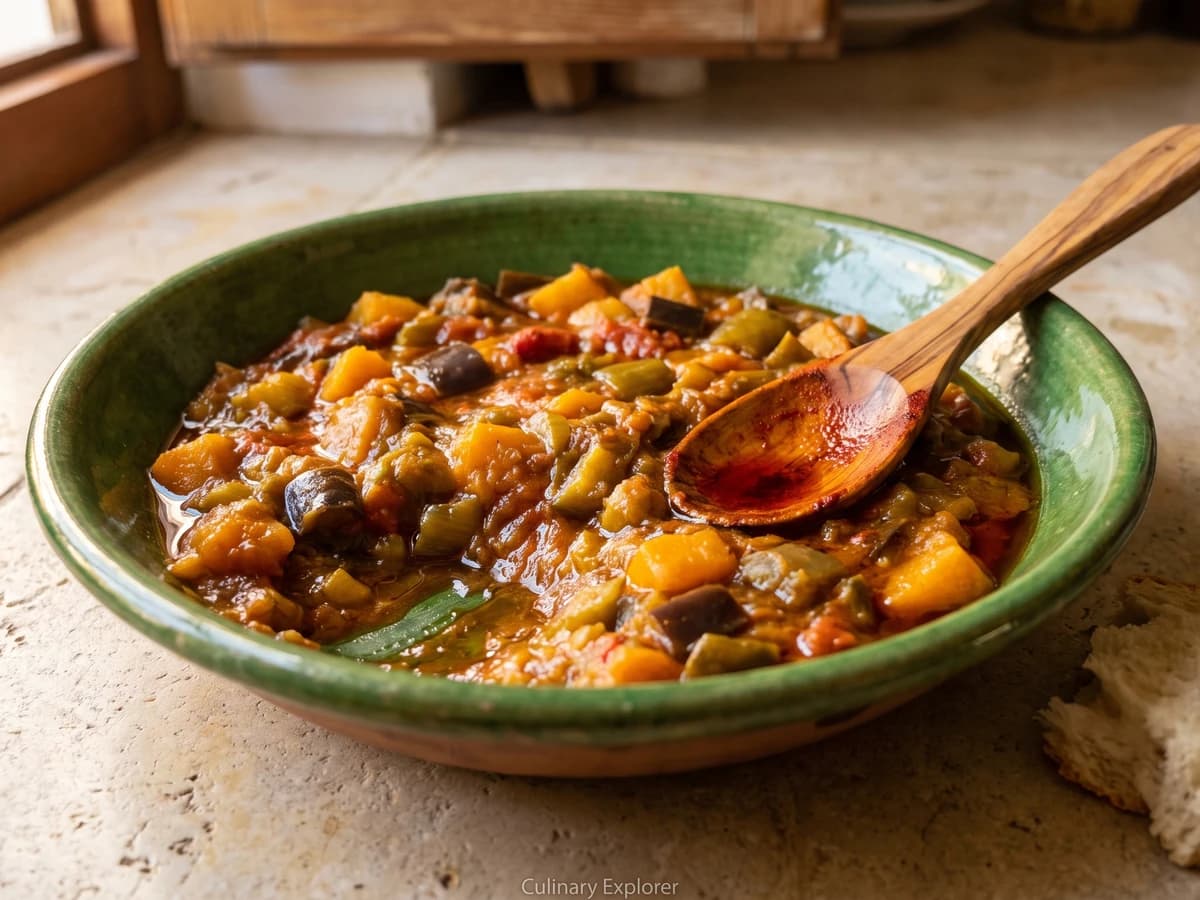
Alboronía is Andalucía's old pumpkin and aubergine stew, deepened with tomato, pimentón, and cumin, then cooked without hurry until the vegetables settle into a glossy, sweet, spoon-soft whole.

Chef Isabel
Aletría Murciana is Murcia's humble noodle guiso: fine fideos, pork ribs, potato, saffron, and a dark sweet sofrito. Get that base right and the pot knows where it's going.
Chef Isabel
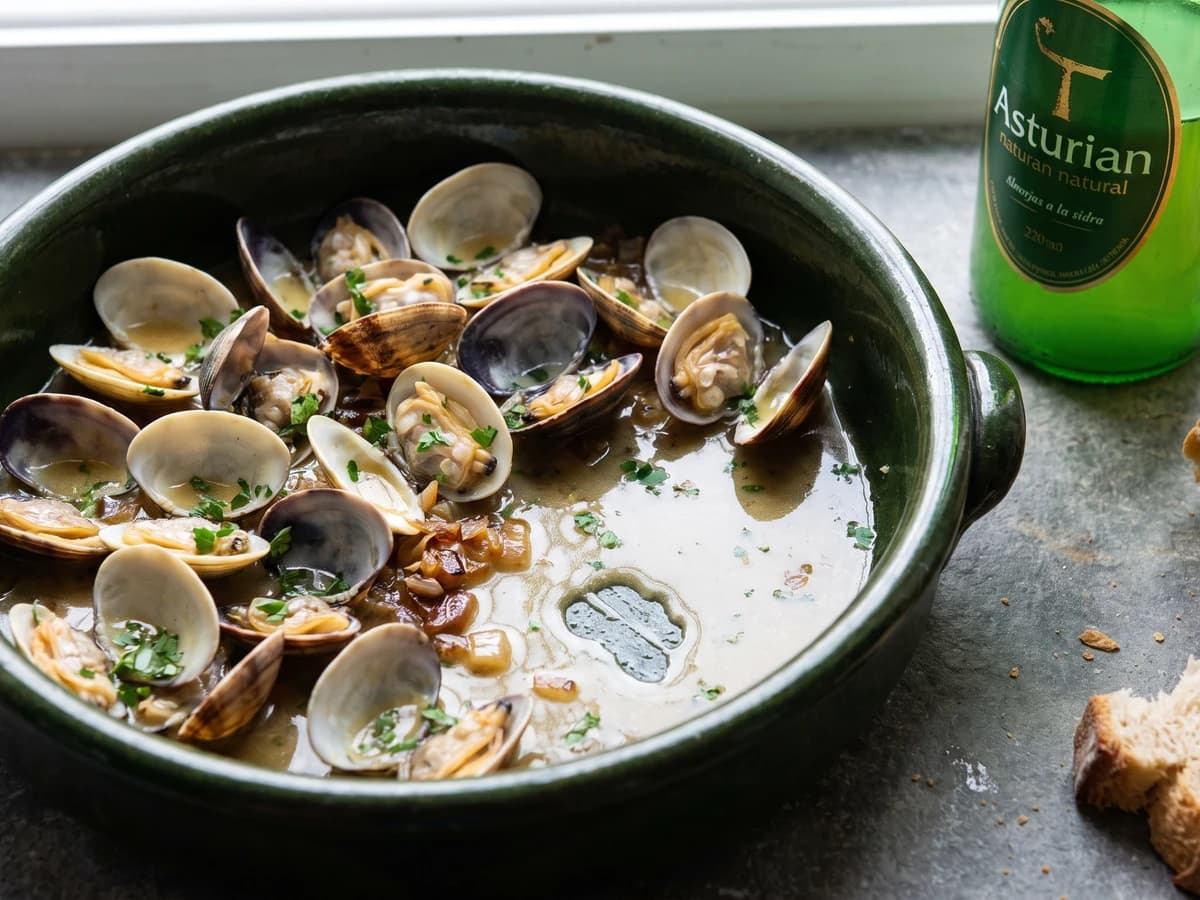
Asturias opens clams in tart natural cider over a slow onion and garlic sofrito, making a bright, briny sauce that asks for bread and rewards one rule: lift each clam as it opens.