Chef Isabel
Abanico Ibérico a la Plancha
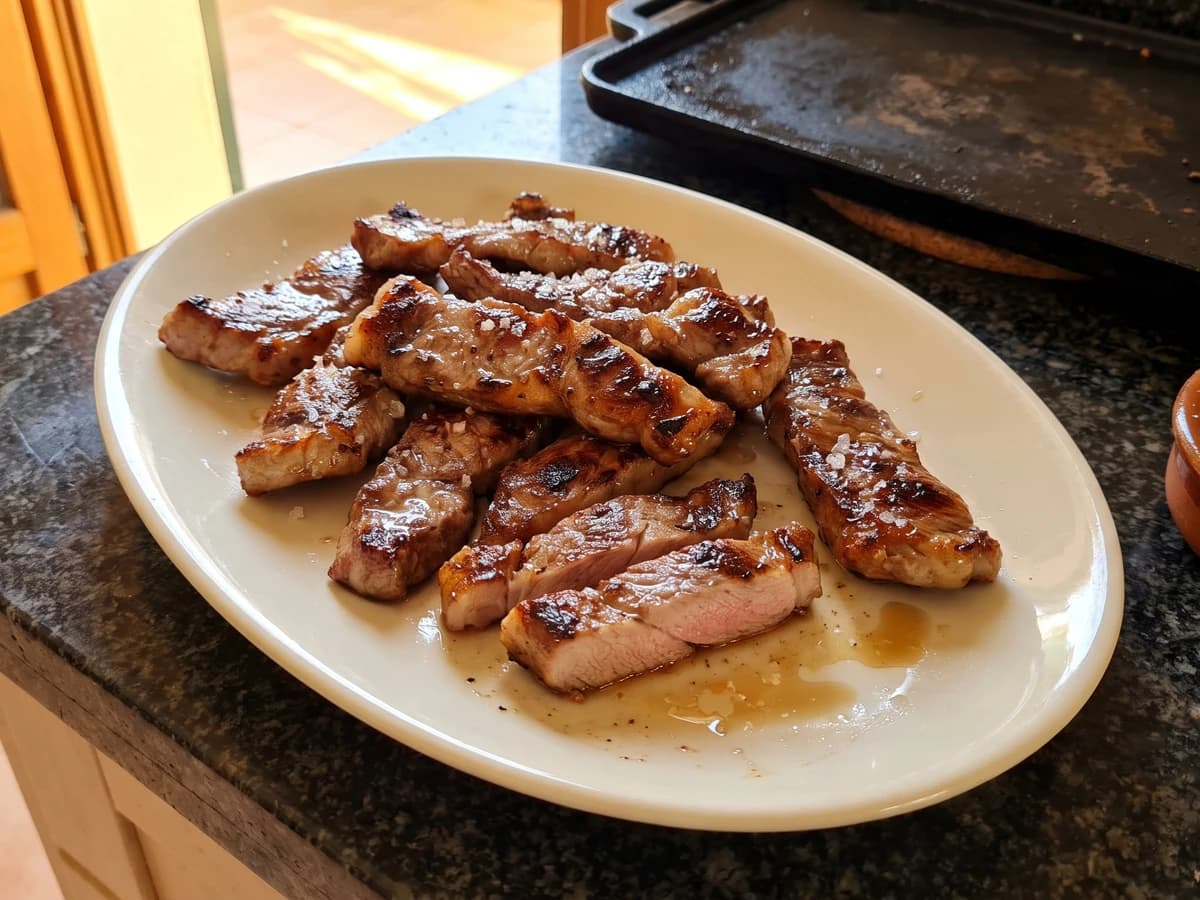
Extremadura's dehesa gives us this fan-shaped, marbled rib cut: salt it at the last moment, lay it on a fierce plancha, and count in seconds so the centre stays juicy.
A cooking platform built around craft, culture, and the stories behind what we eat.
Created by
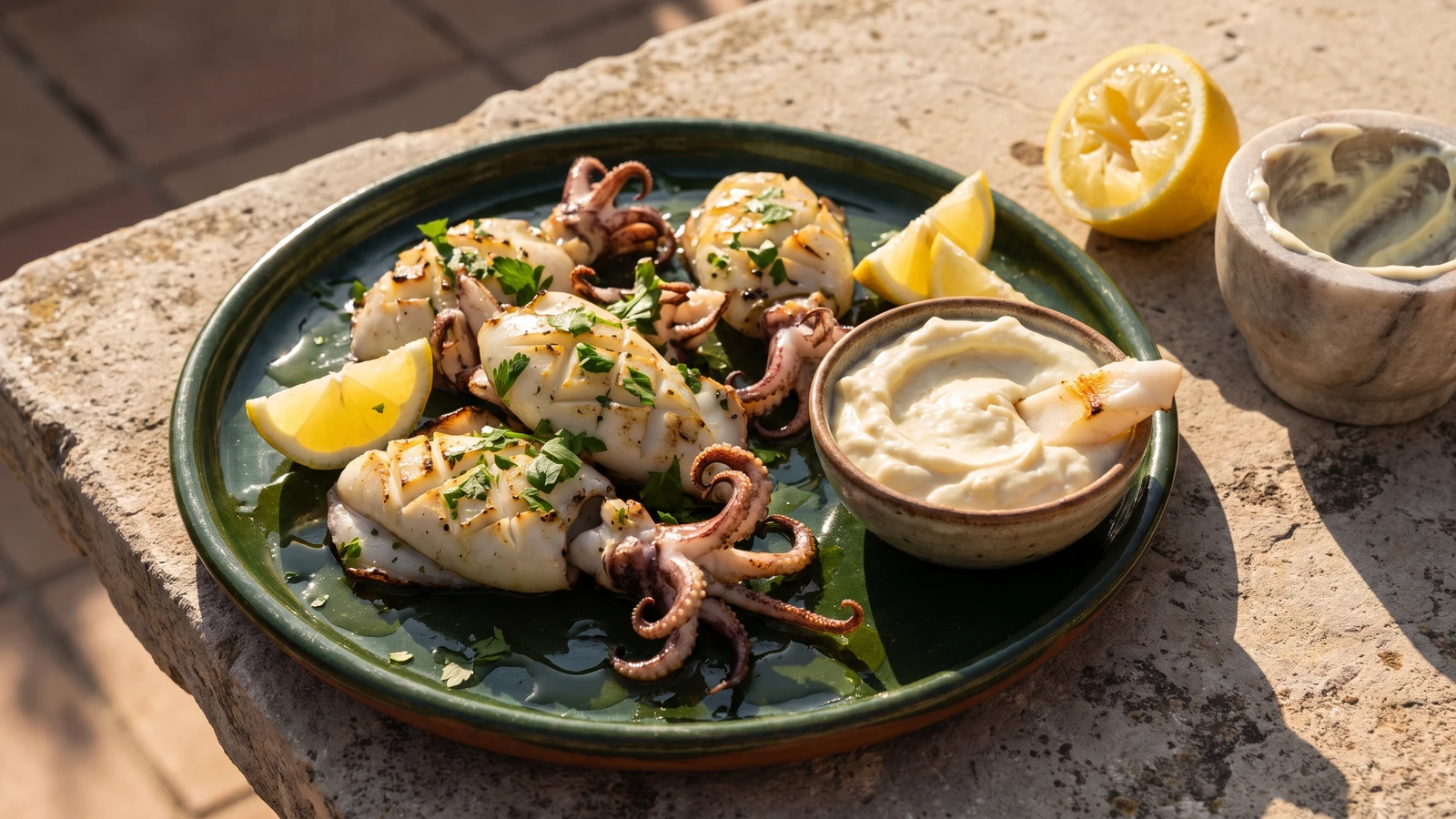
On the Catalan coast, scored cuttlefish meets a fiercely hot plancha, then comes to the table with raw-garlic allioli, parsley, and lemon. Dry it well, crowd nothing, and the edges will color.
Sepia a la plancha con allioli belongs to Catalonia's Mediterranean coast: thick, scored cuttlefish browned hard on the planxa, the iron griddle, with a mortar-made sauce of raw garlic and olive oil beside it. This isn't sepia guisada, softened slowly with peas or potatoes, and it isn't destined for a dark rice. Here the pleasure is the clean, sweet flesh against browned edges and fierce garlic.
One thing decides the dish: the cuttlefish must be very dry and the iron fiercely hot. I dry it twice, oil the fish rather than the pan, and cook in small batches. That keeps the surface against the metal long enough to color before released water can collect underneath. Salt it after cooking, not before. The whole method fits in the margin of my recipe: dry twice, crowd nothing.
Fresh cuttlefish is excellent when it smells clean and feels firm, but good frozen cuttlefish, thawed slowly in the refrigerator, is far better than tired fresh fish. If you can't find it, use cleaned squid. Squid is thinner and less meaty, so cook it for only 45 to 60 seconds per side and expect a softer bite. No hace falta haber pisado España. Get the iron hot, keep the batches small, and it comes out.
Along Catalonia's coast, from the fishing ports of the Costa Brava to Tarragona, sepia from the llotja, the fish auction, goes onto the planxa with little more than oil, garlic, parsley, and lemon. The Catalan word allioli gives its old formula plainly, all i oli, garlic and oil, pounded together in a mortar without egg. Cuttlefish ink and the melsa, its rich brown digestive gland, are often saved for arroces and fideus, so cleaning one animal has long supplied more than one dish.
Quantity
900g
bodies opened flat, tentacles separated
Quantity
30ml
divided between griddling and finishing
Quantity
8g
for the cuttlefish
Quantity
10g
finely chopped
Quantity
1
cut into wedges
Quantity
12g, about 3 medium cloves
peeled
Quantity
3g
for the allioli
Quantity
150ml
for the allioli
| Ingredient | Quantity |
|---|---|
| cleaned cuttlefishbodies opened flat, tentacles separated | 900g |
| extra-virgin olive oildivided between griddling and finishing | 30ml |
| fine sea saltfor the cuttlefish | 8g |
| flat-leaf parsleyfinely chopped | 10g |
| lemoncut into wedges | 1 |
| garlicpeeled | 12g, about 3 medium cloves |
| fine sea saltfor the allioli | 3g |
| mild extra-virgin olive oil, preferably arbequinafor the allioli | 150ml |
Check the cleaned cuttlefish and remove any hard beak left among the tentacles. Lay each body flat with the inner side facing up. Score it diagonally every 5mm, cutting only 2mm deep, then score in the opposite direction to make small diamonds. Cut the bodies into pieces about 6cm wide. Pat everything thoroughly dry, leave it uncovered for 10 minutes, then pat it dry once more. Cuttlefish carries plenty of water, and water on the surface makes it boil before it can brown.
Put the garlic and 3g salt in a sturdy mortar. Pound and grind them against the sides for 2 to 3 minutes, until no pieces remain and the garlic is a smooth, sticky paste. This matters. Bits of garlic won't hold the oil evenly, and the sauce is more likely to split.
Move the pestle continuously in one direction and add the first 30ml oil drop by drop. Once the mixture looks thick and glossy, add the remaining oil in a very thin thread, never pouring faster than the garlic can take it. Keep grinding until the allioli is firm enough to hold the track of the pestle. This is all i oli, garlic and oil, with no egg hiding in it.
Set a large cast-iron griddle or heavy frying pan over high heat for 5 to 7 minutes. It must be hot enough for a piece of cuttlefish to sizzle fiercely the instant it lands. Brush the dry cuttlefish with 20ml olive oil rather than flooding the pan. Open a window or cook outdoors, because proper browning makes itself known.
Lay the body pieces scored-side down in a single uncrowded layer. Press them against the iron for the first 15 seconds, then leave them untouched for 75 to 90 seconds. Turn and cook for another 60 to 90 seconds, until opaque at the thickest point with dark brown marks and lightly charred edges. Cook the tentacles separately for 2 to 3 minutes, turning once. Keep the heat high between batches. If liquid gathers, the pan is crowded or not hot enough; pour it away, reheat the iron, and carry on.
Mix the parsley with the remaining 10ml olive oil. Move the cuttlefish to a warm serving plate, season immediately with the 8g salt, and spoon over the parsley oil. Serve at once with lemon wedges and the allioli beside it, not spread over the charred surface. Squeeze the lemon only at the table. Siempre sale, si lo sigues.
1 serving (about 235g)
Culinary guides, cultural storytelling, and the editorial depth that makes cooking meaningful.
Discover Culinary ExplorerChef Isabel
Extremadura's dehesa gives us this fan-shaped, marbled rib cut: salt it at the last moment, lay it on a fierce plancha, and count in seconds so the centre stays juicy.
Chef Isabel
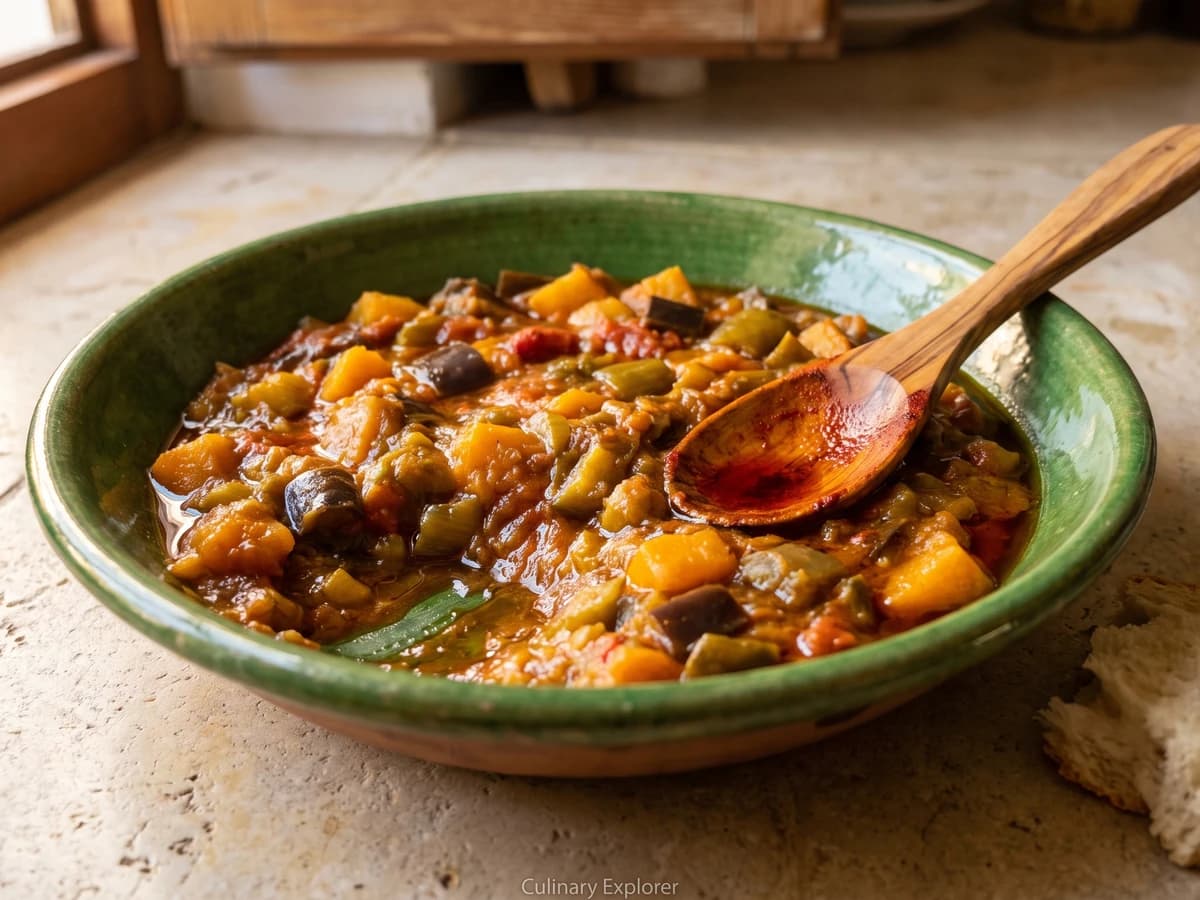
Alboronía is Andalucía's old pumpkin and aubergine stew, deepened with tomato, pimentón, and cumin, then cooked without hurry until the vegetables settle into a glossy, sweet, spoon-soft whole.

Chef Isabel
Aletría Murciana is Murcia's humble noodle guiso: fine fideos, pork ribs, potato, saffron, and a dark sweet sofrito. Get that base right and the pot knows where it's going.
Chef Isabel
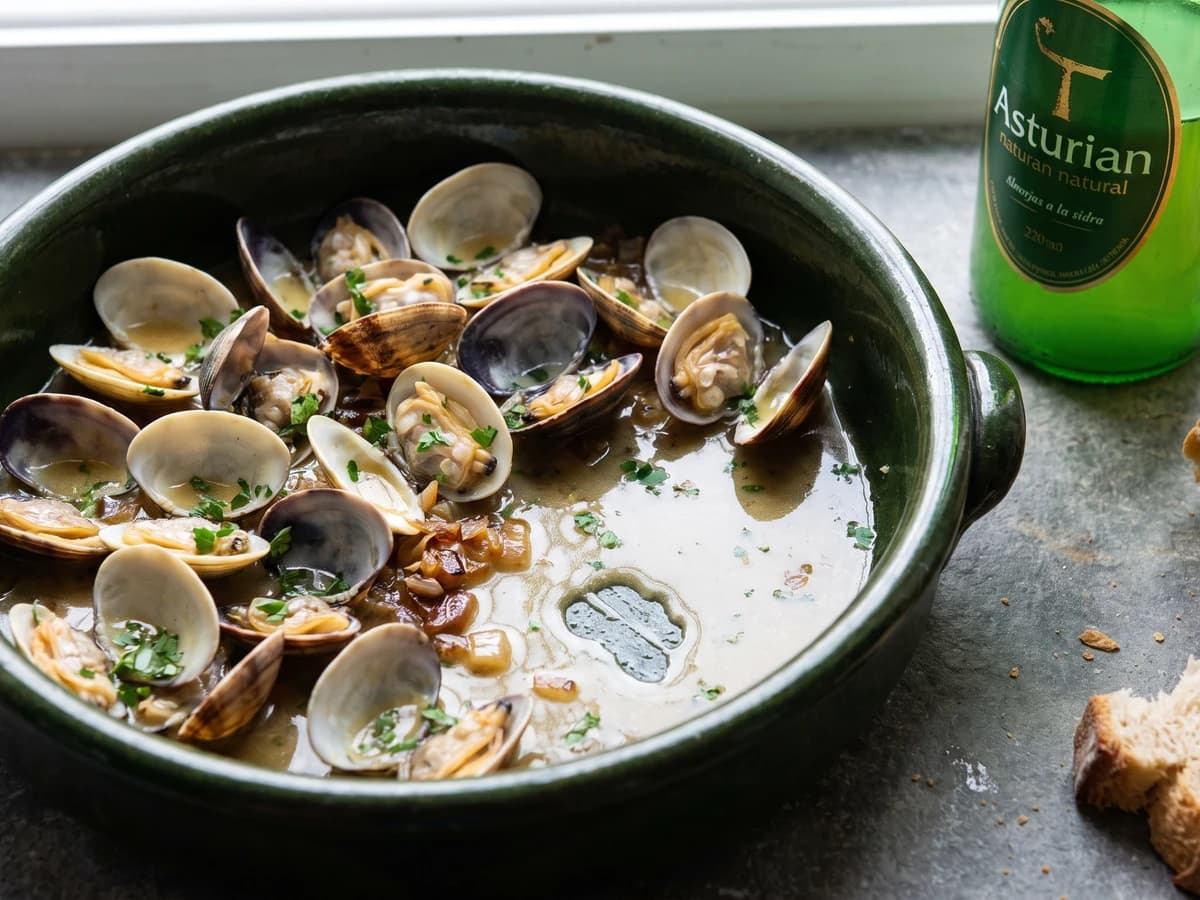
Asturias opens clams in tart natural cider over a slow onion and garlic sofrito, making a bright, briny sauce that asks for bread and rewards one rule: lift each clam as it opens.