Chef Isabel
Abanico Ibérico a la Plancha
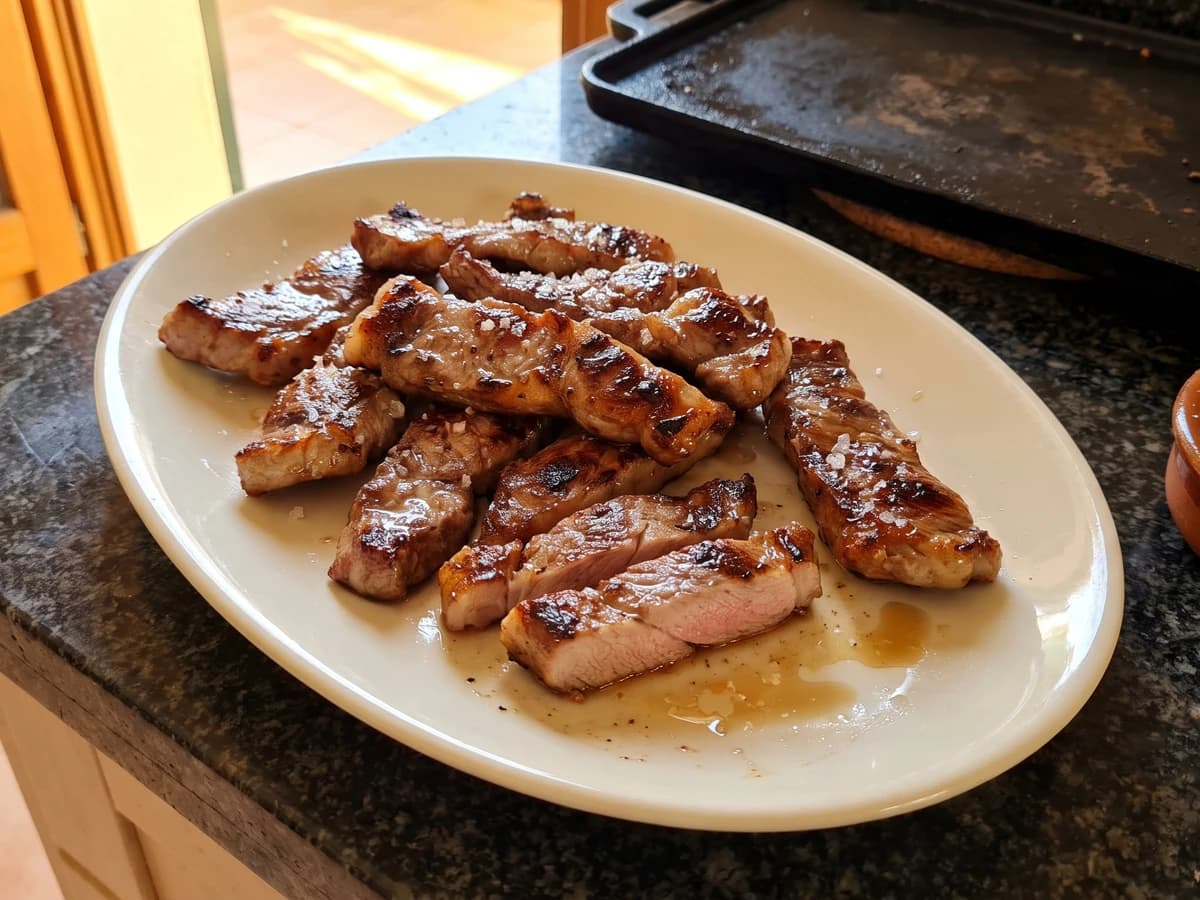
Extremadura's dehesa gives us this fan-shaped, marbled rib cut: salt it at the last moment, lay it on a fierce plancha, and count in seconds so the centre stays juicy.
A cooking platform built around craft, culture, and the stories behind what we eat.
Created by
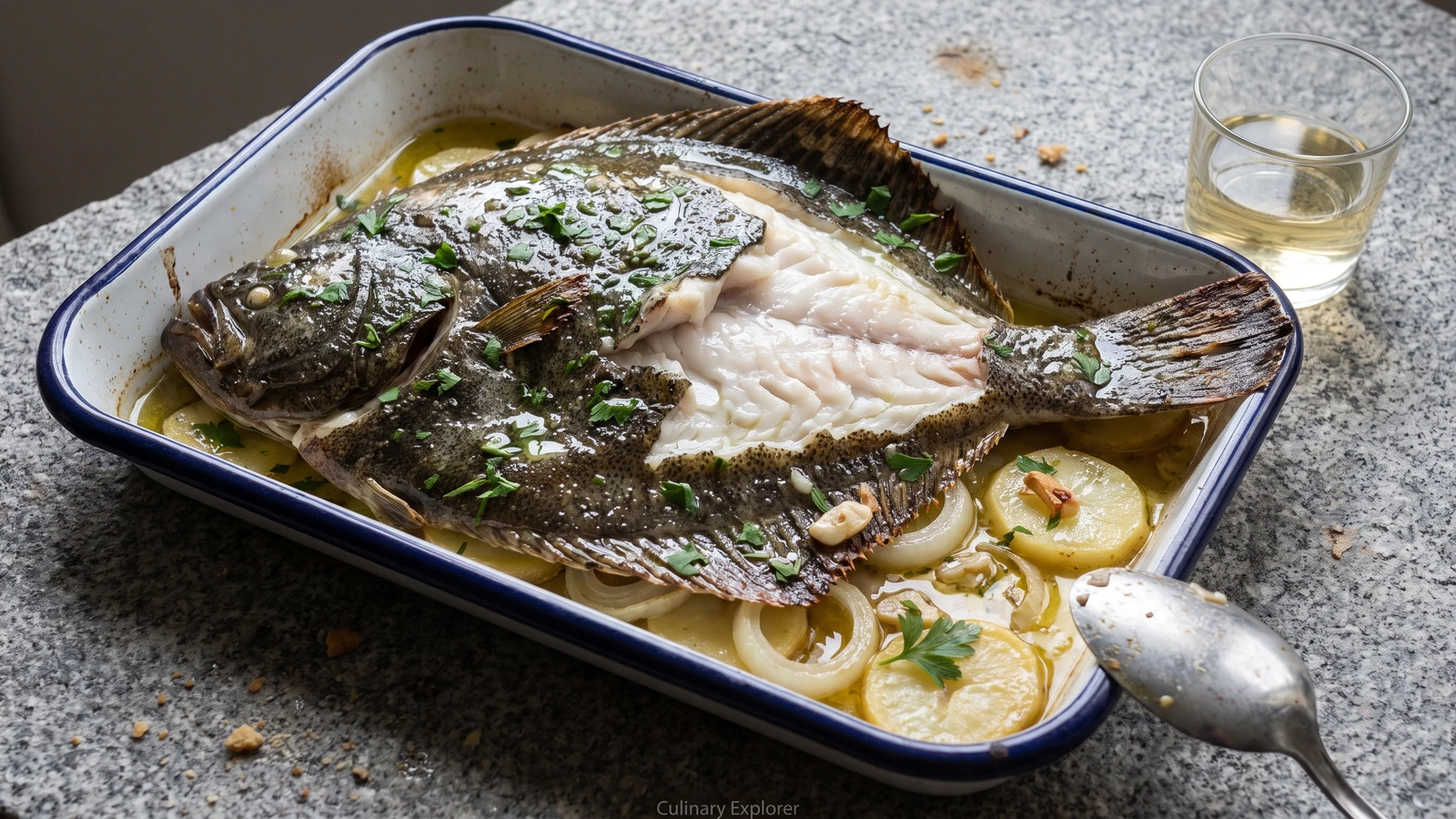
Galicia bakes whole turbot on patacas panadeiras, thin potatoes and onion softened first, then lets white wine, garlic, parsley, and the fish's own gelatin make the sauce.
Rodaballo al horno is Galician festive cooking at its plainest and best: a whole turbot baked over patacas panadeiras, thin potatoes and onion, with garlic, parsley, white wine, and olive oil. The fish goes into the tray with its mottled skin, fins, and backbone intact. That skin is rich in gelatin, which keeps the thick white flesh moist and gives the wine beneath it a lightly sticky body. This is Galicia's Atlantic larder on one tray.
The method that decides it is simple. Bake the potato and onion bed before the fish ever touches it. Turbot cooks faster than raw potatoes, and no amount of hopeful staring through the oven door changes that. Once the slices are nearly tender, set the fish on top and roast only until its flesh lifts cleanly beside the backbone. The potatoes catch the wine and fish juices while the skin shields the meat.
If turbot is scarce where you live, use a whole brill, called coruxo in Galicia. It is the closest substitute a Galician fish counter would offer. Brill is usually smaller and a little leaner, so keep the potato quantities the same but begin checking the fish 5 to 8 minutes earlier. No hace falta haber pisado España. Buy the freshest whole flatfish you can, keep its skin on, and trust the order of the cooking.
My Margin has only one warning beside this dish: the potatoes wait for the fish, never the fish for the potatoes. Follow that, weigh the ingredients, and bring the whole tray to the table. There is very little left to go wrong.
Rodaballo is one of the prized flatfish of Galicia's Atlantic coast and the Rías Baixas, where whole fish traditionally reaches the home kitchen through the coastal lonjas, the fish auctions supplied by local boats. Baking it over patacas panadeiras lets an expensive celebration fish feed a full table while its bones, skin, wine, and olive oil season the potatoes beneath. The same coastal larder also cooks flatfish in caldeirada, a fisherman’s potato stew, but the whole baked form belongs to the festive table.
Quantity
1 fish (1.8kg)
gutted, gills removed, fins trimmed, skin left on
Quantity
800g
peeled and sliced 4mm thick
Quantity
300g
sliced 5mm thick
Quantity
4 cloves (about 20g)
finely chopped
Quantity
20g
finely chopped
Quantity
1
Quantity
200ml
Quantity
150ml
Quantity
90ml
Quantity
14g
divided
Quantity
1g
Quantity
1
cut into wedges for serving
| Ingredient | Quantity |
|---|---|
| whole turbotgutted, gills removed, fins trimmed, skin left on | 1 fish (1.8kg) |
| waxy potatoespeeled and sliced 4mm thick | 800g |
| yellow onionssliced 5mm thick | 300g |
| garlicfinely chopped | 4 cloves (about 20g) |
| flat-leaf parsley leavesfinely chopped | 20g |
| bay leaf | 1 |
| dry Galician white wine, such as Albariño, Ribeiro, or Godello | 200ml |
| unsalted fish stock | 150ml |
| extra virgin olive oil | 90ml |
| fine sea saltdivided | 14g |
| freshly ground black pepper | 1g |
| lemon (optional)cut into wedges for serving | 1 |
Heat the oven to 200°C, or 190°C with a fan. Check that the turbot fits flat in a 40 by 30cm roasting tray. Pat it dry, especially inside the small gut cavity, and leave the dark and pale skins intact. Season both sides with 6g of the salt and all the black pepper, then leave it at cool room temperature while the potatoes begin cooking.
Spread the potatoes and onions across the tray in overlapping layers. Add the bay leaf, 50ml of the olive oil, 8g salt, 100ml wine, and all the fish stock. Turn everything together once, level it, and cover the tray tightly with baking parchment and foil. Bake for 25 minutes, then uncover, turn the potatoes carefully, and bake for another 10 minutes. A knife should enter a potato slice with slight resistance.
Stir the chopped garlic and 15g of the parsley with the remaining 40ml olive oil. Spoon half this mixture through the hot potatoes. Keep the other half for the fish.
Lay the turbot pale side down and dark side up over the potatoes. Rub the reserved garlic and parsley oil across its skin. Pour the remaining 100ml wine around the fish, not over it, so the seasoned oil stays on the surface. Return the uncovered tray to the oven.
Roast for 25 to 30 minutes. Begin checking at 23 minutes if the fish is thinner or weighs less than 1.8kg. It is ready when the thickest flesh beside the backbone is opaque, yields in large moist flakes, and reads 60°C on an instant-read thermometer. A small knife inserted beside the backbone should meet little resistance, and the flesh should lift cleanly from the bone.
Rest the turbot in its tray for 8 to 10 minutes. Spoon the wine and fish juices over the potatoes, discard the bay leaf, and scatter over the remaining 5g parsley. Cut along the centre line of the dark skin, lift away the two upper fillets, remove the backbone, then serve the two lower fillets. Give each plate potatoes, onion, and plenty of the gelatin-rich juices. Siempre sale, si lo sigues.
1 serving (about 400g)
Culinary guides, cultural storytelling, and the editorial depth that makes cooking meaningful.
Discover Culinary ExplorerChef Isabel
Extremadura's dehesa gives us this fan-shaped, marbled rib cut: salt it at the last moment, lay it on a fierce plancha, and count in seconds so the centre stays juicy.
Chef Isabel
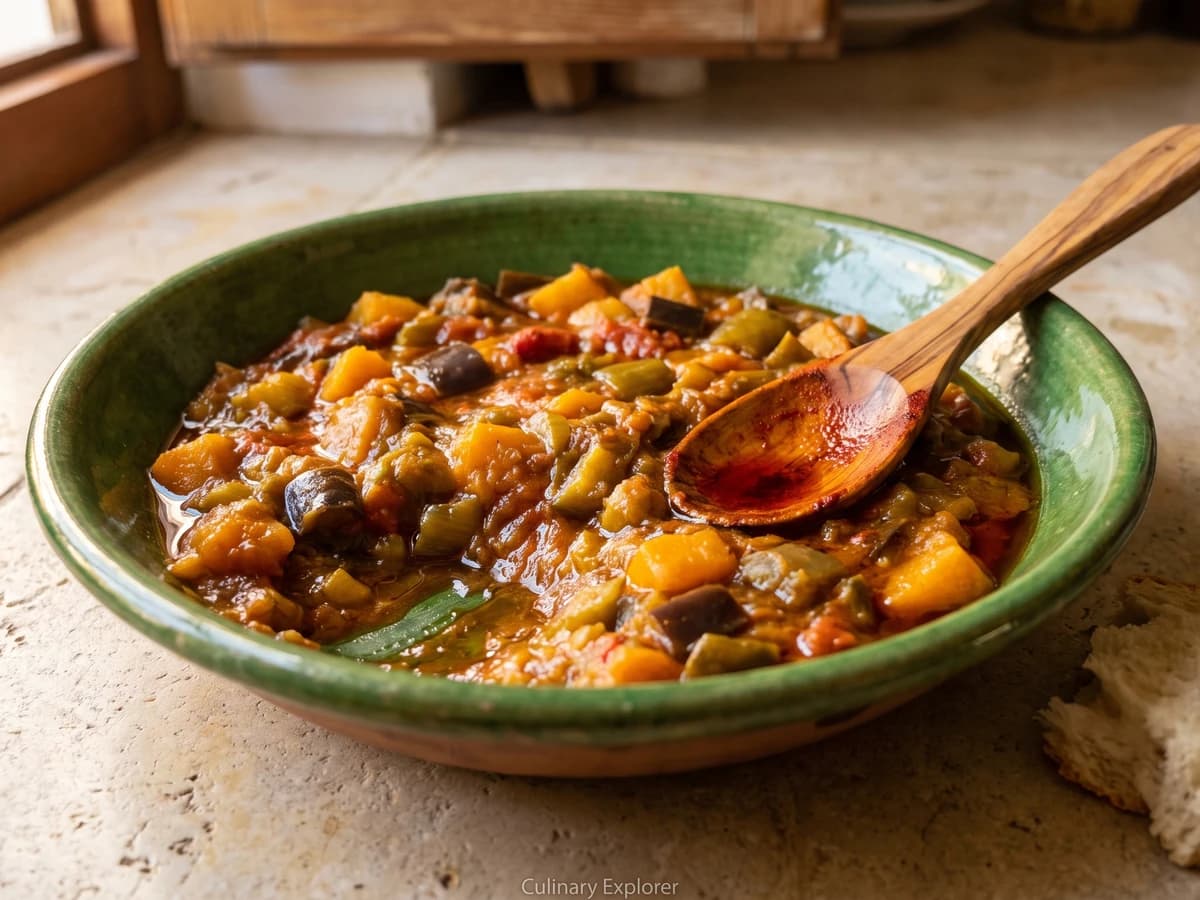
Alboronía is Andalucía's old pumpkin and aubergine stew, deepened with tomato, pimentón, and cumin, then cooked without hurry until the vegetables settle into a glossy, sweet, spoon-soft whole.

Chef Isabel
Aletría Murciana is Murcia's humble noodle guiso: fine fideos, pork ribs, potato, saffron, and a dark sweet sofrito. Get that base right and the pot knows where it's going.
Chef Isabel
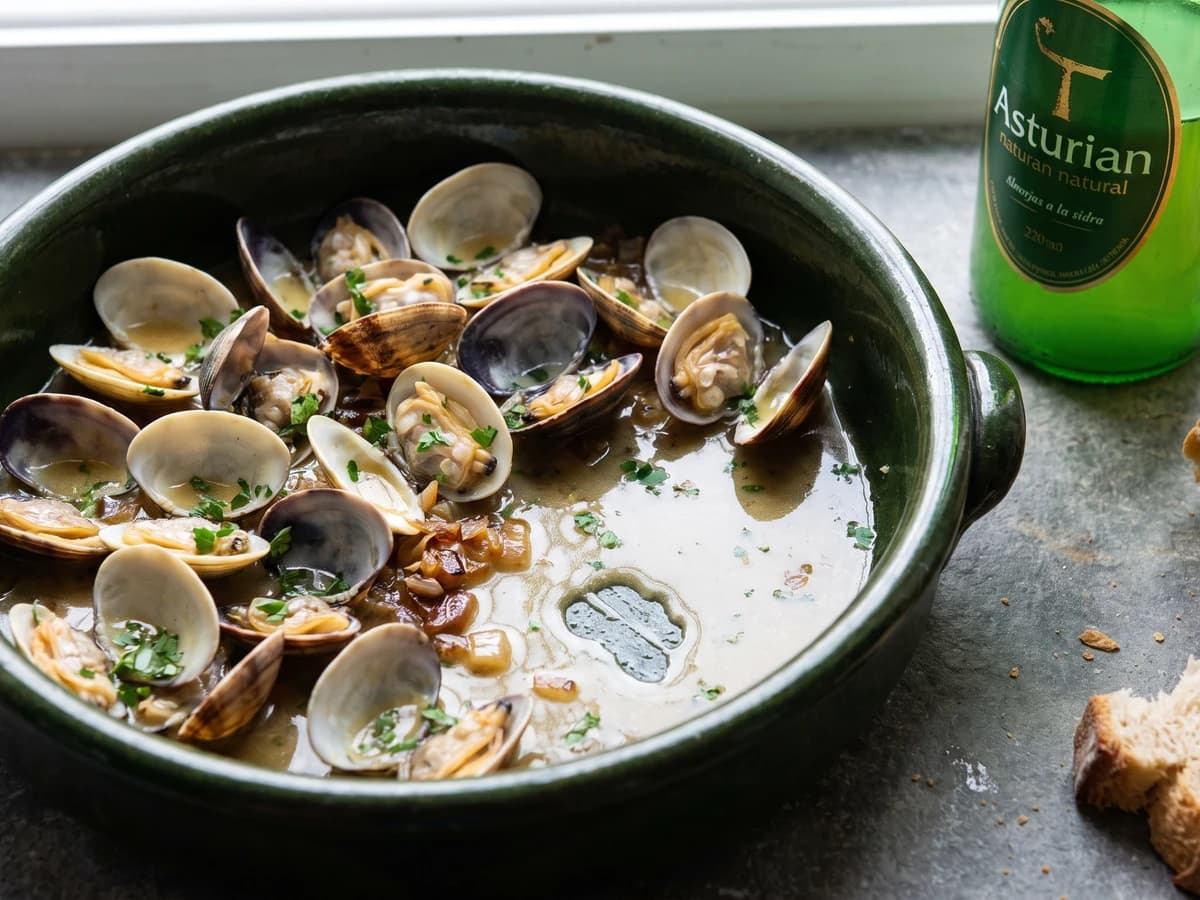
Asturias opens clams in tart natural cider over a slow onion and garlic sofrito, making a bright, briny sauce that asks for bread and rewards one rule: lift each clam as it opens.