Chef Isabel
Abanico Ibérico a la Plancha
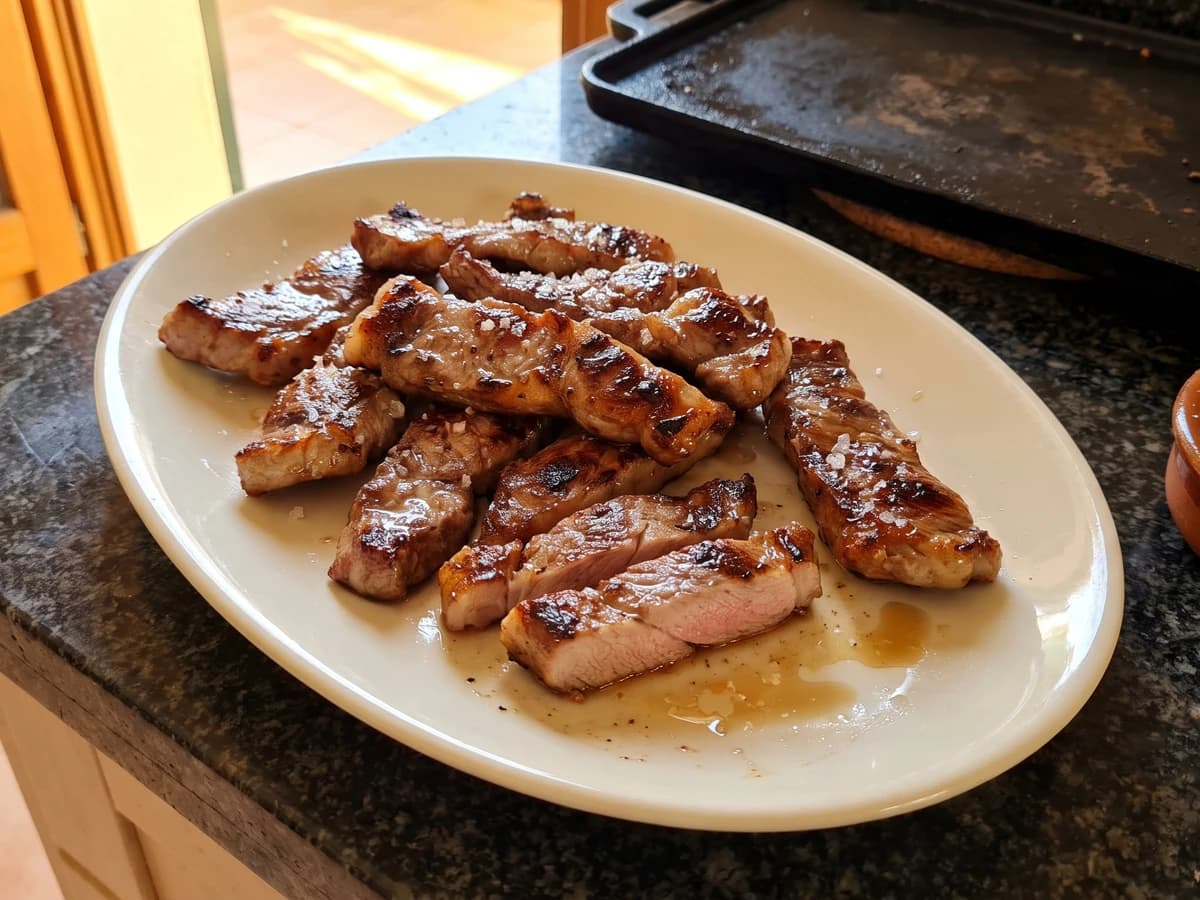
Extremadura's dehesa gives us this fan-shaped, marbled rib cut: salt it at the last moment, lay it on a fierce plancha, and count in seconds so the centre stays juicy.
A cooking platform built around craft, culture, and the stories behind what we eat.
Created by
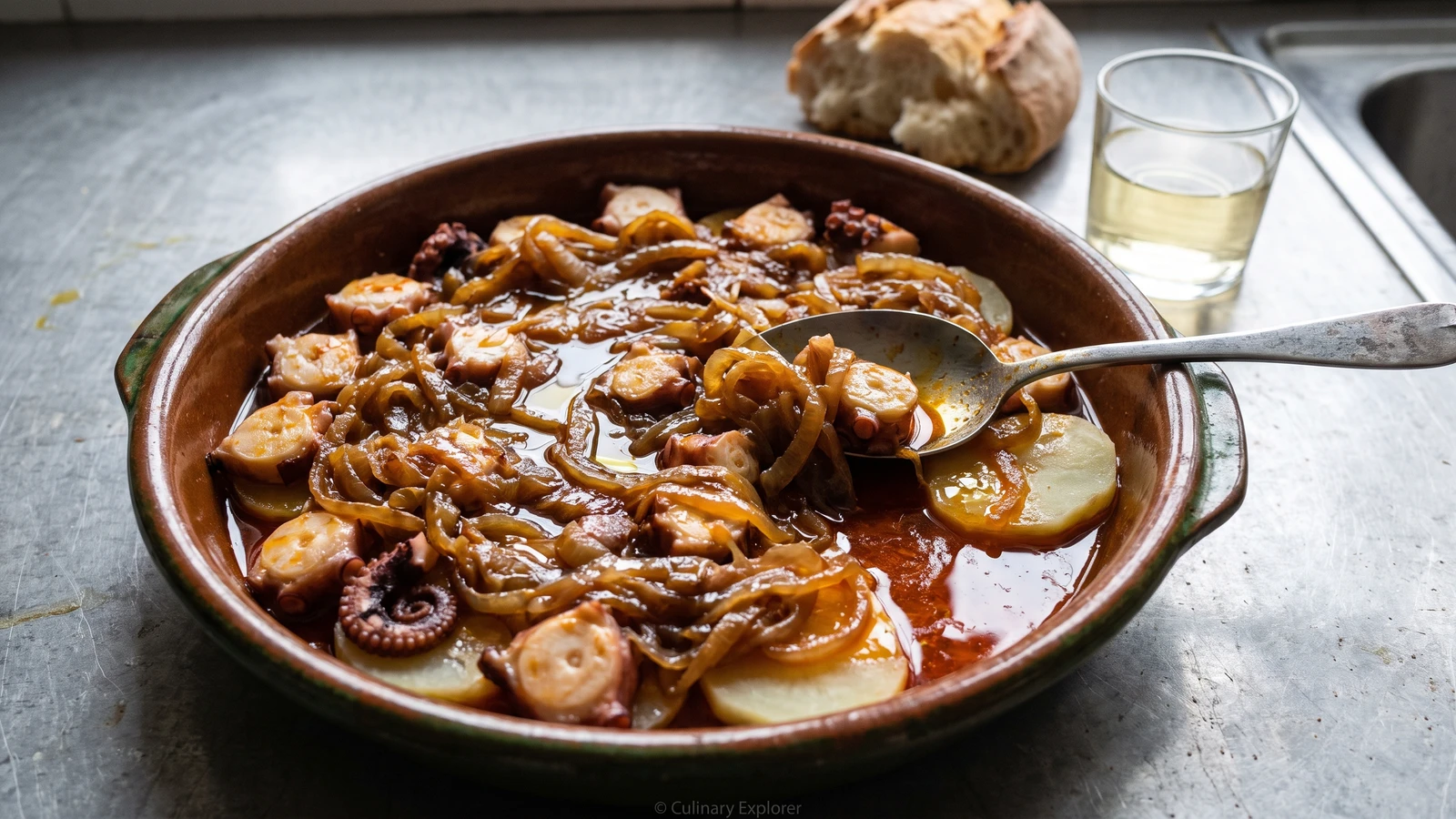
Galicia turns octopus into proper spoon-and-bread food here, folding tender pieces through onions cooked dark gold with garlic, pimentón, and white wine, then laying the lot over potatoes.
Pulpo encebollado gallego is Galicia's octopus for the home pot: tender pieces folded into a deep bed of cebolla pochada, onion softened slowly, with garlic, pimentón, and dry white wine. Potatoes underneath catch the reddish, sweet-savoury sauce. That onion base makes this dish, not the clean oil, salt, and pimentón finish of polbo á feira.
The method that decides it is the onion. Cook it low until it collapses, loses its raw bite, and turns dark gold and almost jammy before the wine goes anywhere near the pot. That slow cooking draws out its sweetness and gives the sauce body. Add the liquid while the onion is still pale and the whole thing tastes thin. I cook the octopus first, then use its liquor for the potatoes and the sauce, so none of its sea flavour is wasted.
Far from Galicia, frozen cleaned octopus is exactly what you want because freezing tenderises the flesh. If you can find only vacuum-packed cooked tentacles, use them and add them for the final five minutes; the dish will have a little less depth because you won't have the cooking liquor, but the onion base still carries it. My margin beside this one says, "the wine waits for the onion." Follow that and it behaves. Siempre sale, si lo sigues.
Along Galicia's rías, octopus entered coastal pots fresh, while dried octopus travelled inland to fairs where pulpeiras made the better-known polbo á feira with oil, salt, and pimentón. Pulpo encebollado belongs to the household pot: a generous weight of onion stretches the octopus and turns its cooking liquor into sauce, with potatoes ready to carry it. At Mugardos on the Ría de Ferrol, the related pulpo a la mugardesa includes pepper and potato in a looser stew; this onion-heavy braise is its own preparation.
Quantity
1.5kg
previously frozen and thawed in the refrigerator
Quantity
3.5L
plus more if needed to cover
Quantity
800g
scrubbed
Quantity
900g (about 5 large)
halved and thinly sliced
Quantity
75ml
divided
Quantity
3 cloves
thinly sliced
Quantity
1
Quantity
5g
Quantity
0.5g
Quantity
150ml
Quantity
200ml
reserved from the pot
Quantity
6g, plus more only if needed
divided
Quantity
as needed
for serving
| Ingredient | Quantity |
|---|---|
| whole cleaned octopuspreviously frozen and thawed in the refrigerator | 1.5kg |
| waterplus more if needed to cover | 3.5L |
| small waxy potatoesscrubbed | 800g |
| yellow onionshalved and thinly sliced | 900g (about 5 large) |
| extra virgin olive oildivided | 75ml |
| garlicthinly sliced | 3 cloves |
| bay leaf | 1 |
| sweet pimentón de la Vera | 5g |
| hot pimentón de la Vera (optional) | 0.5g |
| dry Galician white wine, such as Ribeiro or Albariño | 150ml |
| octopus cooking liquidreserved from the pot | 200ml |
| fine sea saltdivided | 6g, plus more only if needed |
| rustic bread (optional)for serving | as needed |
Check that the thawed octopus is clean inside the head and remove the hard beak from the centre of the tentacles if your fishmonger has left it in. Rinse briefly under cold water. Bring 3.5 litres of water to a full boil in a wide, heavy pot, leaving enough room for the octopus.
Hold the octopus by the head and lower the tentacles into the boiling water for five seconds, then lift them out. Repeat twice more. This is asustar el pulpo, to scare the octopus, and it helps the skin stay on and the tentacles curl neatly. Lower in the whole octopus, return the water to a gentle simmer, and cook for 35 to 45 minutes. Test the thickest part of a tentacle with a skewer; it should enter with slight resistance, like a cooked potato, not slide through mush.
Lift the octopus into a bowl and let it rest for 20 minutes. Put the whole potatoes into the same cooking water and simmer for 18 to 25 minutes, depending on their size, until a skewer reaches the centre without force. Reserve 200ml of the cooking liquid, then drain the potatoes. Peel them while warm, slice them into 1cm rounds, and season with 2g of the salt.
Empty and dry the same pot. Add 60ml of the olive oil, the sliced onions, bay leaf, and the remaining 4g salt. Cook over low heat for 35 to 45 minutes, stirring every few minutes, until the onions have collapsed into soft ribbons and turned a deep, even gold. They should be jammy, not crisp. If they begin catching before they soften, add one tablespoon of water and lower the heat. This is the step that decides the dish, so don't hurry it.
Add the sliced garlic and cook for 2 minutes, just until fragrant. Take the pot off the heat for 30 seconds, add both pimentones, and stir through the oil. Pimentón scorches quickly and turns bitter, which is why the pot leaves the heat. Pour in the wine at once, return the pot to medium heat, and simmer for about 5 minutes, until reduced by half. Add the reserved octopus liquid and simmer for 8 to 10 minutes, until the sauce lightly coats a spoon.
Cut the tentacles into pieces 2 to 3cm thick with kitchen scissors and cut the head into bite-sized strips. Fold the octopus through the onion sauce and cook gently for 6 to 8 minutes, just long enough for it to take on the wine and pimentón. Don't boil it hard or keep it there half an hour; it is already tender. Taste before adding any more salt because the cooking liquid carries the sea with it.
Arrange the potato rounds in a warm shallow serving dish. Spoon over the octopus and plenty of the dark-gold onions, letting the pimentón-stained sauce run between the potatoes. Rest for 5 minutes, then finish with the remaining 15ml olive oil. Put bread beside it because leaving that sauce behind would be foolish.
1 serving (about 650g)
Culinary guides, cultural storytelling, and the editorial depth that makes cooking meaningful.
Discover Culinary ExplorerChef Isabel
Extremadura's dehesa gives us this fan-shaped, marbled rib cut: salt it at the last moment, lay it on a fierce plancha, and count in seconds so the centre stays juicy.
Chef Isabel
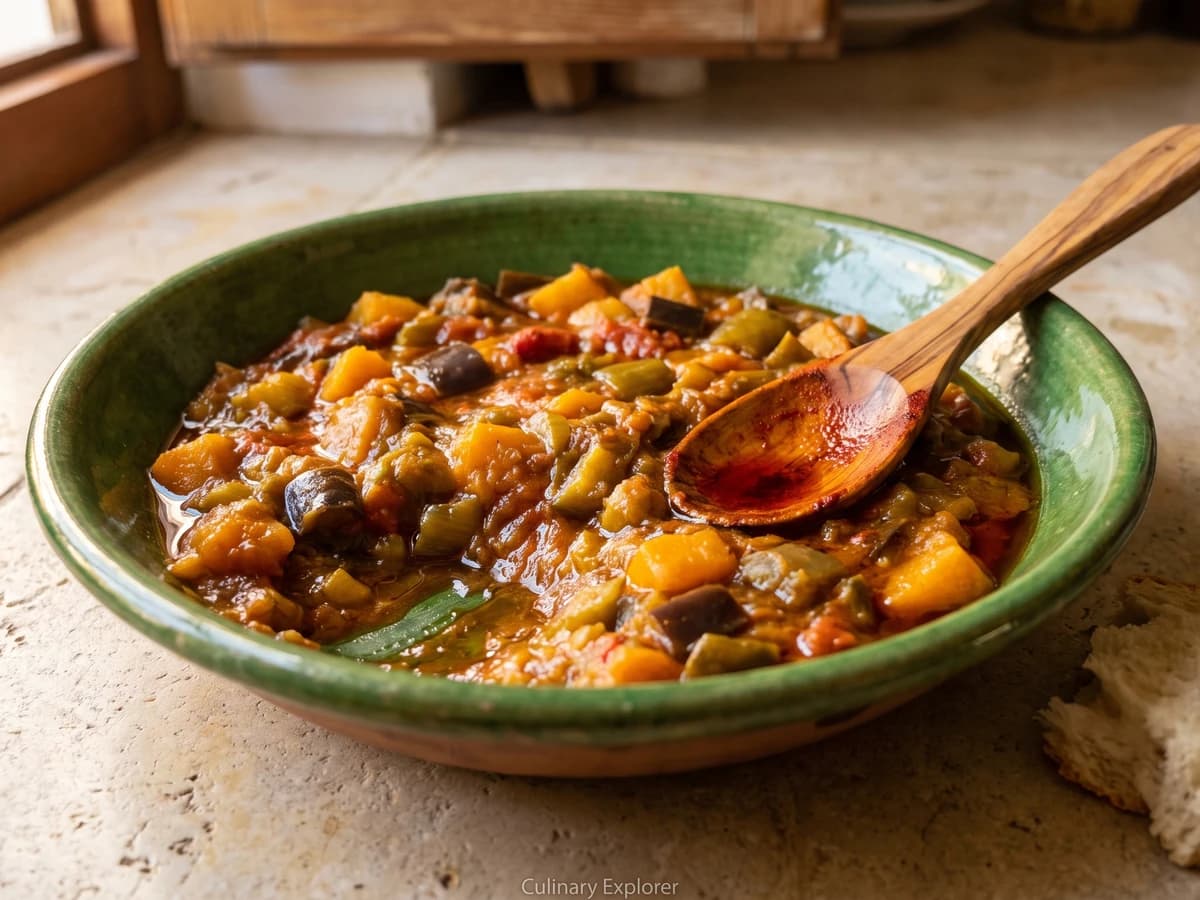
Alboronía is Andalucía's old pumpkin and aubergine stew, deepened with tomato, pimentón, and cumin, then cooked without hurry until the vegetables settle into a glossy, sweet, spoon-soft whole.

Chef Isabel
Aletría Murciana is Murcia's humble noodle guiso: fine fideos, pork ribs, potato, saffron, and a dark sweet sofrito. Get that base right and the pot knows where it's going.
Chef Isabel
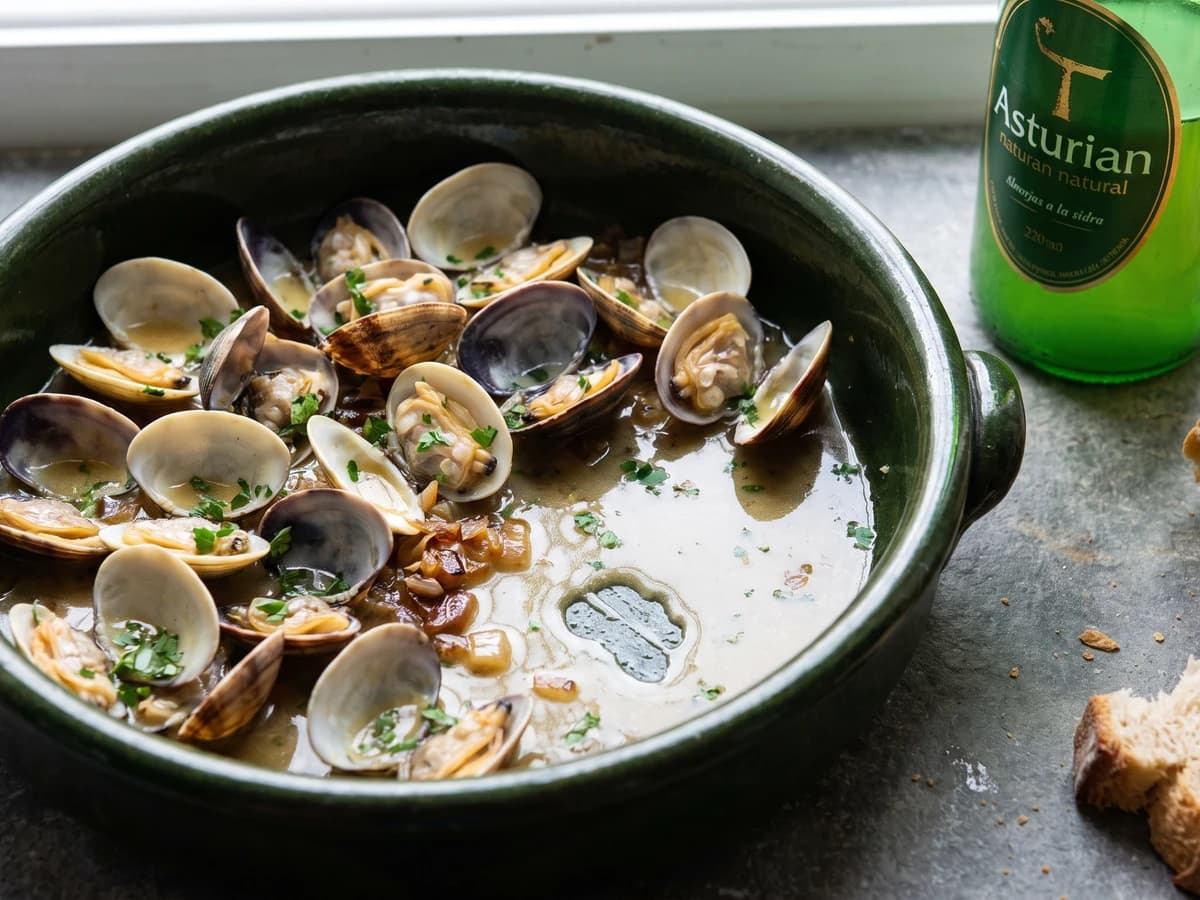
Asturias opens clams in tart natural cider over a slow onion and garlic sofrito, making a bright, briny sauce that asks for bread and rewards one rule: lift each clam as it opens.