Chef Isabel
Abanico Ibérico a la Plancha
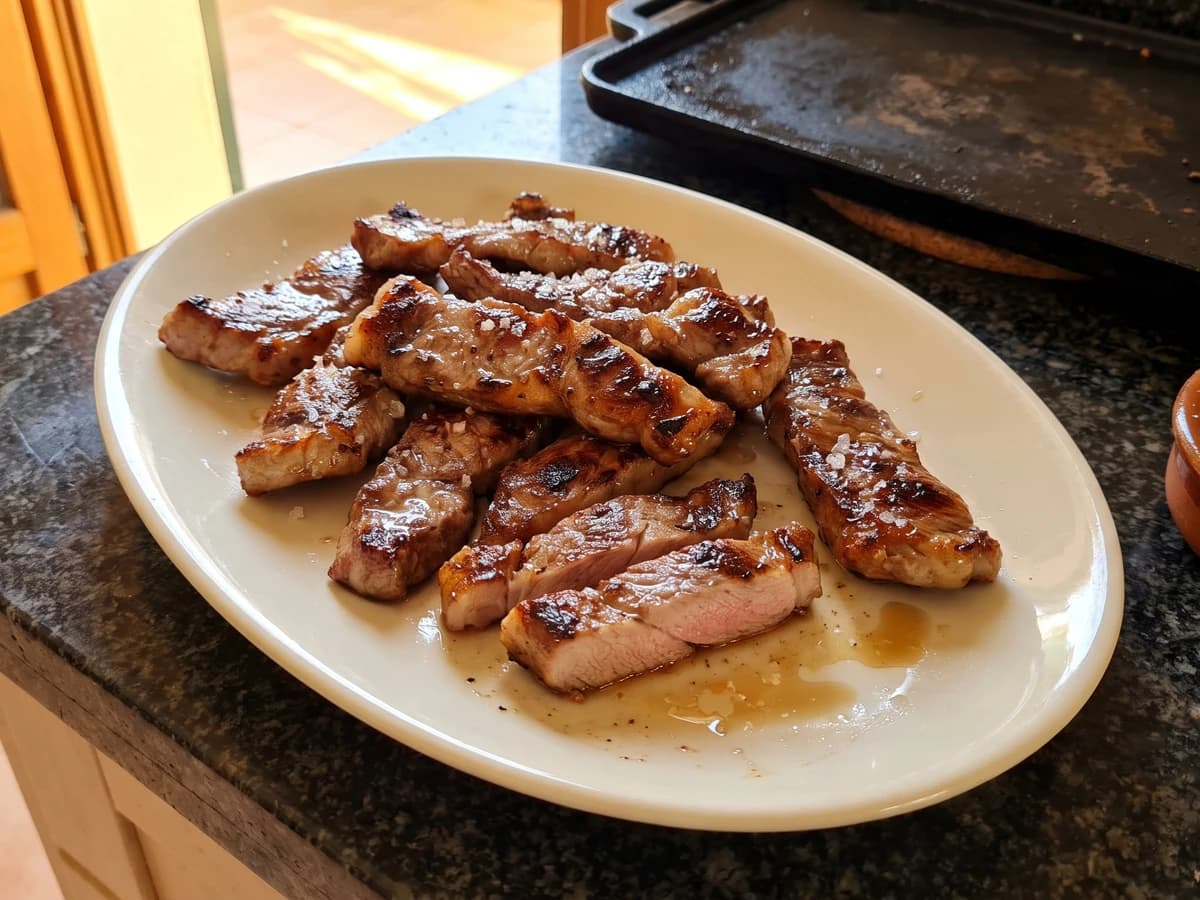
Extremadura's dehesa gives us this fan-shaped, marbled rib cut: salt it at the last moment, lay it on a fierce plancha, and count in seconds so the centre stays juicy.
A cooking platform built around craft, culture, and the stories behind what we eat.
Created by
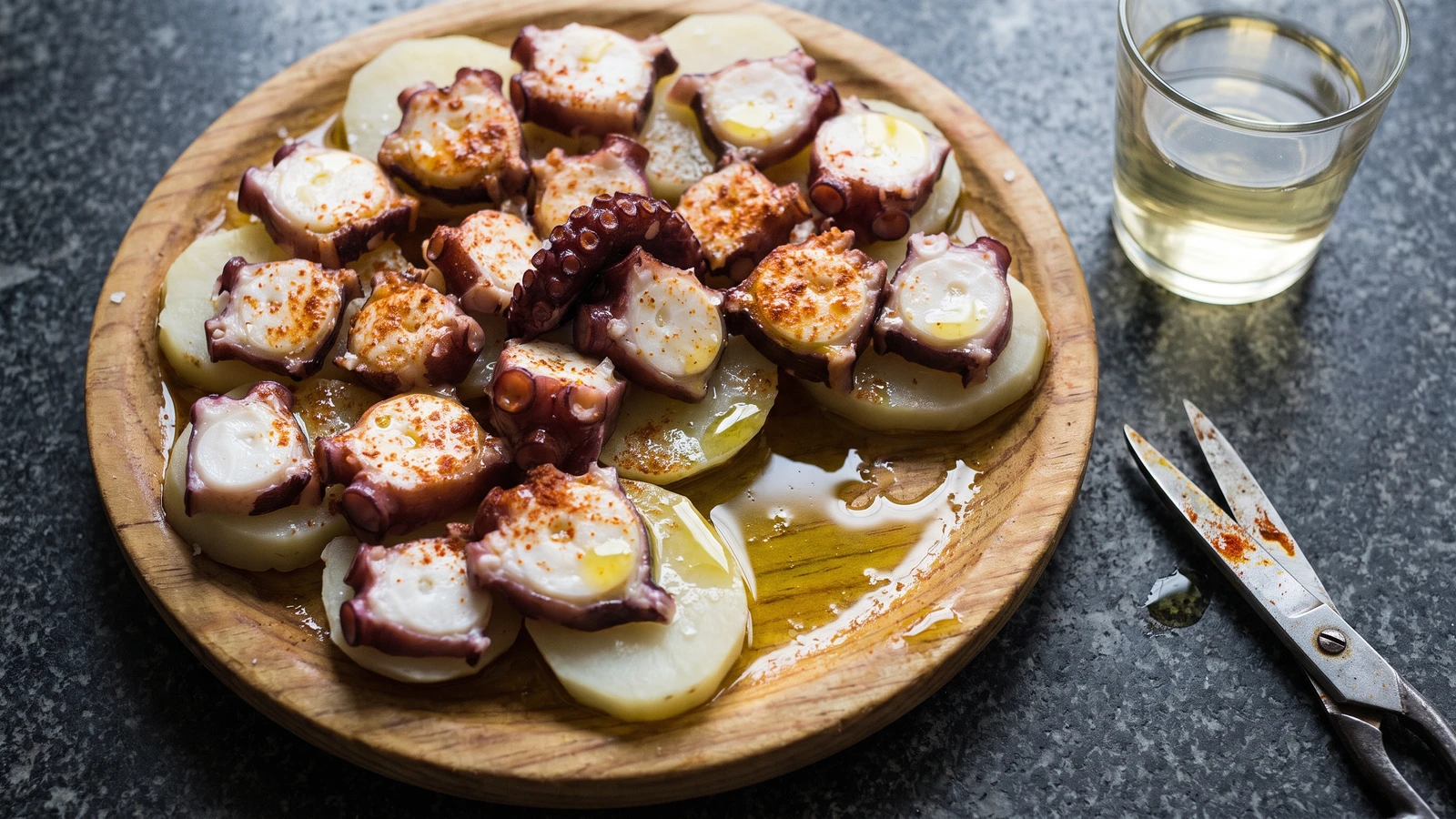
Galicia's fairground octopus, boiled until tender, cut over waxy potatoes, and dressed with green-gold olive oil, coarse salt, and pimentón. Freeze it first, dip it three times, and the skin stays put.
Pulpo a la gallega is Galicia's fairground octopus, called pulpo á feira there: tender pieces snipped with scissors over potato, then dressed with olive oil, coarse salt, and pimentón. Nothing is hidden under a sauce. The sweet flesh, purple skin, smoky pepper, and oil must carry the plate between them.
Freezing is the method that decides it. Octopus muscle is firm, and a proper freeze weakens those fibres before the pot ever goes on. Once thawed, dip the tentacles into boiling water three times before lowering in the whole octopus. This is asustar, to scare it. The old method helps the skin stay attached, but tenderness still has one final judge: a skewer should enter the thickest tentacle as it enters a cooked potato, with only a little resistance.
If you're far from a Galician fish market, buy a cleaned frozen octopus without apology. It is often the better choice. No Galician Kennebec potatoes where you are? Yukon Gold will hold its shape well, though it stays a little firmer and drinks in less of the cooking liquor. Use real pimentón de la Vera if you can; ordinary paprika lacks its wood-smoked depth, and chili powder is another thing entirely. No hace falta haber pisado España.
Cut the octopus thick enough to feel under the teeth, dress it generously, and carry it straight to the table. The Margin beside this recipe says only: don't boil it hard, and don't cut it thin. Siempre sale, si lo sigues. It turns out if you follow it.
Pulpo á feira means fair-style octopus in Galician, and its strongest tradition belongs not only to the fishing coast but to the inland fairs and romerías of Ourense, especially those around O Carballiño. Coastal octopus was once dried so it could travel inland, where pulpeiras cooked it in large copper cauldrons and cut it with scissors onto wooden plates for traders, pilgrims, and farming families. Potatoes, pimentón, coarse salt, and olive oil turned that preserved catch into a substantial fair meal whose method still identifies it as Galician.
Quantity
1.5kg
cleaned, frozen for at least 72 hours, then thawed
Quantity
4 litres
Quantity
700g
peeled and cut into 2cm-thick rounds
Quantity
75ml
Quantity
6g
Quantity
1g
Quantity
20g
for cooking the potatoes
Quantity
6g
for finishing
| Ingredient | Quantity |
|---|---|
| whole octopuscleaned, frozen for at least 72 hours, then thawed | 1.5kg |
| water | 4 litres |
| Kennebec, Yukon Gold, or other all-purpose potatoespeeled and cut into 2cm-thick rounds | 700g |
| extra virgin olive oil | 75ml |
| sweet pimentón de la Vera | 6g |
| hot pimentón de la Vera (optional) | 1g |
| fine sea saltfor cooking the potatoes | 20g |
| coarse sea saltfor finishing | 6g |
Thaw the frozen octopus slowly in the refrigerator for about 24 hours, set in a colander over a bowl. Check that the beak, eyes, and contents of the head have been removed, then rinse the octopus under cold water. Don't scrub away the purple skin. That skin belongs on the plate.
Bring the 4 litres of water to a full boil in a tall, heavy pot. Add no salt or aromatics. Grip the octopus firmly by the head with long tongs, lower the tentacles into the water for 5 seconds, then lift them out for 5 seconds. Repeat twice more, letting the water recover its boil each time. This is asustar el pulpo, scaring the octopus, and it helps set the skin before the longer cooking. After the third dip, lower the whole octopus into the pot.
Let the water return just to the boil, then lower the heat to a steady simmer. Cook uncovered for 35 minutes. Push a thin skewer into the thickest part of a tentacle where it meets the head. It should enter like it does through a cooked potato, easily but with a little resistance. If the flesh still feels tight, cook for another 5 minutes and test again. A 1.5kg octopus usually needs 35 to 45 minutes, but the skewer decides, not the clock.
Turn off the heat and leave the octopus submerged for 15 minutes. This rest lets the heat finish moving through the thick tentacles without tightening the outside. Lift it carefully onto a rimmed tray, let the excess liquid drain away, and cover it loosely while the potatoes cook. Do not rinse it.
Bring the octopus cooking liquor back to the boil and stir in the 20g fine sea salt. Add the potato rounds and simmer for 15 to 18 minutes, until a knife enters the centres cleanly but the slices still hold their shape. Drain them well and arrange them in a close, slightly overlapping layer on a wide serving plate.
Separate the tentacles if that makes them easier to handle. Using kitchen scissors, snip them crosswise into 8 to 10mm pieces directly over the potatoes, keeping the curled tips whole. Cut the tender part of the head into short strips and add those too. Scissors give the blunt, irregular cut used by the pulpeiras, the women who cook and serve octopus at Galician fairs.
Pour the 75ml olive oil evenly over the octopus and potatoes. Scatter over the 6g coarse salt, then dust with the 6g sweet pimentón and the 1g hot pimentón, if using. Serve immediately while the oil still gleams and the potatoes are warm. No sauce, no garnish, no last-minute cleverness. Tal como se hace allí, exactly as it's made there.
1 serving (about 410g)
Culinary guides, cultural storytelling, and the editorial depth that makes cooking meaningful.
Discover Culinary ExplorerChef Isabel
Extremadura's dehesa gives us this fan-shaped, marbled rib cut: salt it at the last moment, lay it on a fierce plancha, and count in seconds so the centre stays juicy.

Chef Isabel
Aletría Murciana is Murcia's humble noodle guiso: fine fideos, pork ribs, potato, saffron, and a dark sweet sofrito. Get that base right and the pot knows where it's going.
Chef Isabel
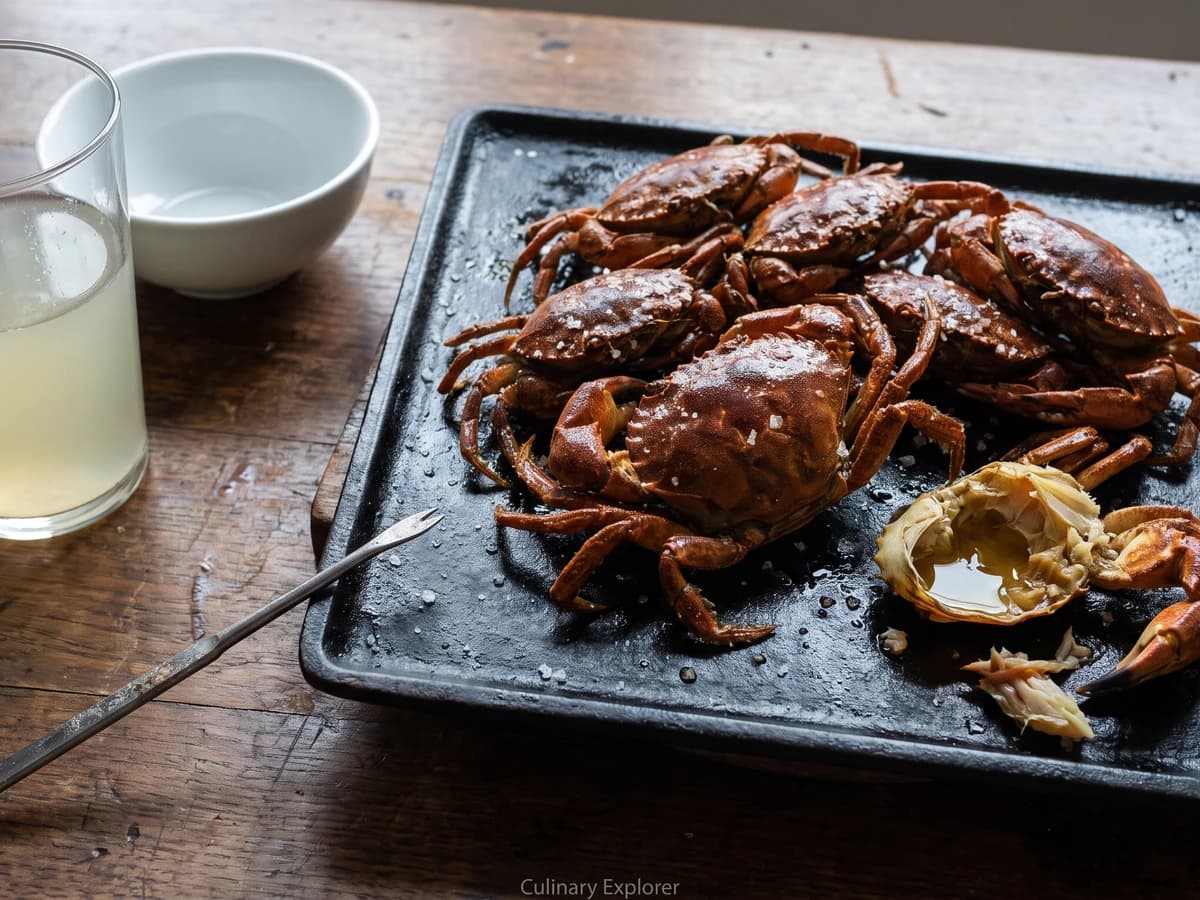
Asturias puts its small velvet crabs straight on a fierce plancha with salt and oil, keeping the shell liquor sweet and briny. Dry them well, cook them fast, and bring plenty of napkins.

Chef Isabel
Andrajos are Andalucía's dough-rag stew from Jaén and Granada: a slow rabbit guiso thickened with torn sheets of flour dough, rolled thin so they cook tender instead of gummy.