Chef Isabel
Abanico Ibérico a la Plancha
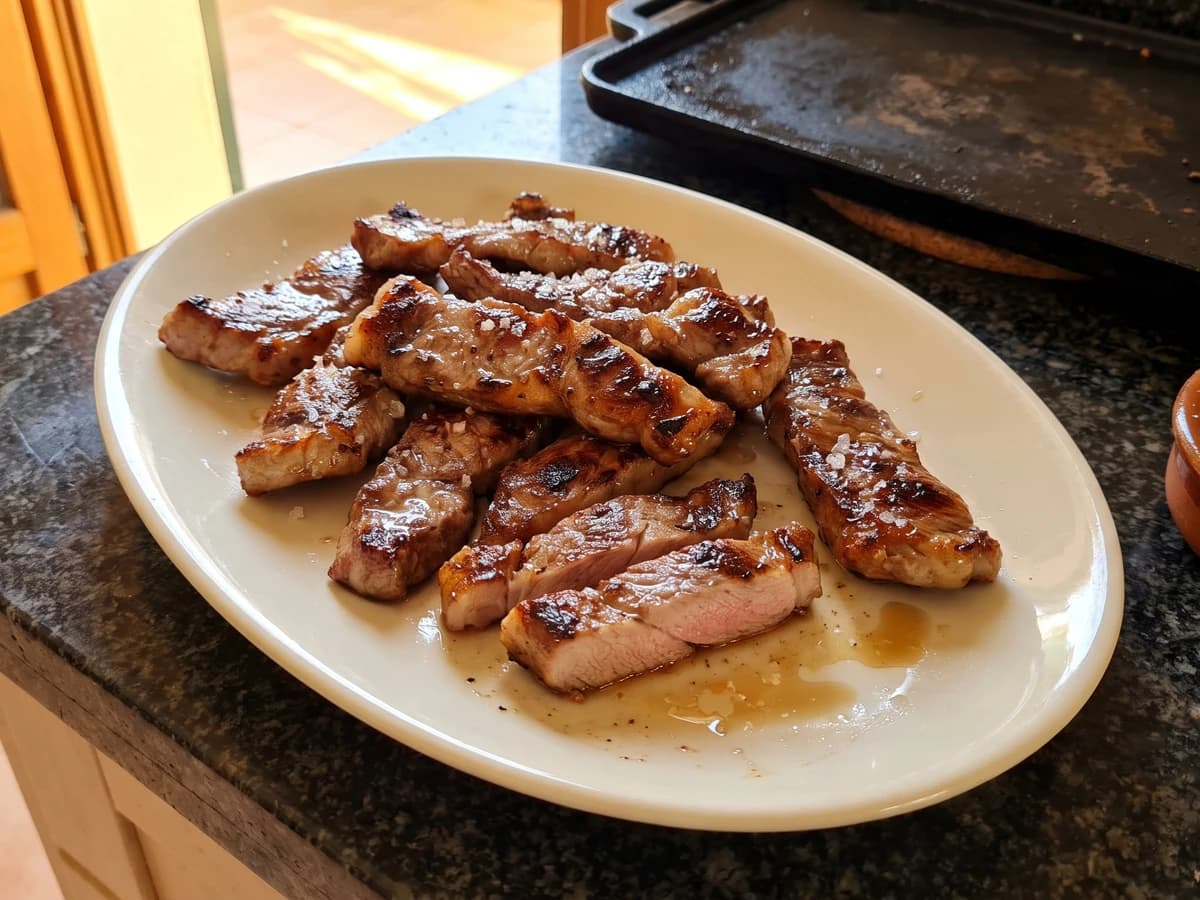
Extremadura's dehesa gives us this fan-shaped, marbled rib cut: salt it at the last moment, lay it on a fierce plancha, and count in seconds so the centre stays juicy.
A cooking platform built around craft, culture, and the stories behind what we eat.
Created by
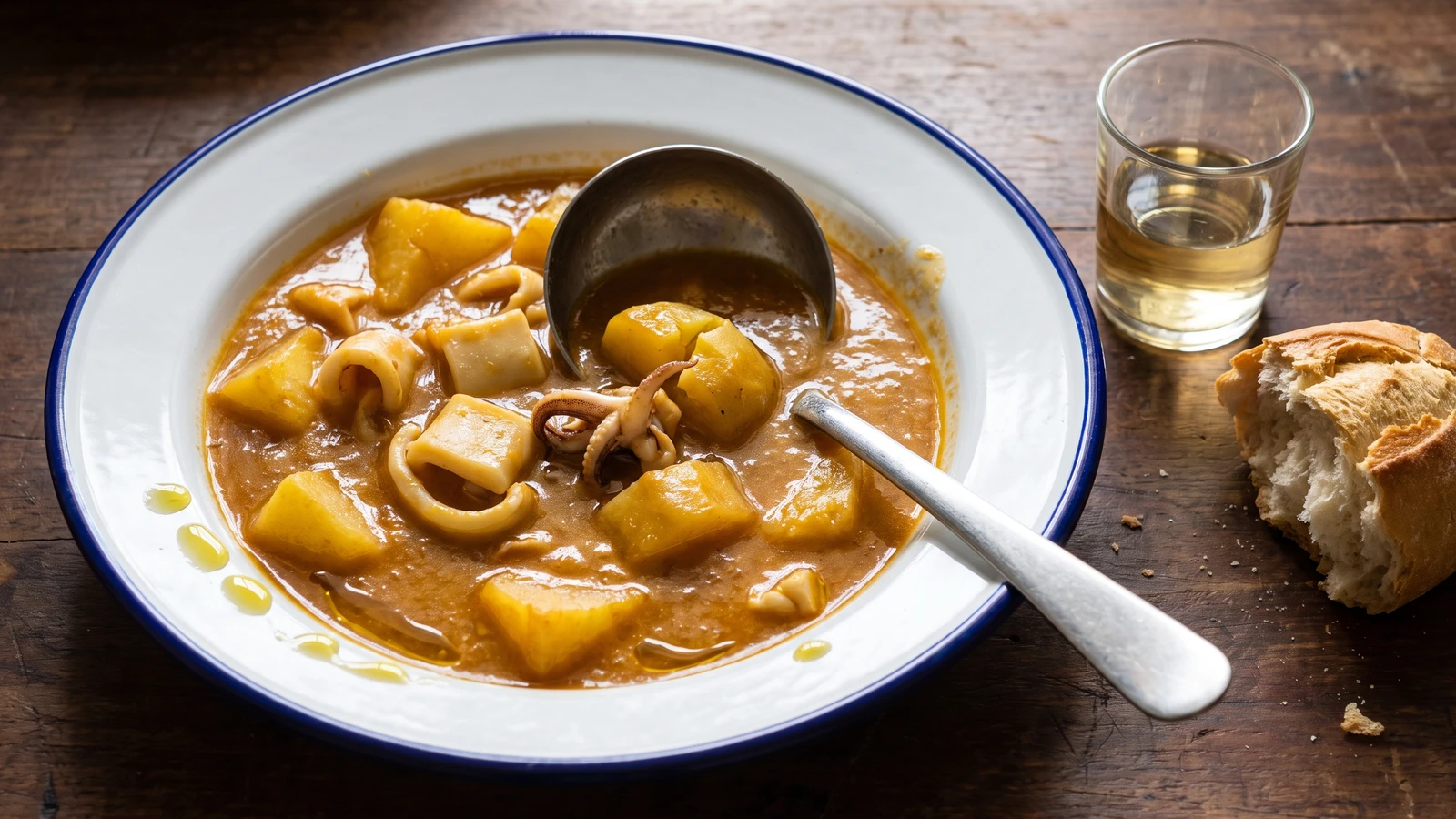
Papas con choco is Cádiz cocina de cuchara: cuttlefish, cracked potatoes, and a slow tomato sofrito, cooked until the rough potato edges surrender enough starch to bind every spoonful.
Papas con choco is a Cádiz guiso, a cuttlefish and potato stew from the Atlantic edge of Andalucía. Choco is what Cádiz calls cuttlefish, and here it cooks with onion, green pepper, tomato, white wine, and enough potato to turn the sea into cocina de cuchara, proper spoon food. What makes this more than cuttlefish served beside potatoes is the thick liquor joining them in the bowl.
Give the sofrito its time, then crack the potatoes instead of cutting tidy cubes. Push the knife partway through each potato and lever the piece away so the edge tears. Those rough faces shed starch as they simmer, a few corners soften into the broth, and the guiso binds without flour. That's the method that decides it. If every potato keeps a perfect edge, you've been too polite with them.
Frozen cleaned cuttlefish works very well and is often what I buy when the fresh catch isn't convincing. Thaw it slowly in the refrigerator and dry it well. If cuttlefish cannot be found where you are, use the same weight of large squid, body and tentacles; the flavour is a little sweeter and less deep, and you should begin testing it for tenderness about 10 minutes sooner. No hace falta haber pisado España. My note in the margin is short: let two papas give themselves to the broth, and leave the others whole.
Papas con choco belongs to Cádiz and the fishing towns around its bay, where choco is the everyday Andalusian name for cuttlefish rather than a restaurant term. Cuttlefish was an ordinary catch, and potatoes stretched it into a filling pot that could feed a household without hiding the flavour of the sea. The dry wines of the nearby Marco de Jerez entered Cádiz fish stews naturally, sharpening a slow tomato and pepper sofrito while the cracked potatoes supplied the thickener.
Quantity
900g
tentacles included, cut into 3cm pieces
Quantity
1kg
peeled and cracked into 4cm pieces
Quantity
60ml
Quantity
250g
finely chopped
Quantity
150g
seeded and finely chopped
Quantity
4 cloves (about 16g)
finely chopped
Quantity
300g
grated
Quantity
250g
drained and crushed
Quantity
4g
Quantity
1 teaspoon
Quantity
1
Quantity
150ml
Quantity
800ml
700ml for the pot, 100ml held back
Quantity
10g
divided
| Ingredient | Quantity |
|---|---|
| cleaned cuttlefishtentacles included, cut into 3cm pieces | 900g |
| all-purpose potatoes, such as Monalisa or Yukon Goldpeeled and cracked into 4cm pieces | 1kg |
| extra virgin olive oil | 60ml |
| onionfinely chopped | 250g |
| green Italian frying pepperseeded and finely chopped | 150g |
| garlicfinely chopped | 4 cloves (about 16g) |
| ripe tomatoesgrated | 300g |
| canned whole tomatoes (optional)drained and crushed | 250g |
| sweet pimentón | 4g |
| dried oregano | 1 teaspoon |
| bay leaf | 1 |
| dry white wine | 150ml |
| hot water700ml for the pot, 100ml held back | 800ml |
| fine sea saltdivided | 10g |
Pat the cleaned cuttlefish dry and cut the body and tentacles into even 3cm pieces. Finely chop the onion, green pepper, and garlic, then grate the tomatoes through the large holes of a box grater, discarding the skins. Keep the potatoes whole and unpeeled for now so they don't sit in water and lose the starch the stew needs.
Warm the olive oil in a wide, heavy casserole over medium-low heat. Add the onion, green pepper, and 3g of the salt. Cook for 18 to 22 minutes, stirring every few minutes, until the vegetables are very soft, dark gold at the edges, and nearly jammy. Add the garlic and cook for 2 minutes. Keep the heat patient. A rushed sofrito stays pale and leaves the whole pot tasting thin.
Add the grated tomato and cook over medium-low heat for 10 to 12 minutes. Stir often until its raw smell has gone, the mixture is thick enough to leave a clear trail across the bottom, and the oil begins to show around the edges. Take the casserole off the heat, stir in the pimentón and oregano for 20 seconds, then return it to the stove. Pimentón burns quickly and turns bitter, so don't leave it alone over direct heat.
Raise the heat to medium-high and fold in the cuttlefish. Cook for 8 to 10 minutes, stirring occasionally. It will release a good deal of liquid before that liquid cooks back down. Wait until the pieces are opaque and the sofrito clings to them again. Pour in the wine and scrape the bottom of the casserole. Boil for 3 to 4 minutes, until the sharp smell of alcohol has gone.
Add the bay leaf and 700ml of the hot water. Bring the pot to a lively simmer, then lower the heat and partially cover it. Cook for 20 minutes. The cuttlefish should be beginning to yield when pierced but still feel a little firm, because it has another stretch of cooking ahead. If it is still rubbery, give it 5 to 10 minutes more before adding the potatoes.
Peel the potatoes. Cut each one by pushing the knife partway through, then levering the piece away so it breaks with a rough face. This is chascar las papas, cracking the potatoes. Add them with 5g more salt and enough of the reserved hot water to leave them barely covered. Those ragged edges release starch and bind the broth; neat cubes don't do the same job.
Simmer the potatoes uncovered for 20 to 25 minutes, keeping the bubbling steady but not violent. Shake the casserole by its handles once or twice instead of stirring hard, which would break every potato. The guiso is ready when a knife enters the potatoes without resistance, the cuttlefish is tender, and the liquid coats a spoon. If it remains thin, crush two potato pieces against the side and stir them through gently.
Remove the bay leaf and take the casserole off the heat. Rest it uncovered for 10 minutes; the potatoes continue releasing starch and the liquor settles into a thick, glossy sauce. Taste and add up to the remaining 2g salt as needed. If it has tightened too far, loosen it with one or two spoonfuls of hot water. Serve in deep bowls with bread for the sauce. Siempre sale, si lo sigues.
1 serving (about 480g)
Culinary guides, cultural storytelling, and the editorial depth that makes cooking meaningful.
Discover Culinary ExplorerChef Isabel
Extremadura's dehesa gives us this fan-shaped, marbled rib cut: salt it at the last moment, lay it on a fierce plancha, and count in seconds so the centre stays juicy.
Chef Isabel
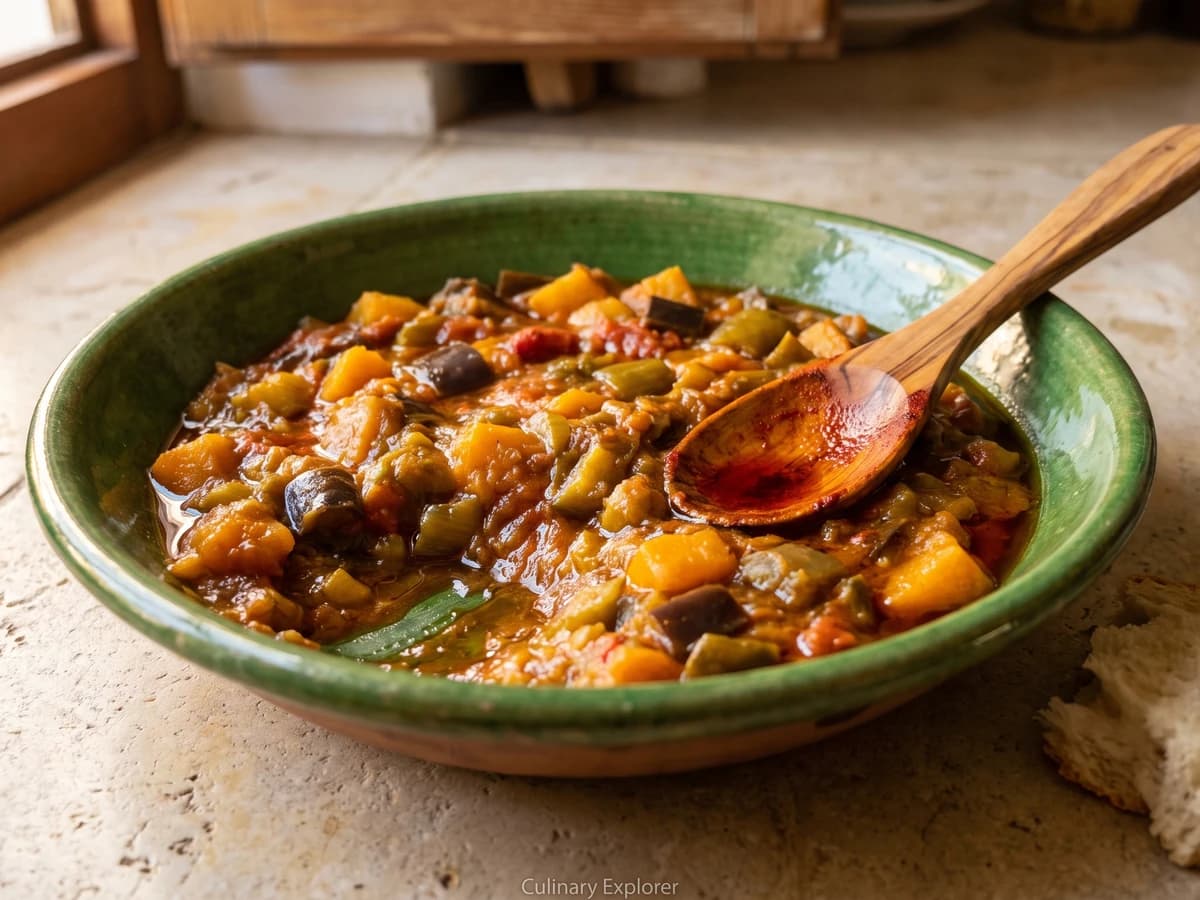
Alboronía is Andalucía's old pumpkin and aubergine stew, deepened with tomato, pimentón, and cumin, then cooked without hurry until the vegetables settle into a glossy, sweet, spoon-soft whole.

Chef Isabel
Aletría Murciana is Murcia's humble noodle guiso: fine fideos, pork ribs, potato, saffron, and a dark sweet sofrito. Get that base right and the pot knows where it's going.
Chef Isabel
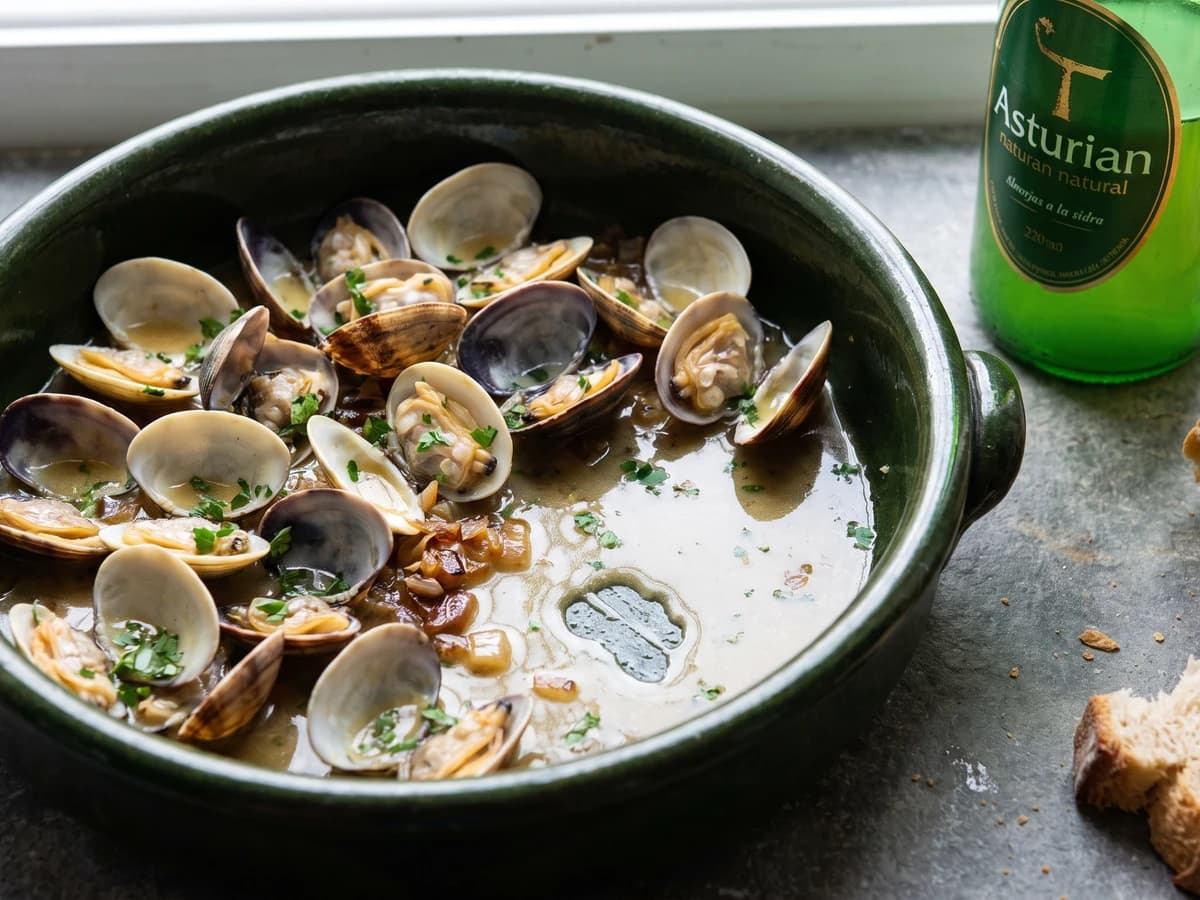
Asturias opens clams in tart natural cider over a slow onion and garlic sofrito, making a bright, briny sauce that asks for bread and rewards one rule: lift each clam as it opens.