Chef Isabel
Abanico Ibérico a la Plancha
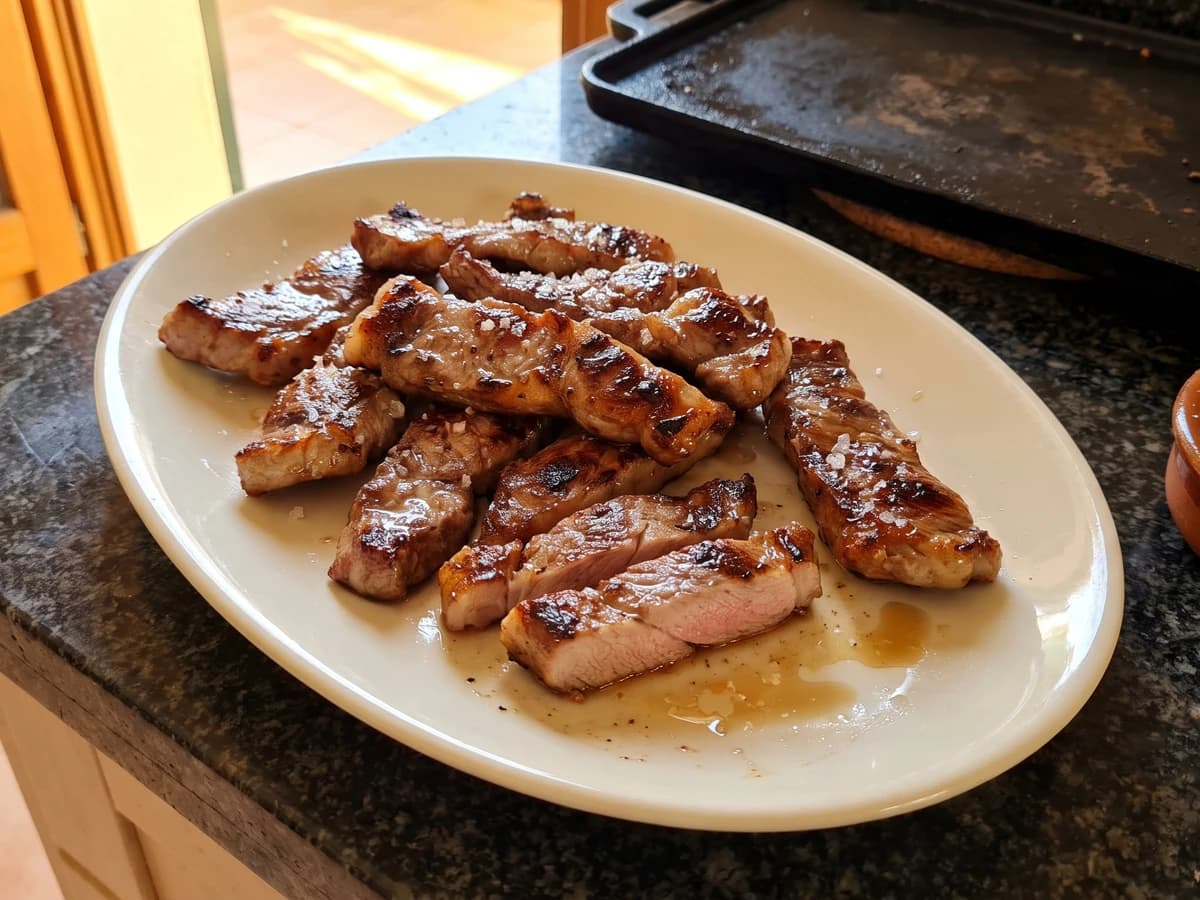
Extremadura's dehesa gives us this fan-shaped, marbled rib cut: salt it at the last moment, lay it on a fierce plancha, and count in seconds so the centre stays juicy.
A cooking platform built around craft, culture, and the stories behind what we eat.
Created by
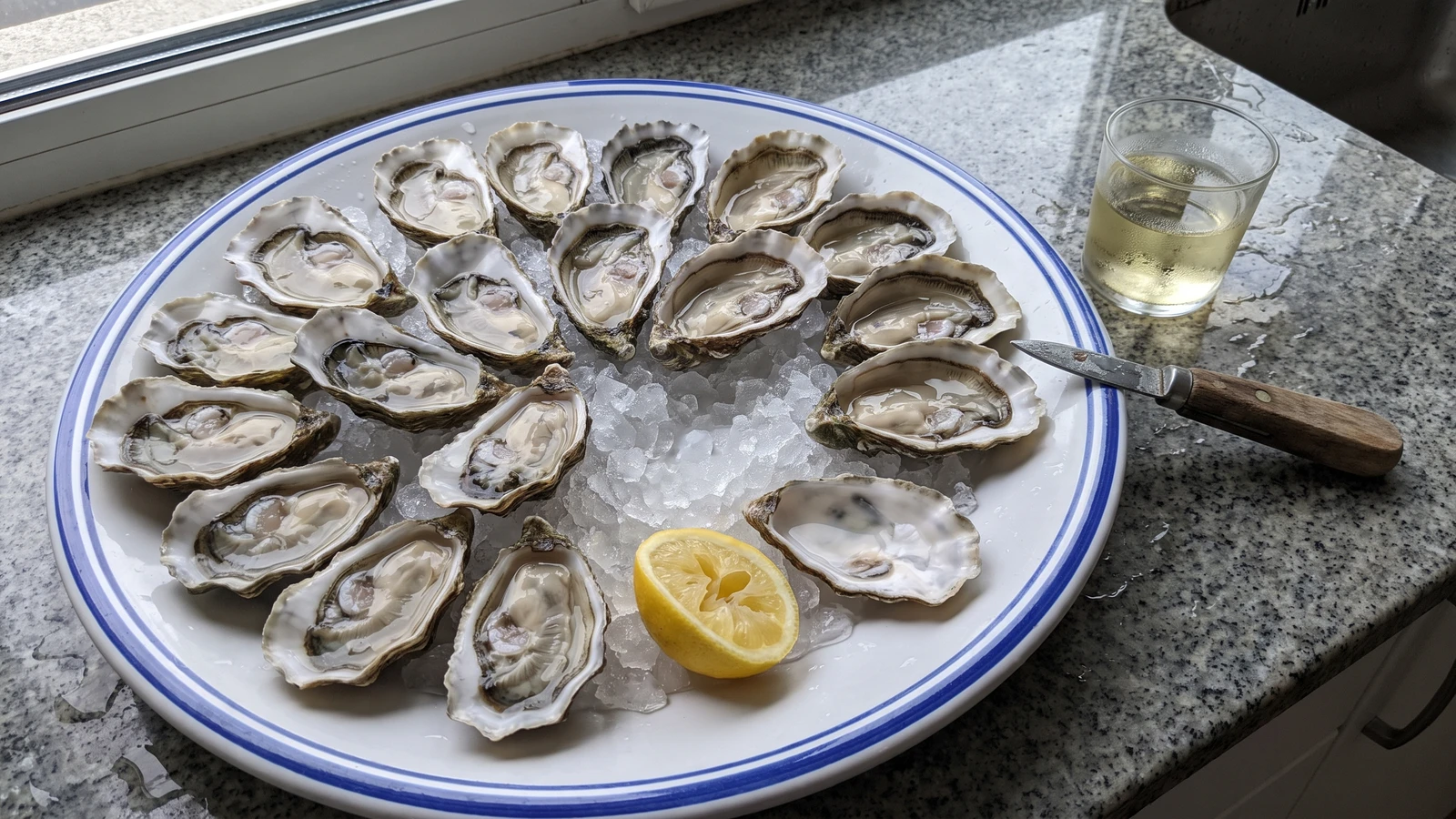
Ostras de Arcade are Galicia at its clearest: live flat oysters from the inner ría de Vigo, opened cold without losing their liquor, then eaten at once with only a few drops of lemon.
Ostras de Arcade are Galician, specifically from Arcade in Soutomaior, where the Verdugo River meets the inner ría de Vigo. The prized oyster is the flat oyster, opened live and left in its deep half-shell with every drop of cold, briny liquor. Lemon waits beside it. No chopped onion, no vinegar, no hot sauce. Those would cover the very taste you bought the oyster for.
The dish is decided while you shuck. Keep the cupped shell level from the first turn of the knife until it reaches the platter, because the oyster's own liquor is part of the serving, not waste to be tipped into the sink. Scrub the outside, open the hinge cleanly, cut the two muscles, and never rinse the flesh. I open six at a time so they reach the table cold and newly released from the shell.
Far from Galicia, look first for live European flat oysters from a careful local farm. If only Pacific oysters are available, use the freshest traceable ones you can buy; they will be deeper-cupped and plumper, without quite the same long mineral finish. The preparation still works, though the place in the name has changed. My Margin has three words beside this dish: cold, level, now. Siempre sale, si lo sigues.
Arcade is a parish of Soutomaior in Pontevedra, set where the Verdugo River reaches the sheltered inner ría de Vigo; the meeting of river and Atlantic waters made oyster cultivation part of the place's shellfish economy. Its Festa da Ostra is held each spring and celebrates the flat oyster as Arcade's emblem, traditionally opened live and eaten raw with lemon so its natural liquor remains the seasoning.
Quantity
24 (about 2 to 2.5kg in shell)
kept whole and cold until shucking
Quantity
1 medium (about 120g)
cut into 8 wedges, seeds removed
Quantity
1kg
for supporting the opened shells
| Ingredient | Quantity |
|---|---|
| live flat oysters from Arcade (Ostrea edulis)kept whole and cold until shucking | 24 (about 2 to 2.5kg in shell) |
| unwaxed lemoncut into 8 wedges, seeds removed | 1 medium (about 120g) |
| food-safe crushed ice (optional)for supporting the opened shells | 1kg |
Keep the oysters at 1 to 4°C until the moment you open them, cupped shell downward on a tray and loosely covered with a clean damp cloth. Never seal them in an airtight container or leave them soaking in fresh water. Discard any cracked oyster. Tap a gaping shell and wait ten seconds; if it doesn't begin to close, discard that one too.
Wash the lemon, cut it into 8 wedges on a clean board, remove the seeds, and set it aside. Spread the crushed ice over a large rimmed platter. Scrub each closed oyster under cold running water with a stiff brush, paying attention to the hinge, then rinse the outside and drain. Do not soak them.
Fold a thick kitchen towel into a pad and wrap the first oyster securely, leaving only the hinge exposed. Keep the deep, cupped shell underneath. Hold it firmly through the towel with your thumb clear of the blade. Work the tip of an oyster knife into the hinge with small side-to-side movements, then twist it like a key until the hinge releases. Don't jab, and don't use a kitchen knife. A kitchen knife slips before an oyster knife does, usually toward the cook.
Keep the oyster level as you slide the blade flat against the underside of the top shell and cut through the upper adductor muscle. Lift away the top shell. Remove any loose shell fragments with the clean knife tip, but never rinse the oyster or pour off its clear liquor. Slide the blade beneath the meat to sever the lower muscle, leaving the oyster loose in its deep shell. It should smell clean and briny, never sour or strongly fishy.
Nest each opened oyster level in the crushed ice so its liquor cannot escape. Open six at a time and serve them within 15 minutes. At the table, add only 2 or 3 drops of lemon to each oyster, or taste the first one without it. The lemon sharpens the sea taste; it should not bury it. Eat straight from the shell while everything is properly cold.
1 serving (about 160g)
Culinary guides, cultural storytelling, and the editorial depth that makes cooking meaningful.
Discover Culinary ExplorerChef Isabel
Extremadura's dehesa gives us this fan-shaped, marbled rib cut: salt it at the last moment, lay it on a fierce plancha, and count in seconds so the centre stays juicy.

Chef Isabel
Aletría Murciana is Murcia's humble noodle guiso: fine fideos, pork ribs, potato, saffron, and a dark sweet sofrito. Get that base right and the pot knows where it's going.
Chef Isabel
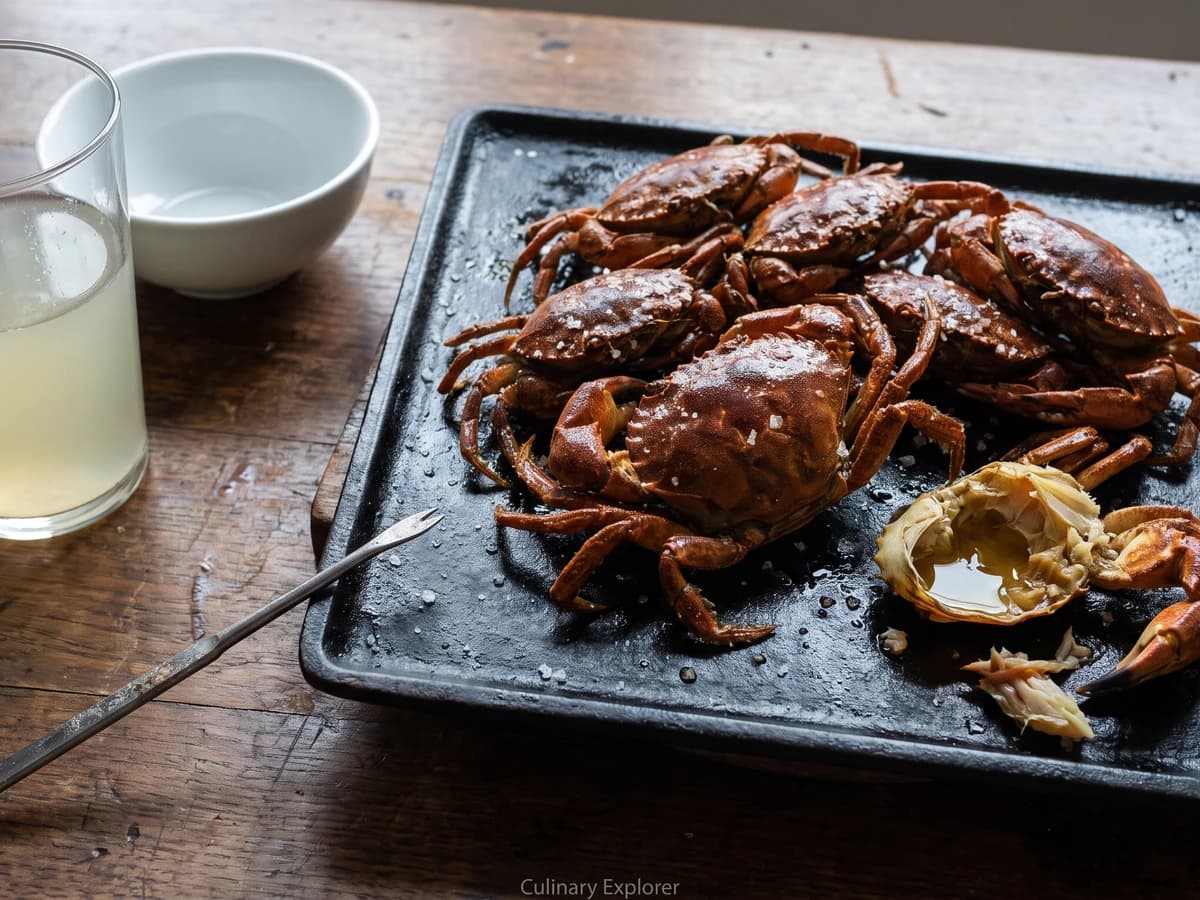
Asturias puts its small velvet crabs straight on a fierce plancha with salt and oil, keeping the shell liquor sweet and briny. Dry them well, cook them fast, and bring plenty of napkins.

Chef Isabel
Andrajos are Andalucía's dough-rag stew from Jaén and Granada: a slow rabbit guiso thickened with torn sheets of flour dough, rolled thin so they cook tender instead of gummy.