Chef Juliette
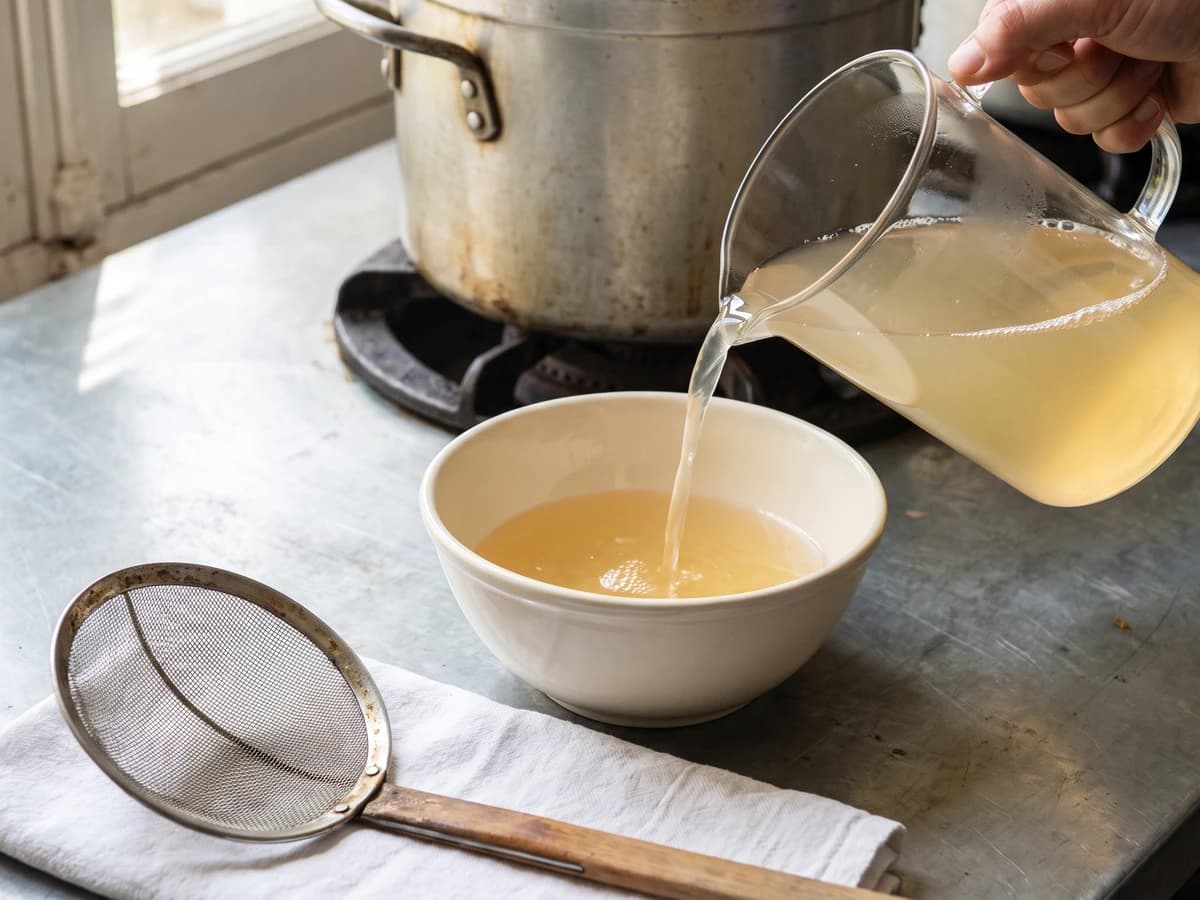
Ordinary or White Consommé
Beef shin, lean beef, and fowl begin in cold water and rise slowly toward a tremble. Skim before the boil, and you learn the quiet discipline that gives every clear French broth its backbone.
A cooking platform built around craft, culture, and the stories behind what we eat.
Created by
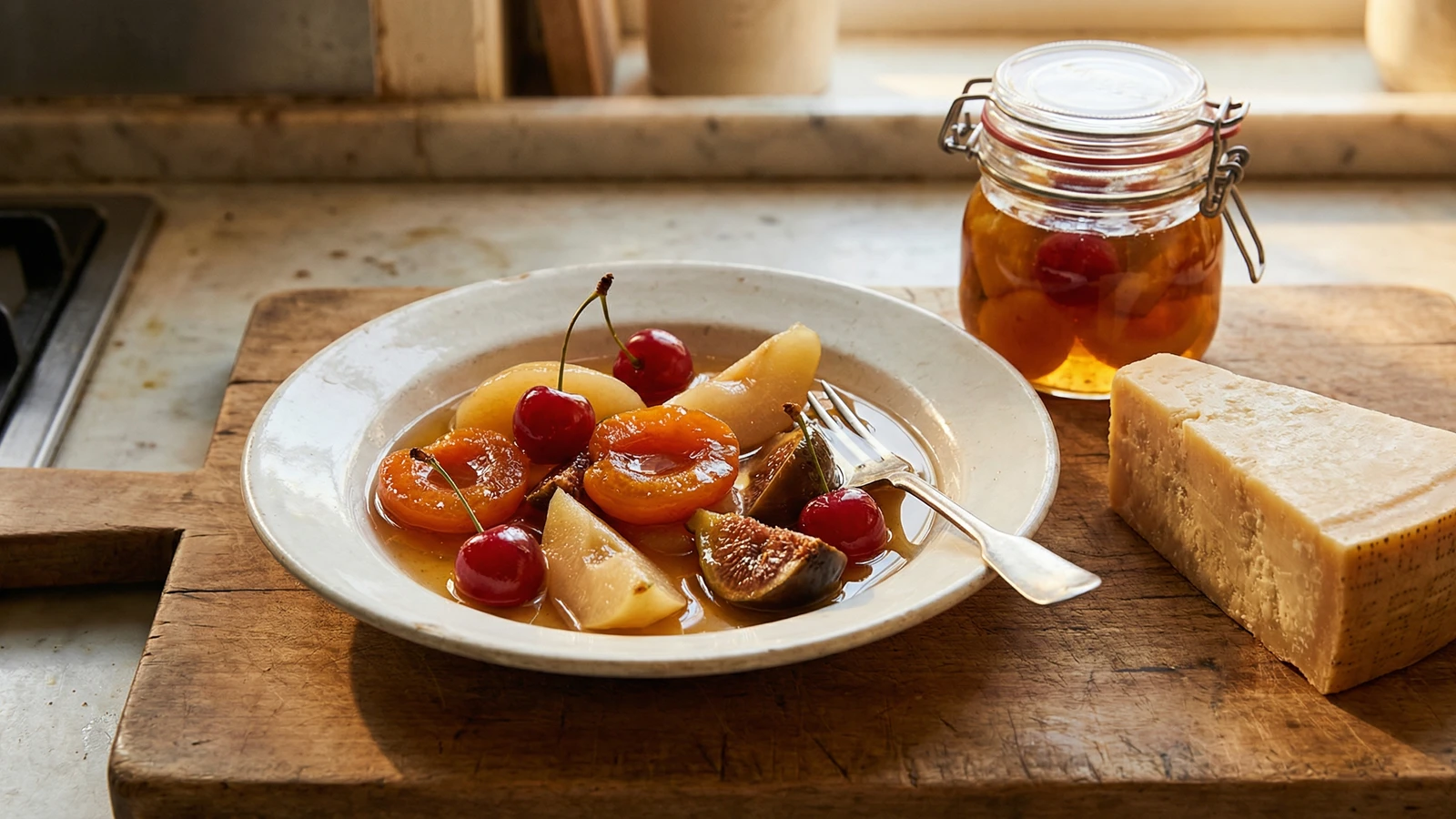
Jewel-bright candied fruits suspended in syrup that bites back. This is Cremona's gift to the Italian table, where sweetness and fire exist in perfect tension.
Mostarda is not jam. It is not chutney. It is not relish. Americans reach for these comparisons because they have nothing else, but each comparison fails. Mostarda is mostarda: whole candied fruits in a syrup infused with mustard essence so potent it clears the sinuses and makes the eyes water.
The process takes days. There is no way around this. You macerate the fruits in sugar, draw off the syrup, concentrate it, pour it back, and repeat. Each day the fruit becomes more translucent, more jewel-like, more saturated with sweetness. Only at the end do you add the mustard oil, because heat destroys its potency. The mustard is never cooked.
In Cremona, families have made this for generations, each with their own combination of fruits: quinces, cherries, apricots, figs, pears, citrus peel. The fruits should be various, the colors bright, the pieces large enough to recognize. This is not a sauce you spread. You lift out a piece of candied fruit, glistening and trembling, and set it beside a slice of bollito misto or a wedge of aged cheese. The sweetness and the fire cut through the richness. This is why mostarda exists.
Mostarda appears in Italian texts as early as the 14th century, when the mustard served as both flavoring and preservative. Cremona, positioned along trade routes in the Po Valley, became the center of production by the Renaissance. The Gonzaga and Sforza courts served it at banquets, and it remains inseparable from the Lombard Christmas table, where no bollito misto is complete without it.
Quantity
3 pounds
quinces, pears, apricots, cherries, figs, citron
Quantity
2 pounds
Quantity
1 cup
Quantity
2 tablespoons, or more to taste
Quantity
from 1 lemon
| Ingredient | Quantity |
|---|---|
| mixed firm fruitsquinces, pears, apricots, cherries, figs, citron | 3 pounds |
| granulated sugar | 2 pounds |
| water | 1 cup |
| mustard oil (olio di senape) | 2 tablespoons, or more to taste |
| lemon juice | from 1 lemon |
Select fruits that are ripe but still firm. Soft fruit will disintegrate. Peel and core pears and quinces, cutting them into quarters or thick wedges. Halve and pit apricots. Leave cherries whole with stems attached if possible. Quarter figs. Cut citron peel into strips. The pieces should be substantial, recognizable as what they are.
In a large, wide bowl or pot, layer the prepared fruits with the sugar, distributing it evenly. Add the water and lemon juice. Cover and let stand at room temperature for 24 hours. The sugar will draw moisture from the fruits and begin to dissolve into a syrup.
After 24 hours, carefully drain the syrup into a heavy saucepan, leaving the fruits behind. Bring the syrup to a boil and cook until it reaches 230°F on a candy thermometer, about 10 minutes. Pour the hot syrup back over the fruits. Cover and let stand another 24 hours.
Repeat the process: drain the syrup, boil it to 230°F, pour it back over the fruits. The syrup will be thicker now, more golden. The fruits will appear slightly more translucent. Cover and rest another 24 hours.
Drain, boil, and return the syrup once more. By now the fruits should be visibly candied, their colors intensified, their texture firm but yielding. The syrup should coat a spoon and drip slowly. Cover and rest a final 24 hours.
On the fifth day, drain the syrup one final time. Bring it to 235°F, the soft-ball stage. Remove from heat and let it cool until just warm to the touch, no hotter than 110°F. Only then add the mustard oil, stirring thoroughly to distribute it evenly. If you add it while the syrup is hot, the heat destroys the volatile compounds that give mustard its fire.
Arrange the candied fruits in clean glass jars, distributing the varieties evenly. Pour the mustard-infused syrup over them, ensuring the fruits are completely submerged. Seal and store in a cool, dark place. The mostarda improves for at least two weeks before serving and keeps for months.
Lift pieces of fruit from the syrup with a small fork or spoon, allowing excess syrup to drip back into the jar. Arrange beside slices of bollito misto, aged Parmigiano-Reggiano, or other rich foods. The mostarda is a condiment, not a dessert. A little goes far.
1 serving (about 40g)
Culinary guides, cultural storytelling, and the editorial depth that makes cooking meaningful.
Discover Culinary ExplorerChef Juliette
Beef shin, lean beef, and fowl begin in cold water and rise slowly toward a tremble. Skim before the boil, and you learn the quiet discipline that gives every clear French broth its backbone.
Chef Juliette
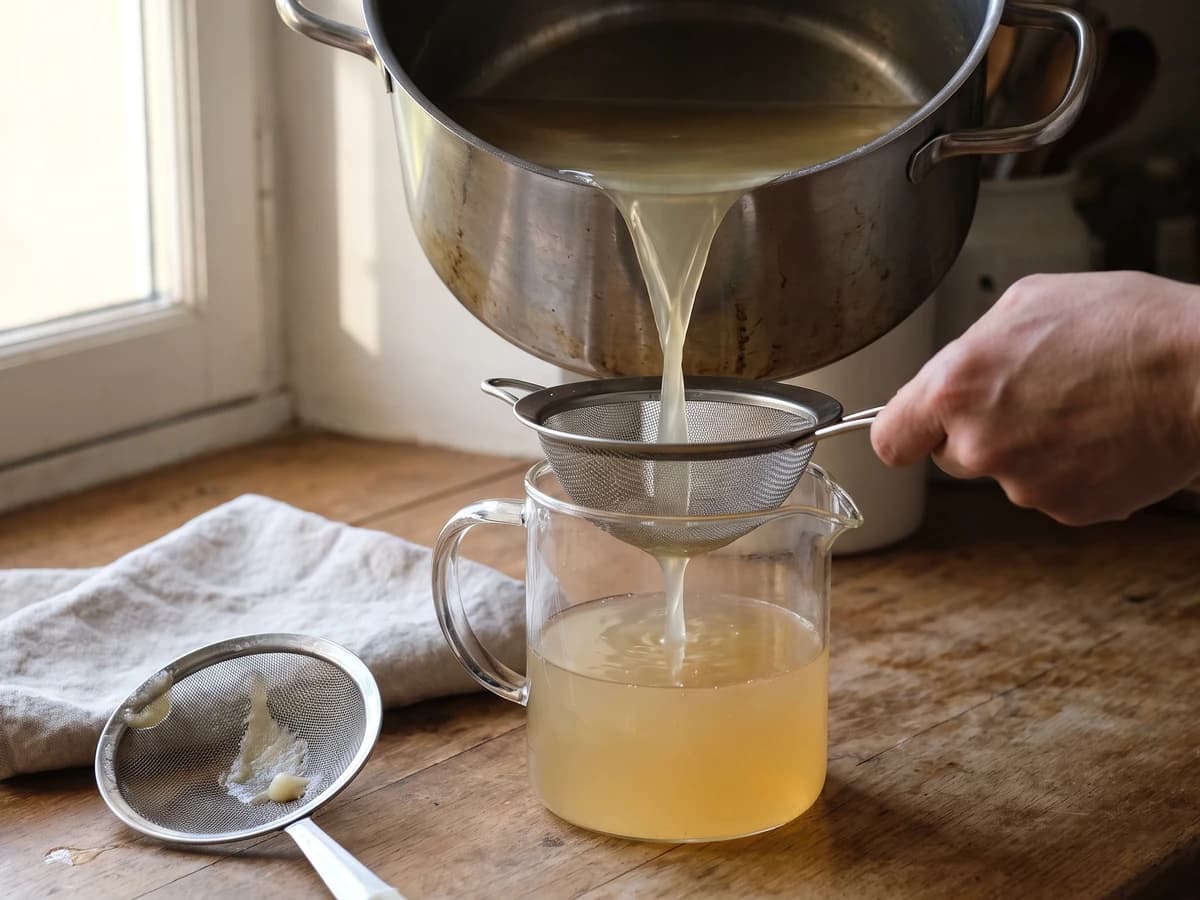
Break the veal bones small, then give them eight hours at a bare tremble. This pale, gelatinous fond becomes the quiet foundation beneath velouté, blanquette, and every sauce that must stay light.
Chef Juliette
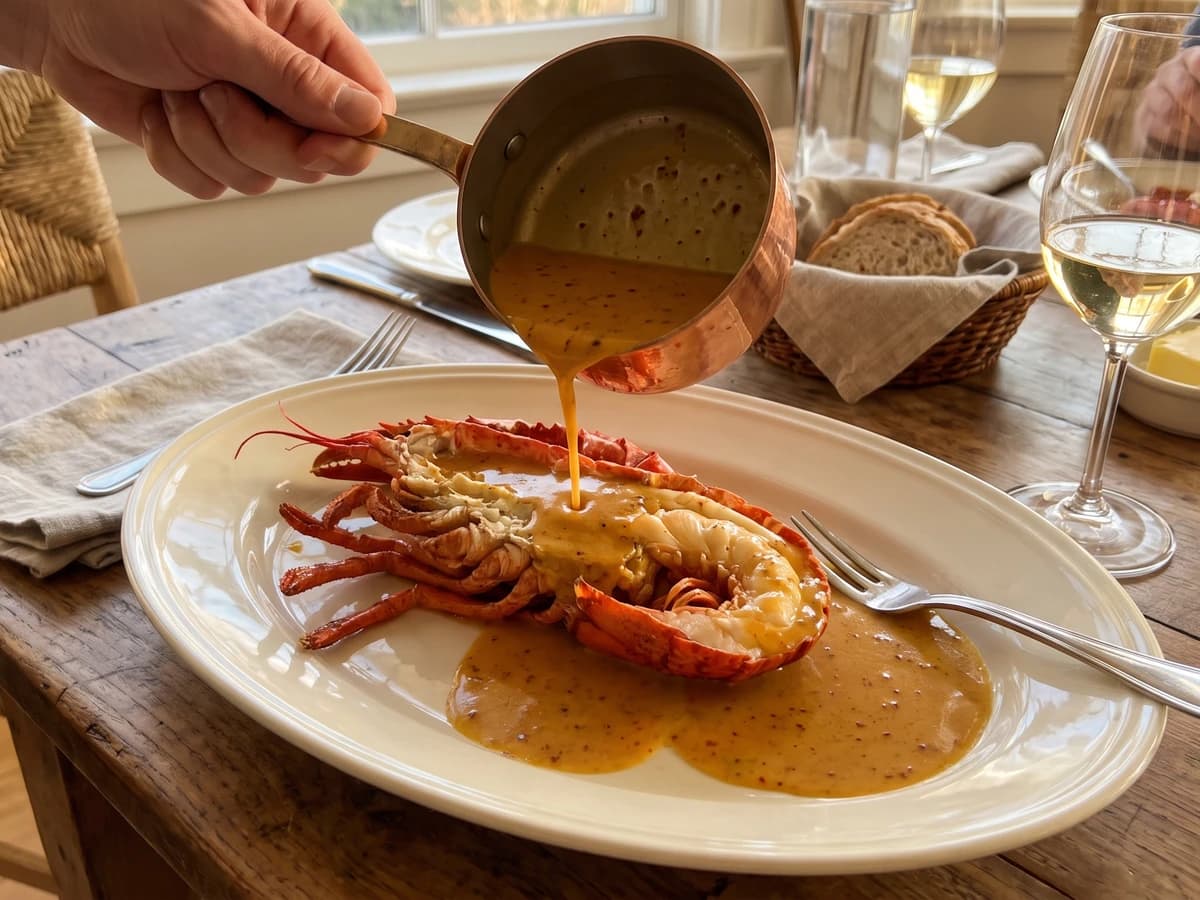
Sauce Orientale concentrates lobster-rich American Sauce with curry, then folds in cream away from the fire: a glossy, gently spiced derivative made for lobster, crayfish, and firm fish.
Chef Juliette
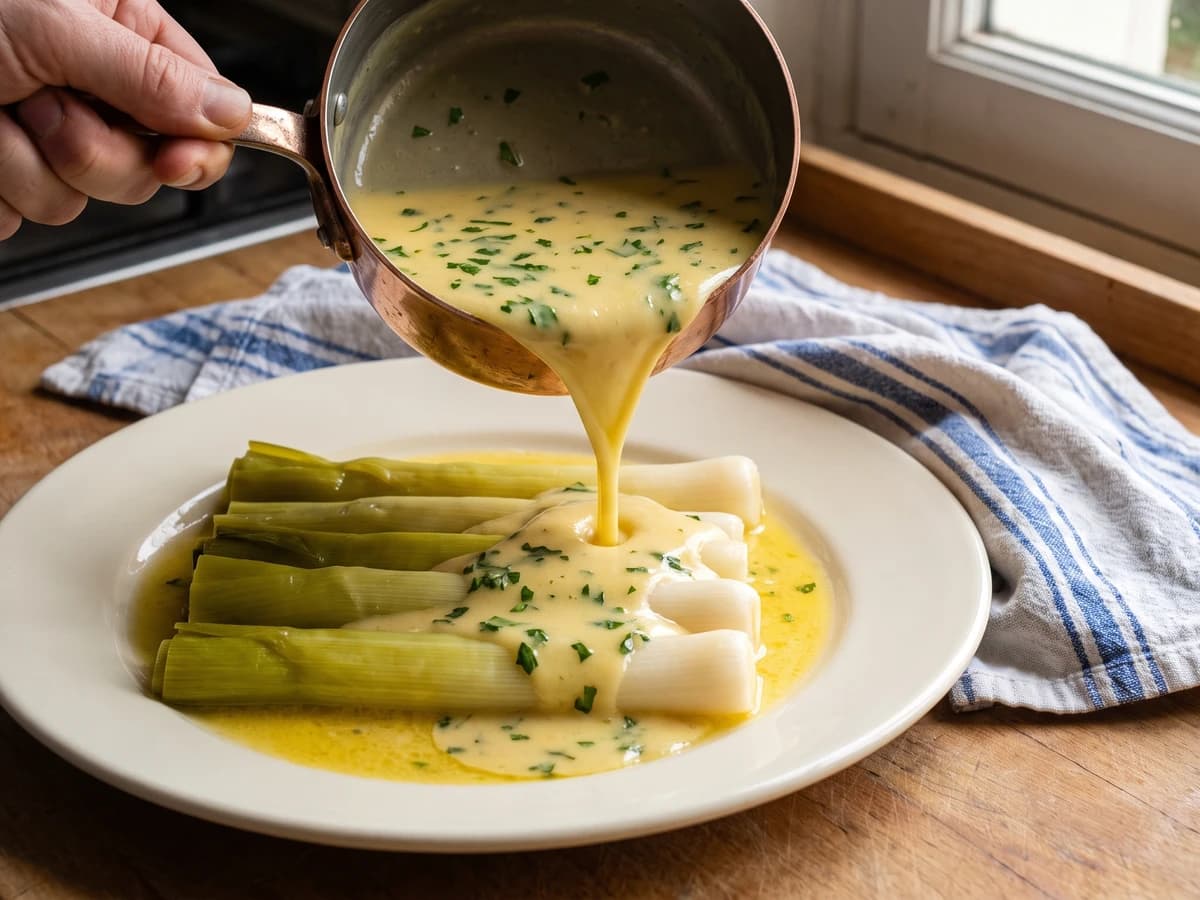
An old lesson in sauce families: Sauce Allemande takes mushroom liquor, then butter, lemon, and parsley, becoming a glossy Poulette for sheep's trotters, leeks, cauliflower, and anything needing gentle richness with a bright edge.