Chef Isabel
Abanico Ibérico a la Plancha
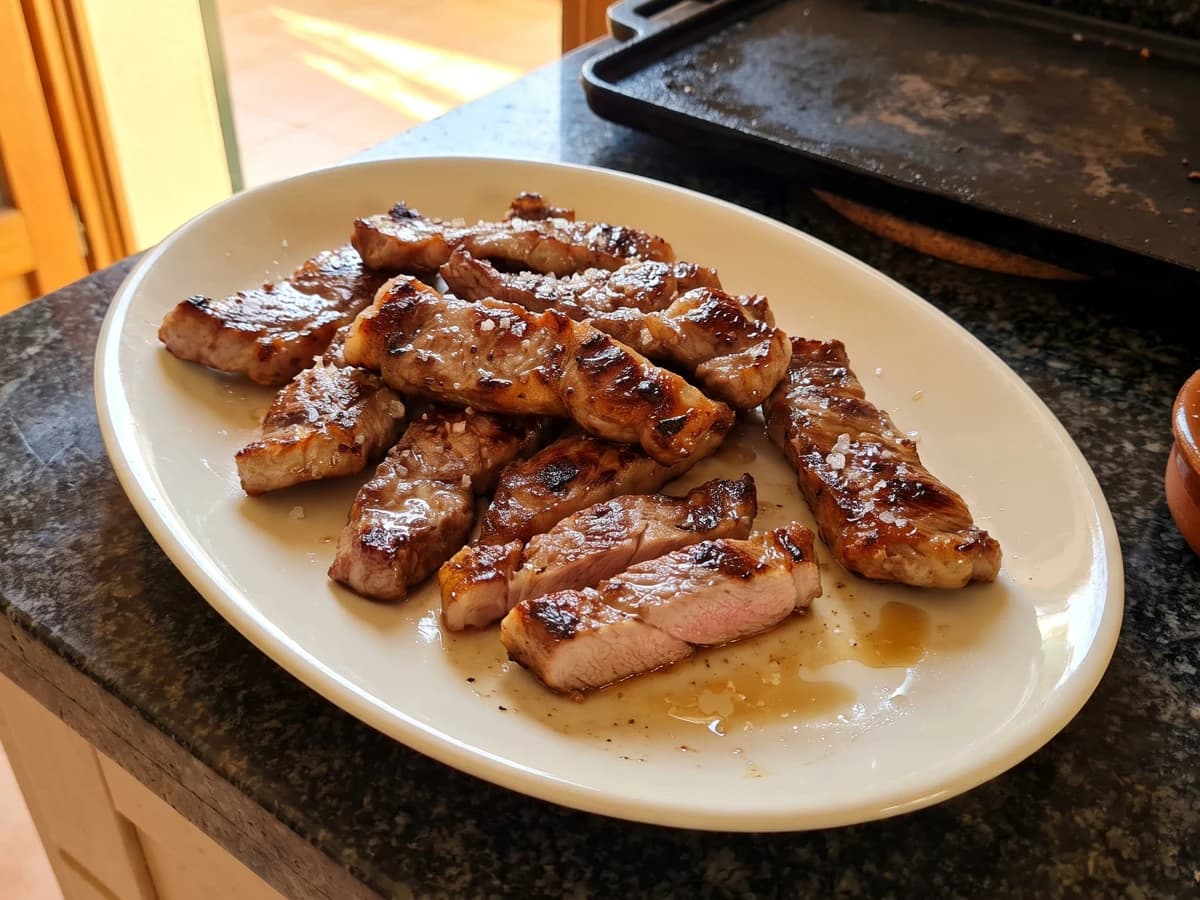
Extremadura's dehesa gives us this fan-shaped, marbled rib cut: salt it at the last moment, lay it on a fierce plancha, and count in seconds so the centre stays juicy.
A cooking platform built around craft, culture, and the stories behind what we eat.
Created by
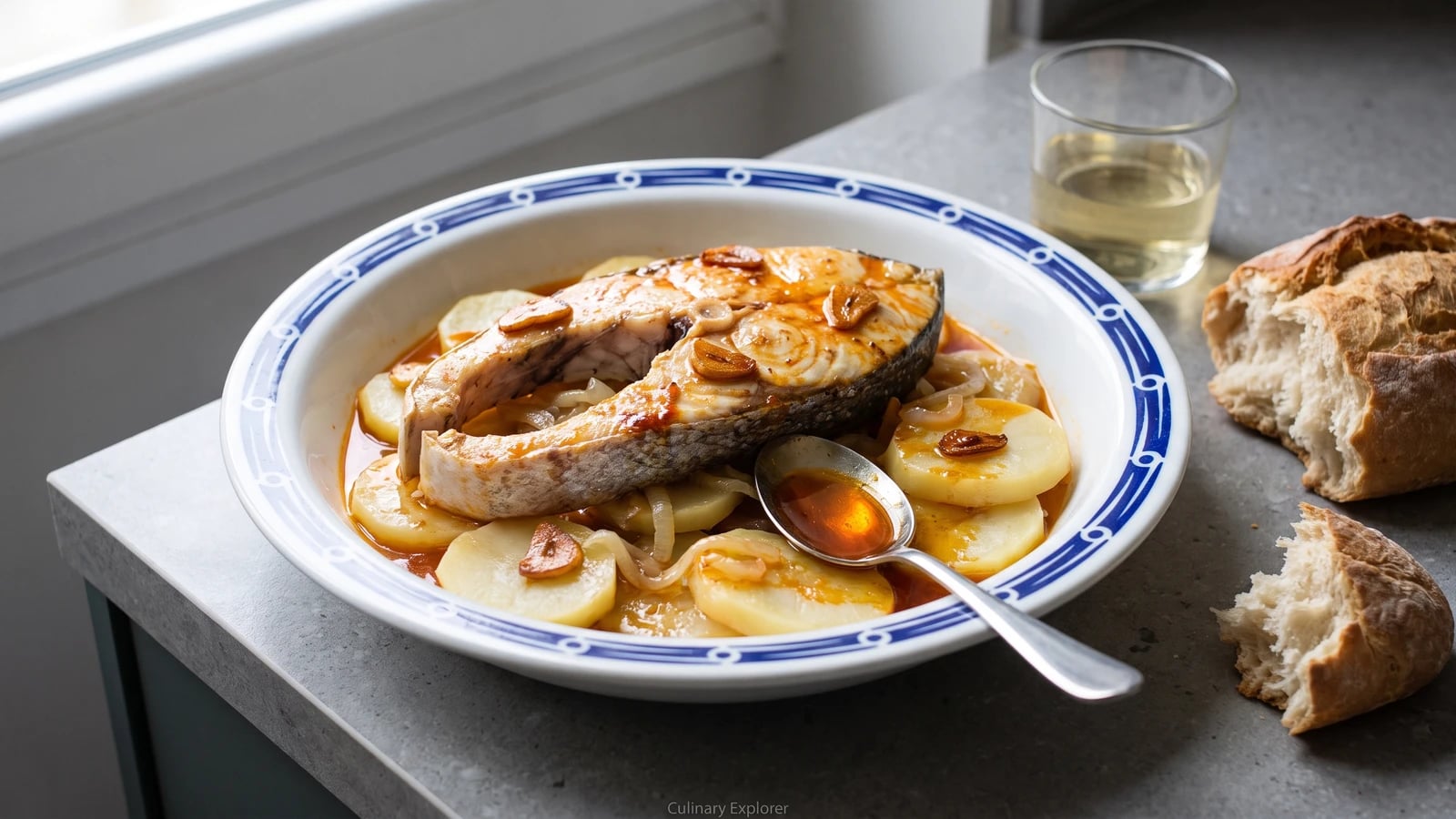
Merluza a la Gallega belongs to Galicia: thick hake steaks, potatoes and onion cooked gently, then flooded with warm ajada whose garlic and sweet pimentón stain the plate red-gold.
Merluza a la Gallega belongs to Galicia: thick hake steaks laid over cachelos, potatoes boiled in broad pieces, with onion and bay, then covered in red-gold ajada of olive oil, garlic, and sweet pimentón. Unlike Basque merluza en salsa verde, there is no flour-thickened parsley sauce here. Galicia names this one with the potatoes beneath and the garlic oil poured over at the end.
It is the sort of coastal main dish that earns its place at both a weekday table and a family gathering. The hake stays clean and delicate, the potatoes catch every drop of seasoned oil, and nothing hides the quality of the fish. Keep the cooking liquid at a bare tremble. A hard boil knocks the hake apart before its centre is ready.
The moment that decides the dish comes after the fish is cooked. Let the garlic turn pale gold, take the pan off the heat, wait a few seconds, and only then add the pimentón. It blooms in the hot oil without burning. Rush that one movement and sweetness becomes bitterness, which is a poor reward for such good hake.
No hace falta haber pisado España. Good frozen hake, thawed slowly, will make the dish properly wherever you are. If hake cannot be found, use thick cod loin of the same weight; it will be firmer, saltier, and larger-flaked, so taste the cooking liquor before adding all the salt. My Margin beside this recipe says only, "pimentón fuera del fuego," pimentón off the heat. Follow that and the rest is plain cooking.
Merluza a la Gallega belongs to Galicia's coastal caldeirada tradition, in which fish was cooked plainly with potatoes and dressed after cooking rather than hidden beneath a heavy sauce. Its ajada, also called allada, is the region's hot dressing of olive oil, garlic, and pimentón, used on ray, octopus, vegetables, and hake. The day's fish could change with the landing, but cachelos and the red-gold garlic oil kept the dish recognizably Galician.
Quantity
800g
cut into 4 bone-in centre steaks about 3cm thick
Quantity
800g
peeled and cut into 2cm rounds
Quantity
1 medium (about 180g)
thinly sliced
Quantity
1
Quantity
1.2 litres
Quantity
12g
divided
Quantity
120ml
Quantity
5 cloves (about 25g)
thinly sliced
Quantity
5g
| Ingredient | Quantity |
|---|---|
| hakecut into 4 bone-in centre steaks about 3cm thick | 800g |
| waxy potatoespeeled and cut into 2cm rounds | 800g |
| onionthinly sliced | 1 medium (about 180g) |
| bay leaf | 1 |
| cold water | 1.2 litres |
| fine sea saltdivided | 12g |
| extra virgin olive oil | 120ml |
| garlicthinly sliced | 5 cloves (about 25g) |
| sweet Spanish pimentón | 5g |
Check the hake for stray scales and bones, then pat it dry. Season both sides with 2g of the salt and keep it chilled while the potatoes begin cooking. Bone-in steaks hold together better than fillets and give the cooking liquor a little body.
Arrange the potato rounds in a wide casserole, overlapping them only slightly. Scatter over the onion, tuck in the bay leaf, and add the water and remaining 10g salt. Bring to a boil, lower the heat, and simmer uncovered for 12 to 15 minutes. The tip of a knife should enter the outside of a potato easily while meeting a little resistance at the centre.
Set the hake steaks over the potatoes in one layer. Cover the casserole and keep the liquid at the gentlest tremble for 6 to 8 minutes, depending on thickness. Do not let it boil hard. The fish is ready when it reaches 63°C at the thickest point and separates into broad, moist flakes beside the bone. Take the casserole off the heat and leave it covered for 2 minutes.
While the hake cooks, put the olive oil and sliced garlic in a small frying pan over medium-low heat. Cook for 4 to 5 minutes, moving the slices now and then, until the garlic is evenly pale gold. Take the pan completely off the heat and wait 30 seconds. Add the sweet pimentón and swirl for 10 seconds, just until the oil turns red-gold and smells warm and sweet. The residual heat is enough. Scorch the pimentón and the whole plate tastes bitter.
Remove the bay leaf. Lift the hake carefully onto warm plates, then divide the cachelos and soft onion beneath and around it. Spoon over the ajada at once, including the golden garlic slices, letting the red-gold oil run into the potatoes. Serve immediately while the hake is moist and the oil still carries the scent of garlic and pimentón. Siempre sale, si lo sigues.
1 serving (about 430g)
Culinary guides, cultural storytelling, and the editorial depth that makes cooking meaningful.
Discover Culinary ExplorerChef Isabel
Extremadura's dehesa gives us this fan-shaped, marbled rib cut: salt it at the last moment, lay it on a fierce plancha, and count in seconds so the centre stays juicy.
Chef Isabel
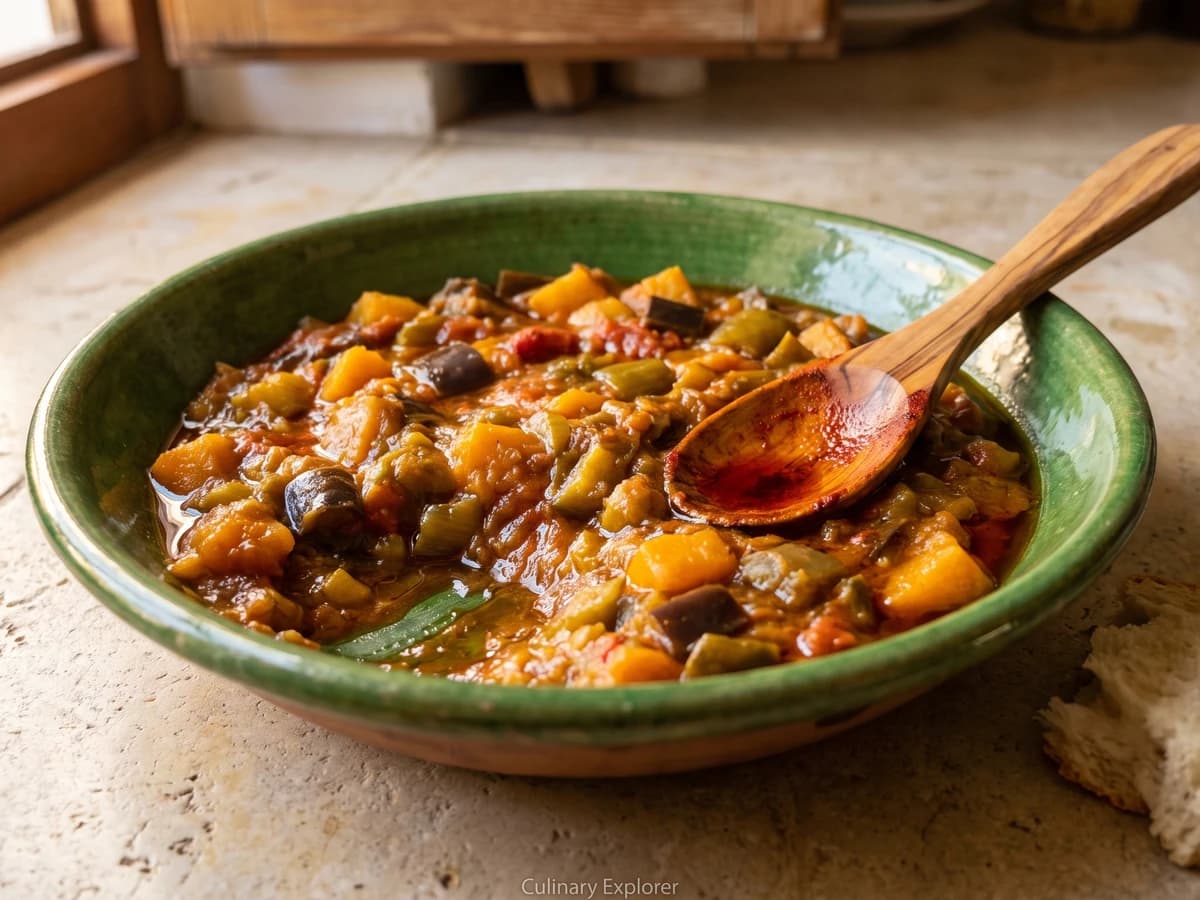
Alboronía is Andalucía's old pumpkin and aubergine stew, deepened with tomato, pimentón, and cumin, then cooked without hurry until the vegetables settle into a glossy, sweet, spoon-soft whole.

Chef Isabel
Aletría Murciana is Murcia's humble noodle guiso: fine fideos, pork ribs, potato, saffron, and a dark sweet sofrito. Get that base right and the pot knows where it's going.
Chef Isabel
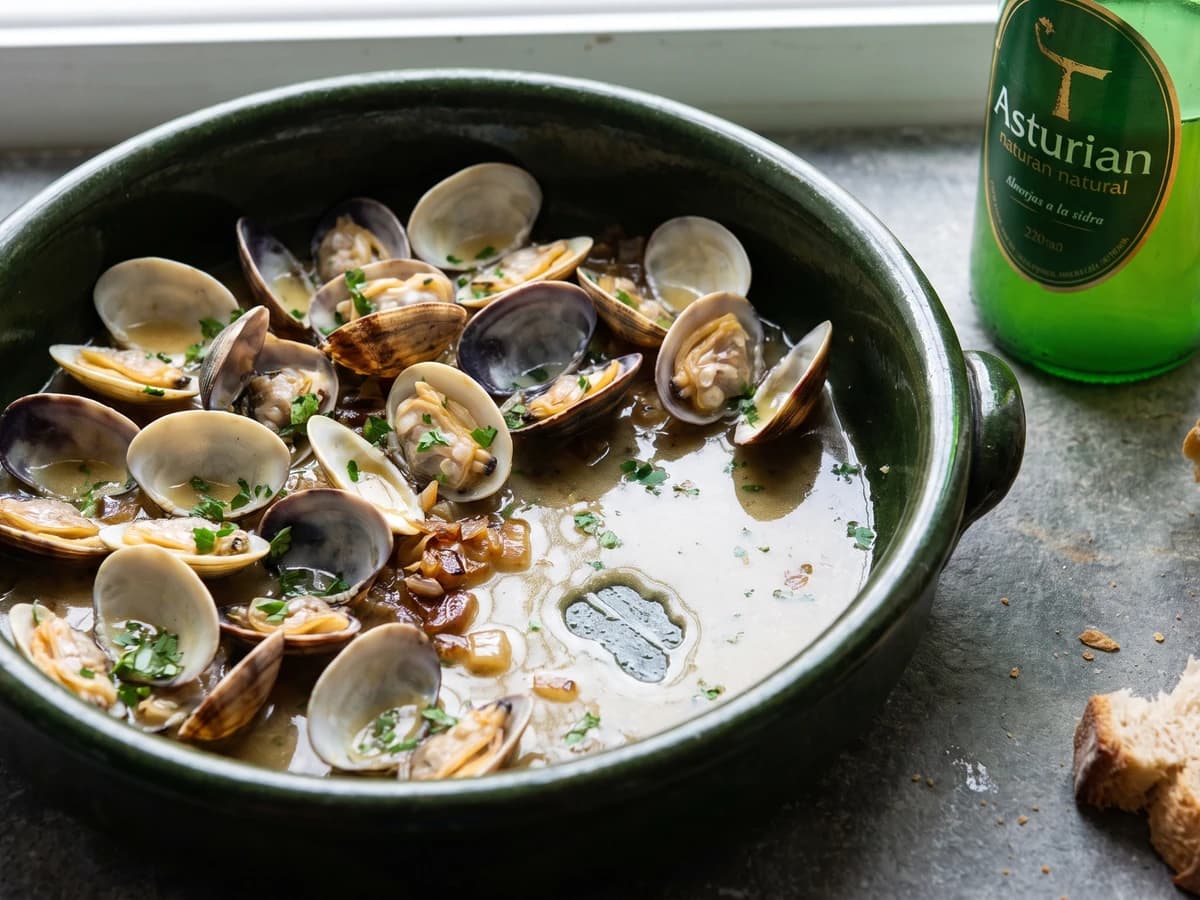
Asturias opens clams in tart natural cider over a slow onion and garlic sofrito, making a bright, briny sauce that asks for bread and rewards one rule: lift each clam as it opens.