Chef Isabel
Abanico Ibérico a la Plancha
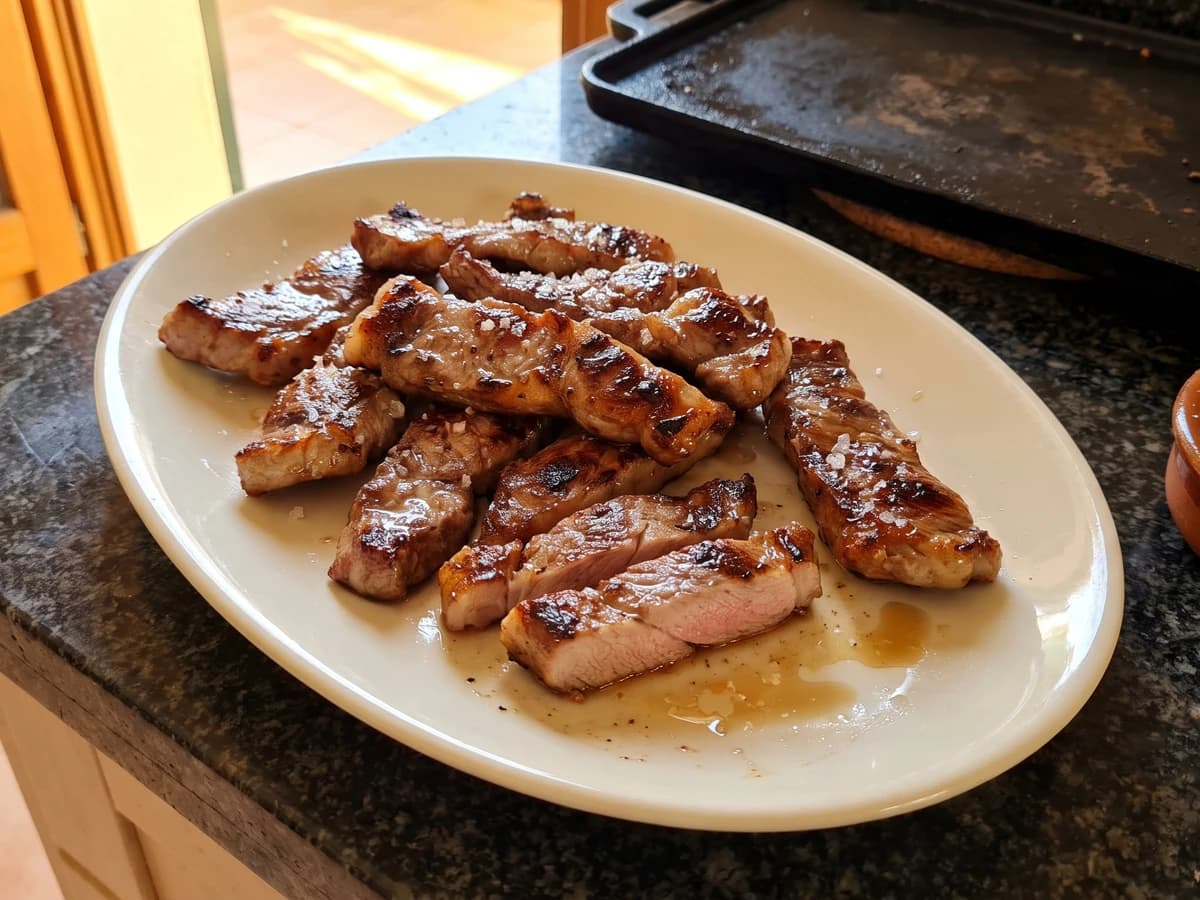
Extremadura's dehesa gives us this fan-shaped, marbled rib cut: salt it at the last moment, lay it on a fierce plancha, and count in seconds so the centre stays juicy.
A cooking platform built around craft, culture, and the stories behind what we eat.
Created by
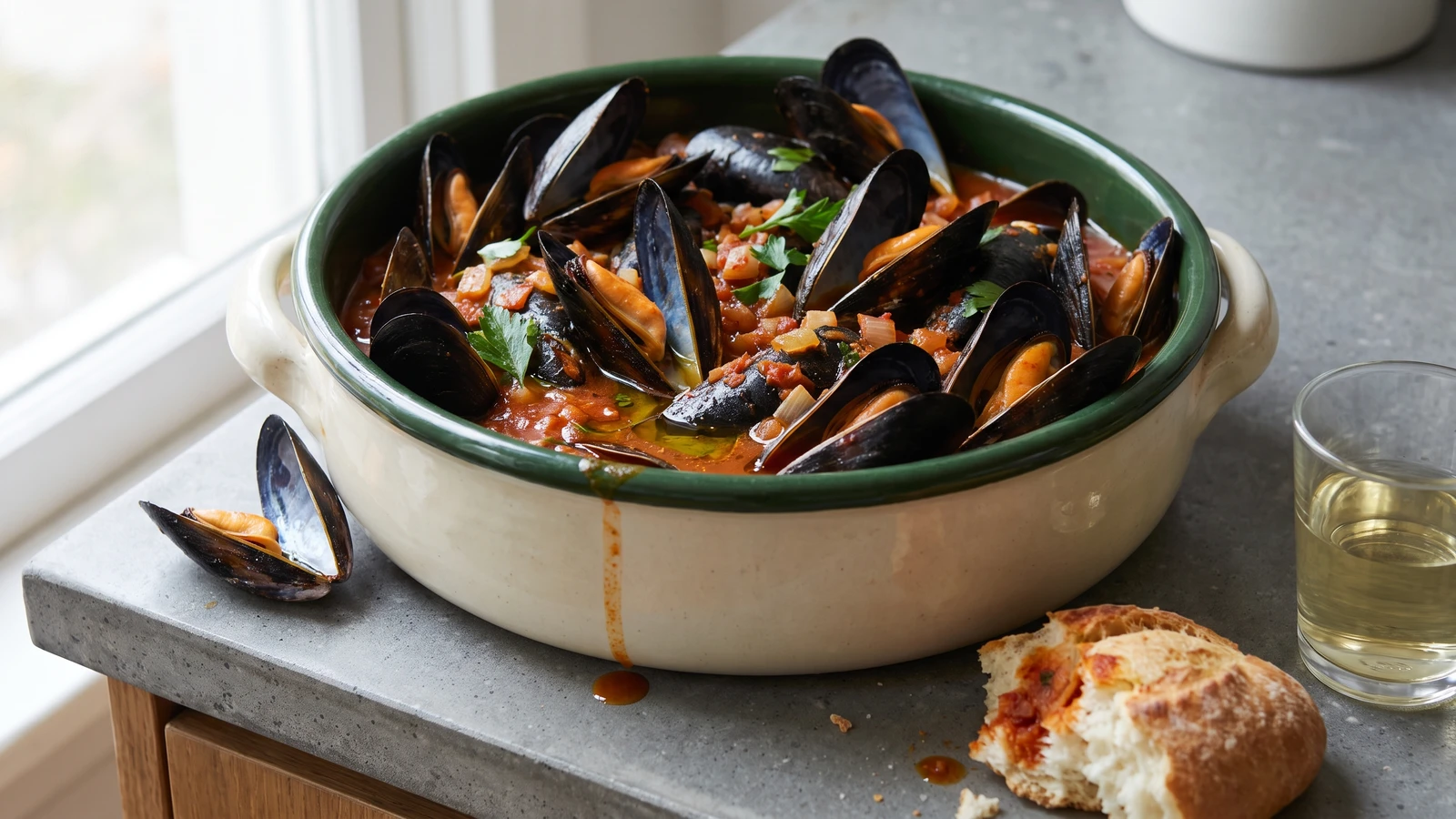
Mejillones a la marinera are Galicia in a cazuela: mussels opened with onion, garlic, bay, dry white wine and pimentón, their liquor strained and reduced into the sauce bread is waiting for.
Mejillones a la marinera are Galician coastal cooking, not merely mussels with a splash of wine. What makes them marinera is the sauce: onion and garlic cooked down in olive oil, bay, dry white wine, sweet pimentón and a little flour, all deepened with the mussels' own briny liquor. In Galicia this is the sort of cazuela, the wide serving dish, that asks for bread before it asks for a fork.
The step that decides the dish comes after the shells begin to open. I lift out each mussel as it opens, strain its liquor to remove the grit, and reduce that liquor without the shellfish in the pan. The sauce gains depth while the mussels stay tender. Leave them boiling through the reduction and you'll have a fine sauce full of little rubber erasers, which is poor payment for good shellfish.
Galicia's raft-grown mussels are large, full and gently sweet. If you're far from Spain, fresh cultivated blue mussels are the proper substitute; their meat is usually smaller and their liquor may be sharper and saltier, so taste before seasoning and reduce with care. Any dry, unoaked white wine can stand in for a Galician wine, though it won't bring quite the same fresh Atlantic edge. The line in my Margin is short: take them out, strain the liquor, put them back. Siempre sale, si lo sigues, it turns out if you follow it.
The sheltered rías of Galicia, especially the Rías Baixas, provide cold, plankton-rich water in which mussels are cultivated on ropes suspended from bateas, floating timber rafts. A la marinera names a family of fishermen's sauces built from aromatics, wine and the cooking liquor of the shellfish, with flour giving the Galician version enough body to cling to bread. Some Galician households add tomato, while others let pimentón and mussel liquor carry the sauce; in either version, the shellfish remains the center of the dish.
Quantity
2kg
scrubbed and debearded
Quantity
45ml
Quantity
200g
finely chopped
Quantity
12g
finely chopped
Quantity
12g
Quantity
5g
Quantity
150ml
Quantity
2
Quantity
10g
finely chopped
Quantity
1g
use only if needed after tasting
Quantity
300g
for serving
| Ingredient | Quantity |
|---|---|
| live musselsscrubbed and debearded | 2kg |
| extra virgin olive oil | 45ml |
| onionfinely chopped | 200g |
| garlicfinely chopped | 12g |
| plain flour | 12g |
| sweet pimentón | 5g |
| dry white wine | 150ml |
| bay leaves | 2 |
| flat-leaf parsleyfinely chopped | 10g |
| fine sea salt (optional)use only if needed after tasting | 1g |
| pan gallego or crusty country bread (optional)for serving | 300g |
Rinse the mussels under cold running water, scrub away any grit, and pull off the beards. Do not soak them in fresh water. Discard cracked shells and any open mussel that does not close within a minute after a firm tap.
Warm the olive oil in a wide lidded pan over medium-low heat. Add the onion and cook for 12 to 15 minutes, stirring often, until deep gold, soft and nearly jammy. This is the sofrito, the slow onion base, and its sweetness gives the sauce its depth. Add the garlic and cook for 1 minute without letting it brown.
Stir in the flour and cook for 1 minute so it loses its raw taste. Take the pan off the heat, add the pimentón, and stir for 10 seconds. Pour in the wine at once so the paprika cannot scorch. Add the bay leaves, return the pan to medium heat, and simmer for 2 minutes, scraping the base smooth.
Raise the heat to high, add the mussels, and cover tightly. Cook for 4 to 6 minutes, shaking the pan twice. Check after 3 minutes and transfer each mussel to a large bowl as soon as its shell opens. Do not leave the early ones in while the last ones catch up, or tender mussels become rubbery. Discard any that remain closed after cooking.
Let the liquid in the pan settle for 1 minute. Pour it through a fine-mesh sieve into a bowl, pressing the softened onion and garlic through with the back of a spoon, but leave the final 15ml of gritty sediment behind. Rinse the pan if any sand remains, then return the strained sauce to it.
Boil the strained sauce over medium-high heat for 3 to 5 minutes, until glossy and thick enough to coat the back of a spoon while still running freely. Taste before adding salt because mussel liquor can provide all it needs. Add no more than the measured 1g if the sauce tastes flat.
Return the mussels and any liquid collected in their bowl to the pan. Add most of the parsley and turn everything through the sauce for 30 seconds, just long enough to coat and warm the shells. Spoon into a wide cazuela, scatter over the remaining parsley, and serve immediately with bread for the sauce.
1 serving (about 270g)
Culinary guides, cultural storytelling, and the editorial depth that makes cooking meaningful.
Discover Culinary ExplorerChef Isabel
Extremadura's dehesa gives us this fan-shaped, marbled rib cut: salt it at the last moment, lay it on a fierce plancha, and count in seconds so the centre stays juicy.
Chef Isabel
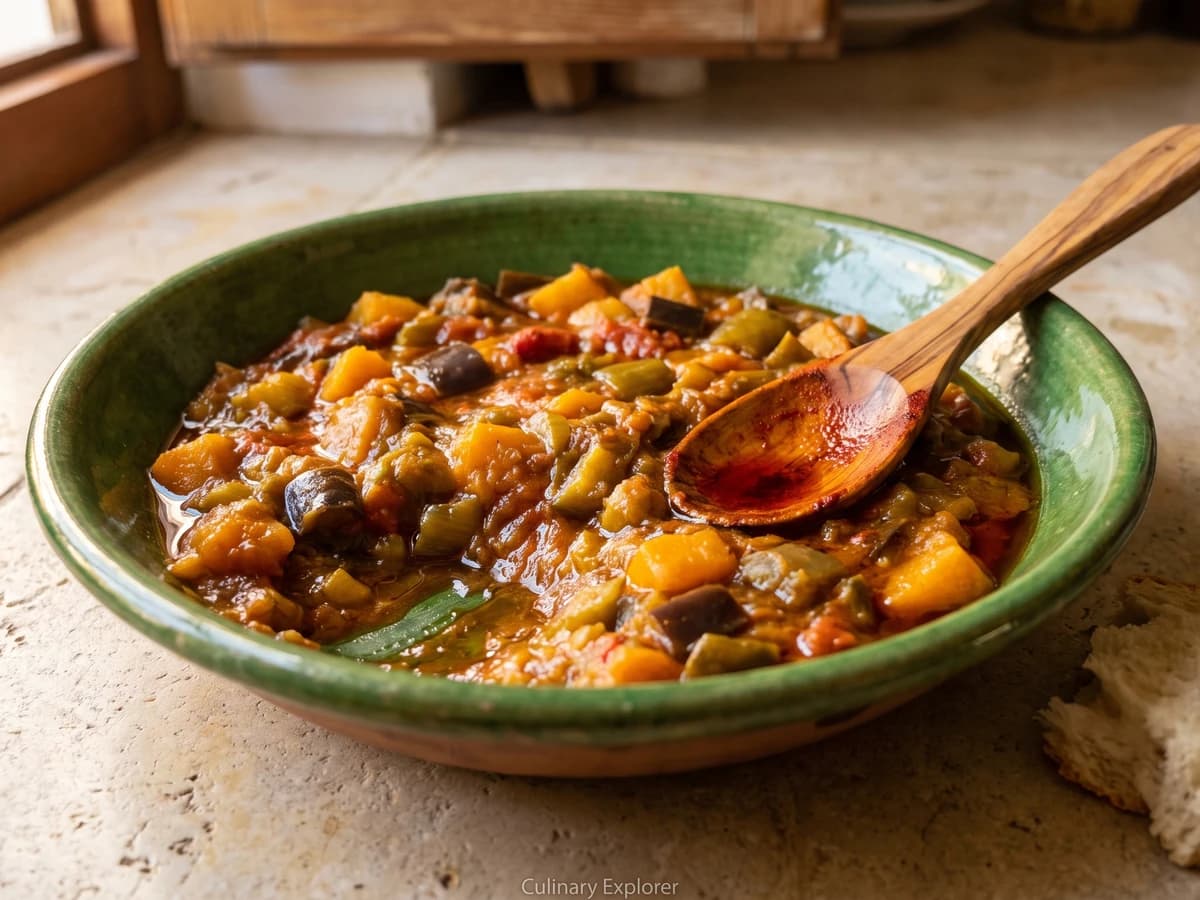
Alboronía is Andalucía's old pumpkin and aubergine stew, deepened with tomato, pimentón, and cumin, then cooked without hurry until the vegetables settle into a glossy, sweet, spoon-soft whole.

Chef Isabel
Aletría Murciana is Murcia's humble noodle guiso: fine fideos, pork ribs, potato, saffron, and a dark sweet sofrito. Get that base right and the pot knows where it's going.
Chef Isabel
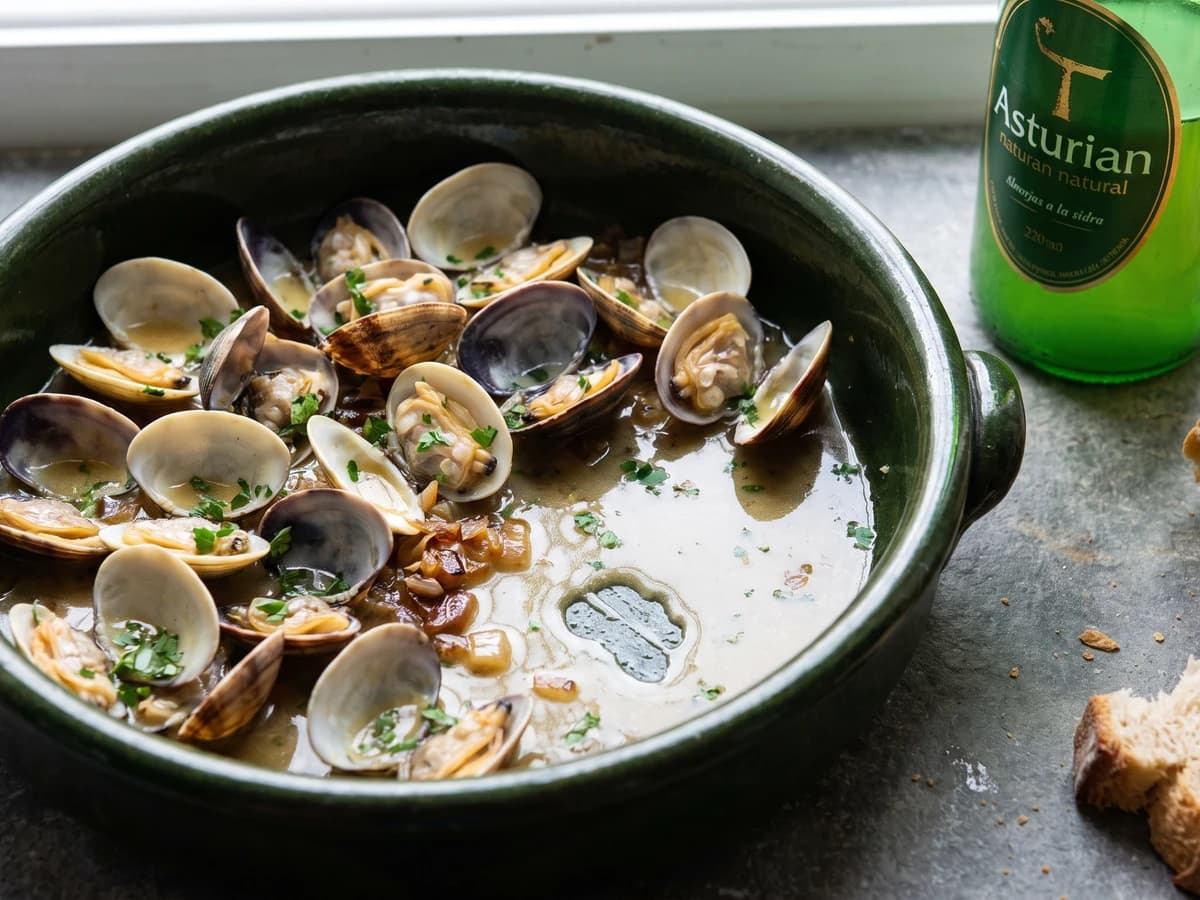
Asturias opens clams in tart natural cider over a slow onion and garlic sofrito, making a bright, briny sauce that asks for bread and rewards one rule: lift each clam as it opens.