Chef Isabel
Abanico Ibérico a la Plancha
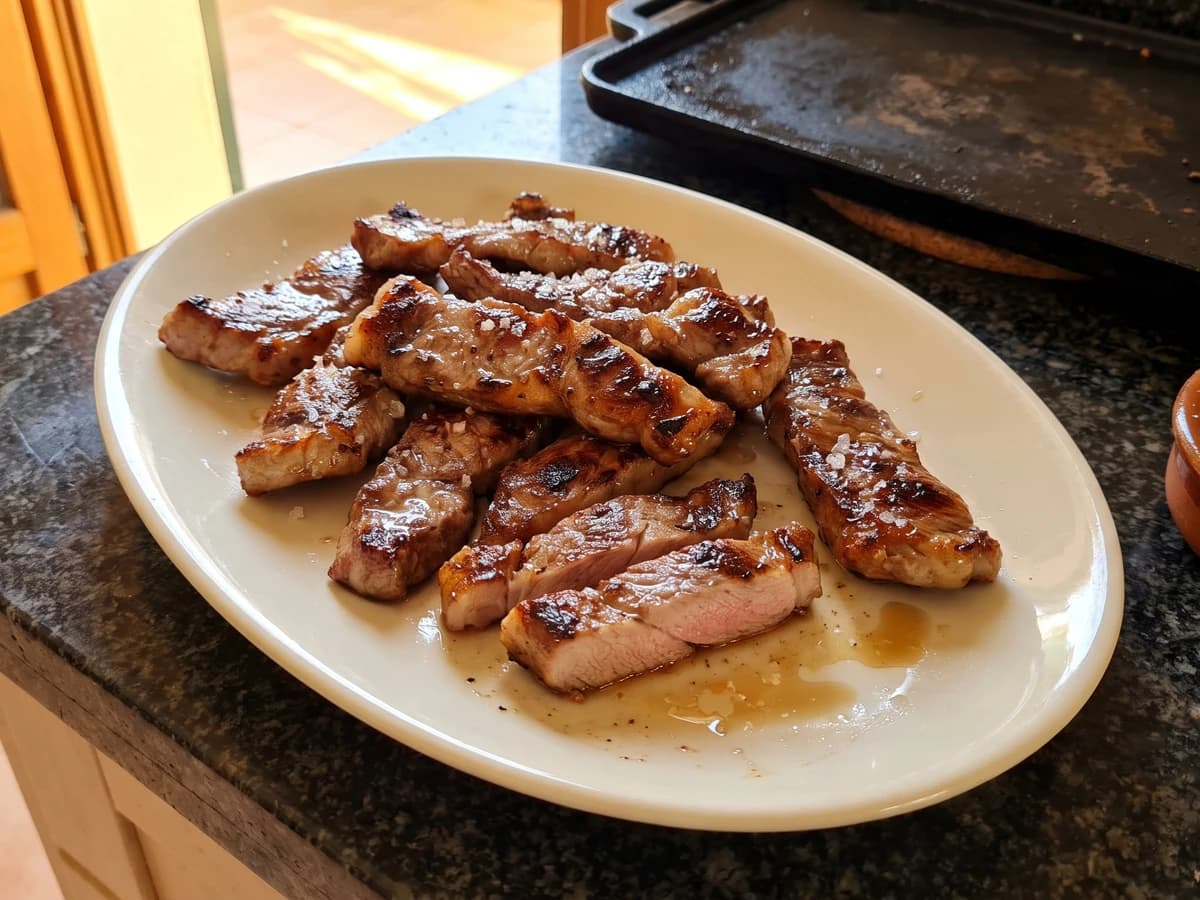
Extremadura's dehesa gives us this fan-shaped, marbled rib cut: salt it at the last moment, lay it on a fierce plancha, and count in seconds so the centre stays juicy.
A cooking platform built around craft, culture, and the stories behind what we eat.
Created by
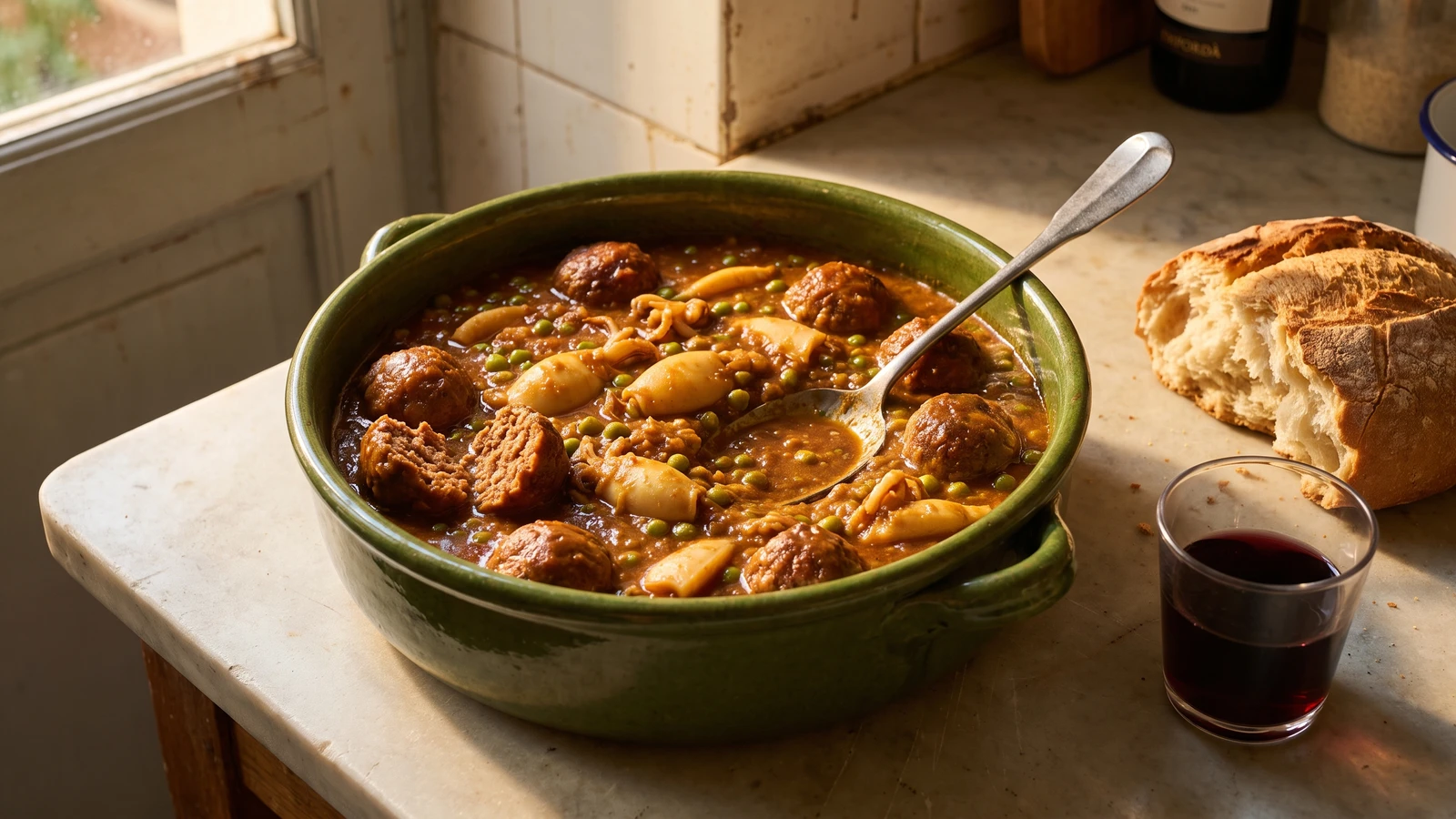
Catalonia puts sea and mountain in one cazuela: browned pork and beef meatballs, tender cuttlefish, a patient sofregit, and almond picada making one deep, glossy sauce.
Mandonguilles amb sípia is Catalan mar i muntanya, sea and mountain in the same pot. Pork and beef meatballs meet cuttlefish in a dark sofregit, then an almond-and-bread picada binds their juices into one sauce. The cuttlefish isn't an ornament laid beside the meat. It braises with it, gives the sauce its clean sea taste, and becomes tender enough to cut with a fork.
The sofregit decides whether the dish works. Cook the onion low until dark gold and jammy, then reduce the tomato until its water is gone and the oil appears again. That slow cooking makes the sweetness and depth the meatballs and cuttlefish need. A pale, hurried base leaves two good ingredients sitting in a thin sauce, barely introduced.
If cuttlefish is difficult to find, use large squid, body and tentacles, cut to the same size. The result will be a little sweeter and less firm, and you should begin testing it 10 minutes earlier. Frozen cleaned cuttlefish is perfectly good once thawed slowly and dried well. No hace falta haber pisado España, you don't need to have set foot in Spain, but you do need to let the sofregit take its time.
Shape the meatballs evenly, keep the braise gentle, and add the picada only near the end. My notebook margin says simply, let the sauce settle before judging it. Ten minutes off the heat does what another spoonful of flour never will.
Mandonguilles amb sípia belongs especially to the cooking of Girona, the Empordà, and Catalonia's northeastern coast, where mar i muntanya dishes brought the catch of fishing towns into the same cazuela as meat from inland farmhouses. The almond, garlic, and fried-bread picada preserves an older Catalan method of thickening and seasoning sauces, one already established before tomato entered the regional larder and became part of the sofregit. Peas commonly join the braise when they are in season, adding sweetness without changing the union of cuttlefish and meatballs that defines the dish.
Quantity
70g
crusts removed and crumbed
Quantity
100ml
Quantity
350g
Quantity
250g
Quantity
1 (about 50g without shell)
Quantity
4 cloves
divided
Quantity
20g
finely chopped and divided
Quantity
0.5g
Quantity
16g
divided
Quantity
1g
Quantity
50g
for dusting
Quantity
900g
body and tentacles cut into 3cm pieces
Quantity
140ml
divided
Quantity
450g
finely diced
Quantity
350g
grated, skins discarded
Quantity
150ml
Quantity
600ml
kept hot
Quantity
1
Quantity
150g
fresh or frozen
Quantity
30g
Quantity
20g
cut into cubes
| Ingredient | Quantity |
|---|---|
| day-old rustic bread for the meatballscrusts removed and crumbed | 70g |
| whole milk | 100ml |
| minced pork shoulder | 350g |
| minced beef | 250g |
| large egg | 1 (about 50g without shell) |
| garlicdivided | 4 cloves |
| flat-leaf parsley leavesfinely chopped and divided | 20g |
| ground cinnamon | 0.5g |
| fine sea saltdivided | 16g |
| freshly ground black pepper | 1g |
| plain flourfor dusting | 50g |
| cleaned cuttlefishbody and tentacles cut into 3cm pieces | 900g |
| olive oildivided | 140ml |
| onionsfinely diced | 450g |
| ripe tomatoesgrated, skins discarded | 350g |
| dry white wine | 150ml |
| unsalted light fish stock or waterkept hot | 600ml |
| bay leaf | 1 |
| shelled peasfresh or frozen | 150g |
| blanched almonds | 30g |
| day-old bread for the picadacut into cubes | 20g |
Put the 70g of bread in a bowl, pour over the milk, and leave it for 10 minutes. Squeeze it firmly so it is moist but no longer dripping. This keeps the meatballs tender without making the mixture loose.
Combine the pork, beef, soaked bread, egg, 1 finely grated garlic clove, 8g parsley, cinnamon, 9g salt, and all the pepper. Mix with your fingers only until everything holds together. Work it too much and the meatballs turn tight. Cover and rest for 15 minutes.
Divide the mixture into 24 portions of about 34g each. Pésalo, no lo adivines, weigh it rather than guessing, because equal meatballs finish cooking together. Roll them lightly between damp palms, coat them thinly with flour, and shake off every loose patch.
Heat 15ml olive oil in a wide casserole over medium heat. Fry the almonds and the 20g bread cubes for 3 to 4 minutes, turning them until evenly golden. Lift them out and leave them to cool. Pound them in a mortar with 1 garlic clove, the remaining 12g parsley, and 1g salt until you have a coarse paste. Set it aside.
Add 55ml olive oil to the casserole and raise the heat to medium-high. Brown the meatballs in three batches, turning them carefully for 5 to 6 minutes per batch. They need a good brown crust but should remain raw inside. Transfer them to a plate and keep every drop of their juices.
Pat the cuttlefish very dry. Add another 20ml oil and sear it in two batches over high heat, about 4 minutes per batch. It will first release liquid. Let that liquid cook away, then give the pieces a little colour. Season with 2g salt and transfer them to the meatball plate.
Lower the heat and add the remaining 50ml oil, the onions, and 3g salt. Cook gently for 25 to 30 minutes, stirring often, until the onion is dark gold, soft, and almost jammy. Add 2 finely chopped garlic cloves and cook for 1 minute. Stir in the grated tomato and cook for another 15 to 20 minutes, until it has darkened, lost its raw sharpness, and the oil shows again around the edges. This patient sofregit, the slow onion and tomato base, is what decides the dish. Rush it and the sauce stays thin in flavour.
Pour in the wine and scrape the browned bits from the bottom. Boil for 3 to 4 minutes, until the raw smell is gone and roughly half the wine remains. Return the cuttlefish and its juices, add the bay leaf and 500ml hot stock, and bring to a gentle simmer. Cover with the lid slightly ajar and cook for 20 minutes.
Return the meatballs and their juices to the casserole. Add the peas and settle everything into the sauce without stirring roughly. Simmer gently, uncovered, for 20 minutes. Turn the meatballs once by moving them with a spoon rather than dragging them through the pot.
Loosen the picada with 60ml of the reserved hot stock, then stir it into the casserole. Simmer for 8 to 10 minutes, gently shaking the pot now and then, until the sauce turns glossy and coats the back of a spoon. Add a little more stock only if it becomes too tight. The meatballs should reach 71°C at the centre, and a knife should enter the cuttlefish without resistance.
Remove the bay leaf, taste, and use the final 1g salt only if the sauce needs it. Take the casserole off the heat and rest it for 10 minutes. The picada continues to settle and bind the sauce as it stands. Bring the cazuela to the table with bread for the sauce. Siempre sale, si lo sigues.
1 serving (about 500g)
Culinary guides, cultural storytelling, and the editorial depth that makes cooking meaningful.
Discover Culinary ExplorerChef Isabel
Extremadura's dehesa gives us this fan-shaped, marbled rib cut: salt it at the last moment, lay it on a fierce plancha, and count in seconds so the centre stays juicy.
Chef Isabel
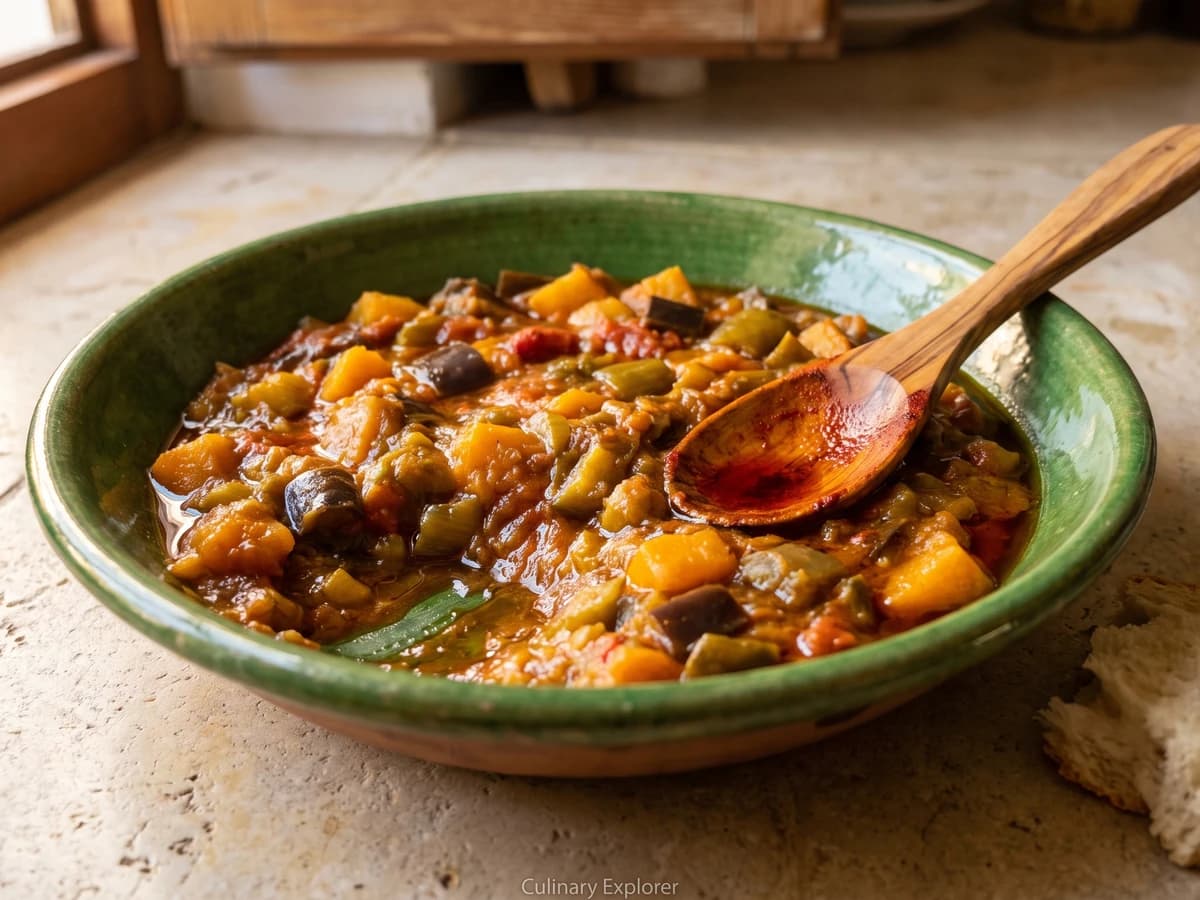
Alboronía is Andalucía's old pumpkin and aubergine stew, deepened with tomato, pimentón, and cumin, then cooked without hurry until the vegetables settle into a glossy, sweet, spoon-soft whole.

Chef Isabel
Aletría Murciana is Murcia's humble noodle guiso: fine fideos, pork ribs, potato, saffron, and a dark sweet sofrito. Get that base right and the pot knows where it's going.
Chef Isabel
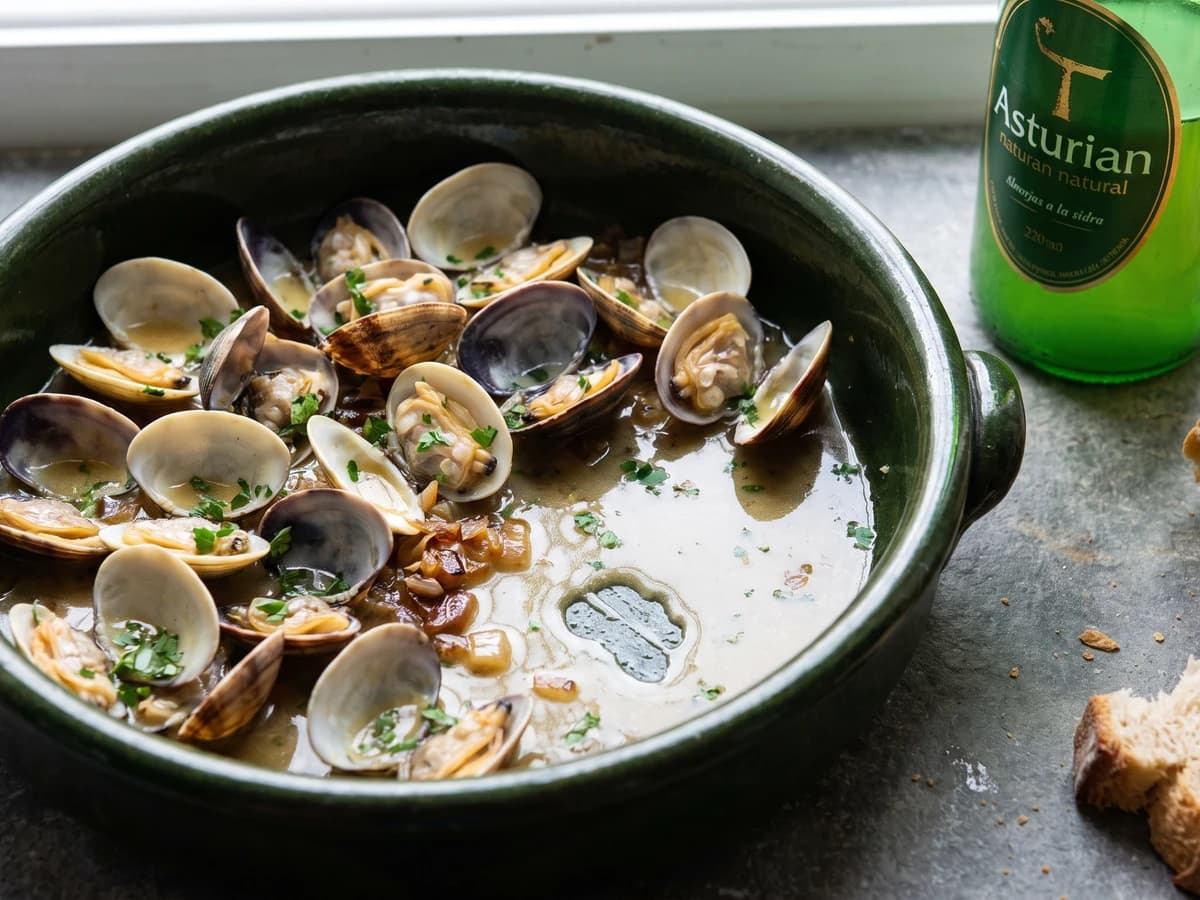
Asturias opens clams in tart natural cider over a slow onion and garlic sofrito, making a bright, briny sauce that asks for bread and rewards one rule: lift each clam as it opens.