Chef Isabel
Abanico Ibérico a la Plancha
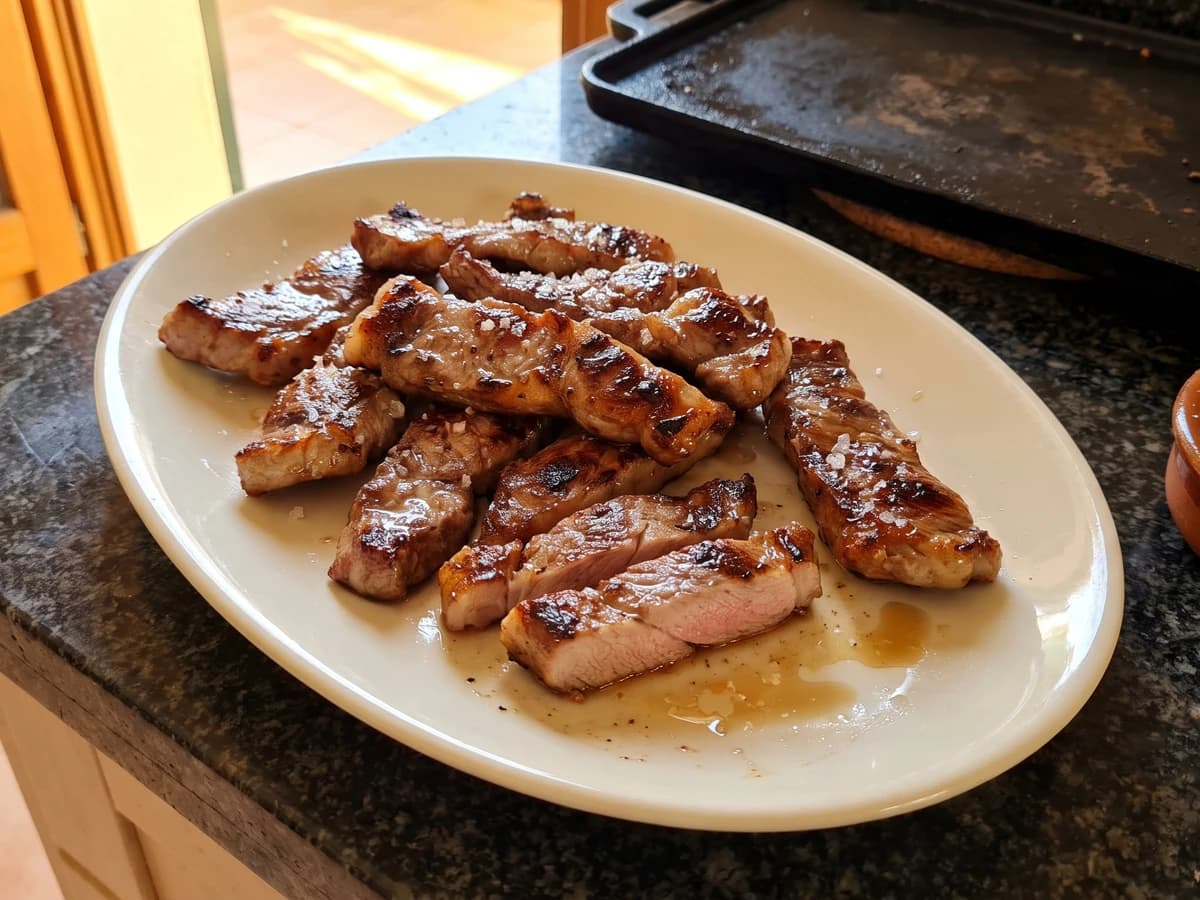
Extremadura's dehesa gives us this fan-shaped, marbled rib cut: salt it at the last moment, lay it on a fierce plancha, and count in seconds so the centre stays juicy.
A cooking platform built around craft, culture, and the stories behind what we eat.
Created by
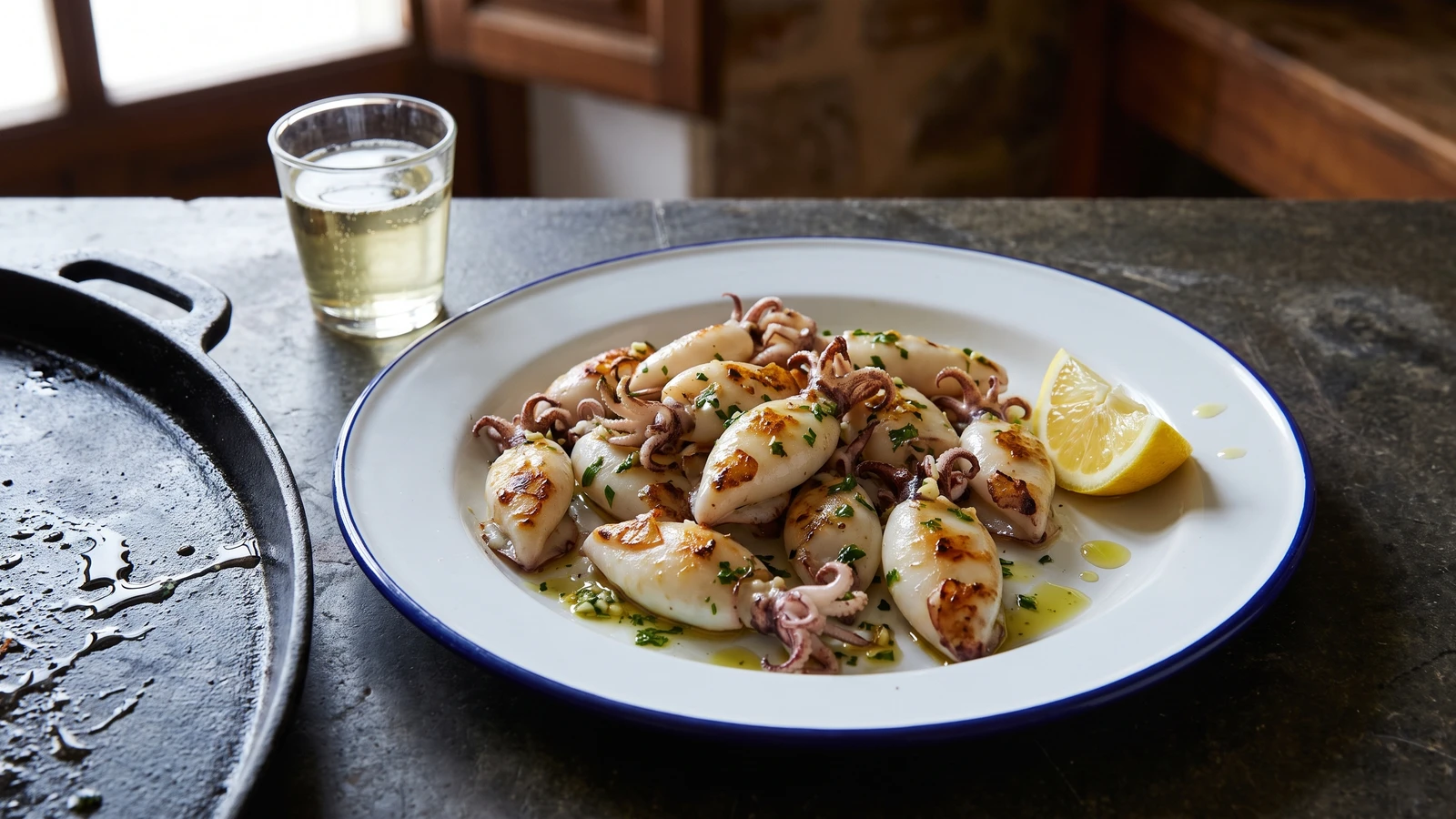
On the Basque coast, baby squid meet a blazing plancha for barely two minutes, then take garlic-parsley oil: dry them thoroughly, leave room between them, and they'll brown while the centres stay tender.
Chipirones a la plancha belong to the Basque coast, where you will also see them written txipirones: small squid cooked whole on an iron griddle, then dressed with ajo-perejil, a plain garlic-and-parsley oil. This is not txipirones en su tinta, the slow onion-and-ink preparation from the same coast. The plancha version is quick, browned at the edges and tender within.
The method that decides it is dryness. Pat the squid dry inside and out, heat the iron until it is fierce, and cook in small batches for less than two minutes each. A wet squid or a crowded plancha releases water and boils pale. Once the flesh turns opaque and the tentacles curl, take it off. The garlic-parsley oil goes on afterward, where the garlic stays fresh instead of burning bitter.
Frozen baby squid is a sound choice when fresh squid is far away. Thaw it slowly in the refrigerator, drain it well, and be especially thorough with the kitchen paper. If you can find only larger squid, cut the tubes into 5cm flat pieces and score the inside lightly; they will be firmer and less delicate, but the same fierce, brief cooking keeps them tender. No hace falta haber pisado España. My Margin says only this: give the iron heat and the squid room.
Along the Basque coast, small squid are known as txipiroi in Euskara, the source of the Castilian word chipirón, and were brought into ports such as Getaria and Hondarribia with the rest of the Bay of Biscay catch. Basque kitchens developed two lasting treatments for them: slow cooking with onion and their ink, and the opposite method of a fiercely hot plancha followed by garlic, parsley, and olive oil. The second preserves the taste and tender bite of very small squid, which need little cooking when the catch is good.
Quantity
800g
tubes and tentacles separated, rinsed briefly and dried thoroughly
Quantity
60ml
divided between the squid and garlic-parsley oil
Quantity
2 small (about 6g)
peeled
Quantity
12g
very finely chopped
Quantity
6g
divided
Quantity
1
cut into wedges
| Ingredient | Quantity |
|---|---|
| cleaned baby squidtubes and tentacles separated, rinsed briefly and dried thoroughly | 800g |
| extra virgin olive oildivided between the squid and garlic-parsley oil | 60ml |
| garlic clovespeeled | 2 small (about 6g) |
| flat-leaf parsley leavesvery finely chopped | 12g |
| fine sea saltdivided | 6g |
| lemon (optional)cut into wedges | 1 |
Check the tubes for any remaining quill or innards, and remove the hard beak from the centre of each cluster of tentacles. Rinse only if needed, then dry every piece inside and out with clean kitchen paper. Spread the squid on a dry tray while you prepare the dressing. Water is the enemy here: wet squid sheds liquid and cooks pale before the plancha can brown it.
Put the garlic and 1g of the salt in a mortar and pound to a smooth paste. Work in the chopped parsley, then stir in 45ml of the olive oil. This is ajo-perejil, garlic-parsley oil. Keep it beside the stove, because it goes on after cooking. Raw garlic belongs in the dressing; burnt garlic belongs in the bin.
Set a cast-iron plancha over high heat for 8 to 10 minutes. It is ready when a drop of water vanishes on contact and the iron looks dry and fiercely hot. If using a 30cm skillet, plan on four batches of about 200g. Crowding cools the iron, and a cool plancha gives you squid sitting in its own liquor.
Toss the thoroughly dried squid with the remaining 15ml olive oil. Do not add the remaining salt yet. Oil the squid rather than pouring oil across the plancha, where excess oil would collect and scorch.
Lay one batch on the plancha in a single loose layer. Press the tubes flat for the first few seconds, then leave them untouched for 45 to 60 seconds, until the undersides have deep golden patches. Turn and cook for another 30 to 45 seconds. The flesh should be opaque and tender, with curled tentacles and browned edges. Lift it off immediately and season while hot. Let the plancha recover its full heat before adding the next batch.
Pile each batch onto a warm serving platter and spoon over a little ajo-perejil. When all the squid is cooked, add the remaining salt and dressing, turning everything once so the oil reaches the tubes and tentacles. Serve at once with lemon wedges if you like. The lemon goes on at the table, never as a marinade. Siempre sale, si lo sigues.
1 serving (about 170g)
Culinary guides, cultural storytelling, and the editorial depth that makes cooking meaningful.
Discover Culinary ExplorerChef Isabel
Extremadura's dehesa gives us this fan-shaped, marbled rib cut: salt it at the last moment, lay it on a fierce plancha, and count in seconds so the centre stays juicy.

Chef Isabel
Aletría Murciana is Murcia's humble noodle guiso: fine fideos, pork ribs, potato, saffron, and a dark sweet sofrito. Get that base right and the pot knows where it's going.
Chef Isabel
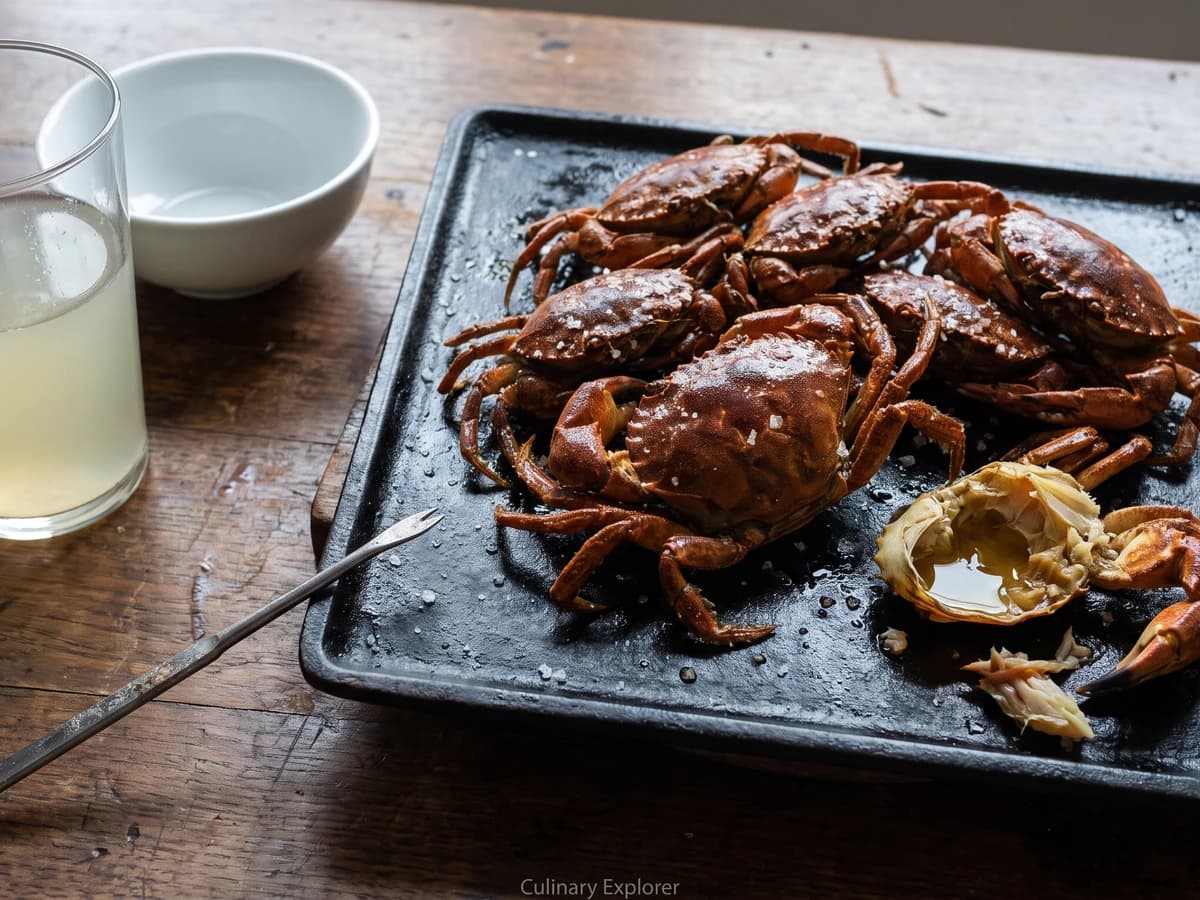
Asturias puts its small velvet crabs straight on a fierce plancha with salt and oil, keeping the shell liquor sweet and briny. Dry them well, cook them fast, and bring plenty of napkins.

Chef Isabel
Andrajos are Andalucía's dough-rag stew from Jaén and Granada: a slow rabbit guiso thickened with torn sheets of flour dough, rolled thin so they cook tender instead of gummy.