Chef Isabel
Abanico Ibérico a la Plancha
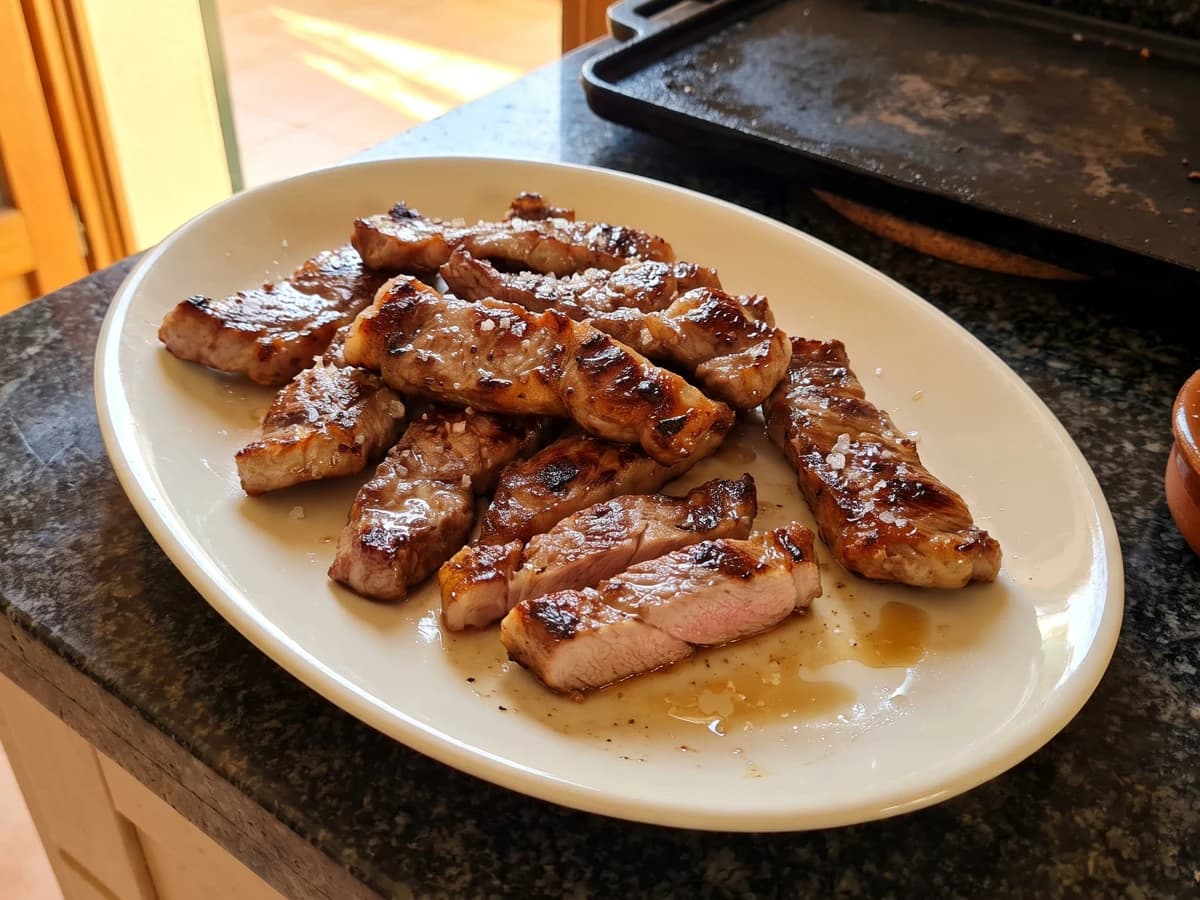
Extremadura's dehesa gives us this fan-shaped, marbled rib cut: salt it at the last moment, lay it on a fierce plancha, and count in seconds so the centre stays juicy.
A cooking platform built around craft, culture, and the stories behind what we eat.
Created by
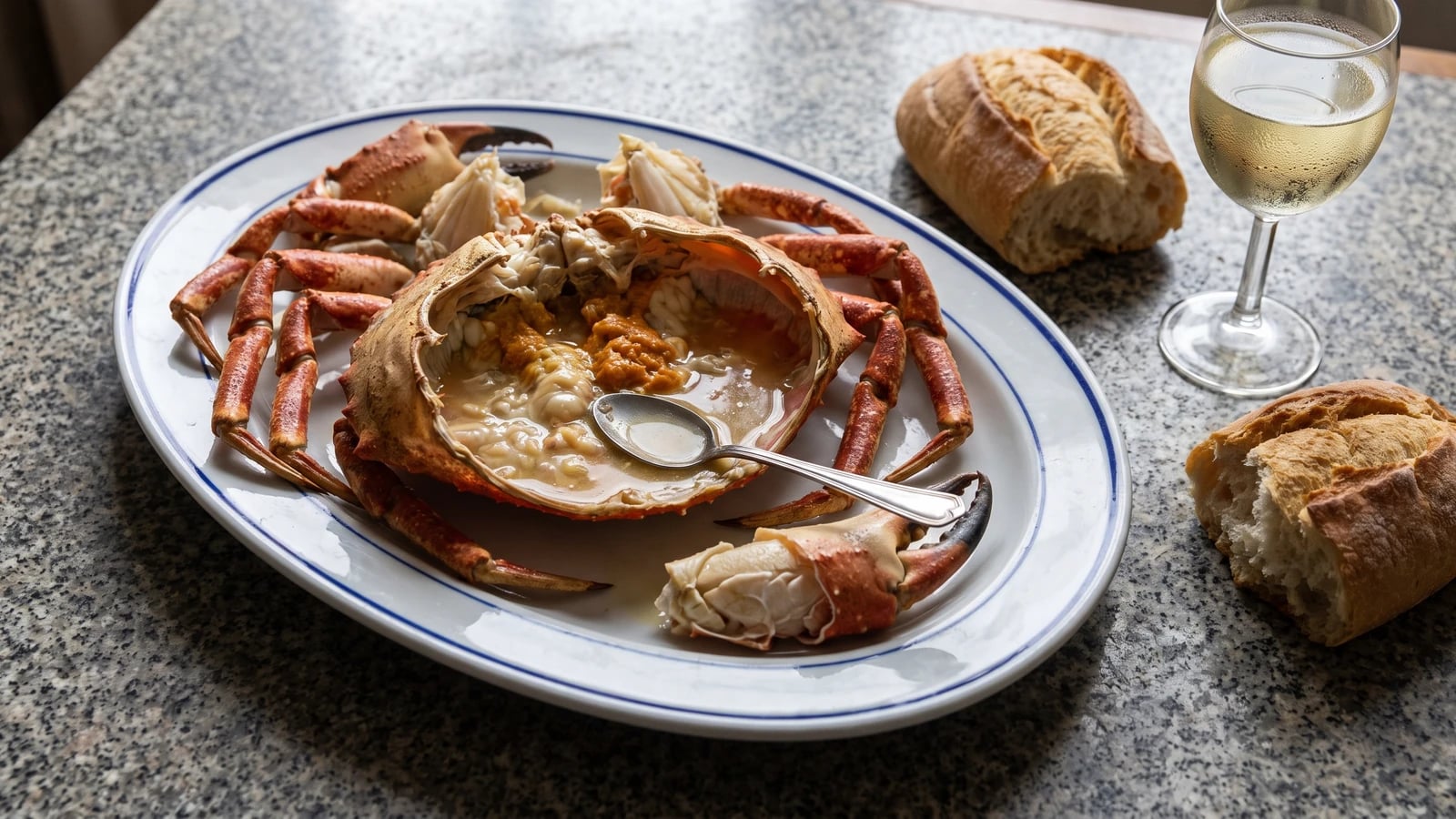
Galicia's prized spider crab needs no sauce: boil it from cold in properly salted water, keep its coral and sweet body juices, and serve the cracked shellfish straight from its own shell.
Centollo cocido is Galician: a whole Atlantic spider crab boiled in briny water, opened, and served with its sweet leg meat and coral-rich body gathered back into the shell. Nothing is added to cover it. That restraint is what distinguishes centollo from dressed crab that tastes mostly of its dressing, and it belongs at a Galician Christmas table as naturally as the bread beside it.
The method that decides it is the start. Put a live centollo into cold, properly salted water and bring it steadily to the boil. The gradual rise in temperature helps keep the legs attached and cooks the thick body evenly. Count the cooking time only once the water reaches a full boil: twenty minutes for a crab weighing 1 to 1.2 kilograms. Pésalo, no lo adivines. Weigh it, don't guess.
If you are far from Galicia, ask for live European spider crab. When that cannot be found, buey de mar, European brown crab, is the substitute a Galician kitchen would use for a mariscada. Its claws are meatier, its body less delicate, and the result is no longer centollo, but the same plain method serves it well. No hace falta haber pisado España.
Keep the shell level while you open it, because the clean juices inside belong in the dish. Fold the loose white meat through the orange coral and brown cream, then return it all to the shell without mayonnaise, chopped egg, or sauce. The Margin beside this recipe says only, "no pierdas el jugo," don't lose the juice. Siempre sale, si lo sigues.
Centola, as the crab is called in Galician, is closely tied to the rocky Atlantic coast and the cold, food-rich waters of the Galician rías, especially the Rías Baixas. It holds a place of honour in the shellfish tables of O Grove and its Festa do Marisco, as well as in the Christmas mariscada shared by families across Galicia. Heavy females are particularly prized for the orange coral inside the shell, which is served plainly with the crab's own juices rather than hidden beneath a dressing.
Quantity
1, weighing 1-1.2kg
Quantity
5 litres
or enough to cover the crab by 3cm
Quantity
300g
calculated at 60g per litre of water
Quantity
2
| Ingredient | Quantity |
|---|---|
| live Galician spider crab (centollo) | 1, weighing 1-1.2kg |
| cold wateror enough to cover the crab by 3cm | 5 litres |
| coarse sea saltcalculated at 60g per litre of water | 300g |
| dried bay leaves (optional) | 2 |
Buy the centollo alive from a fishmonger with good turnover and cook it the same day. It should feel heavy for its size and move when touched. Weigh it before cooking, because the timing follows the weight. Keep it cold beneath a damp cloth until the pot is ready, and handle it from behind with sturdy tongs.
Pour 5 litres of cold water into a tall 10 to 12 litre pot. Add 300g coarse sea salt and the bay leaves, then stir until most of the salt dissolves. The ratio is 60g salt for every litre of water. If your pot needs a different volume, recalculate it rather than judging by handfuls.
Lower the live crab into the cold salted water and make sure it is covered by about 3cm. Set a loose-fitting lid on the pot and bring the water steadily to a full boil over medium-high heat. Starting a live centollo cold helps keep its legs attached and gives the dense body time to heat through evenly.
Begin timing only when the whole surface reaches a strong, rolling boil. Reduce the heat just enough to prevent the pot overflowing while keeping a steady boil, then cook a 1 to 1.2kg crab for exactly 20 minutes. Lift it out promptly with tongs; leaving it in the water makes the meat woolly and washes away its sweetness.
Set the crab on a rimmed tray with its domed back shell underneath and its legs pointing upward. Leave it for 15 minutes, until it is comfortable to handle. This position keeps the savoury liquid inside the shell. Do not rinse it or plunge it into water.
Work over the tray. Twist off the legs and claws, turn the crab over, and pull away the abdominal flap. Hold the top shell level while you lift the body out so the clean liquid and coral remain inside. Discard the feathery grey gills, the hard mouthparts, and the small stomach sac directly behind the mouth.
Spoon any clean liquid from the tray back into the shell. Gently mix the orange coral, creamy brown meat, and loose pieces of white body meat already inside, breaking up large pockets but not beating them smooth. Add nothing else. Here, dressing the shell means returning the crab to itself, not burying it beneath a sauce.
Cut the central body into six pieces through its natural chambers with sturdy kitchen shears. Crack each claw and the thickest leg joints once, just enough to give the diner an opening without crushing the meat. Arrange the body pieces and legs around the filled shell and serve warm or at cool room temperature, with picks and plenty of bread.
1 serving (about 120g)
Culinary guides, cultural storytelling, and the editorial depth that makes cooking meaningful.
Discover Culinary ExplorerChef Isabel
Extremadura's dehesa gives us this fan-shaped, marbled rib cut: salt it at the last moment, lay it on a fierce plancha, and count in seconds so the centre stays juicy.
Chef Isabel
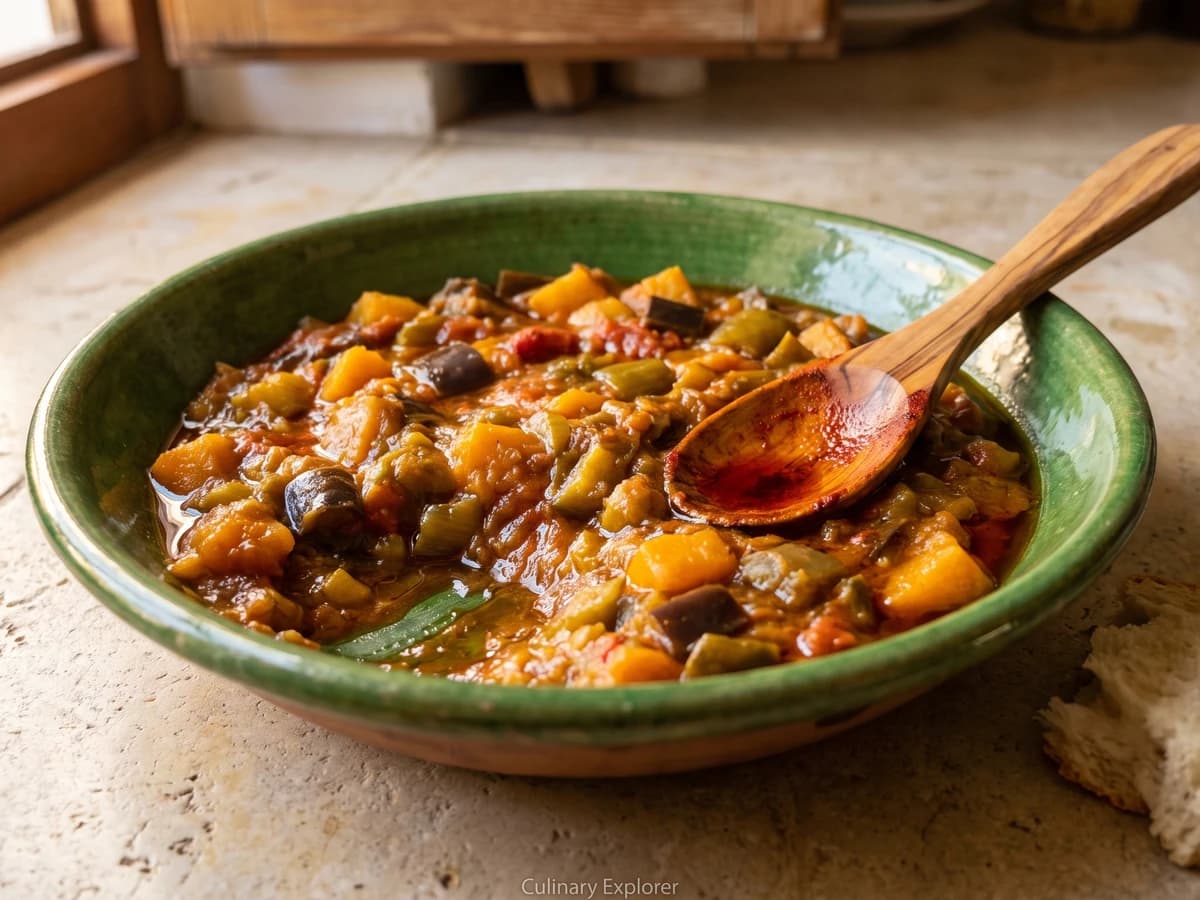
Alboronía is Andalucía's old pumpkin and aubergine stew, deepened with tomato, pimentón, and cumin, then cooked without hurry until the vegetables settle into a glossy, sweet, spoon-soft whole.

Chef Isabel
Aletría Murciana is Murcia's humble noodle guiso: fine fideos, pork ribs, potato, saffron, and a dark sweet sofrito. Get that base right and the pot knows where it's going.
Chef Isabel
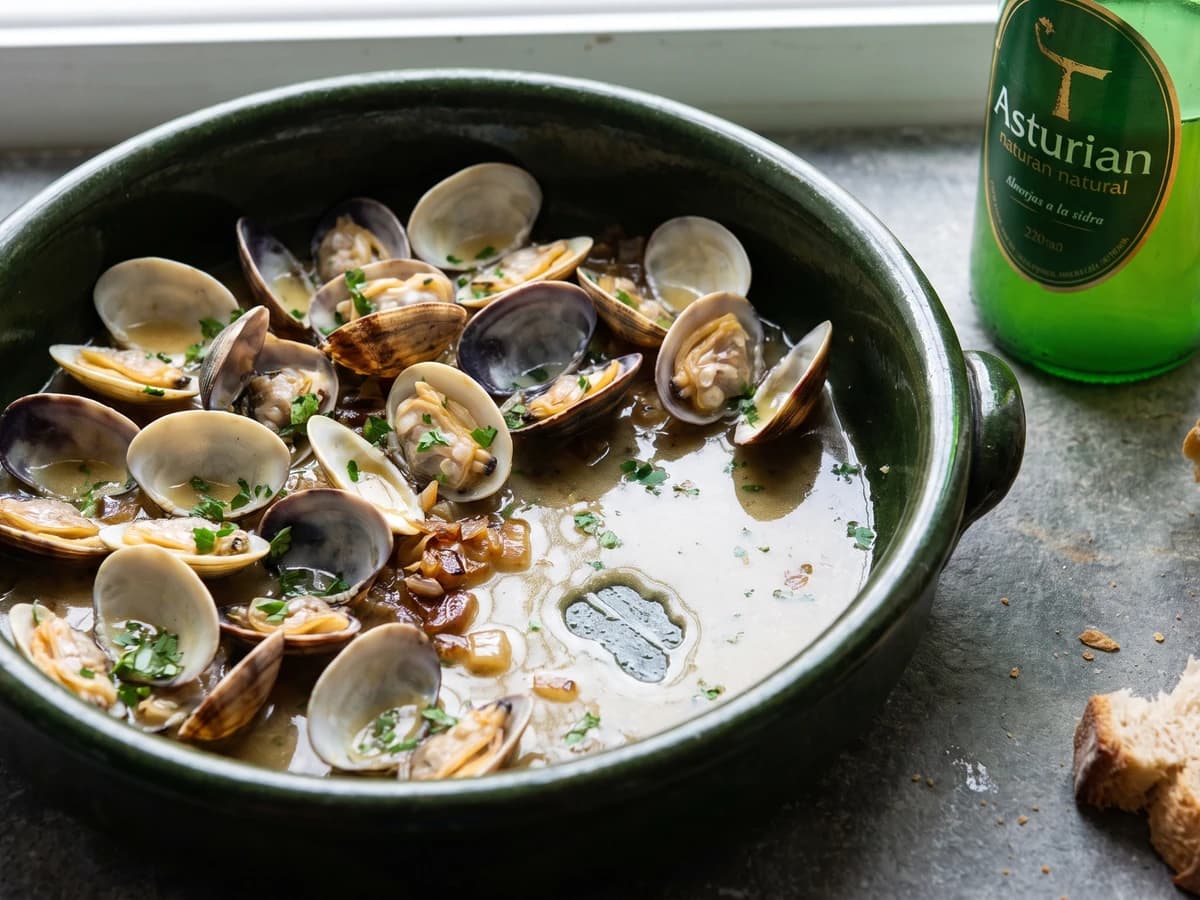
Asturias opens clams in tart natural cider over a slow onion and garlic sofrito, making a bright, briny sauce that asks for bread and rewards one rule: lift each clam as it opens.