Chef Isabel
Abanico Ibérico a la Plancha
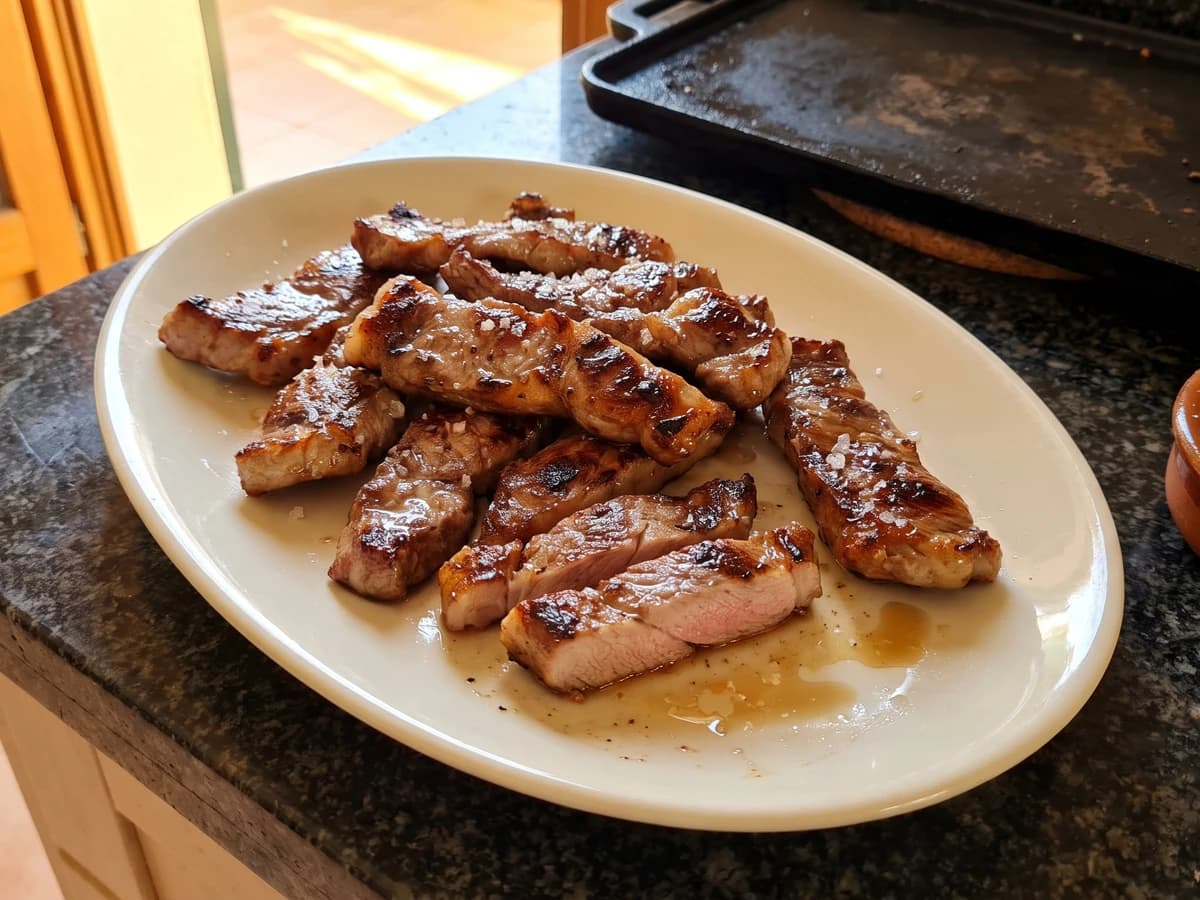
Extremadura's dehesa gives us this fan-shaped, marbled rib cut: salt it at the last moment, lay it on a fierce plancha, and count in seconds so the centre stays juicy.
A cooking platform built around craft, culture, and the stories behind what we eat.
Created by
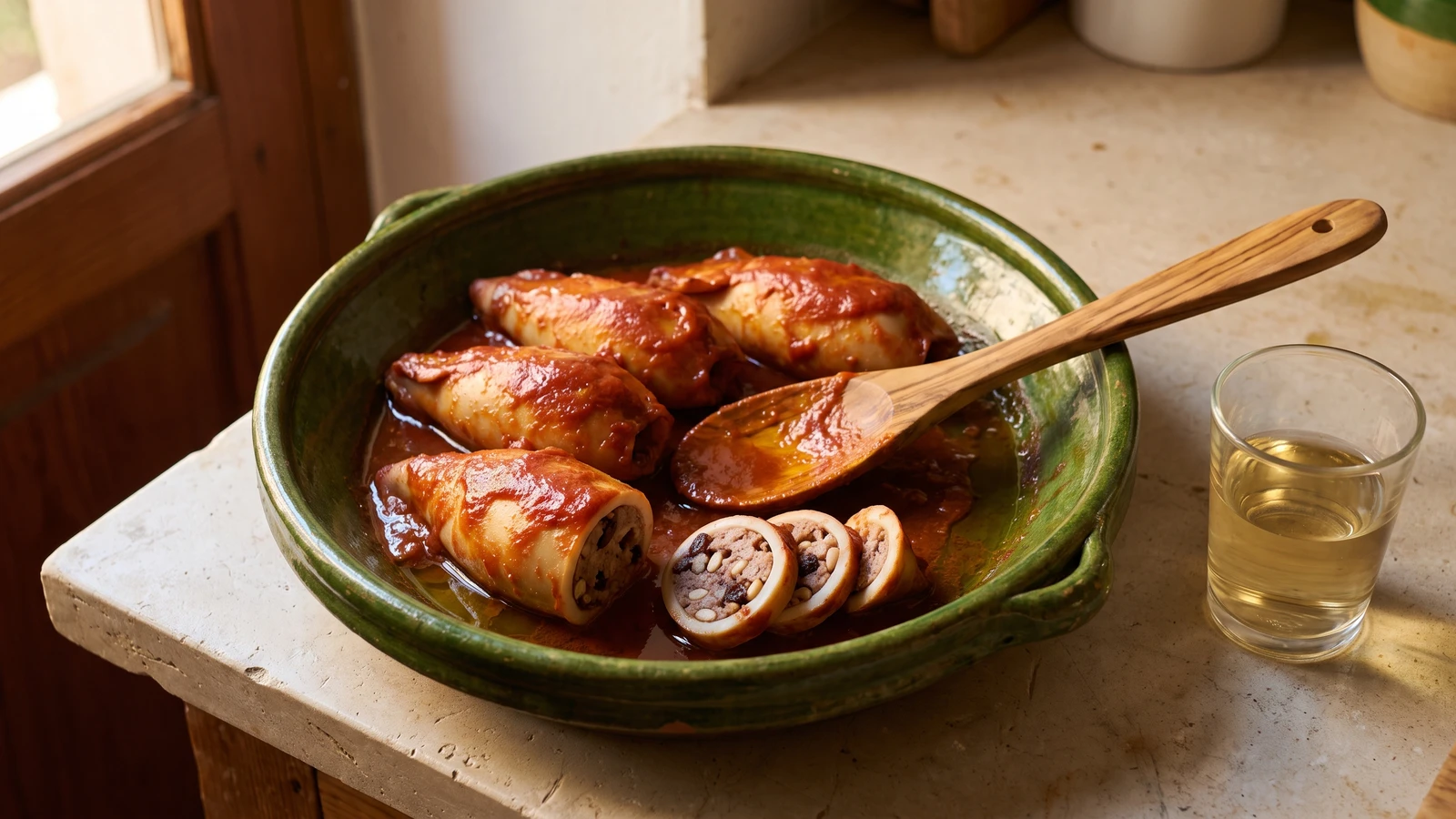
On Mallorca, tender squid bodies carry pork, their own tentacles, pine nuts and raisins, then braise in tomato and brandy sauce. Fill them loosely, pin them shut, and they won't split.
Calamares rellenos a la mallorquina are Mallorca's stuffed squid, known on the island as calamars farcits. The bodies carry a sweet-savoury filling of pork, their own chopped tentacles, pine nuts and raisins, then cook gently in tomato, brandy and a thickening picada of almonds and fried bread. That mixture of sea, matança pork and dried fruit is the island's mark. This is Mallorcan, not stuffed squid without a surname.
The step that decides the dish is simple: fill each body only two-thirds full and pin it shut. Squid contracts as it cooks while the pork and bread expand. Pack it tightly and the filling escapes into the sauce, which is a rather expensive way to make meatballs. Leave room, keep the braise quiet, and every squid stays whole. Siempre sale, si lo sigues, it turns out if you follow it.
The sauce begins with a proper sofrito, the slow onion and tomato base. Cook the onion low until dark gold and sweet, then cook the tomato until thick enough to leave the oil showing at the edges. Brandy gives warmth, not harshness, and the almond picada binds the sauce during the final minutes. I serve the squid whole for a family table, cutting one open so everyone can see the pine nuts and raisins inside.
If fresh medium squid are scarce, use frozen cleaned squid with intact tubes and separate tentacles. Thaw them slowly in the refrigerator and dry them well. They release more water and finish a little softer, so cook the chopped tentacles until the pan is dry and give the braise another five minutes if needed. No hace falta haber pisado España. The margin in my notebook says only, "leave them room," and here that is advice worth keeping.
Calamars farcits belong to Mallorca and the wider Balearic habit of joining the sea catch to the household larder; pork from the matança, the family pig slaughter, enters the stuffing alongside the squid's own tentacles. Pine nuts, raisins and fragrant herbs reflect the island's long Mediterranean exchange and its old taste for sweet and savoury in the same pot, while the almond-and-bread picada thickens the braising sauce without cream. The dish settled naturally onto feast and Sunday tables because squid could be stretched with meat, bread and nuts, then cooked ahead and reheated without harm.
Quantity
8, 1.4kg total before cleaning
cleaned to yield about 1kg; bodies left intact, tentacles and fins reserved
Quantity
35g
soaked and drained
Quantity
50g
crust removed and torn
Quantity
60ml
Quantity
30g
lightly toasted
Quantity
100ml
divided
Quantity
450g
finely chopped and divided into 150g and 300g
Quantity
6 cloves
finely chopped and divided
Quantity
250g
about 20% fat
Quantity
1
beaten
Quantity
20g
finely chopped and divided
Quantity
1g
Quantity
12g
divided
Quantity
1g
divided
Quantity
25g
for dusting
Quantity
450g
grated; or use drained and crushed canned whole peeled tomatoes
Quantity
75ml
Quantity
500ml
Quantity
1
Quantity
30g
Quantity
20g
cut into small cubes
| Ingredient | Quantity |
|---|---|
| medium whole squidcleaned to yield about 1kg; bodies left intact, tentacles and fins reserved | 8, 1.4kg total before cleaning |
| small raisinssoaked and drained | 35g |
| day-old rustic bread for the fillingcrust removed and torn | 50g |
| whole milk | 60ml |
| pine nutslightly toasted | 30g |
| extra virgin olive oildivided | 100ml |
| yellow onionsfinely chopped and divided into 150g and 300g | 450g |
| garlicfinely chopped and divided | 6 cloves |
| fatty ground porkabout 20% fat | 250g |
| large eggbeaten | 1 |
| flat-leaf parsley leavesfinely chopped and divided | 20g |
| dried marjoram | 1g |
| fine sea saltdivided | 12g |
| freshly ground black pepperdivided | 1g |
| plain flourfor dusting | 25g |
| ripe plum or ramellet tomatoesgrated; or use drained and crushed canned whole peeled tomatoes | 450g |
| Spanish brandy | 75ml |
| unsalted fish stock | 500ml |
| bay leaf | 1 |
| blanched almonds | 30g |
| day-old rustic bread for the picadacut into small cubes | 20g |
Pull the heads and tentacles from the bodies without tearing the openings. Remove the clear quills, innards and any remaining membrane from inside the bodies. Cut below the eyes to free the tentacles, push out the hard beaks, and remove the eyes. Pull off the fins and chop them with the tentacles into 5mm pieces. Rinse everything briefly under cold water, then dry it very well with kitchen paper.
Cover the raisins with warm water and leave them for 10 minutes, then drain and dry them. Soak the 50g of filling bread in the milk. Heat 10ml of the olive oil in a small pan and fry the almonds and 20g of bread cubes until evenly golden, about 3 minutes. Lift them out and reserve them for the picada. Toast the pine nuts in the same pan until pale gold, watching them closely, then set them aside.
Heat 20ml olive oil in the wide casserole over medium-low heat. Add 150g onion and cook for 12 to 15 minutes, stirring now and then, until soft and golden. Add 2 garlic cloves and cook for 30 seconds. Raise the heat to medium, add the chopped tentacles and fins, and cook for 5 to 7 minutes, until their liquid has evaporated and the pan is dry again. Scrape the mixture into a bowl and let it cool for 10 minutes.
Squeeze the soaked bread gently and add it to the cooled squid mixture with the pork, egg, raisins, pine nuts, 12g parsley, marjoram, 5g salt and 0.5g black pepper. Mix with your fingers only until evenly combined; working it hard makes the filling tight. Fry a teaspoonful in the small pan until fully cooked and taste it. This small test is cheaper than discovering after eight stuffed squid that the seasoning was wrong.
Spoon the filling into each squid body, pressing it toward the pointed end without packing it firmly. Stop when each body is two-thirds full, leaving about 3cm empty at the opening. Push out any large air pocket and weave a wooden toothpick once through both sides of the opening to close it. Shape any leftover filling into 3cm balls; they cook in the sauce and nothing is wasted.
Pat the filled squid dry once more and dust them lightly with the flour, shaking off every loose bit. Heat 40ml olive oil in the casserole over medium heat. Brown the squid in two batches for 2 to 3 minutes on each broad side, just until lightly golden. Brown the filling balls as well, then transfer everything to a plate. Lower the heat if the flour on the bottom begins to darken.
Add the remaining 30ml olive oil and 300g onion to the casserole with 3g of the salt. Cook over low heat for 20 to 25 minutes, stirring and scraping up the browned bits, until the onion is dark gold, soft and almost jammy. Add 3 garlic cloves and cook for 1 minute. Stir in the tomato, the remaining 4g salt and 0.5g pepper. Cook gently for 15 to 18 minutes, until the tomato is thick, sweet and beginning to show oil at the edges. This slow sofrito is the floor of the sauce. Rush it and the sauce stays sharp.
Take the casserole off the heat before pouring in the brandy. Return it to medium heat and bubble for 2 to 3 minutes, until its raw smell has gone. Add the fish stock and bay leaf, bring the sauce to a gentle simmer, then return the squid and filling balls in a single layer. The liquid should reach roughly halfway up the bodies. Cover, lower the heat, and braise at the quietest simmer for 40 minutes, turning the squid once after 20 minutes.
Pound the fried almonds, fried bread, remaining garlic clove and remaining 8g parsley in a mortar until crumbly and fine. Work in 60ml of liquid from the casserole to make a loose paste. Stir the picada, the almond-and-bread thickener, into the sauce without pressing hard on the squid. Cook uncovered for another 10 to 15 minutes, until the squid yields easily to a small knife and the sauce coats a spoon. The pork filling should reach at least 71°C at the centre.
Remove the bay leaf and rest the casserole off the heat for 10 minutes. Pull out every toothpick. Serve the squid whole with the filling balls and plenty of sauce, or cut one crosswise into thick rounds to show the filling. If the sauce has tightened too much, loosen it with 30ml fish stock or water. Bread alongside is not decoration; that sauce has work for it.
1 serving (about 600g)
Culinary guides, cultural storytelling, and the editorial depth that makes cooking meaningful.
Discover Culinary ExplorerChef Isabel
Extremadura's dehesa gives us this fan-shaped, marbled rib cut: salt it at the last moment, lay it on a fierce plancha, and count in seconds so the centre stays juicy.
Chef Isabel
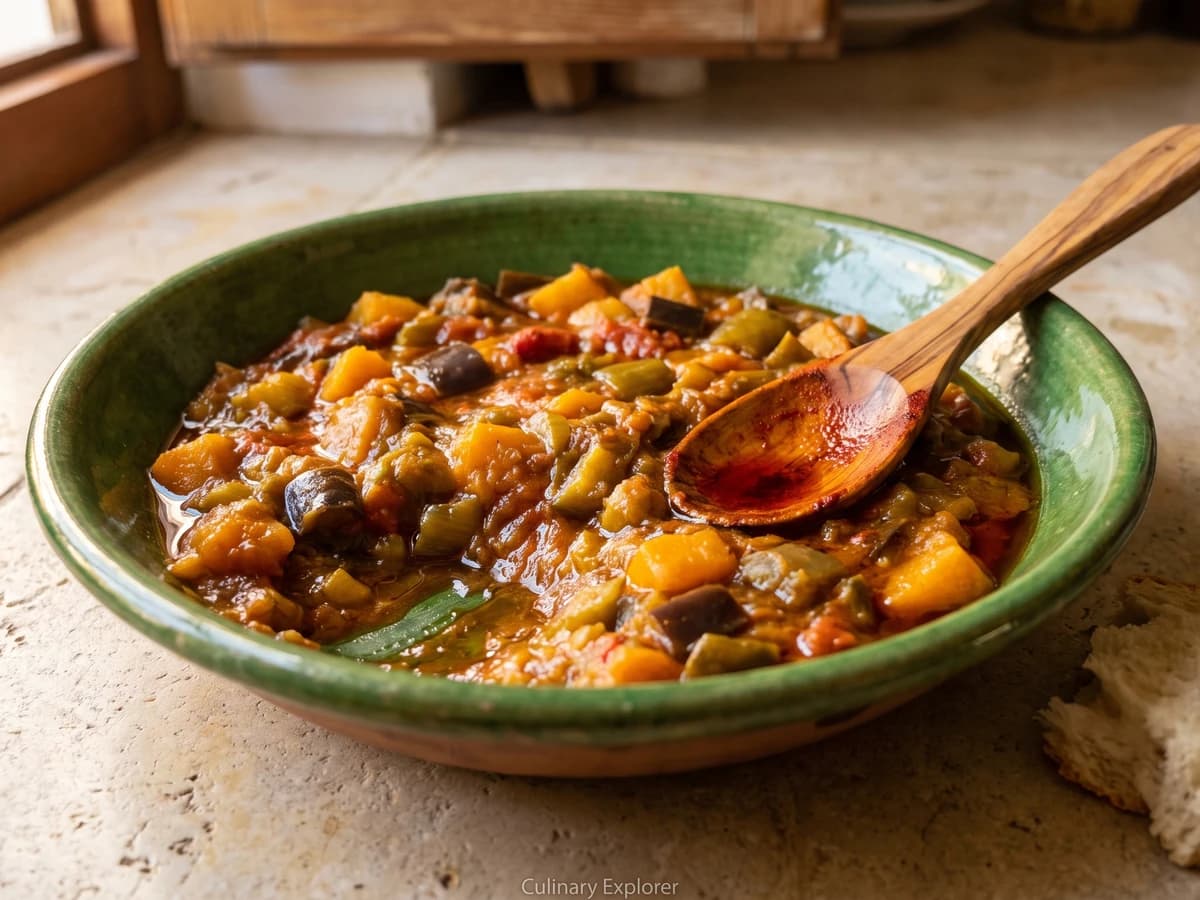
Alboronía is Andalucía's old pumpkin and aubergine stew, deepened with tomato, pimentón, and cumin, then cooked without hurry until the vegetables settle into a glossy, sweet, spoon-soft whole.

Chef Isabel
Aletría Murciana is Murcia's humble noodle guiso: fine fideos, pork ribs, potato, saffron, and a dark sweet sofrito. Get that base right and the pot knows where it's going.
Chef Isabel
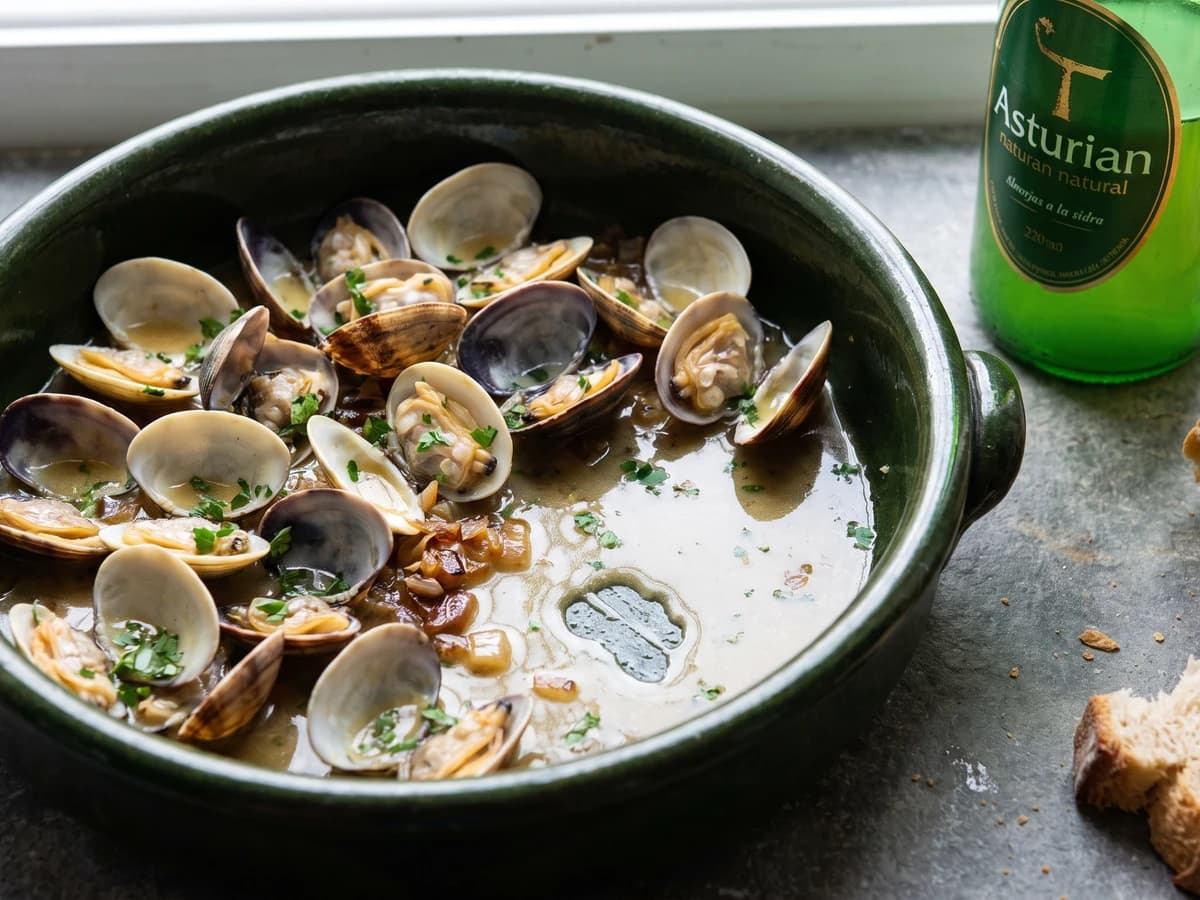
Asturias opens clams in tart natural cider over a slow onion and garlic sofrito, making a bright, briny sauce that asks for bread and rewards one rule: lift each clam as it opens.