Chef Isabel
Abanico Ibérico a la Plancha
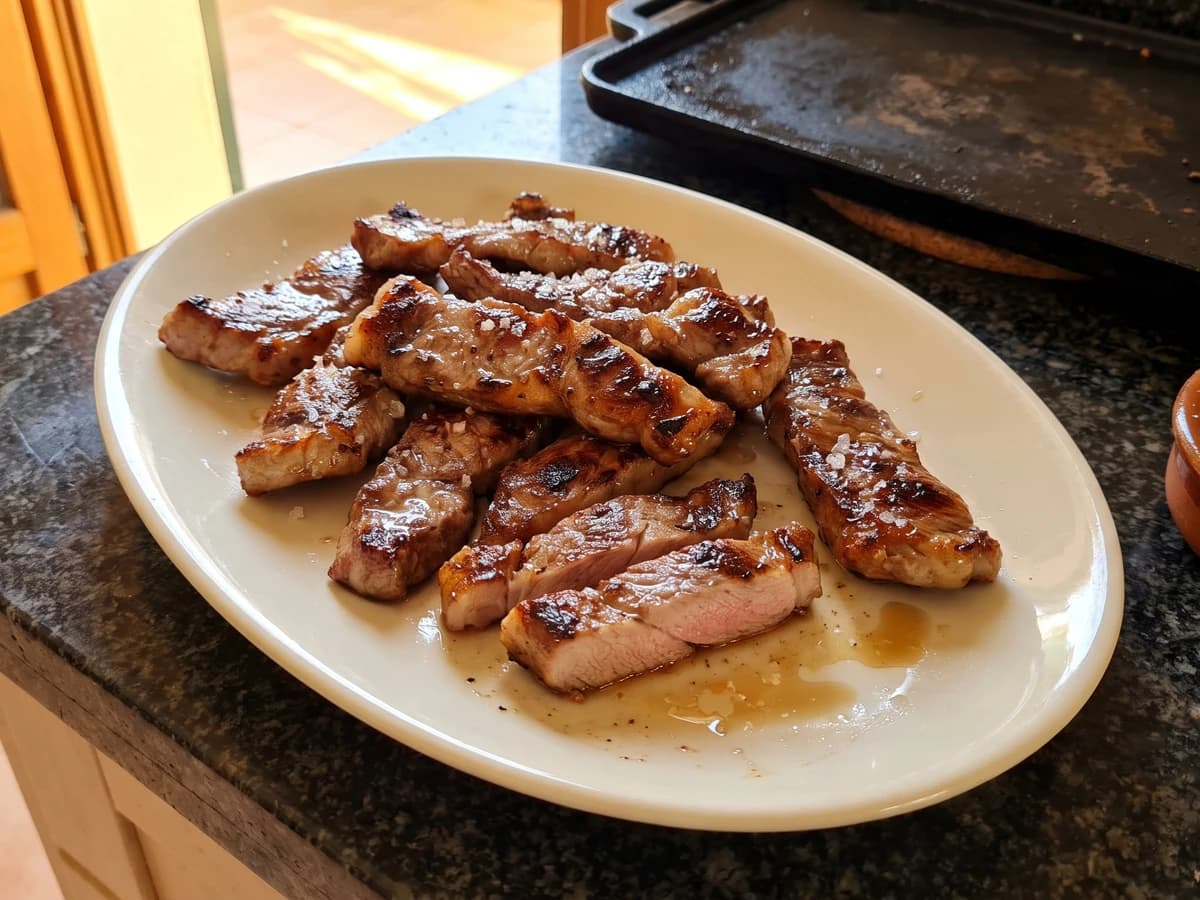
Extremadura's dehesa gives us this fan-shaped, marbled rib cut: salt it at the last moment, lay it on a fierce plancha, and count in seconds so the centre stays juicy.
A cooking platform built around craft, culture, and the stories behind what we eat.
Created by
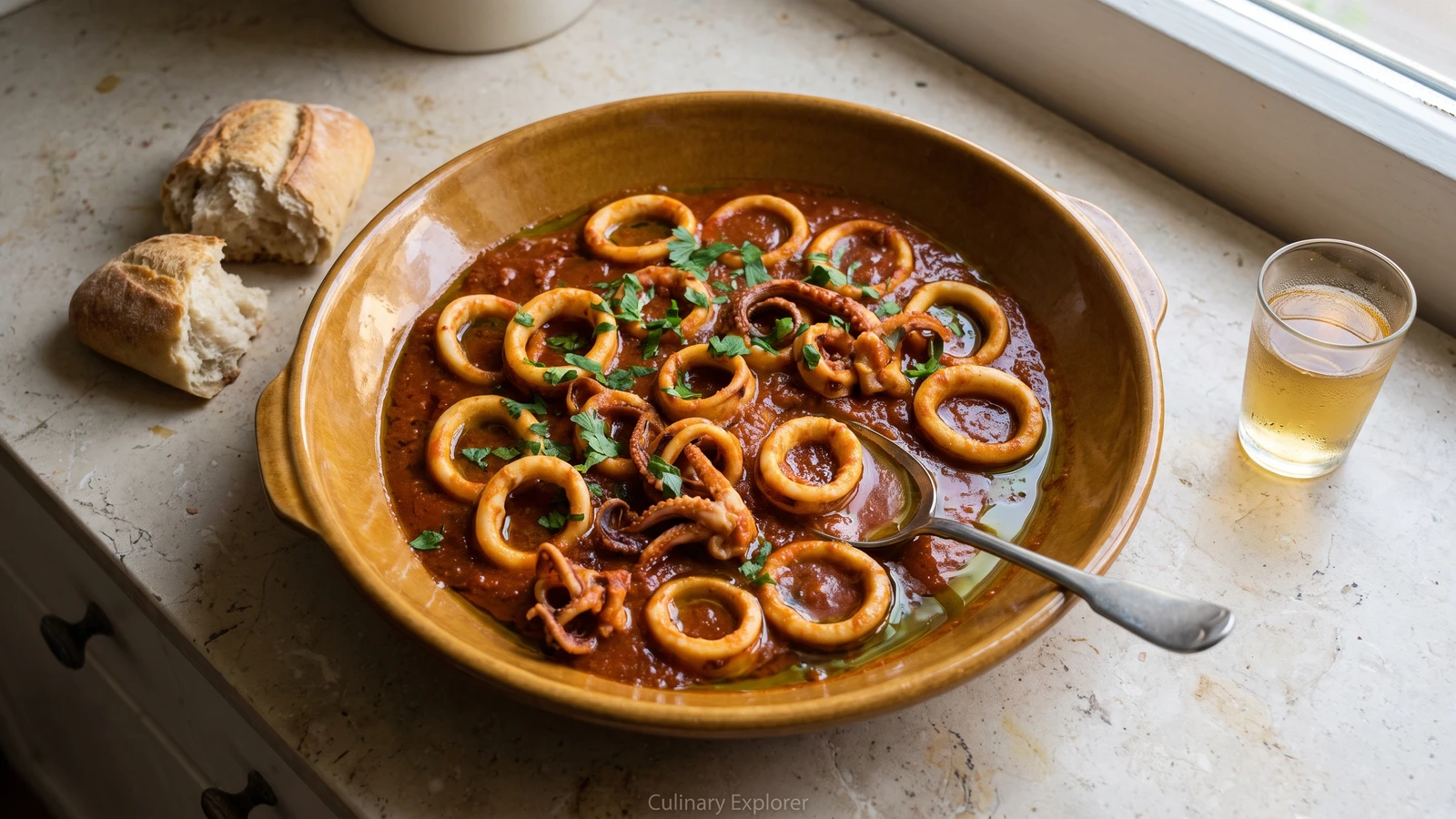
Cádiz squid in its own rich sauce, where a dark, sweet sofrito and a patient simmer turn simple rings and tentacles tender enough to cut with bread.
Calamares en su salsa belong to Cádiz and Andalucía's Atlantic coast in this red, onion-rich form. Squid rings and tentacles cook in a sofrito, the slow onion and tomato base, with garlic, white wine, and their own briny juices. It isn't the ink-dark txipirón stew of the Basque Country, and it isn't a plate of quick-fried rings. This is a home cazuela with enough sauce to demand bread.
Low, patient heat decides the dish. First, cook the onion until dark gold, soft, and almost jammy. That sweetness holds up the tomato and wine without making the sauce sharp. Once the squid goes in, let it simmer gently beyond its first firm stage. Squid is tender when cooked very briefly or properly long; stop halfway and it chews back.
Fresh medium squid is lovely when the market has it. Far from the coast, good frozen squid is the honest substitute, and often better than fresh squid that has spent too long on a counter. Thaw it overnight in the refrigerator, drain it well, and weigh it after draining. Tubes alone will work, though the sauce loses some depth without the tentacles.
Give the pan its time and test the thickest tentacle rather than trusting the clock alone. It should yield easily to a fork, and a ring should cut without pulling. The note in my Margin is short: don't rescue firm squid by taking it off the heat. Cook it gently until it surrenders. Siempre sale, si lo sigues.
Along the ports of Cádiz, squid from the Atlantic catch entered home kitchens in two practical ways: fried quickly while small and fresh, or stretched into a cazuela with onion, wine, and its own juices to feed the table. Tomato joined the red version after arriving from the Americas, while the nearby wines of the Marco de Jerez gave these seafood stews their dry southern edge. The ink-dark squid dishes of the Basque coast belong to another regional branch of the same fishing larder.
Quantity
1kg
bodies cut into 1.5cm rings, tentacles separated
Quantity
60ml
Quantity
400g
finely chopped
Quantity
12g
finely chopped
Quantity
400g
crushed or grated
Quantity
150ml
Quantity
3g
Quantity
1
Quantity
8g
divided
Quantity
1g
Quantity
10g
finely chopped
Quantity
up to 60ml
| Ingredient | Quantity |
|---|---|
| cleaned medium squidbodies cut into 1.5cm rings, tentacles separated | 1kg |
| extra virgin olive oil | 60ml |
| yellow onionsfinely chopped | 400g |
| garlicfinely chopped | 12g |
| good canned crushed tomatoes, or peeled ripe tomatoes in seasoncrushed or grated | 400g |
| dry white wine | 150ml |
| sweet pimentón dulce | 3g |
| bay leaf | 1 |
| fine sea saltdivided | 8g |
| freshly ground black pepper | 1g |
| flat-leaf parsleyfinely chopped | 10g |
| water (optional) | up to 60ml |
Check the cleaned squid for any remaining clear quill, beak, or tough membrane. Cut the bodies crosswise into even 1.5cm rings and leave small tentacles whole. Rinse only if needed, then dry everything thoroughly. Pésalo, no lo adivines: use 1kg after cleaning and draining so the sauce-to-squid balance stays right.
Heat the olive oil in a wide, heavy casserole over medium-low heat. Add the onions and 5g of the salt. Cook for 20 to 25 minutes, stirring every few minutes, until the onion is dark gold, very soft, and jammy at the edges. Keep the heat patient. If the onion browns before it softens, lower the heat and add 15ml water. Add the garlic and cook for 2 minutes, just until its raw smell is gone.
Take the casserole off the heat for a moment and stir in the pimentón for 10 seconds. Do not let it scorch. Return the pan to medium-low heat, add the tomato, bay leaf, and black pepper, then cook uncovered for 12 to 15 minutes. The sofrito is ready when it has darkened, a spoon drawn across the bottom leaves a clear trail, and a little red-gold oil shows around the edges.
Pour in the white wine and raise the heat to medium. Scrape the bottom of the casserole and let the wine bubble for 3 to 4 minutes, until its sharp raw smell has softened and the sauce looks thick again.
Add the squid and the remaining 3g salt. Turn everything through the sofrito, cover, and bring it just to a gentle bubble. The squid will release plenty of liquid. Lower the heat and simmer for 35 minutes, stirring two or three times. Keep the bubbling quiet; a hard boil tightens the squid and throws the oil out of the sauce.
Pierce the thickest tentacle with a fork and cut one ring with the side of a spoon. Both should yield without springing back. If they remain firm, cover and cook for another 10 to 15 minutes. This is the point where nervous cooks stop too soon. The remedy for squid that has become firm is more gentle cooking, not less.
Remove the bay leaf and taste the sauce. Adjust the salt only now, because squid varies in salinity. Stir in three-quarters of the parsley, take the casserole off the heat, and leave it covered for 10 minutes. Finish with the remaining parsley and serve from the casserole with plain white rice or sturdy bread for the sauce.
1 serving (about 400g)
Culinary guides, cultural storytelling, and the editorial depth that makes cooking meaningful.
Discover Culinary ExplorerChef Isabel
Extremadura's dehesa gives us this fan-shaped, marbled rib cut: salt it at the last moment, lay it on a fierce plancha, and count in seconds so the centre stays juicy.
Chef Isabel
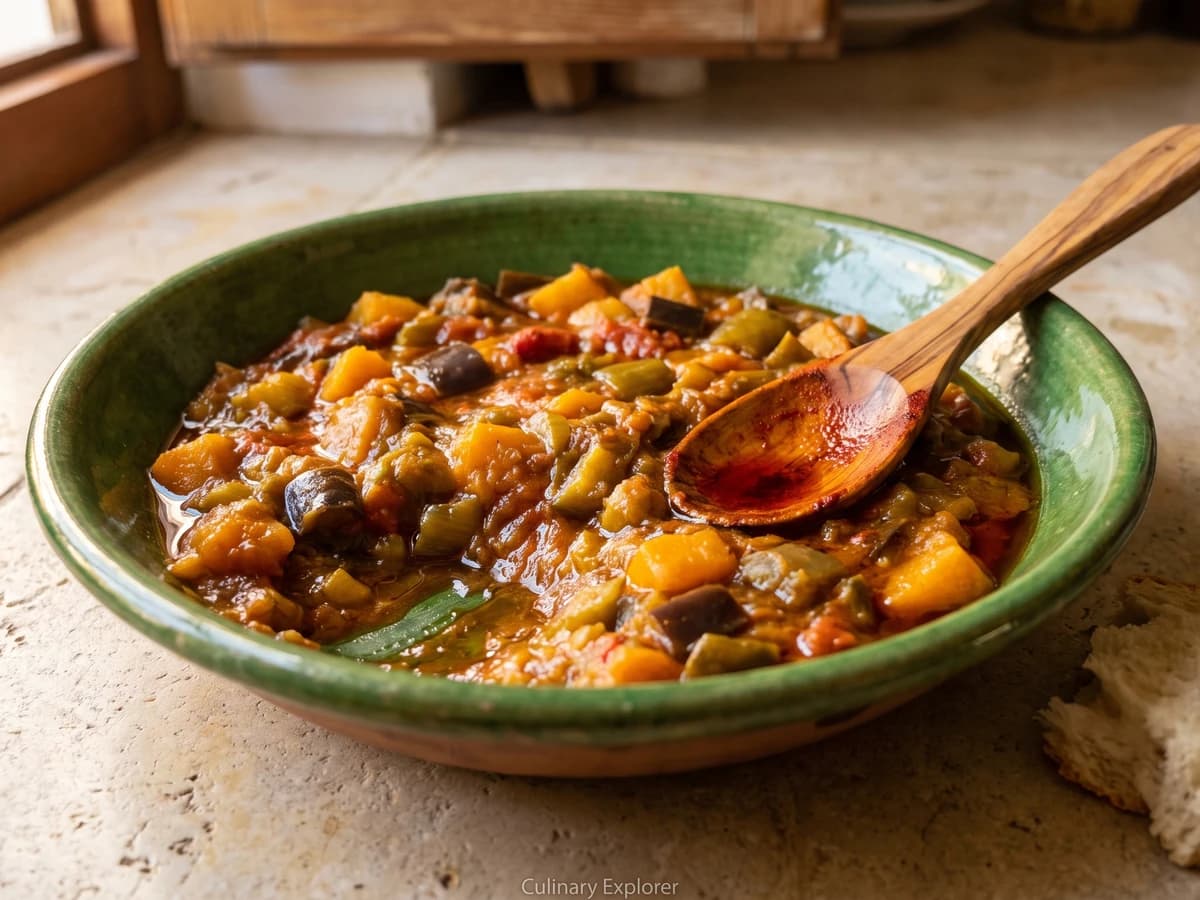
Alboronía is Andalucía's old pumpkin and aubergine stew, deepened with tomato, pimentón, and cumin, then cooked without hurry until the vegetables settle into a glossy, sweet, spoon-soft whole.

Chef Isabel
Aletría Murciana is Murcia's humble noodle guiso: fine fideos, pork ribs, potato, saffron, and a dark sweet sofrito. Get that base right and the pot knows where it's going.
Chef Isabel
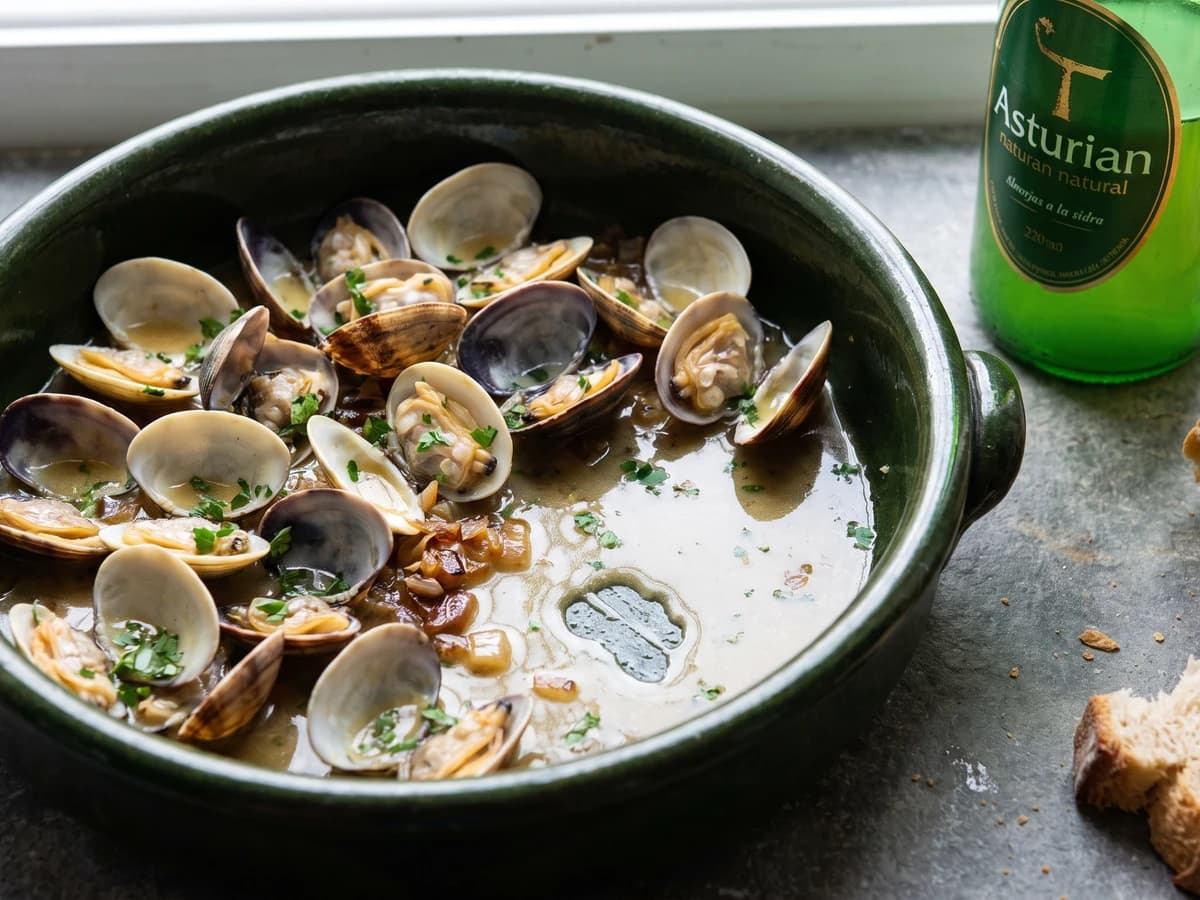
Asturias opens clams in tart natural cider over a slow onion and garlic sofrito, making a bright, briny sauce that asks for bread and rewards one rule: lift each clam as it opens.