
Chef Lupita
Agua de Betabel Aguascalentense de Cuaresma
Aguascalientes' Lenten agua fresca, jewel-red from cooked beet and full of apple, banana, orange, lettuce, and ground peanuts, served cold when Holy Week meets the Feria de San Marcos.

Recipe Archive
Beverages include bright refreshers, hot drinks, smoothies, cocktails, and alcohol-free options where balance and garnish matter as much as the base.
602 recipes
A cooking platform built around craft, culture, and the stories behind what we eat.
Chef Lupita
Aguascalientes' Lenten agua fresca, jewel-red from cooked beet and full of apple, banana, orange, lettuce, and ground peanuts, served cold when Holy Week meets the Feria de San Marcos.

Chef Lupita
Sonora and Sinaloa's creamy malted barley water, built on toasted cebada perla, Mexican canela, vanilla from Papantla, and evaporated milk. Pink-beige, rich, and served cold over heavy ice in a heavy glass tumbler. Liquid cookie comfort the northwest way.

Chef Lupita
Yucatán's everyday tonic of boiled chaya leaves blended with lima agria, sugar, and ice. The bright green jarra that sits on every Peninsula table from Mérida to Valladolid.

Chef Lupita
Yucatán's signature green agua fresca, chaya leaves blanched and blended with ripe pineapple and lima agria, served ice-cold from a sweating glass jarra against the Mérida heat.

Chef Lupita
Tabasco's daily green refresher from the Chontalpa, made with blanched chaya leaves, limón criollo, and piloncillo, poured over ice for the kind of heat that makes the kitchen slow down.

Chef Lupita
Los Altos de Chiapas drink this agua cold, with chía seeds suspended like tiny pearls, limón criollo for sharpness, and piloncillo for a cane-deep sweetness that belongs to the market.

Chef Lupita
Oaxaca's market agua fresca built on chilacayota squash, piloncillo, and Mexican canela, served cold with the spaghetti-like strands of squash and toasted seeds floating in the glass.

Chef Lupita
Sinaloa's seasonal yellow plum water from the orchards around Aguacaliente de Gárate. Small native ciruelas bruised whole into cold water with piloncillo and a strip of lime peel. Tangy, floral, in season for only a few weeks.

Chef Juliana
You think opening a coconut belongs to the beach vendor. It doesn't. Chill the fruit, shave the cap, tap a small door, and you've solved the cold drink beside your pê-efe.

Chef Lupita
Querétaro's Sierra Gorda refresher made from July garambullo berries, cold water, and just enough sugar, a deep purple drink that tastes of cactus fruit, limestone soil, and market patience.

Chef Lupita
Ciudad de Mexico's market-table agua fresca, made from dried flor de jamaica simmered until the water turns garnet, then chilled and poured over ice for hot afternoons.

Chef Lupita
Guerrero's hibiscus water, made with flor de jamaica from Tecoanapa, steeped dark with Mexican canela and clavo de olor, then served cold over ice for the coastal heat.

Chef Lupita
Oaxaca's deep-red hibiscus agua, steeped slow with piloncillo, canela, and a strip of orange peel. The pitcher that sits on every comedor table from Tlacolula to Juchitan.

Chef Lupita
Yucatán's hibiscus agua, flor de jamaica steeped off the heat with canela and pimienta gorda, sweetened with piloncillo, and chilled until the deep ruby color is the most-poured drink on the Peninsula.

Chef Lupita
The Peninsula's floral sour-lime refresher, juiced cold and perfumed with a single strip of peel. The aroma is what makes it Yucatecan, and a Persian lime will not get you there.

Chef Lupita
Ciudad de México's market limeade, built from limón criollo, bloomed chia, cane sugar, and cold water, the glass vitrolero drink that keeps an outdoor table steady.

Chef Lupita
Tabasco's Chontalpa refresher turns purple matalí leaves into a bright pink agua with limón criollo, sugar, and ice, the kind of drink that belongs beside a clay pitcher on a hot table.

Chef Lupita
Sinaloa's most divisive agua fresca, made from ripe yellow nanche and a little piloncillo, cloudy and pungent and unmistakable. You either grew up with it or you spit it out the first time. There is no middle.

Chef Lupita
San Luis Potosí's Altiplano drink for May, pale palmito de yuca blended with cold water and cane sugar, served icy in clay jarritos when the semidesert heat stops pretending.
Chef Lupita
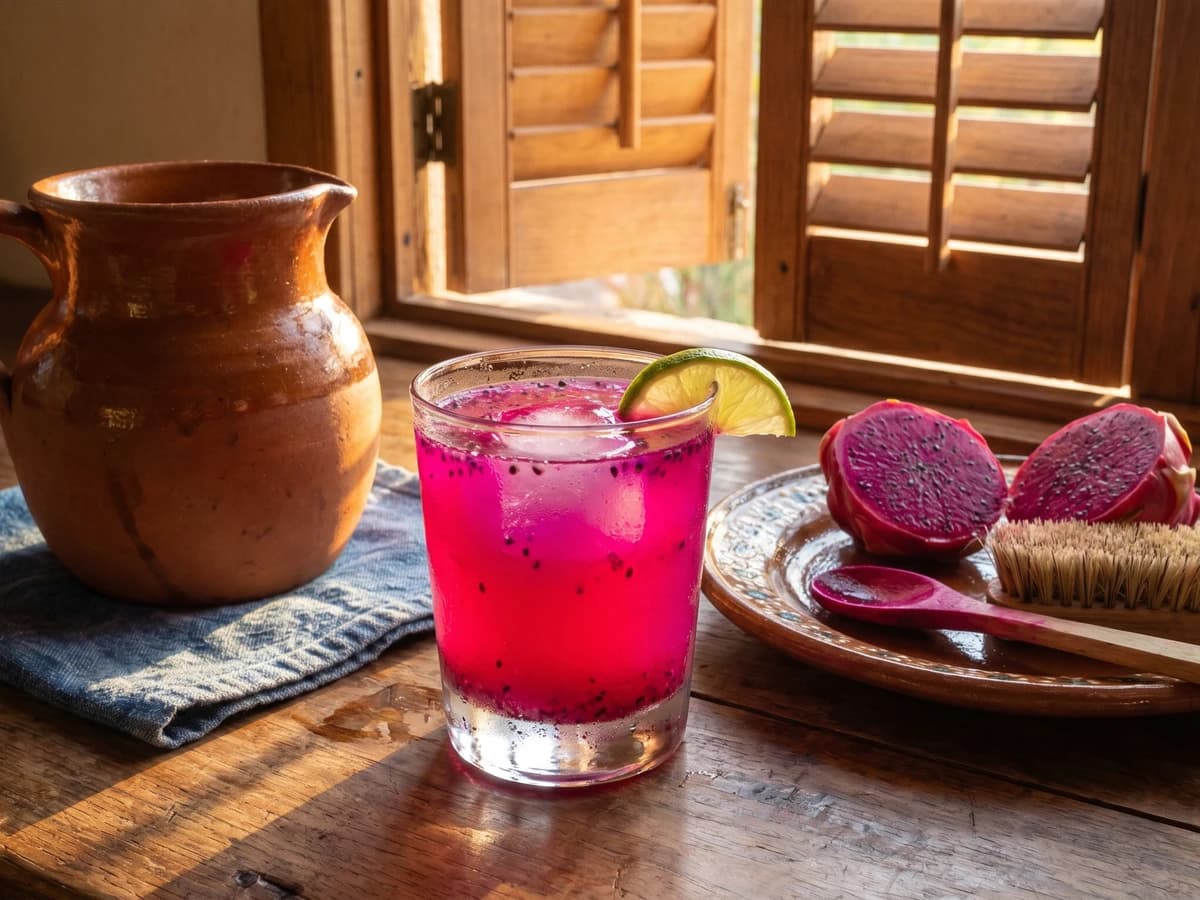
Sonora's magenta refresher from the desert organ pipe cactus, mashed by hand with limon and a pinch of sea salt from Bahia de Kino. The color of the Sonoran summer in a heavy glass tumbler.

Chef Lupita
Yucatán's summer agua fresca, made from cactus-fruit pitaya, cold water, lima agria, and just enough sugar to lift the magenta pulp. The drink that turns Mérida's afternoon heat bearable.

Chef Lupita
Yucatán's sugar apple agua fresca, the cream-white flesh of the saramuyo seeded by hand, blended with cold water and a little sugar until silky. Vanilla-floral, faintly tropical, a Mérida market-day treat.

Chef Lupita
Ciudad de Mexico's mercado agua fresca, made from whole tamarind pods boiled, rested, pressed, sweetened, and chilled until the glass tastes sweet, sour, and honest.

Chef Lupita
Guanajuato's late-summer agua fresca, made when the Bajío nopaleras are heavy with tuna roja, balanced with lime and piloncillo, and strained with restraint.
Culinary guides, cultural storytelling, and the editorial depth that makes cooking meaningful.
Discover Culinary Explorer