
Chef Dimitra
Athenian Freddo Espresso (Φρέντο Εσπρέσο)
Athens made espresso Greek by serving it cold: a double shot shaken with ice until the crema turns thick, then poured over cubes for the cafe standard.
A cooking platform built around craft, culture, and the stories behind what we eat.
Created by
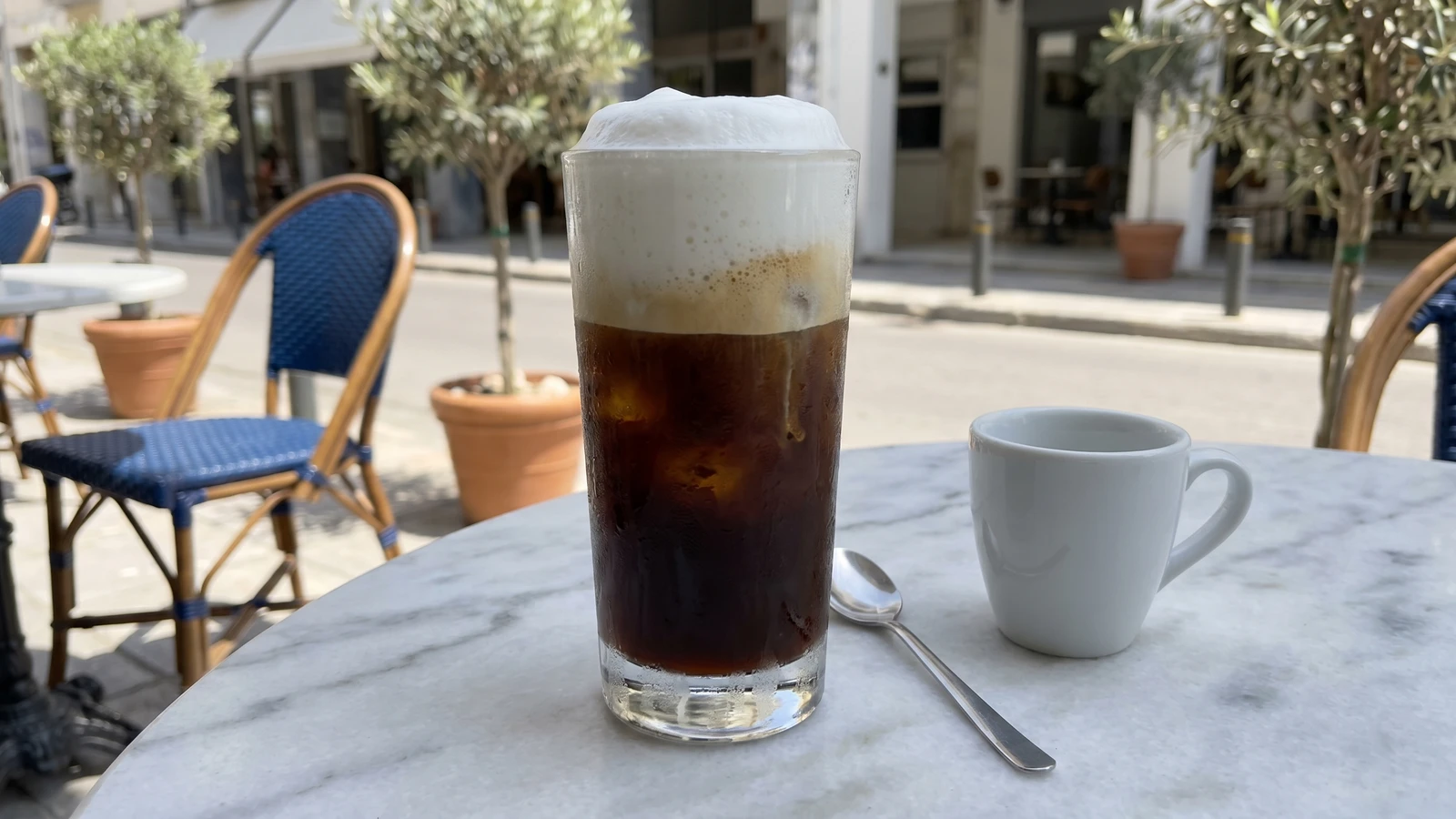
Athens cafe freddo cappuccino is iced double espresso crowned with cold afrogala, the dense milk foam that makes the drink clean, bitter, and properly Greek.
Athens cafe freddo cappuccino is the cold espresso drink of the Greek sidewalk table: dark freddo espresso below, thick white afrogala above, ice knocking quietly in the glass. It isn't a milkshake and it isn't a hot cappuccino poured over ice. The coffee stays sharp. The milk sits on top like a cold cap.
The whole drink depends on the milk. Froth it cold, straight from the refrigerator, until it thickens enough to float. Warm milk gives you the wrong drink, soft and tired, and the foam disappears into the coffee. Cold afrogala is why the first sip is bitter espresso and the next is milk-softened without becoming heavy.
I make it the way the cafés in Athens taught the whole country to drink espresso in summer: fast, clean, unsentimental. Good coffee, cold milk, and patience for thirty seconds of frothing. Λίγα και καλά, a few things, and good ones.
Freddo cappuccino belongs to Greece's modern urban kafeteria culture, especially Athens and Thessaloniki, where espresso machines became common in the 1990s. It followed the Greek habit of cold coffee that began with the instant-coffee frappé, first made at the Thessaloniki International Fair in 1957, but replaced instant coffee with fresh espresso and cold milk foam. The word afrogala means milk foam, and in this drink it is whipped cold, which separates it from the Italian hot cappuccino that gave it its name.
Quantity
18g
Quantity
60ml
Quantity
6 to 8
divided
Quantity
80ml
well chilled
Quantity
1 to 2 teaspoons
| Ingredient | Quantity |
|---|---|
| finely ground espresso coffee | 18g |
| freshly brewed double espresso | 60ml |
| ice cubesdivided | 6 to 8 |
| cold whole milk, 3.5% fatwell chilled | 80ml |
| sugar (optional) | 1 to 2 teaspoons |
Brew a strong double espresso, about 60ml, into a small cup. If you take sugar, stir it in now while the coffee is hot, because sugar won't dissolve properly once the ice goes in.
Pour the hot espresso into a shaker or tall mixing cup with 3 to 4 ice cubes. Shake hard for 10 to 15 seconds, just until the coffee turns cold and a light foam forms. Strain it into a tall chilled glass filled with fresh ice.
Pour the cold milk into a narrow metal cup and froth with a handheld drink mixer until it becomes thick afrogala, the cold milk foam, about 25 to 35 seconds. This is the step that decides the drink. The milk must be cold, never heated, so the foam stays dense enough to sit on the coffee instead of sinking into it.
Spoon the afrogala gently over the chilled espresso so it floats in a clean white cap. Serve at once with a straw. Don't stir it unless you like the café owner to know you're impatient.
1 serving (about 330g)
Culinary guides, cultural storytelling, and the editorial depth that makes cooking meaningful.
Discover Culinary ExplorerChef Dimitra
Athens made espresso Greek by serving it cold: a double shot shaken with ice until the crema turns thick, then poured over cubes for the cafe standard.

Chef Dimitra
Attiki lemonada is the kafeneio summer glass: fresh lemon juice, a light syrup, and a little zest steeped just long enough to smell like the peel.

Chef Dimitra
Chamomili from Greek Macedonia is a cup of dried spring flowers, steeped covered until pale gold and apple-sweet. The rule is plain: hot water, patient steeping, no boiling.

Chef Dimitra
Kanelada is the cinnamon cordial of Corfu and Crete, dark red, bracing, and simple: bark simmered low, syrup cooled, then poured over ice.