
Chef Dimitra
Athenian Freddo Espresso (Φρέντο Εσπρέσο)
Athens made espresso Greek by serving it cold: a double shot shaken with ice until the crema turns thick, then poured over cubes for the cafe standard.
A cooking platform built around craft, culture, and the stories behind what we eat.
Created by
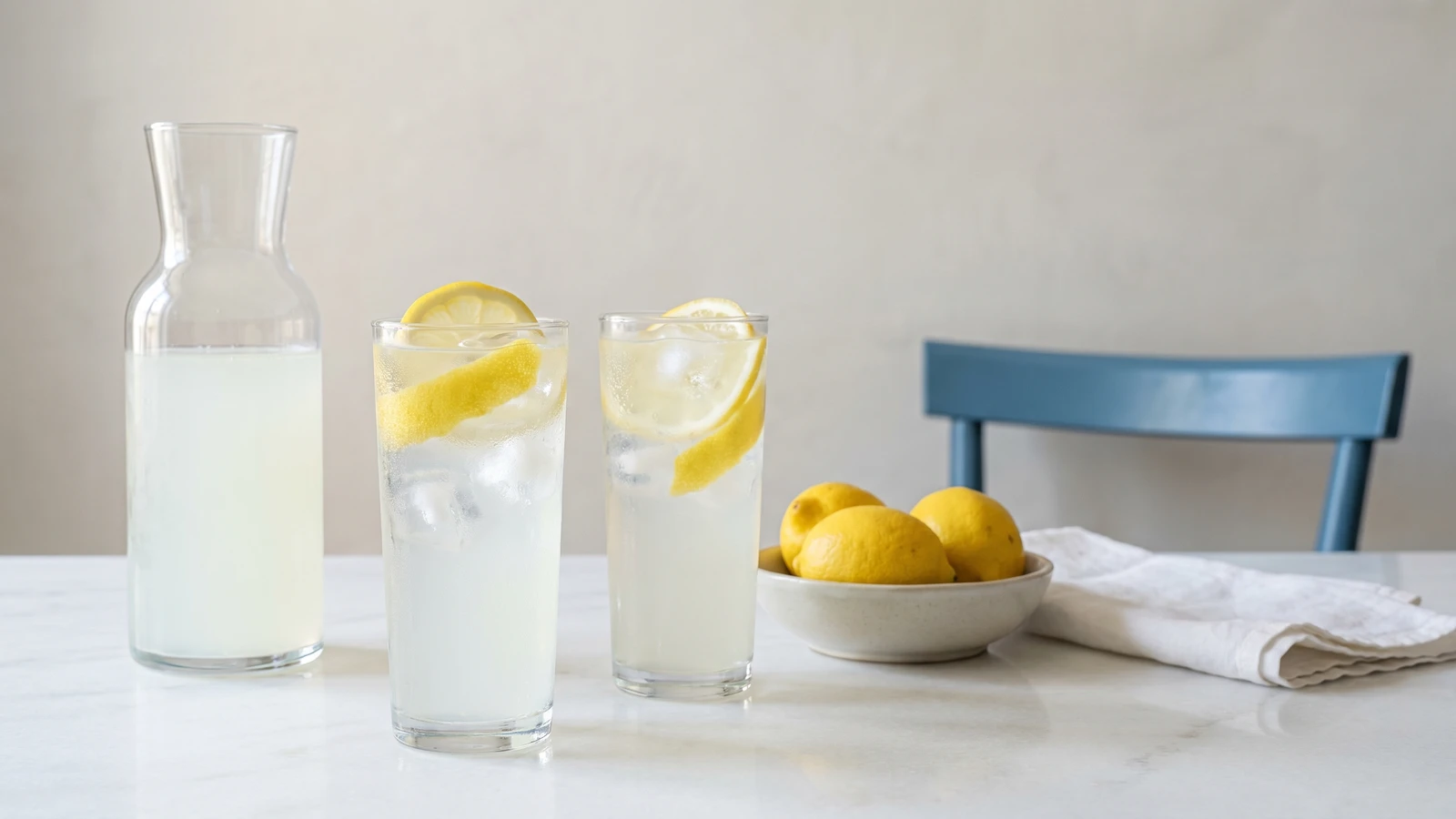
Attiki lemonada is the kafeneio summer glass: fresh lemon juice, a light syrup, and a little zest steeped just long enough to smell like the peel.
Attiki lemonada is the summer drink of the Athens kafeneio and the home balcony: fresh lemon juice, a light sugar syrup, cold water, ice. It is not fizzy bottled lemonade. It tastes of the fruit itself, sharp first, then clean and sweet enough to keep you drinking.
The whole glass depends on the syrup. Dissolve the sugar with water, then steep only the yellow zest while it is hot. That little rest pulls out the lemon oil, the perfume in the peel, without dragging in bitterness from the white pith. Then the juice goes in cold, so it stays bright.
I keep this one plain because that is how it earns its place. Λίγα και καλά: good lemons, clean water, enough sugar, and patience while it chills. On a hot afternoon, a bottle of this concentrate in the refrigerator is worth more than any complicated dessert.
Lemonada became a common Greek refreshment in urban kafeneia and home kitchens in the nineteenth and twentieth centuries, when sugar was no longer only a luxury and lemons from Attica, the Peloponnese, and the islands moved easily through city markets. In Athens and Piraeus, homemade lemon syrup was often kept as a concentrate, then diluted glass by glass for guests, children, and hot afternoons. The zest-steeped syrup separates the home version from factory lemonade, which usually gives sweetness and sourness but little of the peel's aroma.
Quantity
250ml
strained, from about 6 large unwaxed lemons
Quantity
180g
Quantity
250ml
for the syrup
Quantity
750ml
for serving
Quantity
from 2 unwaxed lemons
wide strips, no white pith
Quantity
as needed
Quantity
6
for serving
| Ingredient | Quantity |
|---|---|
| fresh lemon juicestrained, from about 6 large unwaxed lemons | 250ml |
| granulated sugar | 180g |
| waterfor the syrup | 250ml |
| cold still or sparkling waterfor serving | 750ml |
| lemon zestwide strips, no white pith | from 2 unwaxed lemons |
| ice cubes | as needed |
| thin lemon slices (optional)for serving | 6 |
Wash the lemons well, then cut wide strips of yellow zest from 2 of them, leaving the bitter white pith behind. Juice enough lemons to give 250ml juice, then strain out the seeds and heavy pulp.
Put the sugar, 250ml water, and lemon zest in a small saucepan. Bring just to a simmer, stirring until the sugar dissolves, then take it off the heat. Leave the zest in the hot syrup for 20 minutes, no longer. This is the step that decides the lemonade: the zest gives the clean lemon oil aroma, but the white pith gives bitterness if you bully it.
Strain out the zest and let the syrup cool. Stir in the 250ml strained lemon juice, bottle the concentrate, and chill it for at least 45 minutes, until properly cold.
For each glass, pour 80ml lemon concentrate over ice and add about 120ml cold still or sparkling water. Stir once, taste, and adjust with a little more water if your lemons are very sharp. Add a thin lemon slice if you like, then drink it while the glass is cold.
1 serving (about 245g)
Culinary guides, cultural storytelling, and the editorial depth that makes cooking meaningful.
Discover Culinary ExplorerChef Dimitra
Athens made espresso Greek by serving it cold: a double shot shaken with ice until the crema turns thick, then poured over cubes for the cafe standard.

Chef Dimitra
Athens cafe freddo cappuccino is iced double espresso crowned with cold afrogala, the dense milk foam that makes the drink clean, bitter, and properly Greek.

Chef Dimitra
Chamomili from Greek Macedonia is a cup of dried spring flowers, steeped covered until pale gold and apple-sweet. The rule is plain: hot water, patient steeping, no boiling.

Chef Dimitra
Kanelada is the cinnamon cordial of Corfu and Crete, dark red, bracing, and simple: bark simmered low, syrup cooled, then poured over ice.