Culinary Explorer

A cooking platform built around craft, culture, and the stories behind what we eat.
Discover Culinary Explorer
Atole de Aguamiel de Tarecuato

Atole de Aguamiel de Tarecuato

Created by

Michoacan's Meseta Purhepecha gives this atole its character: fresh aguamiel from maguey, white nixtamal masa, slow stirring in a clay olla, and sweetness before sugar.

Beverages
Mexican
Special Occasion
Comfort Food
10 min
Active Time
25 min cook35 min total
Yield6 servings

This comes from Tarecuato, Michoacan, in the Meseta Purhepecha, where atole is not one drink. It is a language. Kamata is the word you need to know, the P'urhepecha way of naming atole, and this one belongs to the maguey as much as to the corn.

Aguamiel is the fresh sap drawn from the heart of the maguey before it becomes pulque. It should taste green, floral, lightly honeyed, and alive. If it is already sour and foamy, it has started fermenting. That is for another drink, not this atole. Preguntale a las senoras del mercado. They will tell you who brings the good aguamiel in the morning.

The technique is patient: masa loosened with cold water, strained so it cooks smooth, then stirred into raw aguamiel over gentle heat until the drink thickens and shines. No piloncillo. No cinnamon hiding the flavor. The sweetness is pre-conquest sweetness, maguey and corn doing the work together. La cocina no es decoracion, es trabajo.

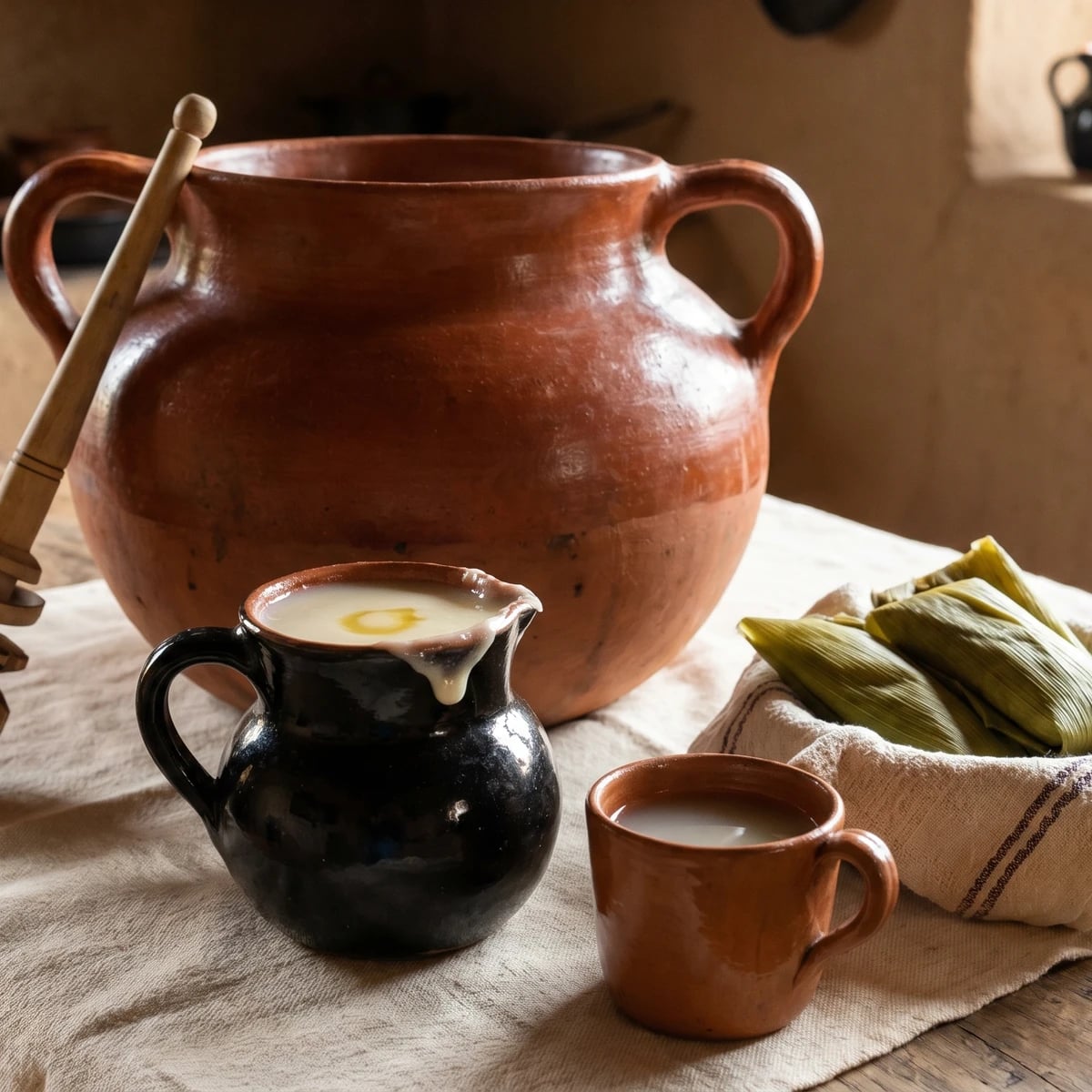
In Tarecuato, I was served this in a clay jarro with corundas on the table, the kind of breakfast that makes a cold morning behave. You adapt it to a stove if you must, but remember the principle of lena and clay: low heat, steady hand, no rushing. Asi se hace y punto.

Aguamiel was consumed in central and western Mexico long before the conquest, and the P'urhepecha communities of Michoacan kept maguey sap in daily foodways as both drink and sweetener. Tarecuato, an Indigenous community in the municipality of Tangamandapio, is part of the Meseta Purhepecha network where corn drinks, known locally as kamata, remain tied to household cooking, feast days, and market mornings. This atole preserves a pre-sugar logic: fresh maguey sap sweetens nixtamal masa without piloncillo, cane sugar, or milk.

The technique, the tradition, and the story behind every dish.

Discover Culinary Explorer

Ingredients

fresh raw aguamiel

Quantity

6 cups

strained

fresh white nixtamal masa

Quantity

1 cup

cold water

Quantity

1 cup

fine sea salt

Quantity

1/4 teaspoon

fresh nurite (optional)

Quantity

1 small sprig

rinsed

Equipment Needed

  • Clay olla from Michoacan or a heavy 3-quart saucepan
  • Wooden spoon or molinillo
  • Fine-mesh strainer
  • Clay jarros from Patamban, Tzintzuntzan, or Capula

Instructions

  1. 1

    Check the aguamiel

    Taste the aguamiel before you cook. It should be fresh, sweet, green, and lightly floral. If it tastes sharply sour or smells fermented, do not use it for this atole. Aguamiel changes quickly. Morning sap is best.

  2. 2

    Loosen the masa

    Put the fresh nixtamal masa in a bowl and whisk in the cold water little by little until there are no large lumps. Use your fingers if the masa resists. This is corn, not cake batter. It needs your hand.

  3. 3

    Strain the base

    Pass the loosened masa through a fine-mesh strainer into a clay olla or heavy saucepan, pressing with a spoon. This gives the atole its smooth body. The coarse bits left behind belong to the compost, not the jarro.

  4. 4

    Warm the aguamiel

    Pour the strained aguamiel into the olla with the masa base. Add the salt. Set over medium-low heat and stir constantly with a wooden spoon or molinillo. Do not boil it hard. A violent boil dulls the fresh maguey flavor and can make the masa catch on the bottom.

    If you are cooking over lena, keep the olla at the edge of the fire, not in the fiercest heat. Tarecuato cooks know this by the sound of the pot: a soft murmur, not an angry boil.
  5. 5

    Thicken slowly

    Cook for 18 to 22 minutes, stirring in a steady circle and scraping the bottom. The atole is ready when it coats the spoon lightly, looks glossy, and the raw masa smell has turned into warm corn. If using nurite, add the sprig for the last 3 minutes only, then remove it. Nurite perfumes. It should not take over.

  6. 6

    Serve in jarros

    Ladle the atole into warm clay jarros. Serve it plain, with corundas or pan de muerto at the side if the season is right. Do not sprinkle cinnamon over it. That is not what this drink is trying to say. Saber cocinar es saber vivir.

Chef Tips

  • Fresh aguamiel is the ingredient. Bottled aguamiel is usually pasteurized or already fermenting, and it will not taste the same. A substitution is a compromise, not an upgrade.
  • If you cannot find aguamiel, make a different atole. Do not replace it with honey water and call it Tarecuato. Cada estado, su propia cocina.
  • Use fresh nixtamal masa from a tortilleria if you can. Masa harina works in an emergency, but it gives a flatter flavor and a lighter body. Start with 3/4 cup masa harina whisked into 1 cup cold water, then adjust thickness as it cooks.
  • Nurite is regional to Michoacan and not always used in this atole. If you have it fresh, use a small sprig. If you do not, leave it out. Do not replace it with mint.

Advance Preparation

  • Drink this atole the day it is made. As it sits, the masa thickens and the fresh aguamiel flavor fades.
  • The masa can be loosened and strained 2 hours ahead, then refrigerated. Stir before using because the corn settles.
  • If reheating leftovers, add a splash of water and warm gently while stirring. Do not boil hard.

Frequently Asked Questions

Nutrition Information

1 serving (about 280g)

Calories
170 calories
Total Fat
1 g
Saturated Fat
0 g
Trans Fat
0 g
Unsaturated Fat
1 g
Cholesterol
0 mg
Sodium
105 mg
Total Carbohydrates
39 g
Dietary Fiber
1 g
Sugars
24 g
Protein
2 g

Note: Chef personas and recipes are created with AI assistance. Cook with care: follow safe food-handling practices, check doneness with a thermometer when needed, and adapt for allergies and your kitchen.

Where cooking meets culture.

Culinary guides, cultural storytelling, and the editorial depth that makes cooking meaningful.

Discover Culinary Explorer

More from Atole de Chaqueta, Kamáta Urápiti, Charanda & Ponche de Pátzcuaro

Browse the full collection