Culinary Explorer

A cooking platform built around craft, culture, and the stories behind what we eat.
Discover Culinary Explorer
Atole de Nurite de la Meseta P'urhepecha

Atole de Nurite de la Meseta P'urhepecha

Created by

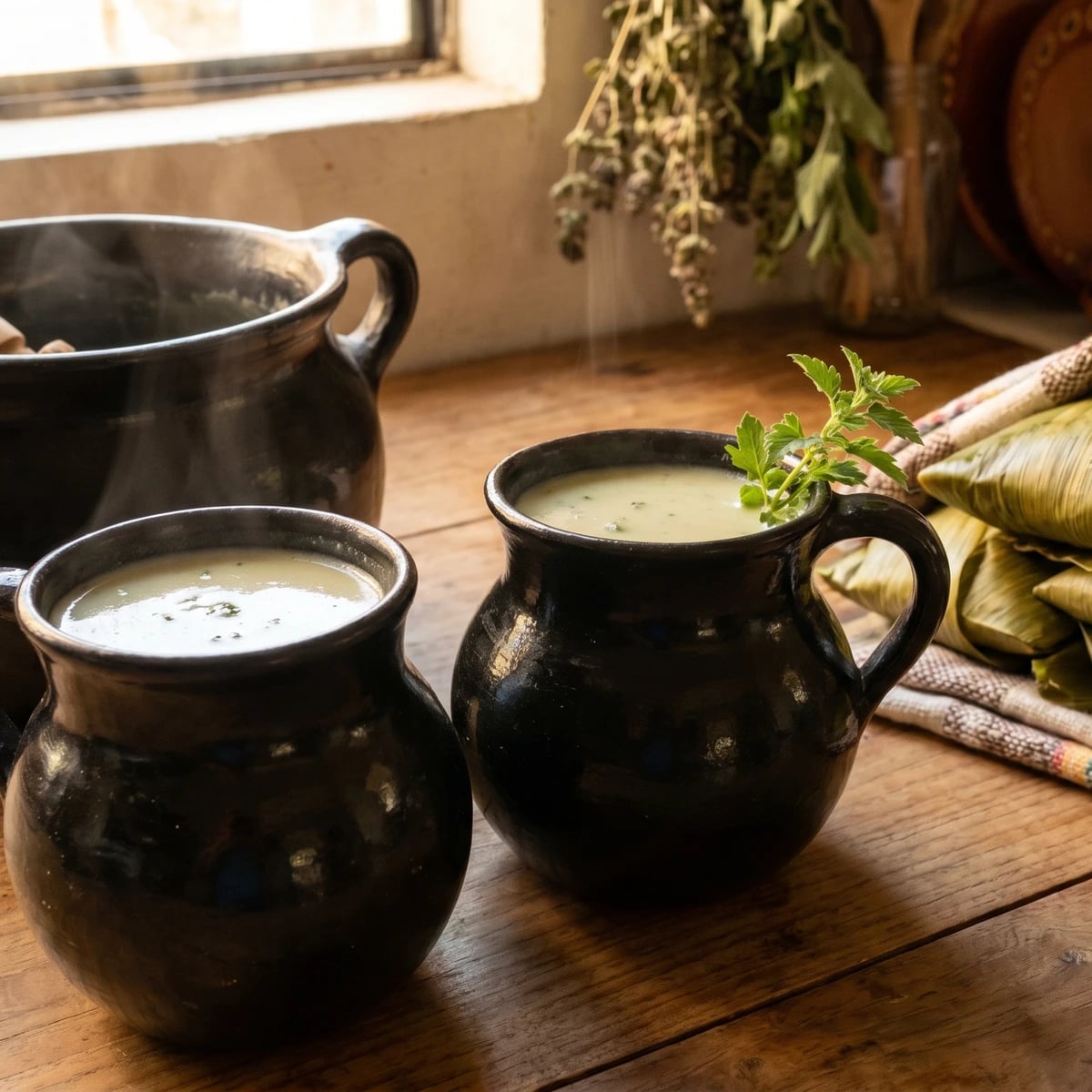
Michoacan's Meseta P'urhepecha morning kamáta, made with fresh masa and nurite, a mountain herb that gives the atole its green, minty comfort.

Beverages
Mexican
Comfort Food
Weeknight
15 min
Active Time
25 min cook40 min total
Yield6 servings

Michoacan, Meseta P'urhepecha. This atole lives in the highland towns around Cheran, Paracho, Nahuatzen, and Sevina, where the mornings can bite and a clay jarro of kamáta does more work than coffee.

Nurite, Satureja macrostema, is the herb that gives this drink its name. It grows in the mountains and smells like mint, oregano, and wet pine after rain. The women who taught me this did not treat it like a garnish. They treated it like medicine that also feeds you. Masa, water, lena, herb. That is the discipline.

Do not turn this into milk atole with cinnamon and call it P'urhepecha. That is another drink. This one is corn first, nurite second, lightly sweetened only if the household wants it. Cada estado, su propia cocina, and inside Michoacan, cada region has its own hand.

Atole comes from the Nahuatl atolli, but the P'urhepecha highlands have their own family of corn drinks known as kamáta, including white atoles, sour atoles, and herb-infused versions tied to local plants. Nurite, Satureja macrostema, is native to western and central Mexico and has long been used in Michoacan as a digestive herb, especially in the Meseta P'urhepecha. The use of nixtamal masa in drinks predates Spanish contact; piloncillo entered later through colonial sugar production, which is why sweetness in this atole should stay restrained.

The technique, the tradition, and the story behind every dish.

Discover Culinary Explorer

Ingredients

fresh nixtamal masa

Quantity

1 cup

or 1 cup masa harina mixed with 3/4 cup warm water

water

Quantity

7 cups

divided

fresh nurite leaves and tender stems (Satureja macrostema)

Quantity

1 packed cup

rinsed

piloncillo

Quantity

1 small cone, about 3 ounces

or 1/3 cup dark brown sugar

fine sea salt

Quantity

1/4 teaspoon

Equipment Needed

  • Clay olla or heavy 3-quart saucepan
  • Wooden spoon or molinillo
  • Fine-mesh strainer
  • Clay jarros from Patamban, Tzintzuntzan, or Capula

Instructions

  1. 1

    Dissolve the masa

    Put the fresh masa in a bowl with 2 cups of the water. Work it with your fingers until it loosens into a smooth, milky slurry. Strain it through a fine-mesh sieve into a clay olla or heavy saucepan, pressing out every bit of corn. The strainer catches dry lumps. A good kamáta should drink smooth, not gritty.

  2. 2

    Start the atole

    Add the remaining 5 cups water, piloncillo, and salt to the olla. Set it over medium heat. Stir with a wooden spoon or molinillo as the piloncillo melts and the masa begins to thicken. Keep the spoon moving along the bottom. Corn catches fast, and scorched masa tastes like carelessness.

  3. 3

    Cook until glossy

    Cook for 15 to 18 minutes, stirring often, until the atole lightly coats the spoon and loses the raw corn smell. It should look satiny and pour in a thick ribbon. If it gets too thick, add hot water a few tablespoons at a time. Meseta cooks know this by the pull of the spoon, not by a timer.

  4. 4

    Steep the nurite

    Turn the heat to low. Bruise the nurite gently between your palms and add it to the atole. Stir for 3 to 4 minutes, just until the drink smells green, minty, and a little resinous. Do not boil the herb hard. Nurite is delicate. Beat it to death and you lose the clean mountain flavor.

  5. 5

    Rest and strain

    Turn off the heat, cover the olla, and let the nurite steep for 5 minutes. Strain if you want a clean drink, or leave a few soft leaves in the jarro the way many homes do. Taste for sweetness. It should be gentle, not candy. This is atole for the stomach and the morning, not dessert trying to show off.

  6. 6

    Serve in jarros

    Ladle the atole into warm clay jarros. Serve with corundas, uchepos, or pan de muerto when the season is right. On the Meseta, the vessel matters: clay keeps the drink steady and reminds you this is food from a hearth, not from a paper cup. Así se hace y punto.

Chef Tips

  • Fresh nurite is the point. Look for it in Michoacan markets, especially around Uruapan, Paracho, Patzcuaro, and the Meseta towns. Outside Mexico, ask Mexican herb vendors before accepting a substitute. Preguntale a las señoras del mercado.
  • If you cannot find nurite, use fresh spearmint with a small pinch of Mexican oregano. It is a compromise, not the same drink. Nurite has a wild, resinous edge that garden mint does not carry.
  • Fresh nixtamal masa gives the best body. Masa harina works for a weeknight, but whisk it well and strain it. Lumps in atole mean you rushed.
  • Do not boil the nurite from the beginning. Cook the corn first, then steep the herb. That is how you keep the flavor clean.

Advance Preparation

  • The masa slurry can be mixed and strained up to 8 hours ahead, then refrigerated. Stir before cooking because the corn settles.
  • Atole is best the day it is made. If reheating, warm it gently with a splash of water and stir constantly until smooth again.
  • Rinse the nurite only shortly before using. Wet herbs bruise and darken if they sit too long.

Frequently Asked Questions

Nutrition Information

1 serving (about 310g)

Calories
130 calories
Total Fat
1 g
Saturated Fat
0 g
Trans Fat
0 g
Unsaturated Fat
1 g
Cholesterol
0 mg
Sodium
100 mg
Total Carbohydrates
29 g
Dietary Fiber
2 g
Sugars
14 g
Protein
2 g

Note: Chef personas and recipes are created with AI assistance. Cook with care: follow safe food-handling practices, check doneness with a thermometer when needed, and adapt for allergies and your kitchen.

Where cooking meets culture.

Culinary guides, cultural storytelling, and the editorial depth that makes cooking meaningful.

Discover Culinary Explorer

More from Atole de Chaqueta, Kamáta Urápiti, Charanda & Ponche de Pátzcuaro

Browse the full collection