
Chef Juliette
Smelt (Éperlans)
Tiny éperlans, lightly floured and fried until their tails stand crisp, arrive in a generous heap on a napkin with fried parsley and grooved lemon, a weeknight lesson in heat and restraint.
A cooking platform built around craft, culture, and the stories behind what we eat.
Created by Chef Juliette
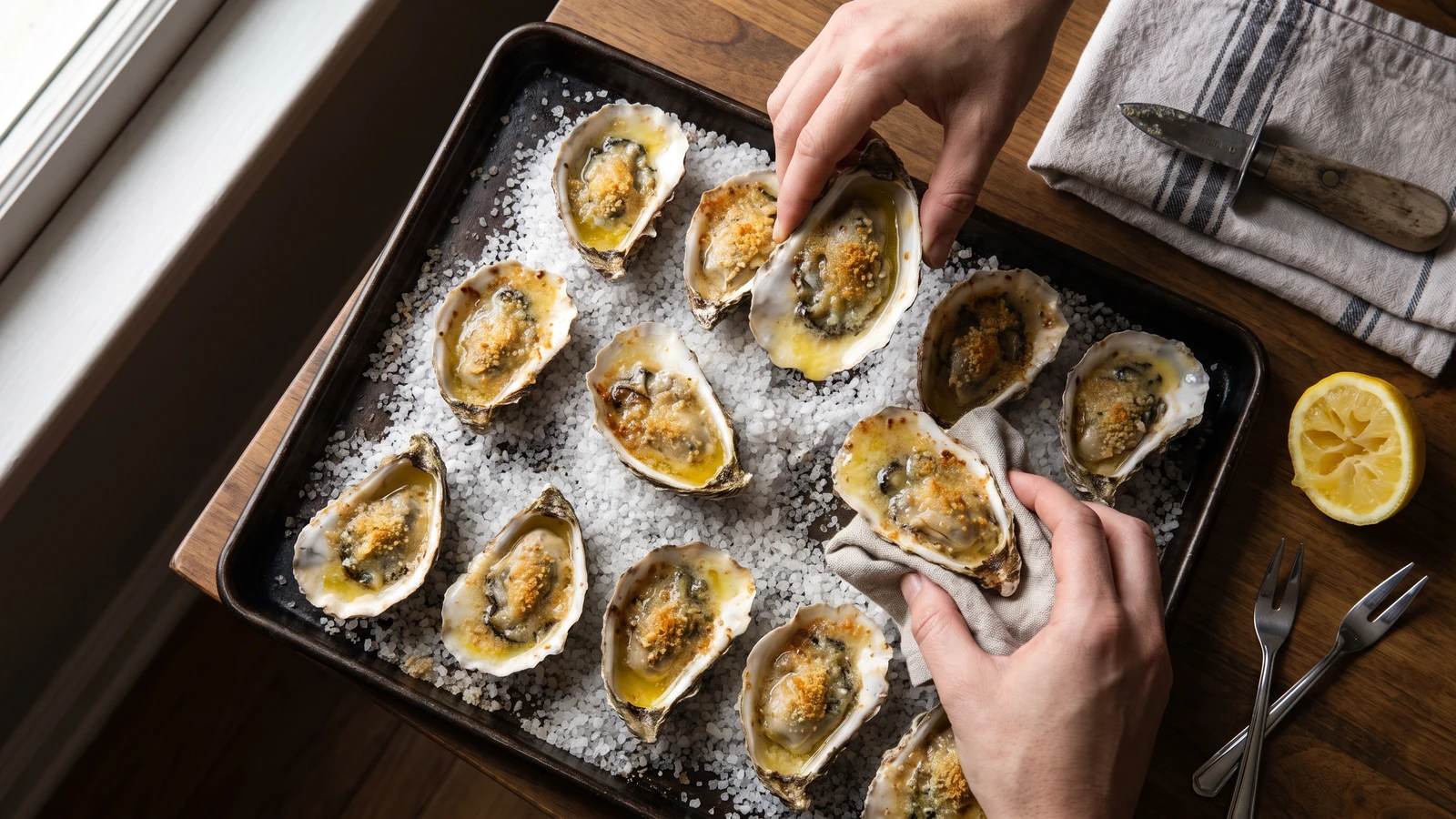
Based on No. 981, Huîtres au Gratin, from Le Guide Culinaire (1907) by Auguste Escoffier
Huîtres au Gratin prove that gratin is speed, not heaviness: lemon, fried crumbs, and two touches of butter browned fiercely while the oyster underneath stays pearly, plump, and full of its own liquor.
Huîtres au Gratin (oysters under a browned crumb crust) teach the quickest form of gratin: color the surface before the food beneath has time to toughen. The one true thing is speed. The oysters should emerge plump in their liquor, with butter-gold crumbs above, not baked until they curl into little fists.
The old kitchen needed no saucier and no stockpot for this one. Its advantages were a shucker working to order, a salt-incrusted tray, and a salamander fierce enough to bronze the topping in moments. At home, the salamander becomes a fully preheated broiler and the brigade portion becomes twelve oysters. The salt bed stays because it is part of the dish, holding every shell level so its liquor and butter remain where they belong. We cut the service scaffolding, not the rapid gratin itself.
Each oyster receives the original sequence: a drop of lemon, a pinch of fried crumbs, a little melted butter, then a pea-sized piece of cold butter. Nothing more. Preheat the broiler fully before you shuck the first oyster, because waiting beneath a timid element is what turns tenderness into rubber.
Huîtres au gratin belongs to the classical Paris dining room, whose kitchens received live oysters from Normandy, Brittany, and the Atlantic beds around Marennes-Oléron. The dish carried coastal oyster culture into grand service, where the salamander allowed shells to travel from shucking bench to table under a newly browned crust. Despite a common misconception, gratin here means neither cheese nor a heavy sauce; it is a rapid surface browning of crumbs and butter that leaves the oyster itself unmistakable.
Quantity
12
scrubbed and kept cold
Quantity
4 cups (960 ml / 1.2 kg)
for supporting the shells
Quantity
1/2 teaspoon (2.5 ml / 2.5 g)
Quantity
2 tablespoons (30 ml / 12 g) (No. 268)
Quantity
2 tablespoons (30 ml / 28 g)
divide into 1 tablespoon melted and 1 tablespoon cold cut into 12 pea-sized pieces
| Ingredient | Quantity |
|---|---|
| medium live oystersscrubbed and kept cold | 12 |
| coarse sea saltfor supporting the shells | 4 cups (960 ml / 1.2 kg) |
| fresh lemon juice | 1/2 teaspoon (2.5 ml / 2.5 g) |
| finished fried bread crumbs for Gratins | 2 tablespoons (30 ml / 12 g) (No. 268) |
| unsalted butterdivide into 1 tablespoon melted and 1 tablespoon cold cut into 12 pea-sized pieces | 2 tablespoons (30 ml / 28 g) |
Set an oven rack 3 to 4 inches (8 to 10 cm) below the broiler and heat the broiler on high for at least 10 minutes. Spread the coarse salt in an even layer across a quarter-sheet pan, making small hollows where the shells will sit. Do not preheat the salt-lined pan; its work is to steady the shells, not cook the oysters from beneath.
Work with one cold oyster at a time. Hold it cupped-side down in a folded towel or cut-resistant glove, insert the oyster knife at the hinge with its point directed away from your hand, and twist until the shell releases. Cut the upper muscle, remove the flat shell, then slide the knife beneath the oyster to free it from the lower shell without spilling its liquor. Pick out any shell fragments and nestle the cupped half securely in the salt.
Leave the natural liquor around each oyster unless it nearly reaches the rim, in which case spoon off only the excess. Place two or three drops of lemon juice on each oyster, then scatter over a small pinch of the finished fried bread crumbs for Gratins (No. 268). Dribble each with a little melted butter and finish with one pea-sized piece of cold butter. This exact sequence is the dish. If the crumbs become soaked before the tray reaches the broiler, lift away the wet patch with a teaspoon and replace it with dry crumbs. Ça se rattrape.
Slide the tray beneath the fully heated broiler and watch without leaving the stove. Broil for 2 to 3 minutes, rotating the tray once if the element colors unevenly, until the crumbs are deep gold, the butter bubbles at the shell edges, and the oyster rims have just turned opaque and begun to curl. The largest oyster should reach 145°F (63°C) at its center. If the crumbs darken before the oyster is ready, lower the tray one rack and shield the darkest shells loosely with foil for another 30 to 60 seconds. Ça se rattrape. A slow oven is not the answer; speed keeps the oysters tender.
Carry the oysters to the table immediately on their salt-lined tray, set over a sturdy trivet. The shells are very hot, so give each guest a folded napkin or small plate and an oyster fork. Serve before the butter loses its lively gloss and the crumbs soften. À table!
1 serving (about 50g)
Culinary guides, cultural storytelling, and the editorial depth that makes cooking meaningful.
Discover Culinary ExplorerChef Juliette
Tiny éperlans, lightly floured and fried until their tails stand crisp, arrive in a generous heap on a napkin with fried parsley and grooved lemon, a weeknight lesson in heat and restraint.

Chef Juliette
Brandade de Morue turns salt cod, warm olive oil, and milk into a pale, silky emulsion: keep everything warm and add the oil slowly, then crown the generous dome with butter-fried bread.

Chef Juliette
Salt cod worked warm with cream, one patient spoonful at a time, until the rough flakes become a glossy Nîmes paste, domed generously and ringed with butter-fried croutons for the table.

Chef Juliette
Wine-poached char packed in its earthenware crock beneath butter gold: a make-ahead first course that turns careful cooling, thorough boning, and one unbroken seal into quiet abundance.