
Chef Juliette
Smelt (Éperlans)
Tiny éperlans, lightly floured and fried until their tails stand crisp, arrive in a generous heap on a napkin with fried parsley and grooved lemon, a weeknight lesson in heat and restraint.
A cooking platform built around craft, culture, and the stories behind what we eat.
Created by Chef Juliette
Based on No. 387, Tartlets and Barquettes, from Le Guide Culinaire (1907) by Auguste Escoffier
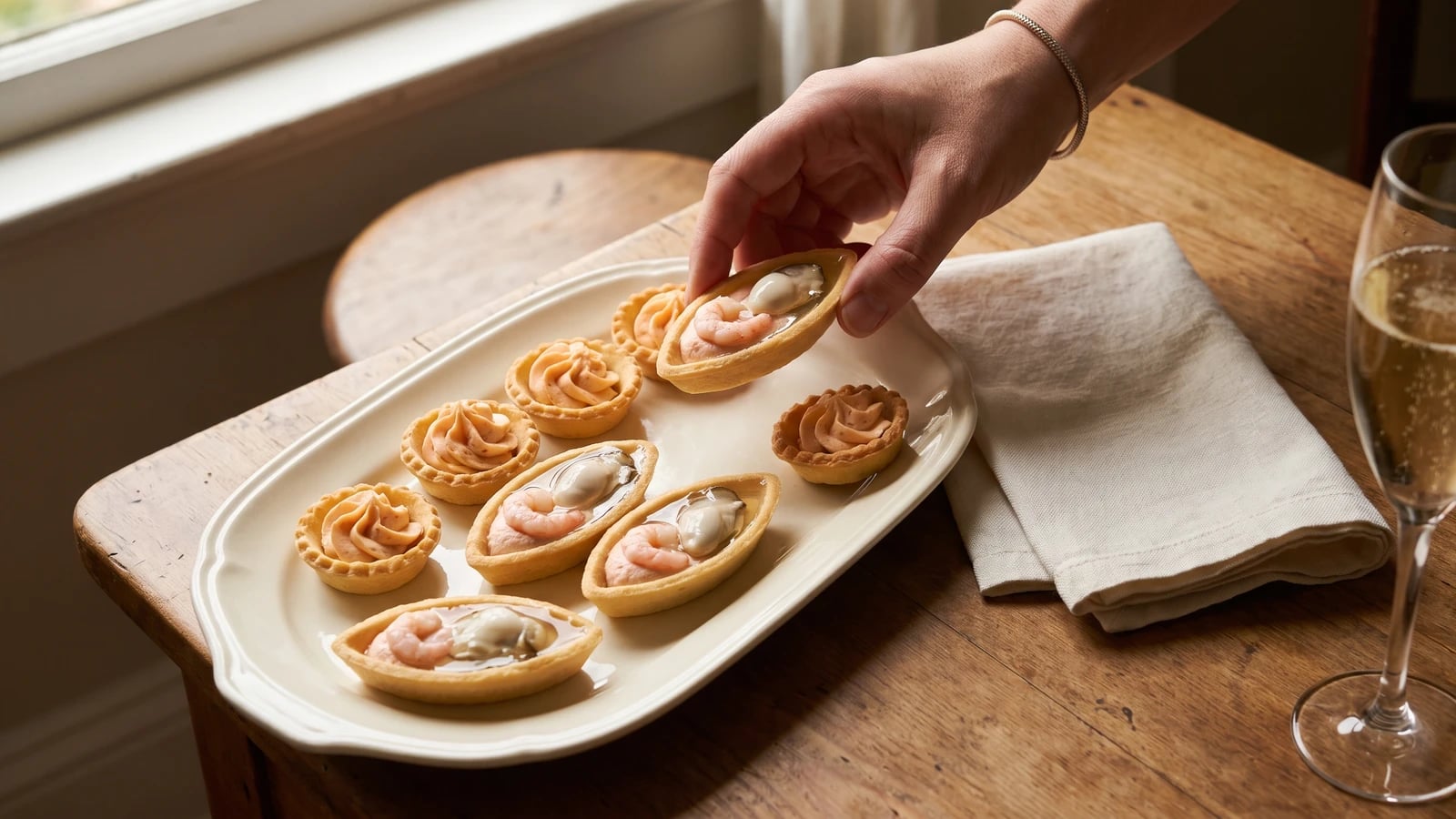
These petite pastry shells teach the discipline of cold hors-d'œuvres: bake them fully dry, cool them completely, then add compound butter or aspic-set shrimp mousse without surrendering the crisp bite.
Tartelettes et barquettes teach the discipline behind every good filled hors-d'œuvre. The pastry must be baked fully dry before it carries anything cold and soft. Pale pastry isn't delicate here, it is unfinished, and once the filling goes in, no oven can rescue it.
The source formula assumed a mixing board, stacks of petits-fours moulds, and a garde-manger where compound butters, clear aspic, and Mousses waited for service. This home batch quarters the paste for twelve round tartlets, then reaches for twelve finished Barquettes (No. 314), whose separate preparation remains in its own entry. A bowl, small moulds, parchment, and dried rice replace the production bench. Brigade volume and ornamental repetition are scaffolding and can go; the two-hour rest and thoroughly dry blind bake are the dish and must stay. One cook, one stove, one evening.
Half the shells receive a finished shellfish compound butter from Canapés and Toast (No. 316). The others take pink shrimp Mousse, a white poached oyster, and clear aspic. The filling must seal the pastry edge to edge, and the aspic must be cool enough not to melt it. We don't apologize for butter, but we do guard the crisp shell. Give the blind bake your full attention.
Tartelettes and barquettes belong to Parisian classical hors-d'œuvre service, where pastry technique and the tiny moulds used for petits fours were turned toward savoury frivolités. They traveled from grand dining rooms to traiteur counters and home apéritif tables because their shells could be baked ahead and filled from the cold larder. The distinction is shape, not technique: the tartelette is round, the barquette boat-shaped, and both carry the same garnishes.
Quantity
Scant 1 cup (225 ml / 115 g)
Quantity
Scant 1/4 teaspoon (1 ml / 0.9 g)
Quantity
1/4 cup (60 ml / 57 g)
melted and cooled until barely fluid
Quantity
2 1/2 teaspoons (12.5 ml / 12.5 g) from 1 beaten egg
Quantity
2 teaspoons (10 ml / 9 g) from 1 beaten yolk
Quantity
Up to 1/2 teaspoon (2.5 ml / 2.5 g)
use only if needed
Quantity
1 cup (250 ml / 200 g)
for blind baking and later reuse
Quantity
12 finished Barquettes (No. 314), baked dry and cooled
Quantity
1/2 cup (120 ml / 115 g) for Canapés and Toast (No. 316)
cool but pliable
Quantity
1/2 cup (120 ml / 125 g)
chilled
Quantity
12
shucked, with their liquor reserved and strained
Quantity
3
hard-boiled and cut into small fluted rounds
Quantity
3/4 cup (180 ml / 180 g)
melted and cooled until barely fluid
| Ingredient | Quantity |
|---|---|
| plain flour | Scant 1 cup (225 ml / 115 g) |
| fine salt | Scant 1/4 teaspoon (1 ml / 0.9 g) |
| unsalted buttermelted and cooled until barely fluid | 1/4 cup (60 ml / 57 g) |
| large egg | 2 1/2 teaspoons (12.5 ml / 12.5 g) from 1 beaten egg |
| large egg yolk | 2 teaspoons (10 ml / 9 g) from 1 beaten yolk |
| cold water (optional)use only if needed | Up to 1/2 teaspoon (2.5 ml / 2.5 g) |
| uncooked ricefor blind baking and later reuse | 1 cup (250 ml / 200 g) |
| finished boat-shaped shells | 12 finished Barquettes (No. 314), baked dry and cooled |
| finished shellfish compound butter garnishcool but pliable | 1/2 cup (120 ml / 115 g) for Canapés and Toast (No. 316) |
| finished pink shrimp Moussechilled | 1/2 cup (120 ml / 125 g) |
| small oystersshucked, with their liquor reserved and strained | 12 |
| large eggs (optional)hard-boiled and cut into small fluted rounds | 3 |
| very clear prepared aspic jellymelted and cooled until barely fluid | 3/4 cup (180 ml / 180 g) |
Sift the flour and salt into a wide bowl and make a well in the centre. Add the measured beaten egg, yolk, and cooled melted butter. Draw in the flour with a flexible scraper or your fingertips, handling the mixture only until it gathers into rough clumps. If dry flour remains, add the cold water a few drops at a time. Stop as soon as the paste holds together; kneading develops gluten and gives a small shell the bite of a boot.
Shape the paste into a flat disc, wrap it, and refrigerate it for two hours. This rest is not production ceremony. It lets the flour hydrate and the gluten relax, so the pastry rolls without springing back and keeps its fluted edges in the oven.
Heat the oven to 175°C (350°F). Roll the chilled paste on a lightly floured surface to 3 mm (1/8 inch), turning it often but never stretching it. Stamp twelve fluted rounds sized for the tartlet moulds, press them gently into the corners, and prick only the bases with a fork. Patch a crack with a thin scrap of paste pressed flat; once baked, no one at the table will know.
Fit a small piece of parchment into each shell and fill it to the rim with rice. Bake for 12 to 14 minutes, until the edges are set and pale gold. Lift out the parchment and rice, then bake for another 4 to 6 minutes, until the bases are biscuit-gold, dry to the touch, and smell faintly toasted. If a base puffs, press it down with the back of a teaspoon while hot and return it to the oven. If it is still pale, keep baking. Ça se rattrape, but only before the filling goes in.
Let the tartlets stand in their moulds for one minute, then turn them onto a wire rack and cool them completely. Set them beside the twelve finished Barquettes (No. 314). If any stored shell has lost its crispness, bake it at 160°C (325°F) for 3 to 4 minutes and cool it again before filling.
Put the strained oyster liquor in a small saucepan, supplementing it with a spoonful of water if necessary. Bring it to a bare simmer, add the oysters, and poach for 2 to 3 minutes, until opaque, firm, and at least 63°C (145°F) at the centre. Drain them, cool them promptly, and blot them thoroughly dry. Skip this step if using the hard-boiled egg rounds.
Divide the finished shellfish compound butter garnish for Canapés and Toast (No. 316) among six tartlets and six barquettes. Pipe it with a fluted tip or spoon it neatly into a low mound, pressing the first layer against the entire pastry base. Keep the filling below the rim so each shell remains a clean two-bite hors-d'œuvre.
Spread the chilled pink shrimp Mousse edge to edge inside the remaining six tartlets and six barquettes; this continuous layer protects the pastry from the jelly. Place one dry poached oyster, or one hard-boiled egg round, on each. Spoon the barely fluid aspic over the garnish until it reaches the pastry rim. If the aspic begins setting in the bowl, stand the bowl briefly in warm water and stir. If it feels warm, wait before pouring, because warm aspic melts the Mousse and softens the shell.
Refrigerate the filled shells for 45 to 60 minutes, until the aspic is clear and firmly set. Bring the platter out 10 minutes before serving so the compound butter loses its refrigerator hardness while the aspic stays cool. Serve within two hours and return any leftovers promptly to the refrigerator. À table!
1 serving (about 85g)
Culinary guides, cultural storytelling, and the editorial depth that makes cooking meaningful.
Discover Culinary ExplorerChef Juliette
Tiny éperlans, lightly floured and fried until their tails stand crisp, arrive in a generous heap on a napkin with fried parsley and grooved lemon, a weeknight lesson in heat and restraint.

Chef Juliette
Brandade de Morue turns salt cod, warm olive oil, and milk into a pale, silky emulsion: keep everything warm and add the oil slowly, then crown the generous dome with butter-fried bread.

Chef Juliette
Salt cod worked warm with cream, one patient spoonful at a time, until the rough flakes become a glossy Nîmes paste, domed generously and ringed with butter-fried croutons for the table.

Chef Juliette
Wine-poached char packed in its earthenware crock beneath butter gold: a make-ahead first course that turns careful cooling, thorough boning, and one unbroken seal into quiet abundance.