
Chef Juliette
Smelt (Éperlans)
Tiny éperlans, lightly floured and fried until their tails stand crisp, arrive in a generous heap on a napkin with fried parsley and grooved lemon, a weeknight lesson in heat and restraint.
A cooking platform built around craft, culture, and the stories behind what we eat.
Created by Chef Juliette
Based on No. 346, Marinaded Smelts, from Le Guide Culinaire (1907) by Auguste Escoffier
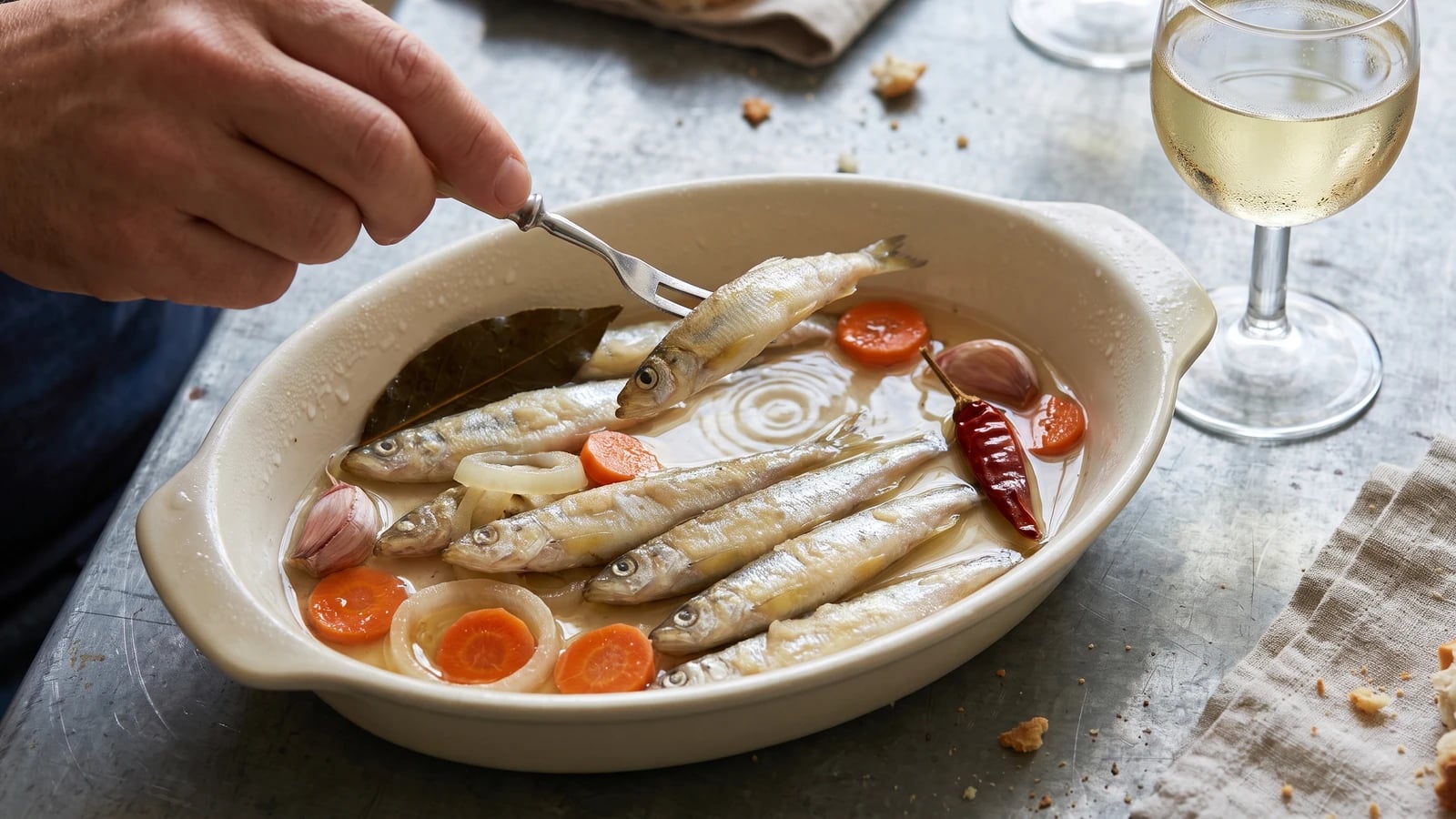
Crisp-fried smelts, softened by a day in vinegar, garlic, carrot, and onion: a cold hors d'oeuvre whose most important cooking happens after the pan leaves the fire.
Éperlans marinés (marinaded smelts) teach that a marinade can be the second act of cooking, not merely a bath before it. The smelts are floured and fried first, then a warm, aromatic vinegar liquor goes to work: the crust relaxes, the fine bones become gentler, and garlic, carrot, onion, thyme, bay, and piment travel through every bite. The one true thing is simple. The long soak is everything; shorten it and you have cold fried fish, not Éperlans marinés.
The original formula assumed two pounds of fish, a pint of frying oil, a deep service bowl, and the easy rhythm of a brigade. At home, halve the fish and every liquid ratio, use one wide skillet, and chill everything in a close-fitting nonreactive dish. A separate saucier and a five-quart batch of Cooked Marinade for Venison (No. 168) are brigade scaffolding and can go. The equal measures of vinegar and water, the twelve-minute bath, and the full twenty-four-hour rest are the dish and must stay. One cook, one stove, one evening of work; the cold does the rest.
What reaches the table is pale gold and silver beneath a clear, sharp liquor, with translucent onion, bright carrot rounds, ivory garlic, and one small piment among the fish. Serve it very cold and spoon the marinade generously. The step that matters most comes after all the noise of frying: keep every smelt in contact with the liquor and give it the full day.
Éperlans marinés belong to the cold hors d'oeuvre repertoire of Paris and northern France, where small smelts from rivers and Channel estuaries reached the markets fresh enough to fry whole. The vinegar method shares its preserving logic with escabèche around Mediterranean ports, but classical French kitchens placed it within their family of cooked marinades and served the fish from their liquor. This is not raw fish cured by acid: frying cooks it, the twelve-minute bath seasons it, and the day in the cold makes the dish.
Quantity
1 lb (454 g)
cleaned, rinsed, and very well dried
Quantity
1/2 cup (120 ml / 60 g)
Quantity
1 cup (240 ml / 218 g)
Quantity
4
left unpeeled
Quantity
1/2 small (about 2 oz / 60 g)
cut into 1/8-inch (3 mm) rounds
Quantity
1/2 medium (about 2 oz / 60 g)
cut into 1/8-inch (3 mm) rounds
Quantity
1/4 cup (60 ml / 60 g)
Quantity
1/4 cup (60 ml / 60 g)
Quantity
3/4 teaspoon (3.5 ml / 4 g)
Quantity
1
Quantity
1
Quantity
1
Quantity
4
| Ingredient | Quantity |
|---|---|
| small whole smeltscleaned, rinsed, and very well dried | 1 lb (454 g) |
| all-purpose flour | 1/2 cup (120 ml / 60 g) |
| neutral frying oil | 1 cup (240 ml / 218 g) |
| garlic clovesleft unpeeled | 4 |
| small yellow onioncut into 1/8-inch (3 mm) rounds | 1/2 small (about 2 oz / 60 g) |
| medium carrotcut into 1/8-inch (3 mm) rounds | 1/2 medium (about 2 oz / 60 g) |
| white wine vinegar | 1/4 cup (60 ml / 60 g) |
| water | 1/4 cup (60 ml / 60 g) |
| fine sea salt | 3/4 teaspoon (3.5 ml / 4 g) |
| small dried piment (red chile) | 1 |
| small bay leaf | 1 |
| small thyme sprig | 1 |
| parsley stalks | 4 |
Check the smelts for any remaining scales or innards, rinse them quickly, and dry them inside and out with clean towels. They must be truly dry before flouring. Wet fish turns the flour to paste and makes the oil spit; leave them on fresh towels for ten minutes if necessary. Put the flour in a shallow dish, coat the smelts lightly, and shake off every loose veil of flour.
Heat the oil in a 10-inch (25 cm) heavy skillet to 350°F (175°C). Fry the smelts in uncrowded batches until pale gold, crisp at the surface, and opaque at the backbone, about 2 to 3 minutes total for small fish. Lift them carefully with a spider or wide slotted turner and arrange them in a deep nonreactive dish. If loose flour begins burning between batches, stop before the oil turns bitter. Ça se rattrape: strain the oil through a fine metal sieve into a clean heatproof pan, leaving the dark sediment behind, then continue.
Lower the heat to medium. Add the unpeeled garlic, onion rounds, and carrot rounds to the frying oil, separating the onion without breaking it. Fry gently for 3 to 4 minutes, stirring, until the vegetables soften and take only the faintest gold at their edges. Lift the vegetables out, carefully pour the oil into a heatproof vessel, and return the vegetables to the skillet with only the thin film of oil that clings to them. Let the discarded oil cool completely before handling it further.
Add the white wine vinegar and water in equal measure, then the salt, piment, bay leaf, thyme, and parsley stalks. Bring the marinade to a bare simmer, scraping any pale floury fond from the skillet into the liquor. Keep the ratio exact. If hard boiling reduces the liquid, restore it with vinegar and water in equal spoonfuls. The book places Cooked Marinade for Venison (No. 168) beside this preparation as its family reference, but the smelts use the lighter vinegar-and-water liquor specified here.
Return the fried smelts to the skillet, fitting them snugly and spooning the marinade over the uppermost fish. Hold the liquid at the barest tremble for exactly 12 minutes. Do not stir. Turn the fish once with a wide slotted turner if the liquor cannot reach their upper sides. If one tears, don't discard it. Ça se rattrape: lay the pieces together in the serving dish and cover them with marinade; after the long rest, the flavour will be intact even if the fish is less handsome.
Transfer the smelts to a close-fitting glass or glazed ceramic dish and distribute the vegetables among them. Pour over every drop of marinade. Press a piece of parchment directly onto the surface so the upper fish remain wet, let the fierce heat subside for 15 minutes, then cover loosely and refrigerate. Once thoroughly cold, seal the dish and leave it for a full 24 hours. Turn the fish carefully after 12 hours if any portion sits above the liquor. The waiting is not make-ahead convenience; it is the technique.
Remove the thyme, parsley stalks, and bay leaf. Arrange the smelts with the carrot, onion, garlic, and piment, then spoon a generous portion of the cold marinade over everything. Serve directly from the chilled dish with small forks. No added garnish and no fussy arrangement are needed. Cooking well is not cooking fancy. À table!
1 serving (about 175g)
Culinary guides, cultural storytelling, and the editorial depth that makes cooking meaningful.
Discover Culinary ExplorerChef Juliette
Tiny éperlans, lightly floured and fried until their tails stand crisp, arrive in a generous heap on a napkin with fried parsley and grooved lemon, a weeknight lesson in heat and restraint.

Chef Juliette
Brandade de Morue turns salt cod, warm olive oil, and milk into a pale, silky emulsion: keep everything warm and add the oil slowly, then crown the generous dome with butter-fried bread.

Chef Juliette
Salt cod worked warm with cream, one patient spoonful at a time, until the rough flakes become a glossy Nîmes paste, domed generously and ringed with butter-fried croutons for the table.

Chef Juliette
Wine-poached char packed in its earthenware crock beneath butter gold: a make-ahead first course that turns careful cooling, thorough boning, and one unbroken seal into quiet abundance.