Chef Juliette
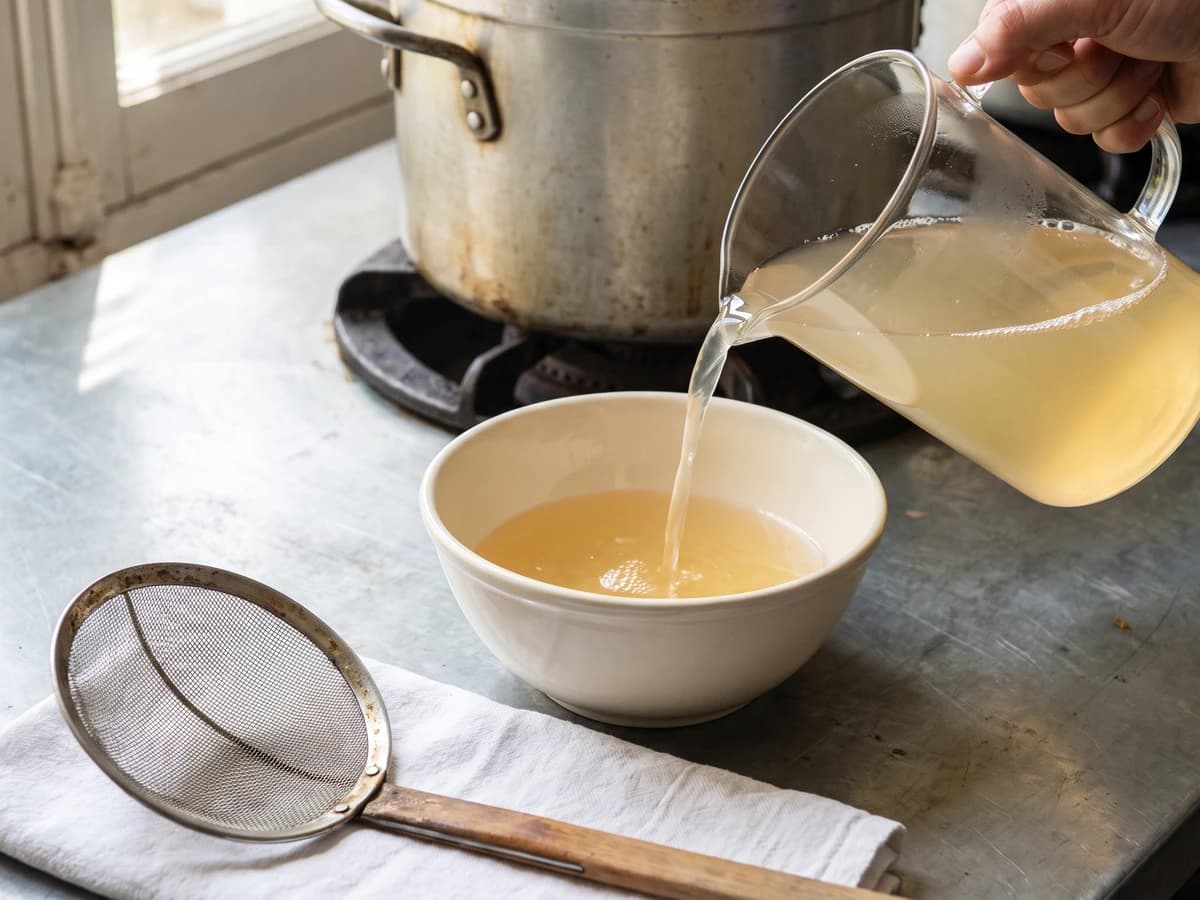
Ordinary or White Consommé
Beef shin, lean beef, and fowl begin in cold water and rise slowly toward a tremble. Skim before the boil, and you learn the quiet discipline that gives every clear French broth its backbone.
A cooking platform built around craft, culture, and the stories behind what we eat.
Created by Chef Juliette
Based on No. 329a, Marinaded Cèpes, from Le Guide Culinaire (1907) by Auguste Escoffier
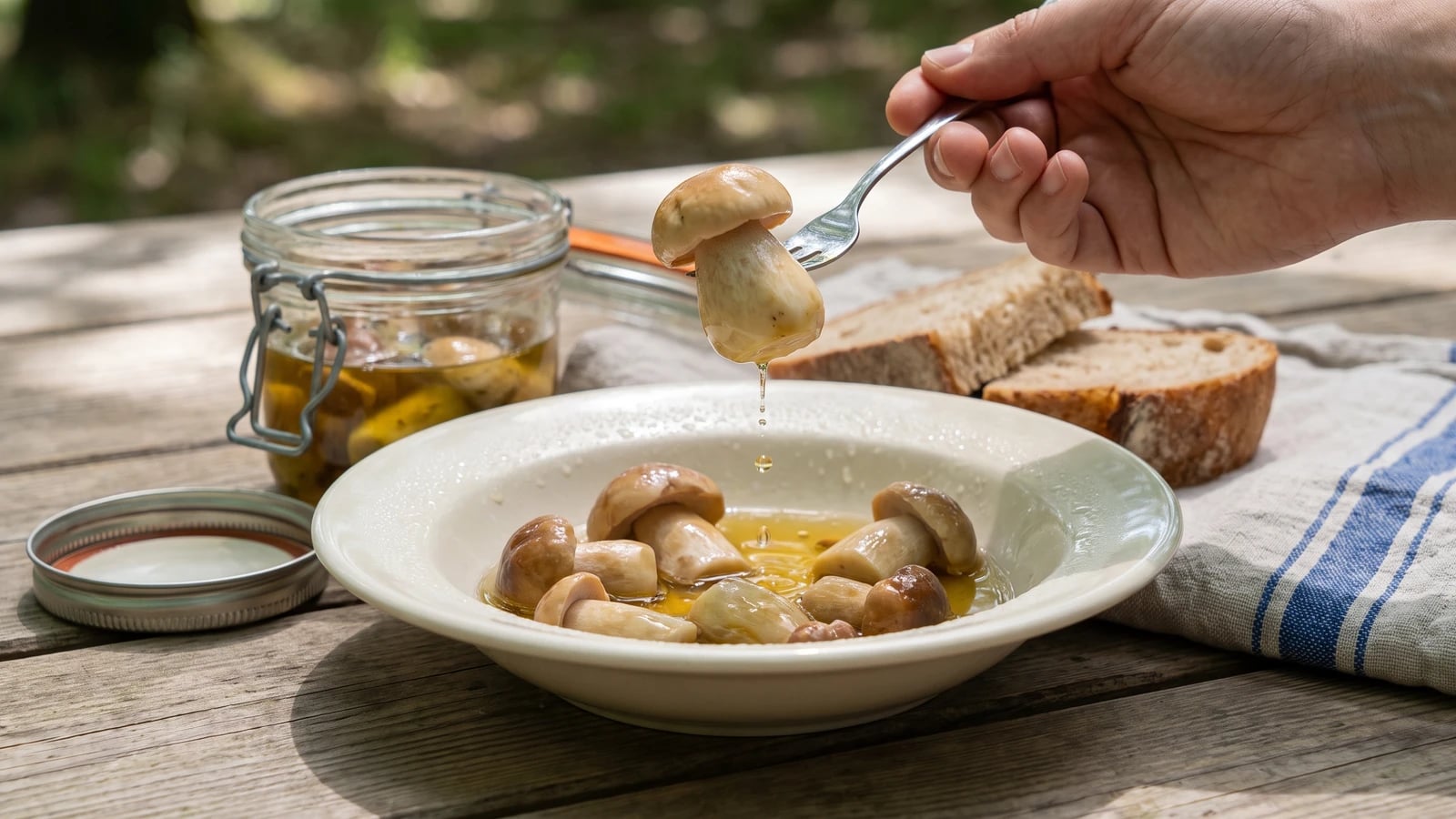
Cèpes marinés teach the discipline of hot marinade and cold patience: small porcini kept whole, parboiled briefly, then steeped under sharp vinegar, oil, garlic, coriander, fennel, thyme, and bay.
Cèpes marinés (marinated porcini mushrooms) teach one precise lesson: a preserve tastes vivid only when the mushroom remains itself. Use very small, truly fresh cèpes, then respect the temperature sequence. The mushrooms are parboiled, drained, and cooled completely before a strained marinade meets them at a full boil. That contrast seasons them without continuing to cook them into softness.
The original recipe assumed two pounds of tiny cèpes arriving together, a broad basin, and a reliably cold larder. This home version halves that batch to fill one compact vessel and uses the refrigerator as the honest modern equivalent. The book connects the method to Cooked Marinade for Venison (No. 168), but gives cèpes their own sharper formula of vinegar, oil, garlic, bay, thyme, peppercorns, coriander, fennel, and parsley root. The large batch is brigade scaffolding and can go. The eight-minute parboil, five-minute aromatic boil, and five-to-six-hour steep are the dish, so they stay.
When they are ready, the little caps shine under their clear vinegar-oil coating, the woodland flavor sharpened rather than buried. The step that decides everything is simple: pour the strained marinade at a full boil over cèpes that are cool and thoroughly drained.
Cèpes marinés belong to the preserving table of southwestern France, particularly Périgord and Gascony, where Boletus edulis comes from oak and chestnut woods and must be dealt with while firm. Classical kitchens carried that woodland practice into the cold hors-d'oeuvre repertoire, and the word cèpe remained precise, meaning the prized bolete rather than any large mushroom. This preparation is a short refrigerated preserve, not a shelf-stable oil conserve: vinegar leads, oil rounds its edge, and the mushroom remains whole.
Quantity
About 6 cups (1 lb / 450 g)
brushed clean, bases trimmed, left whole
Quantity
8 cups (1.9 L / 1.9 kg)
for parboiling
Quantity
1 batch (No. 168), about 1½ cups (380 ml / 370 g)
Quantity
1 cup plus 3 tablespoons (285 ml / 285 g)
Quantity
6 tablespoons plus 1 teaspoon (95 ml / 87 g)
Quantity
½ small clove (about 1.5 g)
crushed
Quantity
¼ leaf
Quantity
1 small sprig
Quantity
3
Quantity
⅛ teaspoon (0.6 ml / 0.25 g)
lightly crushed
Quantity
1 tablespoon loosely packed (15 ml / 1 g)
Quantity
½ small root, about ¼ cup (30 g)
scrubbed and thinly sliced
| Ingredient | Quantity |
|---|---|
| very small fresh cèpesbrushed clean, bases trimmed, left whole | About 6 cups (1 lb / 450 g) |
| waterfor parboiling | 8 cups (1.9 L / 1.9 kg) |
| Cooked Marinade for Venison, using the mushroom-specific formula below | 1 batch (No. 168), about 1½ cups (380 ml / 370 g) |
| white wine vinegar, at least 5 percent acidity | 1 cup plus 3 tablespoons (285 ml / 285 g) |
| neutral oil, preferably sunflower or grapeseed | 6 tablespoons plus 1 teaspoon (95 ml / 87 g) |
| garliccrushed | ½ small clove (about 1.5 g) |
| dried bay leaf | ¼ leaf |
| fresh thyme | 1 small sprig |
| black peppercorns | 3 |
| coriander seedslightly crushed | ⅛ teaspoon (0.6 ml / 0.25 g) |
| fennel fronds | 1 tablespoon loosely packed (15 ml / 1 g) |
| parsley rootscrubbed and thinly sliced | ½ small root, about ¼ cup (30 g) |
Choose cèpes small enough to leave whole, with tight undersides, firm stems, and caps free of wet bruises or insect tunnels. Brush away soil and trim only the dry base; don't soak them, because their sponge-like flesh holds water. If they are already soft or smell sour, change the plan. A marinade can preserve a good mushroom, but it cannot restore a tired one.
Bring the water to a full boil in a roomy saucepan. Add the cèpes, let the water return to a gentle boil, then cook for exactly eight minutes, stirring once so they cook evenly. A knife should enter the thickest stem with slight resistance while the cap still holds its shape. If a stem remains chalky, give it one more minute; if the mushrooms soften early, drain them immediately and spread them in one layer. Ça se rattrape by stopping the carryover cooking quickly. Do not rinse or squeeze them. Let them cool completely.
Make the mushroom-specific Cooked Marinade for Venison (No. 168) while the cèpes cool. Combine the vinegar, oil, crushed garlic, bay, thyme, peppercorns, coriander, fennel fronds, and parsley root in a small nonreactive saucepan. Bring to a controlled boil, then boil for five minutes. The oil and vinegar will remain separate, and that is correct; this is a marinade, not an emulsion. If it spits, lower the heat only enough to keep a steady boil.
Pass the marinade through a fine strainer, pressing the aromatics lightly, then return the strained liquid to the saucepan and bring it back to a full boil. Place the cool, well-drained cèpes in a narrow heatproof nonreactive bowl and immediately pour the boiling marinade over them. If the liquid does not quite cover, move everything to a narrower vessel or place a small nonreactive plate directly on top. Do not dilute the vinegar with water. Let the bowl stand for 30 minutes, then cover and refrigerate.
Marinate the cèpes in the refrigerator for five to six hours, turning them gently once halfway through if the top layer rises above the liquid. Lift them out with a slotted spoon and serve cool, with just enough marinade spooned over to leave the caps glossy rather than swimming. They belong beside pâté, cold roast meat, bread, or a picnic spread kept properly chilled. À table!
1 serving (about 100g)
Culinary guides, cultural storytelling, and the editorial depth that makes cooking meaningful.
Discover Culinary ExplorerChef Juliette
Beef shin, lean beef, and fowl begin in cold water and rise slowly toward a tremble. Skim before the boil, and you learn the quiet discipline that gives every clear French broth its backbone.
Chef Juliette
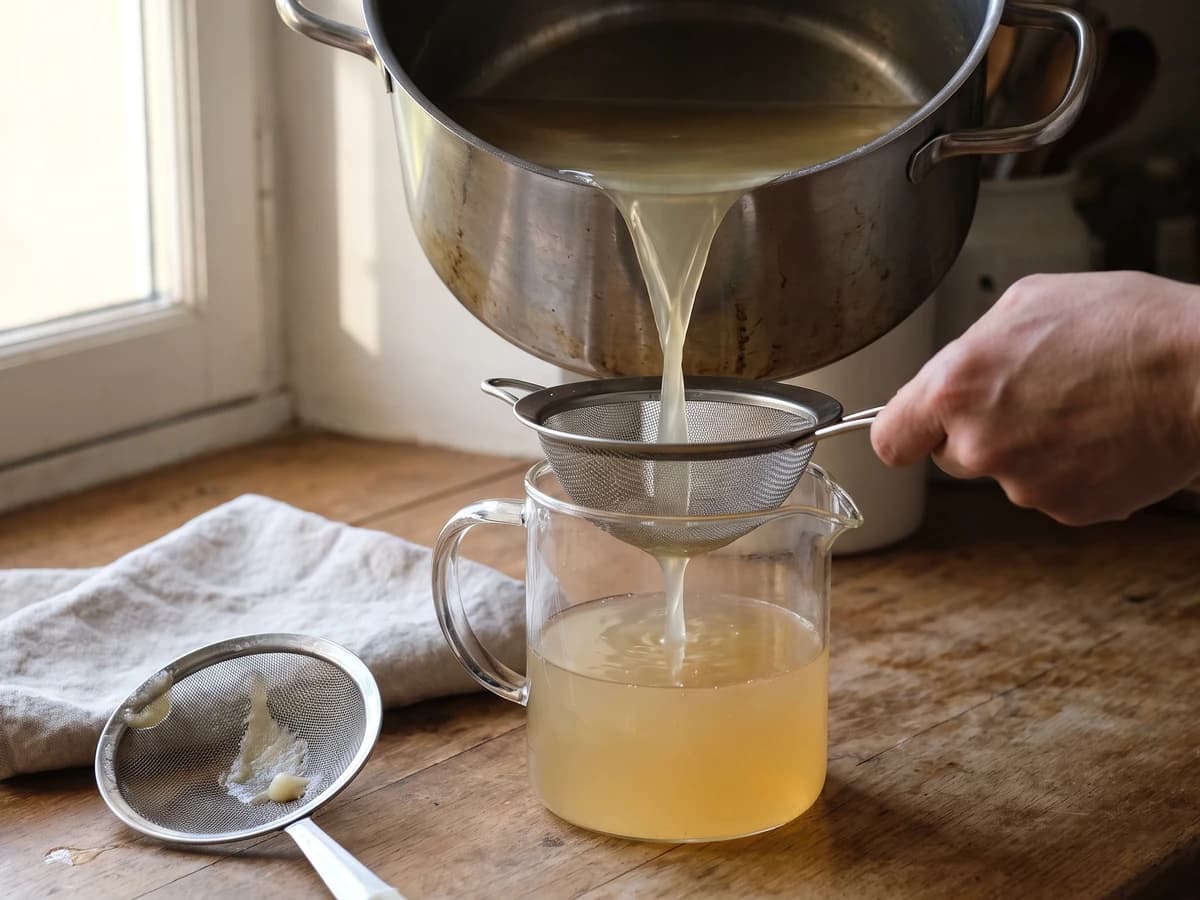
Break the veal bones small, then give them eight hours at a bare tremble. This pale, gelatinous fond becomes the quiet foundation beneath velouté, blanquette, and every sauce that must stay light.
Chef Juliette
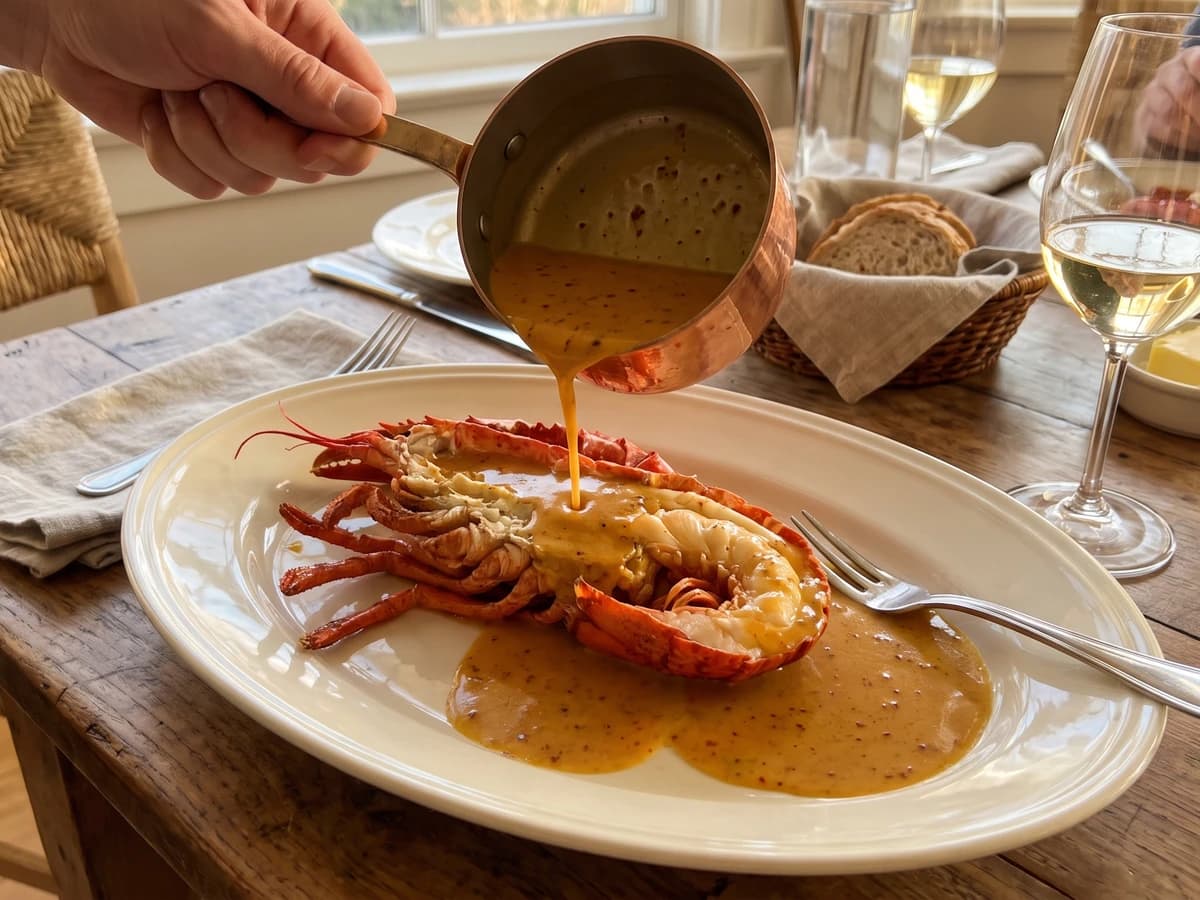
Sauce Orientale concentrates lobster-rich American Sauce with curry, then folds in cream away from the fire: a glossy, gently spiced derivative made for lobster, crayfish, and firm fish.
Chef Juliette
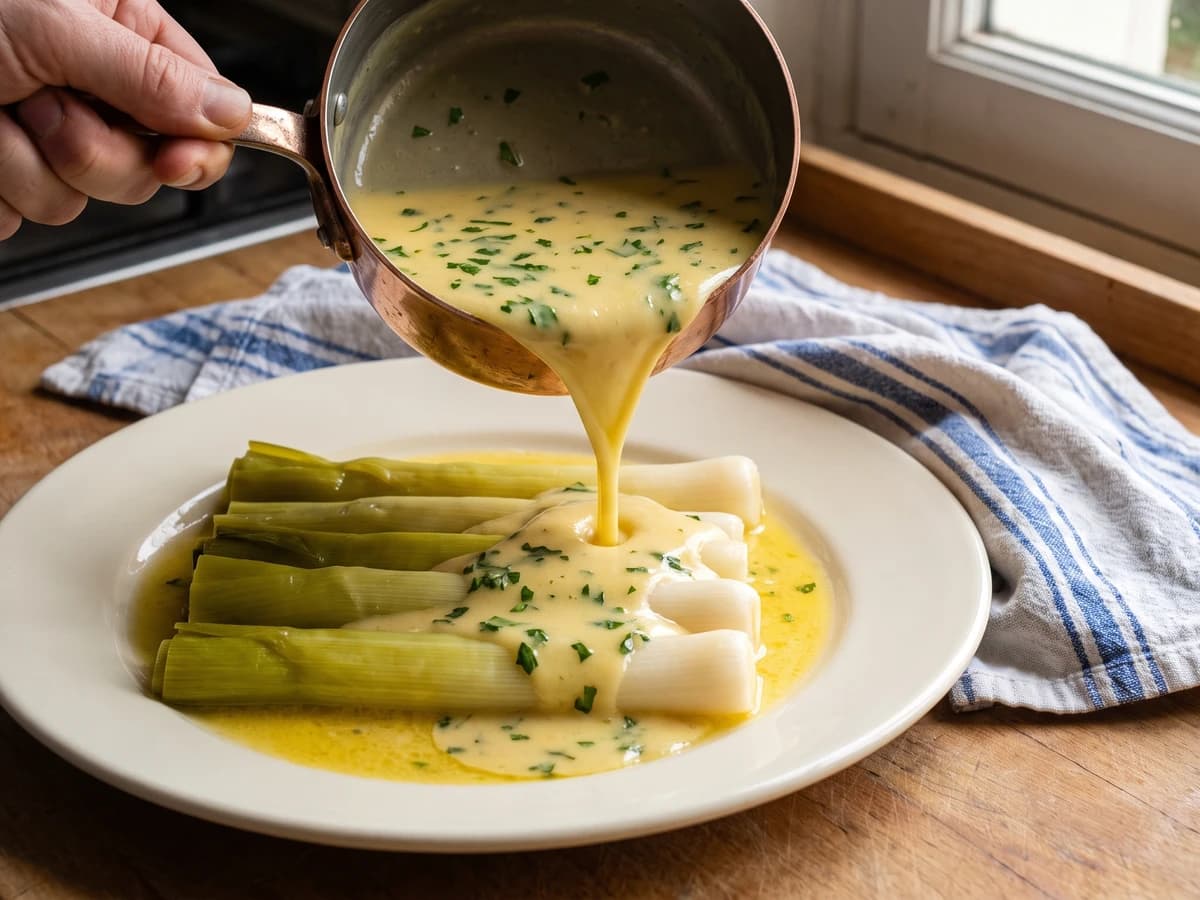
An old lesson in sauce families: Sauce Allemande takes mushroom liquor, then butter, lemon, and parsley, becoming a glossy Poulette for sheep's trotters, leeks, cauliflower, and anything needing gentle richness with a bright edge.