
Chef Juliette
Smelt (Éperlans)
Tiny éperlans, lightly floured and fried until their tails stand crisp, arrive in a generous heap on a napkin with fried parsley and grooved lemon, a weeknight lesson in heat and restraint.
A cooking platform built around craft, culture, and the stories behind what we eat.
Created by Chef Juliette
Based on No. 321, Danish Toast, from Le Guide Culinaire (1907) by Auguste Escoffier
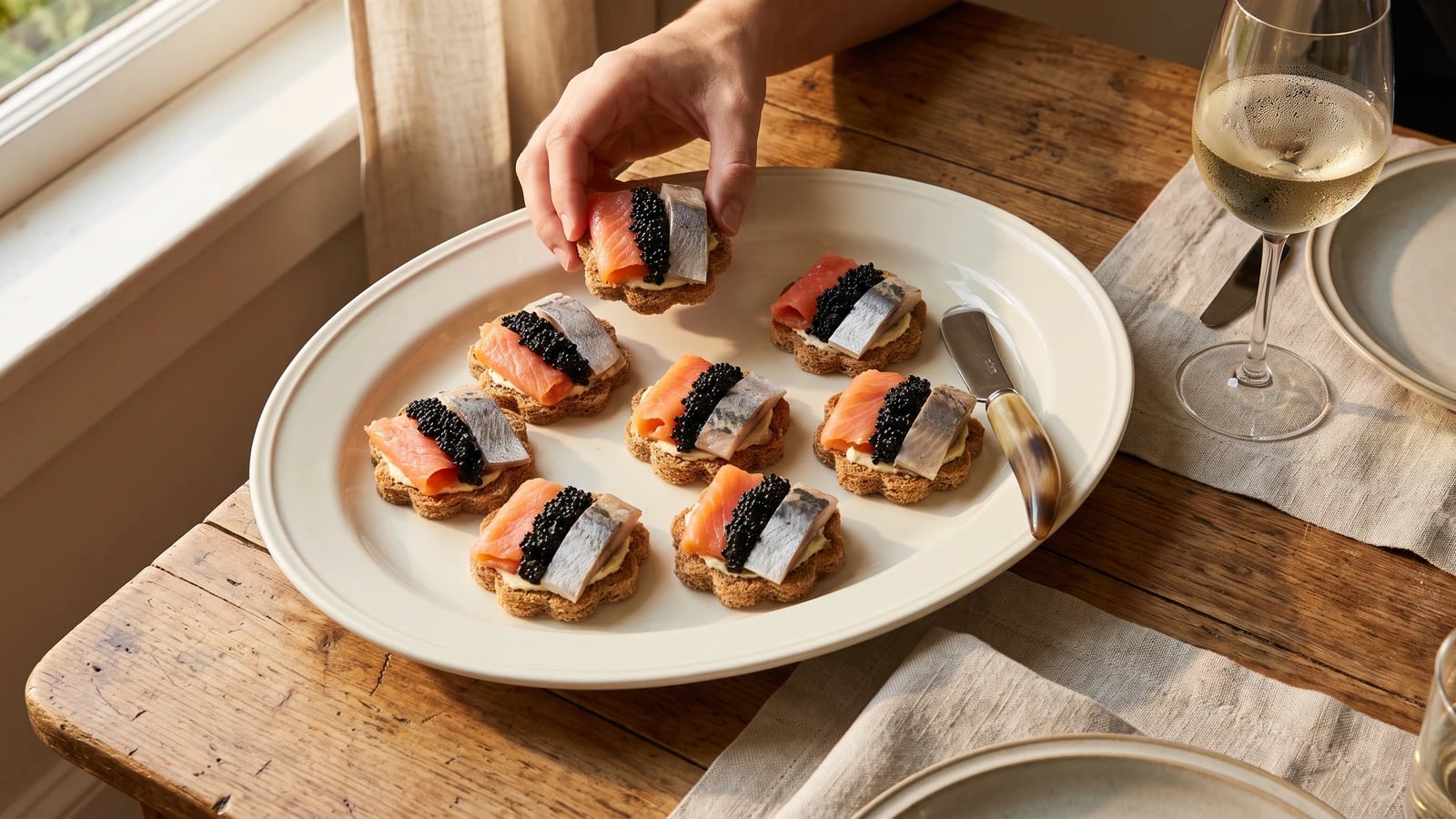
Supple warm brown bread, sharp horseradish butter, and cool bands of smoked salmon, caviar, and wine-marinated herring, stamped only after garnishing: a precise little lesson in restraint, proportion, and a very sharp cutter.
Toast danois (Danish toast) teaches restraint: the bread is warmed, never grilled. That tender, barely heated base lets the horseradish butter settle into the crumb without turning the appetizer into crostini, while smoked salmon, caviar, and wine-marinated herring remain cool and distinct. The one true thing to know before touching a pan is simple: colour on the bread is a mistake.
The original assumed a garde-manger (cold-larder station) with compound butter, marinated fish, wide loaves, and drawers of fancy cutters ready for service. A salamander has no work here because browning would defeat the dish. Making five quarts of Cooked Marinade for Venison (No. 168) on the day is brigade scaffolding; reaching for a small measure of that finished, chilled preparation is the honest home equivalent. Warming rather than grilling, laying the fish and caviar in separate bands, and stamping only after garnishing are the dish itself, so those remain untouched. One cook, one stove, one evening.
The delicate moment comes last. Chill the garnished bread briefly, press the cutter straight through without sawing, and wipe it between cuts. If the first toast smears, stop and chill the slices for another ten minutes. Ça se rattrape. A cold, sharp cutter is the step that decides the finish.
Toast danois belongs to the French classical hors-d'oeuvre table, where cooks translated the preserved fish and dark breads of northern Europe into small, decoratively cut pieces for formal service. Despite its name, it is not a direct rendering of Danish smørrebrød: the horseradish compound butter, alternating bands, and final stamping follow French canapé practice. Its pantry looks northward, but its grammar belongs to the French garde-manger.
Quantity
2 fillets (about 3 oz / 85 g)
ready to eat
Quantity
¾ cup (180 ml / about 180 g) Cooked Marinade for Venison (No. 168)
prepared separately and fully chilled
Quantity
4 tablespoons (60 ml / 57 g)
softened
Quantity
1 tablespoon (15 ml / 12 g)
finely grated
Quantity
4 large slices (about 7 oz / 200 g)
cut ⅜ inch (1 cm) thick
Quantity
6 thin slices (about 3 oz / 85 g)
cut into narrow strips
Quantity
¼ cup (60 ml / about 50 g)
well chilled
| Ingredient | Quantity |
|---|---|
| skinless salt-cured herring filletsready to eat | 2 fillets (about 3 oz / 85 g) |
| Cooked Marinade for Venisonprepared separately and fully chilled | ¾ cup (180 ml / about 180 g) Cooked Marinade for Venison (No. 168) |
| unsalted buttersoftened | 4 tablespoons (60 ml / 57 g) |
| fresh horseradishfinely grated | 1 tablespoon (15 ml / 12 g) |
| dense brown breadcut ⅜ inch (1 cm) thick | 4 large slices (about 7 oz / 200 g) |
| smoked salmoncut into narrow strips | 6 thin slices (about 3 oz / 85 g) |
| caviarwell chilled | ¼ cup (60 ml / about 50 g) |
Lay the herring fillets in a small nonreactive dish and cover them with the fully chilled Cooked Marinade for Venison (No. 168). Cover and refrigerate for at least 4 hours and no longer than 12, turning once so the wine-based marinade reaches both sides. Lift out the fillets, discard the used marinade, and pat the fish thoroughly dry. Cut them lengthwise into neat strips about ⅜ inch (1 cm) wide.
Beat the softened butter with the finely grated horseradish until smooth and evenly flecked. The beurre de raifort (horseradish butter) should spread without resistance but must not be melted. If it remains firm enough to tear bread, work it firmly against the side of the bowl with a spatula or leave it at room temperature for five minutes. Don't warm it over heat.
Heat the oven to 275°F (135°C). Lay the brown bread on a baking sheet and warm it for 4 to 5 minutes, just until supple and faintly warm at the centre. Do not grill it, toast it, or allow the edges to colour. If an edge begins to crisp, stack the slices beneath a clean towel for two minutes; the trapped moisture will soften it again.
Let the bread stand for two minutes so it is warm rather than hot, then spread each slice from edge to edge with a thin, even layer of beurre de raifort. Hot bread would melt the butter into greasy patches; properly warmed bread accepts it while keeping a visible ivory layer beneath the fish.
Cover each whole slice with alternating narrow bands of smoked salmon, caviar, and marinated herring. Lay the salmon and herring strips flat, then use the tip of a small spoon to form tidy bands of caviar between them without pressing the eggs. Repeat the sequence until the bread is completely covered. Refrigerate the garnished slices uncovered for 10 minutes, just long enough to firm the butter.
Set a sharp 2-inch (5 cm) fancy cutter over the chilled garnished bread and press straight down with one decisive motion. Avoid sawing or twisting, which drags the three toppings into one another. Wipe the cutter clean after every stamp. If the first cut smears, return everything to the refrigerator for another 10 minutes, then continue. Ça se rattrape. Arrange the toasts on a cool platter and serve promptly; the trimmings belong to the cook. À table!
1 serving (about 125g)
Culinary guides, cultural storytelling, and the editorial depth that makes cooking meaningful.
Discover Culinary ExplorerChef Juliette
Tiny éperlans, lightly floured and fried until their tails stand crisp, arrive in a generous heap on a napkin with fried parsley and grooved lemon, a weeknight lesson in heat and restraint.

Chef Juliette
Brandade de Morue turns salt cod, warm olive oil, and milk into a pale, silky emulsion: keep everything warm and add the oil slowly, then crown the generous dome with butter-fried bread.

Chef Juliette
Salt cod worked warm with cream, one patient spoonful at a time, until the rough flakes become a glossy Nîmes paste, domed generously and ringed with butter-fried croutons for the table.

Chef Juliette
Wine-poached char packed in its earthenware crock beneath butter gold: a make-ahead first course that turns careful cooling, thorough boning, and one unbroken seal into quiet abundance.