
Chef Juliette
Smelt (Éperlans)
Tiny éperlans, lightly floured and fried until their tails stand crisp, arrive in a generous heap on a napkin with fried parsley and grooved lemon, a weeknight lesson in heat and restraint.
A cooking platform built around craft, culture, and the stories behind what we eat.
Created by Chef Juliette
Based on No. 313, Small Artichoke-bottoms, from Le Guide Culinaire (1907) by Auguste Escoffier
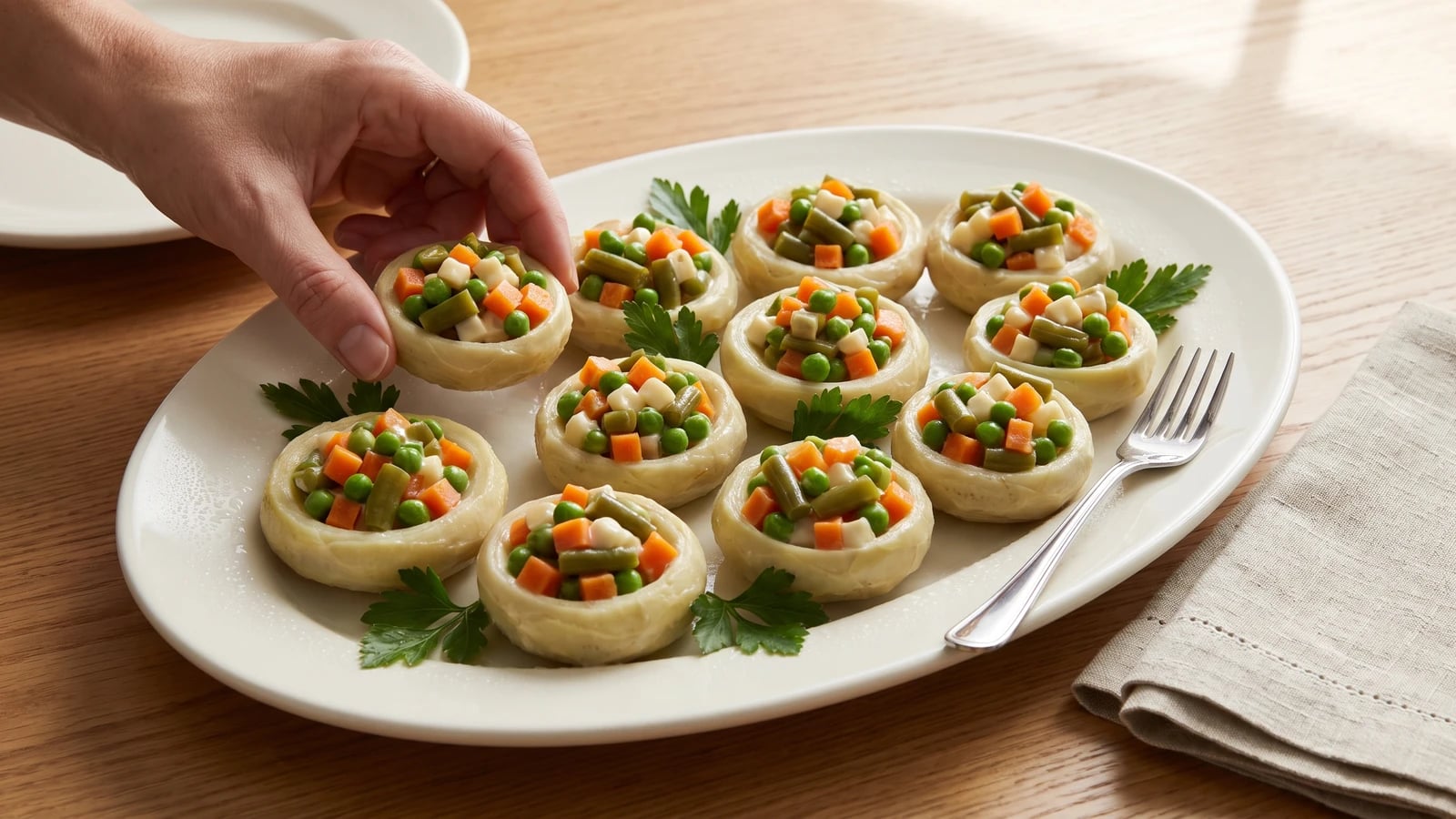
Pale, tender artichoke cups, lemon-bright from their au blanc cooking and twenty-minute marinade, holding a neat macédoine of vegetables: careful trimming turned into a generous cold hors d’œuvre.
Petits fonds d’artichauts (small artichoke bottoms) teach a quiet classical discipline: control the color first, then give the tender base enough structure to carry a cold filling. The one true thing is brutally simple. A trimmed artichoke exposed to air darkens at once, so the acidulated bowl must be waiting before the knife touches the first leaf.
The original entry assumed five quarts of blanc, trays of little artichokes, and a cold larder with several fillings ready for service. At home, six cups in a wide saucepan and one bright vegetable macédoine are enough for twelve. The five-quart volume and the display of competing fillings are brigade scaffolding, so they go; cooking au blanc, cooling the bottoms in their liquor, drying them thoroughly, and giving them exactly twenty minutes in oil and lemon are the dish, so they stay. The separate Cooked Marinade for Venison (No. 168) remains available for the book’s venison salpicon alternative, where it belongs.
Done properly, each bottom is pale ivory-green, tender enough for a fork yet firm beneath its little mound of vegetables. Set up the acidulated water first and trim one artichoke at a time. That is the step that decides the dish.
Petits fonds d’artichauts belong less to one province than to the cold hors-d’œuvre table shaped in Parisian classical kitchens and carried into bourgeois dining rooms. Artichokes came north from the market gardens of Mediterranean France, while Parisian cooks turned their fleshy bottoms into uniform edible cups for salpicons, purées, and macédoines. Au blanc is sometimes mistaken for a pale sauce, but here it is a protective flour-and-acid cooking liquor whose purpose is to keep vulnerable vegetables light while they become tender.
Quantity
12 (about 2½ pounds / 1.1 kg total)
Quantity
8 cups (1.9 L / 1.9 kg)
Quantity
¼ cup (60 ml / 60 g)
divided
Quantity
6 cups (1.4 L / 1.4 kg) Special Court-bouillon, or Blanc (No. 167)
Quantity
3 tablespoons (45 ml / 41 g)
Quantity
⅓ cup (80 ml / 45 g)
cut into ¼-inch dice
Quantity
⅓ cup (80 ml / 40 g)
cut into ¼-inch pieces
Quantity
⅓ cup (80 ml / 50 g)
Quantity
⅓ cup (80 ml / 75 g)
Quantity
2 teaspoons (10 ml / 12 g)
divided
Quantity
¼ teaspoon (1 ml / 0.5 g)
Quantity
12
Quantity
1 cup (240 ml / 240 g) Cooked Marinade for Venison (No. 168)
chilled
Quantity
6 ounces (170 g)
Quantity
2 teaspoons (10 ml / 9 g)
| Ingredient | Quantity |
|---|---|
| small globe artichokes | 12 (about 2½ pounds / 1.1 kg total) |
| cold water | 8 cups (1.9 L / 1.9 kg) |
| fresh lemon juicedivided | ¼ cup (60 ml / 60 g) |
| Special Court-bouillon, or Blanc | 6 cups (1.4 L / 1.4 kg) Special Court-bouillon, or Blanc (No. 167) |
| olive oil | 3 tablespoons (45 ml / 41 g) |
| carrotcut into ¼-inch dice | ⅓ cup (80 ml / 45 g) |
| green beanscut into ¼-inch pieces | ⅓ cup (80 ml / 40 g) |
| fresh or frozen peas | ⅓ cup (80 ml / 50 g) |
| thick mayonnaise | ⅓ cup (80 ml / 75 g) |
| fine saltdivided | 2 teaspoons (10 ml / 12 g) |
| finely ground white pepper | ¼ teaspoon (1 ml / 0.5 g) |
| small parsley sprays | 12 |
| Cooked Marinade for Venison (optional)chilled | 1 cup (240 ml / 240 g) Cooked Marinade for Venison (No. 168) |
| lean venison steak (optional) | 6 ounces (170 g) |
| unsalted butter (optional) | 2 teaspoons (10 ml / 9 g) |
Combine the cold water with 2½ tablespoons (37 ml / 37 g) of the lemon juice in a large bowl before you begin. Working with one artichoke at a time, pull away every leaf, cut the stem flush with the base, and pare away the tough green exterior until only the fleshy pale bottom remains. Scoop out the hairy choke with a teaspoon or melon baller without gouging through the base, then plunge the bottom immediately into the acidulated water. If an exposed patch begins to grey, shave away the thinnest possible layer and return it to the water at once. Ça se rattrape.
Bring the Special Court-bouillon, or Blanc (No. 167) to a gentle boil in a wide saucepan. Drain the artichoke bottoms and lower them into the blanc, then cover the surface directly with a round of parchment so every bottom remains submerged. Cook at a quiet simmer for 15 to 20 minutes, checking from 12 minutes onward; a small knife should enter with slight resistance, and the bottoms must still hold their shape. If one softens before the others, lift it into a small bowl with enough blanc to cover while the rest finish.
Remove the saucepan from the heat and leave the bottoms to cool in their cooking liquor, still beneath the parchment. After 15 minutes, set the saucepan in a sink of cold water to bring the temperature down promptly without exposing the artichokes to air. Refrigerate them in the blanc once cool. Cooling in the liquor is not brigade ceremony; it keeps the bottoms moist, pale, and evenly seasoned.
Bring a small saucepan of water to a boil and season it with 1 teaspoon (5 ml / 6 g) of the salt. Add the carrot, then add the green beans after 2 minutes and the peas 2 minutes later. Cook for 1 final minute, just until every vegetable is tender but still distinct. Drain, cool under cold water, and spread the vegetables on a clean towel until thoroughly dry. This is the macédoine, an even mixture of small vegetables. Fold in the mayonnaise by spoonfuls until the dice cohere without swimming in sauce, then season with the white pepper and enough of the remaining salt to make the cold filling taste lively. If the mixture turns loose, drain it briefly in a fine sieve, dry it again, and add fresh mayonnaise a teaspoon at a time.
If you prefer the book’s salpicon, an even small dice cohered with sauce, marinate the venison steak under refrigeration in the chilled Cooked Marinade for Venison (No. 168) for 4 to 8 hours. Drain it, discard the used marinade, and dry the meat thoroughly. Sear it in the butter over medium-high heat until browned and cooked to 145°F (63°C), then rest it for 3 minutes and chill it promptly. Cut the cold venison into ¼-inch dice and bind it with enough of the measured mayonnaise to hold together. Use this in place of the macédoine, not alongside it.
Lift the cold artichoke bottoms from the blanc, drain them upside down, and blot every surface dry. Arrange them cup-side up in a shallow dish. Whisk the olive oil with the remaining 1½ tablespoons (22 ml / 22 g) lemon juice and a pinch of salt, pour it over the bottoms, and turn them gently to coat. Leave them for exactly 20 minutes, turning once halfway through. Longer is not better here; too much acid softens their edges. Drain them well, and if oil collects inside a cup, touch it away with the corner of a clean towel.
Set the bottoms upright and spoon the macédoine, or the venison salpicon, into each one, mounding the filling generously without packing it down. Wipe the rims clean with a damp fingertip and refrigerate for at least 30 minutes so the filling settles. If a bottom has torn, turn the damaged edge toward the center of the platter and support it against its neighbors. Never apologize at your own table.
Arrange the petits fonds d’artichauts on a chilled hors-d’œuvre dish with the parsley sprays tucked loosely between them, just as the entry directs. Let them stand outside the refrigerator for 10 minutes before serving so the artichoke and mayonnaise lose their hard chill while remaining cool. Set down the platter with a small serving fork. À table!
1 serving (about 145g)
Culinary guides, cultural storytelling, and the editorial depth that makes cooking meaningful.
Discover Culinary ExplorerChef Juliette
Tiny éperlans, lightly floured and fried until their tails stand crisp, arrive in a generous heap on a napkin with fried parsley and grooved lemon, a weeknight lesson in heat and restraint.

Chef Juliette
Brandade de Morue turns salt cod, warm olive oil, and milk into a pale, silky emulsion: keep everything warm and add the oil slowly, then crown the generous dome with butter-fried bread.

Chef Juliette
Salt cod worked warm with cream, one patient spoonful at a time, until the rough flakes become a glossy Nîmes paste, domed generously and ringed with butter-fried croutons for the table.

Chef Juliette
Wine-poached char packed in its earthenware crock beneath butter gold: a make-ahead first course that turns careful cooling, thorough boning, and one unbroken seal into quiet abundance.