
Chef Juliette
Smelt (Éperlans)
Tiny éperlans, lightly floured and fried until their tails stand crisp, arrive in a generous heap on a napkin with fried parsley and grooved lemon, a weeknight lesson in heat and restraint.
A cooking platform built around craft, culture, and the stories behind what we eat.
Created by Chef Juliette
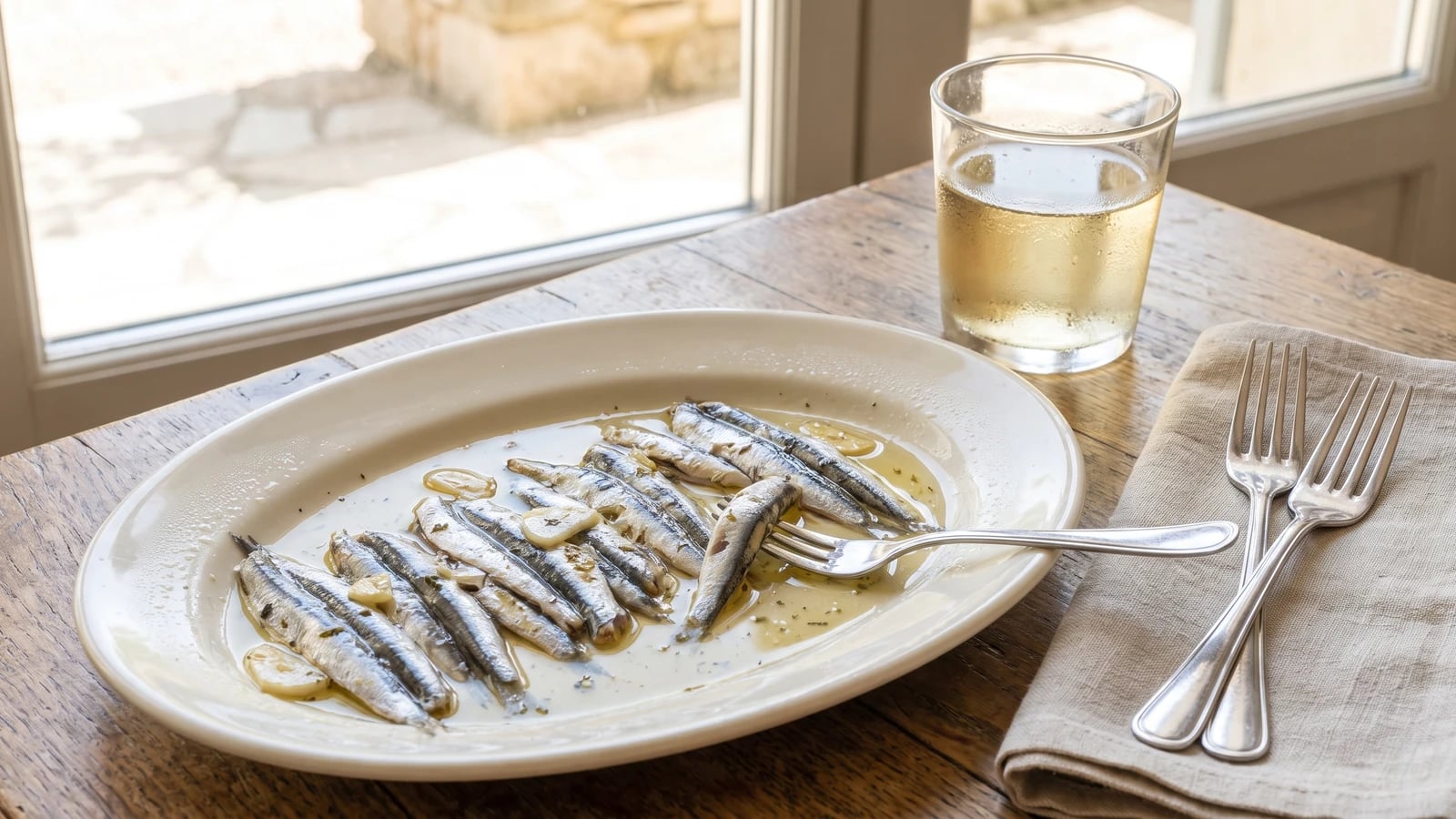
Based on No. 302, Fresh Marinaded Anchovies, from Le Guide Culinaire (1907) by Auguste Escoffier
Salted for firmness, flashed in very hot oil, and cooled in a lightly acid marinade, these silvery anchovies teach the exact instant when frying stops and setting begins.
Anchois frais marinés (fresh marinated anchovies) teach the difference between setting a fish and frying it. The very hot oil should stiffen the flesh and brighten the silvery skin without giving either time to brown. Seek firmness, not crispness. That single instant is the dish.
The original formula assumed live anchovies, a deep vessel of smoking oil, and five quarts of Cooked Marinade for Venison (No. 168) waiting in the cold pantry. A home kitchen needs twelve ounces of properly handled fish, one cup of the finished marinade, a small heavy saucepan, and a thermometer. The brigade quantity and literal smoke are scaffolding, so they go. The two-hour salting, brief plunge, and lightly acid bath must stay because they create the texture and flavor.
Use fresh, uncured anchovies that have been commercially frozen for raw or lightly cooked service, then thawed under refrigeration. The oil flash is too brief to guarantee parasite destruction, and acid cannot do that work. Dry the fish with great care before they meet the oil; moisture causes violent sputtering and prevents the clean, quick setting you want.
Fresh anchovy preparations belong to France’s Mediterranean shore, with Collioure in Roussillon particularly bound to the salting and preserving of the little fish. This exact method entered the national hors-d’œuvre repertory through the grand kitchen, where a flash in oil was followed by Cooked Marinade for Venison (No. 168), showing how a standard preparation could travel well beyond the meat named in its title. The acid seasons and preserves the texture briefly, but it does not make untreated raw fish safe; the oil sets the flesh, while proper sourcing protects the table.
Quantity
24 to 30 fish, about 12 oz (340 g)
commercially frozen for raw or lightly cooked service, thawed under refrigeration, cleaned
Quantity
1/4 cup (60 ml / 72 g)
Quantity
3 cups (720 ml / about 660 g)
for the hot-oil plunge
Quantity
1 cup (240 ml / about 245 g) Cooked Marinade for Venison (No. 168)
fully cooked, strained, and cold
| Ingredient | Quantity |
|---|---|
| small whole fresh anchoviescommercially frozen for raw or lightly cooked service, thawed under refrigeration, cleaned | 24 to 30 fish, about 12 oz (340 g) |
| fine sea salt | 1/4 cup (60 ml / 72 g) |
| refined olive oilfor the hot-oil plunge | 3 cups (720 ml / about 660 g) |
| Cooked Marinade for Venisonfully cooked, strained, and cold | 1 cup (240 ml / about 245 g) Cooked Marinade for Venison (No. 168) |
Remove each anchovy’s head, drawing the viscera out with it, then open and clean the small belly cavity without splitting the fish into fillets. Leave the backbone and tail intact. Rinse quickly under very cold water and dry well. Arrange the fish in a glass or stainless-steel dish, coat them evenly with the salt, cover, and refrigerate for 2 hours. Turn them once halfway through so the firming is even.
Pour the cold Cooked Marinade for Venison (No. 168) into a shallow nonreactive dish large enough to hold the anchovies in one snug layer. Keep it refrigerated while the oil heats. Use the finished component as written, without adding more vinegar; the anchovies need a moderately acid bath, not a pickle strong enough to erase them.
Rinse the salt from the anchovies quickly, drain them, and press them dry between clean kitchen towels until no surface moisture remains, including inside the belly cavities. Pour the refined olive oil into a small heavy saucepan with deep sides and heat it to 375°F (190°C). This measured heat replaces the old instruction to wait for smoke. If the oil begins smoking, take it off the burner and let it fall back to temperature before continuing.
Lower one anchovy into the oil with a spider and cook it for 12 to 20 seconds, only until its body stiffens, the flesh at the belly opening loses its translucence, and the skin shines silver-white. It must not brown. Test this first fish before working in batches of four to six, allowing the oil to return to 375°F (190°C) between them. If a batch remains limp, return it for 3 to 5 seconds. If the first fish colors, shorten the next plunge; the marinade will soften a slightly crisp edge, but it cannot restore dried flesh.
Drain each batch for about 30 seconds, then lay the anchovies directly in the cold marinade while they are still warm. Spoon the liquid over them, keeping the fish in one layer so none are crushed. Let the dish stand for no more than 10 minutes, cover, and refrigerate until thoroughly cold, about 1 hour. Turn the anchovies gently after 30 minutes so both sides meet the marinade.
Lift the cold anchovies onto a shallow hors-d’œuvre dish and arrange them neatly without fuss. Spoon over just enough marinade to glisten the fish and leave a little liquor at the bottom of the dish; they should not swim in it. Serve cold with small forks and bread for catching the sharp, savory liquid. À table!
1 serving (about 140g)
Culinary guides, cultural storytelling, and the editorial depth that makes cooking meaningful.
Discover Culinary ExplorerChef Juliette
Tiny éperlans, lightly floured and fried until their tails stand crisp, arrive in a generous heap on a napkin with fried parsley and grooved lemon, a weeknight lesson in heat and restraint.

Chef Juliette
Brandade de Morue turns salt cod, warm olive oil, and milk into a pale, silky emulsion: keep everything warm and add the oil slowly, then crown the generous dome with butter-fried bread.

Chef Juliette
Salt cod worked warm with cream, one patient spoonful at a time, until the rough flakes become a glossy Nîmes paste, domed generously and ringed with butter-fried croutons for the table.

Chef Juliette
Wine-poached char packed in its earthenware crock beneath butter gold: a make-ahead first course that turns careful cooling, thorough boning, and one unbroken seal into quiet abundance.