Chef Juliette
Ordinary or White Consommé
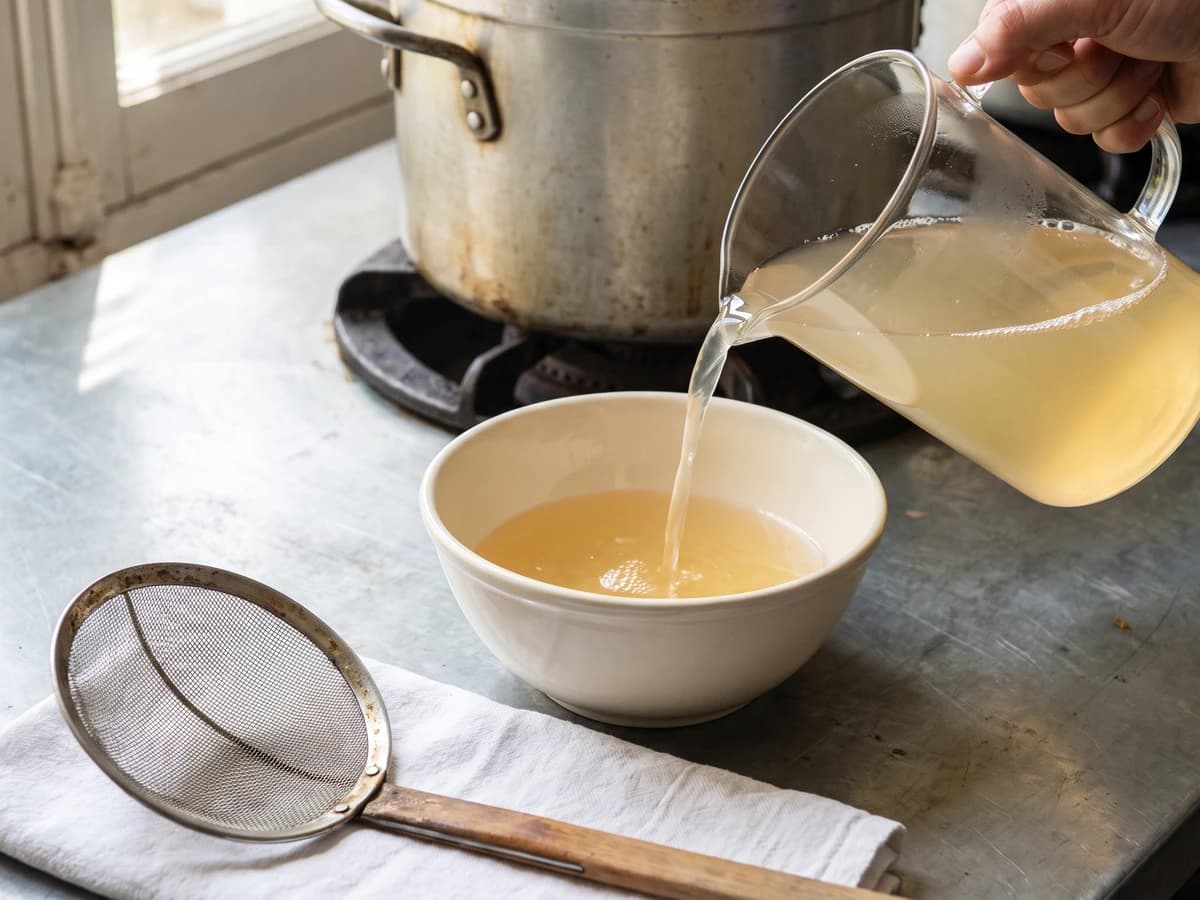
Beef shin, lean beef, and fowl begin in cold water and rise slowly toward a tremble. Skim before the boil, and you learn the quiet discipline that gives every clear French broth its backbone.
A cooking platform built around craft, culture, and the stories behind what we eat.
Created by Chef Juliette
Based on No. 2965, Red-currant Jelly (Method A), from Le Guide Culinaire (1907) by Auguste Escoffier
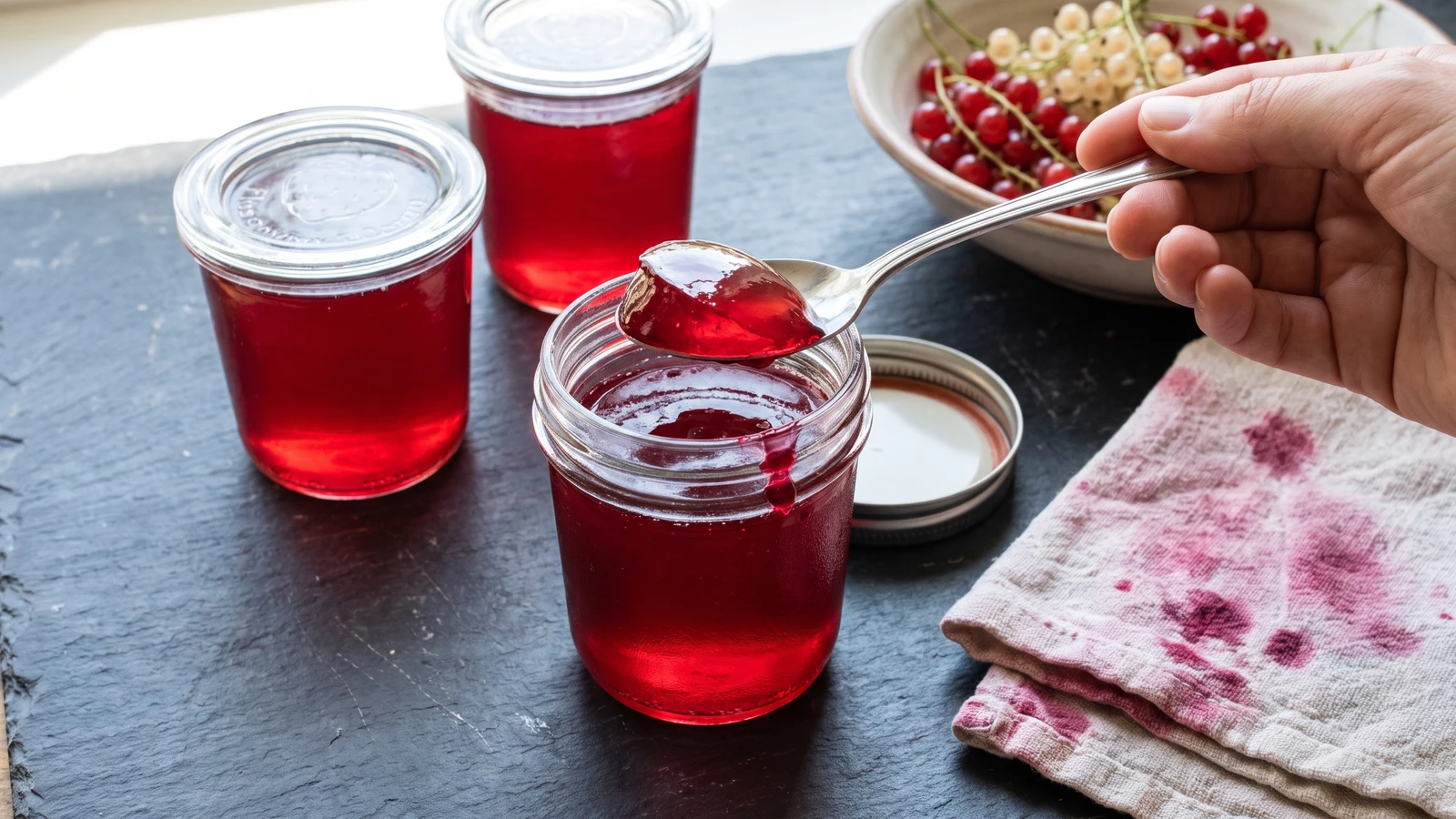
Three fruits, one clear lesson: press the juice cleanly, dissolve the sugar completely, then boil without hesitation until the gelée reaches nappe, jewel-bright, tart, and ready for roast meat or breakfast bread.
Gelée de groseilles, méthode A (red-currant jelly) teaches the law of clear fruit preserves: colour and a clean set are won by speed. Crush the fruit raw, press out its vivid juice, dissolve the sugar completely, then boil fiercely until nappe, the large-drop sheeting stage. A timid simmer cooks away the perfume before the jelly can set.
The original formula assumed a preserving pantry with a broad pan over a fierce range, loaf sugar, a strong cloth, warmed pots, and enough hands to press, skim, and seal without breaking rhythm. Your honest equivalents are a damp flour-sack towel or jelly bag, granulated sugar, a wide stainless steel pan, and three clean lidded jars. Loaf sugar and the paper-and-glycerine seal were pantry scaffolding, so they go. Pressing in small quantities, the two-to-one currant ratio, three ounces of raspberries per two pounds of currants, hard skimming, and the fierce boil must stay. Those steps are the dish.
This home batch preserves every proportion while bringing the work down to one cook, one stove, one evening. The step that decides it is the uninterrupted boil to nappe, so warm the jars, chill the testing plates, set the skimmer beside the stove, and clear away every distraction before the pan meets high heat.
Gelée de groseilles belongs to the preserving cupboards of northern and eastern France, where currants thrive and their abundant pectin makes a clear jelly possible without added setting agents. Household preserving pans carried the jelly into the classical pantry, where it serves both as a breakfast preserve and as a sharp accompaniment to game, pâtés, and composed sauces. It should not be confused with Lorraine's confiture de groseilles de Bar-le-Duc, whose berries are traditionally deseeded one by one and kept whole; Method A deliberately crushes and presses the fruit for a limpid jelly.
Quantity
about 10¾ cups (1.21 kg / 2 lb 10⅔ oz)
rinsed and drained, spoiled fruit and leaves removed
Quantity
about 5⅓ cups (605 g / 1 lb 5⅓ oz)
rinsed and drained, spoiled fruit and leaves removed
Quantity
about 1⅓ cups (170 g / 6 oz)
gently rinsed and thoroughly drained
Quantity
about 2¼ to 2⅔ cups (460 to 525 g / 16¼ to 18½ oz), but exactly 8 oz (227 g; about 1⅛ cups) per 1 imperial pint (568 ml / about 2⅖ US cups) extracted juice
measured only after the juice volume is known
| Ingredient | Quantity |
|---|---|
| red currantsrinsed and drained, spoiled fruit and leaves removed | about 10¾ cups (1.21 kg / 2 lb 10⅔ oz) |
| white currantsrinsed and drained, spoiled fruit and leaves removed | about 5⅓ cups (605 g / 1 lb 5⅓ oz) |
| raspberriesgently rinsed and thoroughly drained | about 1⅓ cups (170 g / 6 oz) |
| granulated white sugarmeasured only after the juice volume is known | about 2¼ to 2⅔ cups (460 to 525 g / 16¼ to 18½ oz), but exactly 8 oz (227 g; about 1⅛ cups) per 1 imperial pint (568 ml / about 2⅖ US cups) extracted juice |
Wash three 1-cup jars and their lids thoroughly, rinse them, and keep the jars warm in hot water so the hot jelly cannot crack the glass. Put two small plates in the freezer. Dampen a strong flour-sack towel or jelly bag, arrange it over a deep nonreactive bowl, and set a wide preserving pan, scale, ladle, skimmer, and jar funnel within reach. The Cooking, Potting, and Sealing of Jams (No. 2955) supplies the governing rhythm: cook quickly, judge the nappe carefully, rest briefly, and pot promptly. The paper-and-glycerine closure is replaced here by modern lids and refrigerated storage.
Combine the red currants, white currants, and raspberries in a large nonreactive basin. Crush them thoroughly with a potato masher or the end of a rolling pin until every currant has burst and the raspberries have collapsed into the juice. Do not use a food processor. Its blades cut the seeds and stems too finely, bringing bitterness and a muddy haze into a jelly that should be clear.
Spoon about 2 cups of crushed fruit at a time into the damp towel. Gather the cloth securely, then twist and press firmly over the bowl until the pulp feels nearly dry. Small portions protect the cloth and extract the juice more completely. If the seam strains, stop and divide the fruit again; ça se rattrape before the towel splits, not after. Pass any juice carrying visible seeds through a fresh damp layer of cloth, then measure the finished juice precisely. Expect roughly 4¾ to 5½ cups (1.1 to 1.3 liters), but the fruit decides the yield, not the recipe.
For every 1 imperial pint (568 ml / about 2⅖ US cups) of extracted juice, weigh exactly 8 oz (227 g) sugar. Put the juice and its calculated sugar into the wide preserving pan, which should be no more than half full. Stir over medium-low heat only until every crystal has disappeared. Do not let the mixture boil before the sugar dissolves, or crystals can form around the pan and seed a grainy jelly. If your pan is too small, divide the juice into two measured batches and calculate the sugar separately for each.
Raise the heat to its highest setting and bring the jelly to a full rolling boil that cannot be stirred down. Skim carefully and often, especially during the first minutes, lifting away the pale foam without taking spoonfuls of clear juice with it. Once boiling begins, stir only if a hot spot threatens to catch. If the pan surges toward the rim, lift it off the heat for a few seconds, let it settle, and return it immediately. If the bottom scorches, do not scrape it. Pour the clear upper jelly into a clean pan, leave the burnt layer behind, and resume the fierce boil. Ça se rattrape when caught early.
Begin testing once the vapor above the pan thins and the bubbling becomes heavier and more distinct, often after 8 to 15 minutes, though the clock cannot decide this jelly. Lift the skimmer frequently. At first the liquid runs from it quickly; at nappe it gathers toward the centre and falls at long intervals in broad, heavy drops. A thermometer will usually read 104 to 105°C (219 to 221°F), and a teaspoon placed on a frozen plate should wrinkle softly when pushed after 30 seconds. Remove the pan at once. If the jelly has become ropy, stir in 1 tablespoon (15 ml / 15 g) hot water per 2 cups (473 ml) jelly, return it briefly to the boil, and test again.
Leave the pan undisturbed off the heat for 7 to 8 minutes, then skim away the last foam. Ladle the jelly through the funnel into the warm jars, leaving ¼ inch (6 mm) headspace. Wipe the rims clean, close with the lids, and cool the jars upright for no longer than 2 hours before refrigerating. The short rest is part of the original method: it settles the violent boiling without allowing the jelly to set in the pan.
Leave the jelly refrigerated and undisturbed for 12 to 24 hours before judging the set. If it remains syrupy, empty it into a clean wide pan, boil fiercely back to nappe, and refill freshly washed, warmed jars. Ça se rattrape. Serve the gelée with buttered bread, pâté, roast duck, or game, where its bright acidity earns every spoonful. À table!
1 serving (about 20g)
Culinary guides, cultural storytelling, and the editorial depth that makes cooking meaningful.
Discover Culinary ExplorerChef Juliette
Beef shin, lean beef, and fowl begin in cold water and rise slowly toward a tremble. Skim before the boil, and you learn the quiet discipline that gives every clear French broth its backbone.
Chef Juliette
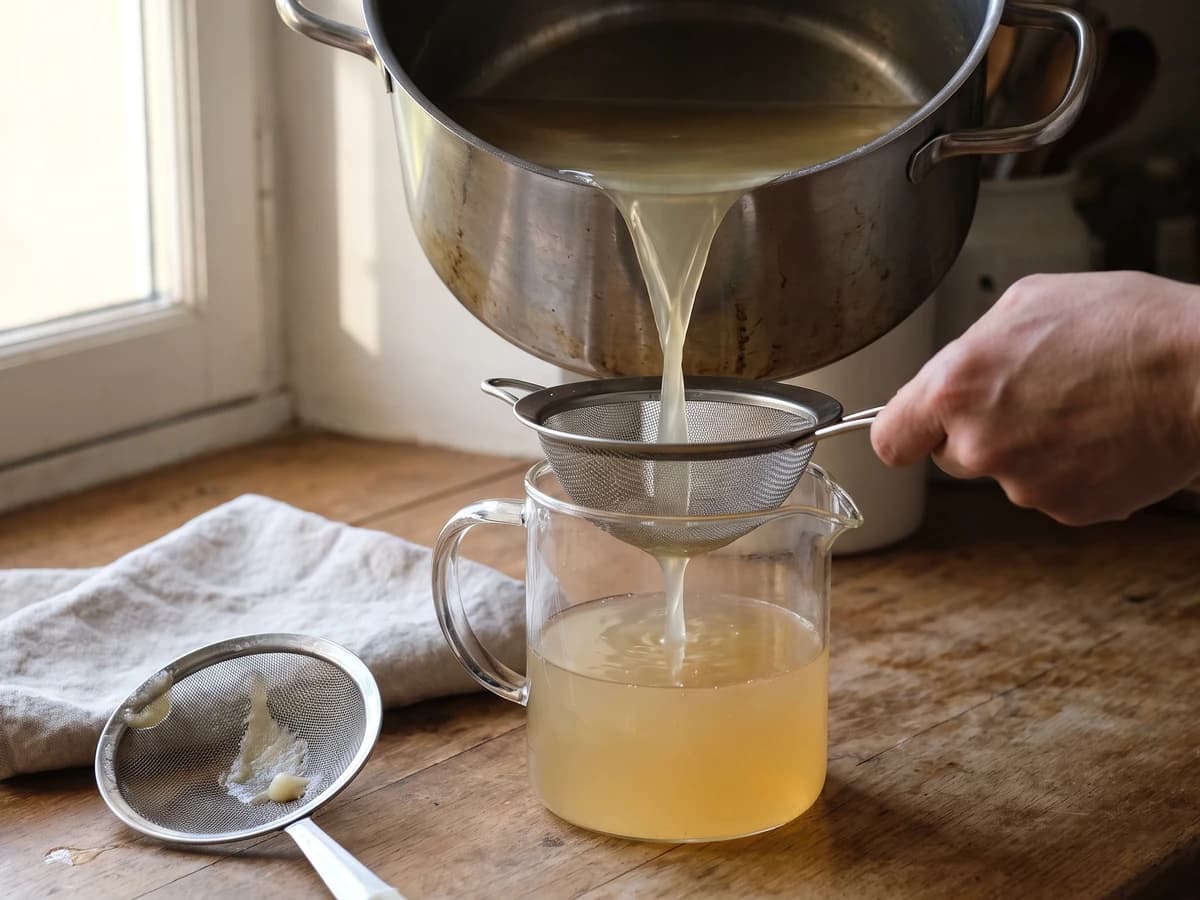
Break the veal bones small, then give them eight hours at a bare tremble. This pale, gelatinous fond becomes the quiet foundation beneath velouté, blanquette, and every sauce that must stay light.
Chef Juliette
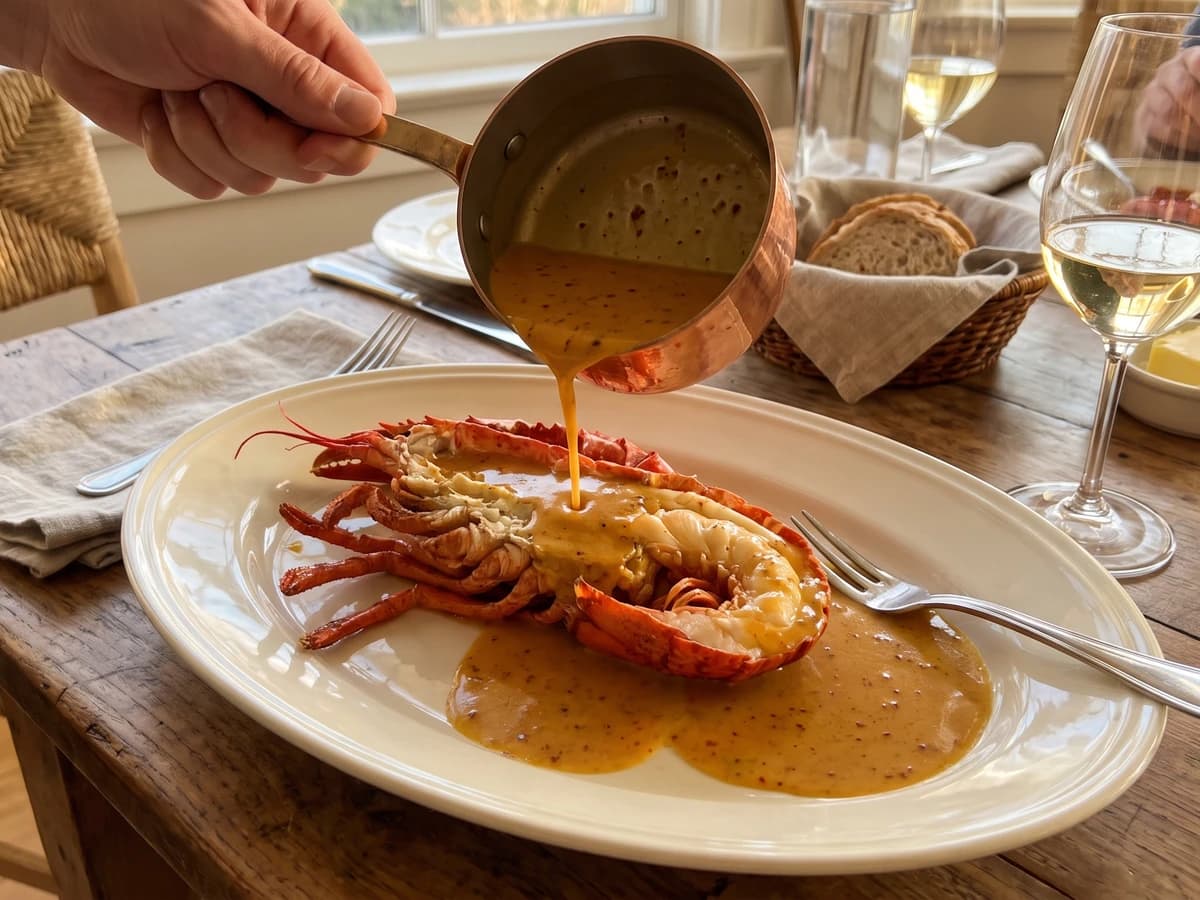
Sauce Orientale concentrates lobster-rich American Sauce with curry, then folds in cream away from the fire: a glossy, gently spiced derivative made for lobster, crayfish, and firm fish.
Chef Juliette
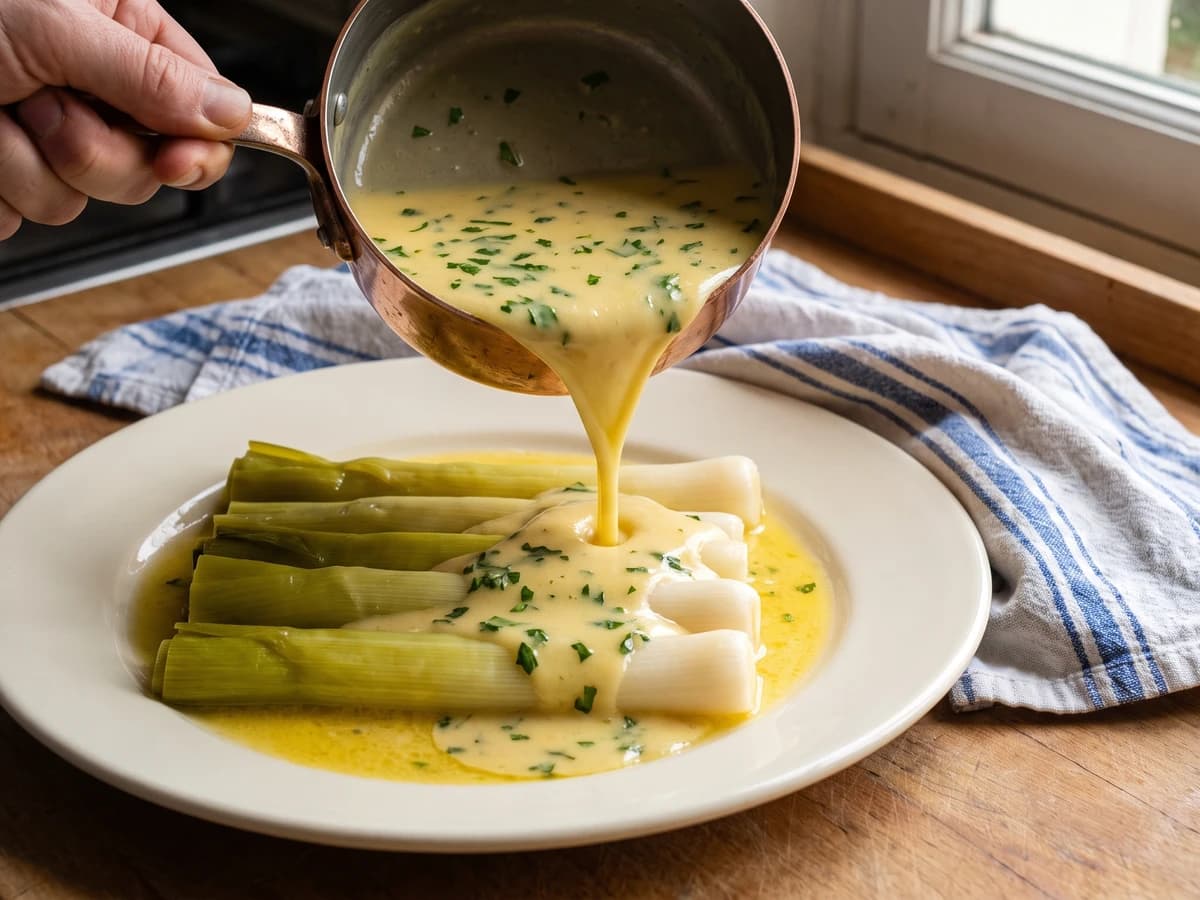
An old lesson in sauce families: Sauce Allemande takes mushroom liquor, then butter, lemon, and parsley, becoming a glossy Poulette for sheep's trotters, leeks, cauliflower, and anything needing gentle richness with a bright edge.