Chef Juliette
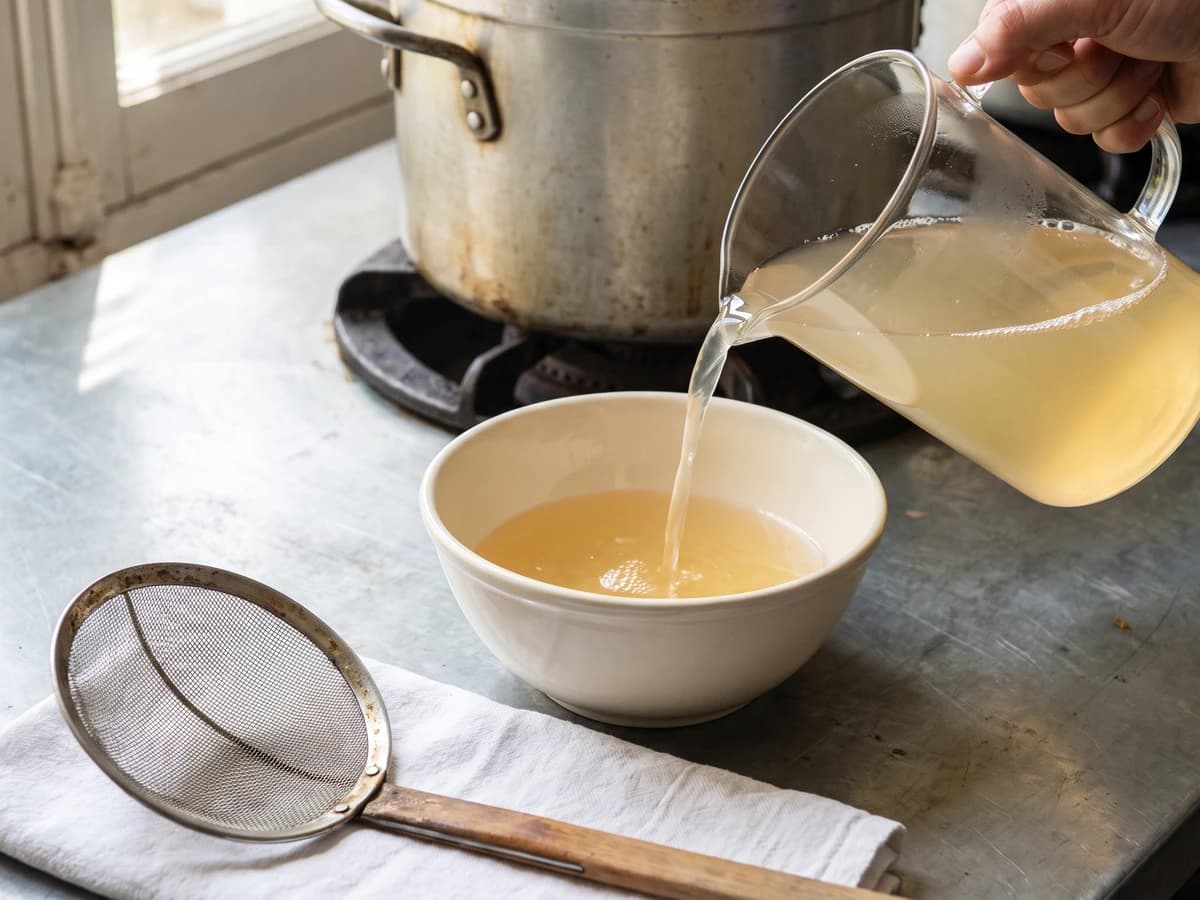
Ordinary or White Consommé
Beef shin, lean beef, and fowl begin in cold water and rise slowly toward a tremble. Skim before the boil, and you learn the quiet discipline that gives every clear French broth its backbone.
A cooking platform built around craft, culture, and the stories behind what we eat.
Created by Chef Juliette
Based on No. 2964, Quince Jelly, from Le Guide Culinaire (1907) by Auguste Escoffier
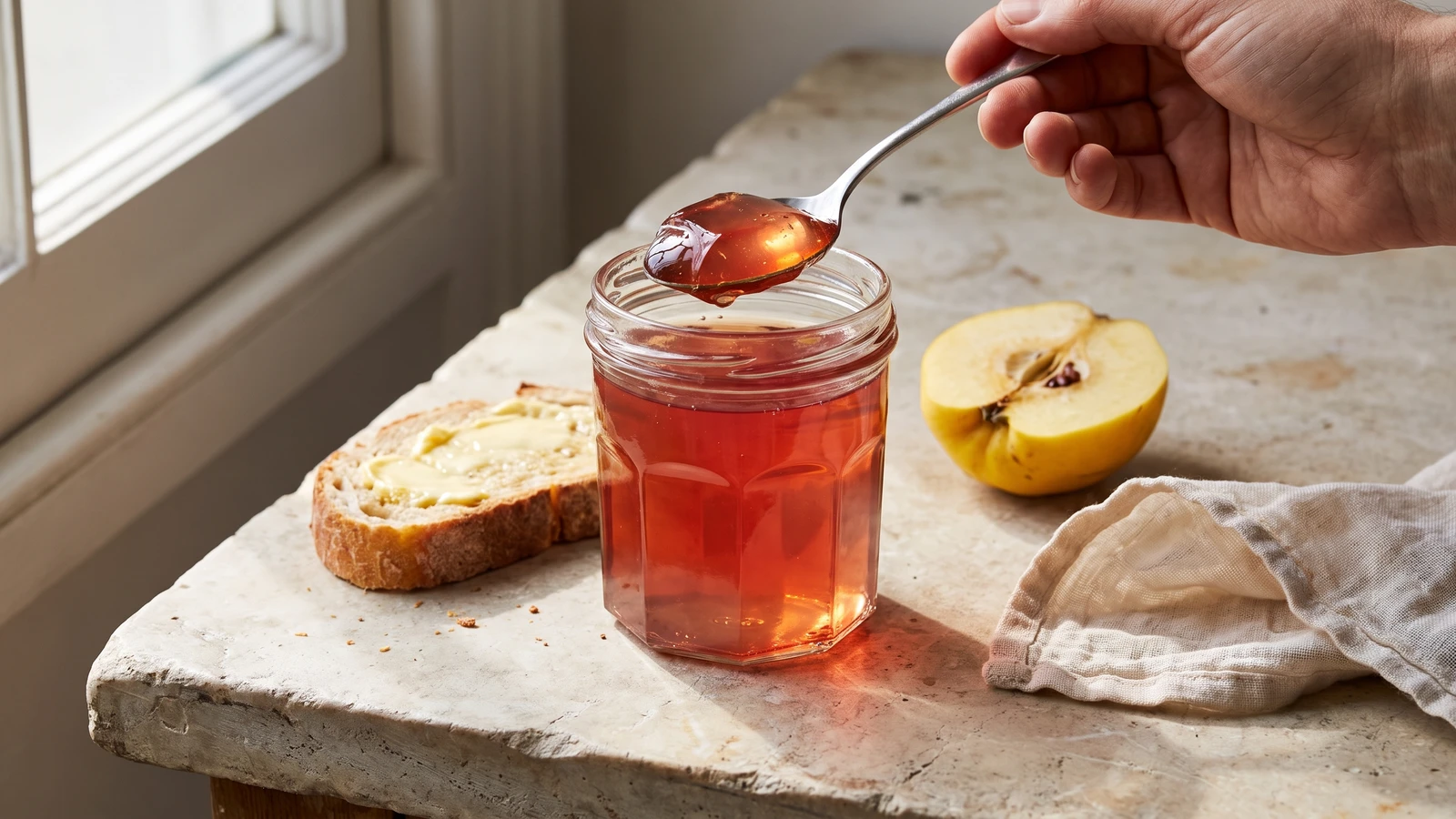
Gelée de coing turns quince and sugar into a clear rose-amber preserve, but clarity is won before the boil: let the cooked fruit drain by gravity, because one squeeze clouds the jar.
Gelée de coing (quince jelly) teaches the hardest lesson in preserving: do less. The quince cooks in an abundance of water without stirring, then drains under its own weight. Press the pulp and its fine solids enter the juice; no later polishing will make it truly clear.
The original formula assumed a preserving room with a broad pan, sugar broken from a loaf, muslin stretched over a basin, and ranks of pots closed with treated paper. Your equivalents are a wide stainless-steel pot, ordinary white granulated sugar of the same weight, damp muslin over a heatproof bowl, and small glass jars with modern lids. The brigade-sized apparatus and paper closures are scaffolding, so they go. The untouched cooking, gravity draining, fierce final boil, and last muslin strain are the dish, so every one stays. Scaled to two pounds of fruit, it remains one cook, one stove, one evening.
The finished gelée should be perfectly clear, jewel-bright, and naturally rose-amber, with enough tenderness to quiver on a spoon rather than bounce from it. When the cooked fruit reaches the sieve, let gravity do every bit of the work. That is the step that matters most.
Orléans, in the Loire Valley, has a particular quince lineage through cotignac, a concentrated preserve traditionally packed in small boxes, while clear gelée de coing belongs more broadly to preserving cupboards throughout France. Fine sieves and muslin carried the fruit from household pantry to bourgeois and grand kitchens, where clarity became the measure of the cook's restraint. Its rose-amber color comes from the quince itself during cooking, not from red fruit or coloring.
Quantity
4 medium (2 lb / 900 g)
sliced, peeled, and cored
Quantity
about 8 cups (1.9 L / 1.9 kg), or enough to cover
for holding the cut fruit
Quantity
7 Imperial pints or 16¾ cups (4 L / 4 kg)
for cooking
Quantity
3⅜ cups (24 oz / 680 g)
Quantity
up to 2 tablespoons (30 ml / 30 g)
only for loosening overcooked jelly
Quantity
1 procedure (No. 2955)
| Ingredient | Quantity |
|---|---|
| very ripe quincessliced, peeled, and cored | 4 medium (2 lb / 900 g) |
| cold fresh waterfor holding the cut fruit | about 8 cups (1.9 L / 1.9 kg), or enough to cover |
| fresh waterfor cooking | 7 Imperial pints or 16¾ cups (4 L / 4 kg) |
| white granulated sugar | 3⅜ cups (24 oz / 680 g) |
| boiling water (optional)only for loosening overcooked jelly | up to 2 tablespoons (30 ml / 30 g) |
| The Cooking, Potting, and Sealing of Jams | 1 procedure (No. 2955) |
Wash seven 4 fl oz (120 ml) jars, their new lids, and all utensils thoroughly. Keep the jars hot while you cook so the hot jelly cannot shock the glass. Rinse the muslin or jelly bag in hot water, wring it well, and arrange it over a large heatproof bowl without letting its bottom touch the collected liquid.
Quinces are hard even when ripe, so give each one a stable flat side before cutting further. Slice them about ½ inch (1 cm) thick, then peel each slice and remove every pip and hard piece of core. Drop the prepared slices immediately into the cold holding water. Fresh water alone belongs here; no lemon or other flavoring enters this formula.
Drain away the holding water. Put the quince slices into the wide preserving pot with the measured 7 Imperial pints or 16¾ cups (4 L / 4 kg) fresh water. Bring to a steady simmer and cook uncovered for 60 to 75 minutes, until the fruit is thoroughly tender and beginning to collapse. Do not stir, crush, or prod it. The abundant water and untouched cooking draw out the pectin and fragrance without driving pulp into the liquid.
Set a fine sieve over a large bowl. Lift the tender fruit into it carefully, then pour over the remaining liquid and leave everything to drain under its own weight for 60 to 90 minutes. Never press or squeeze. If pulp slips through and the juice looks cloudy, pass it through fresh damp muslin once more and let gravity work; ça se rattrape, provided you stop pressing.
Rinse the preserving pot so no fruit pulp remains, then return all the clear quince juice to it. Add the 3⅜ cups (24 oz / 680 g) white granulated sugar, preserving the book's ratio of 12 oz sugar for each pound of quince. Warm gently, stirring only until every crystal has dissolved and the liquid looks clear. Granulated sugar replaces loaf sugar because the loaf was a convenient form of refined sugar, not a separate flavor.
Once the sugar is completely dissolved, raise the heat and boil as fiercely as the pan can safely hold. Keep the pot uncovered and skim away pale froth without stirring it back into the jelly. As the water leaves, the bubbles will become slower and more distinct. Lift the skimmer frequently near the finish: at first the jelly falls in quick separate drops, then gathers toward the center and falls slowly in large drops. This is the approach to nappe, the coating stage. Pull the pan from the heat just before those drops become one heavy continuous sheet. A clock cannot decide this because pan width and burner strength decide evaporation. If the jelly has gone ropey before you can strain it, remove it from the heat and stir in boiling water 1 tablespoon (15 ml / 15 g) at a time until it flows freely, then return it to a brief boil. Ça se rattrape.
Immediately pour the cooked jelly through the prepared damp muslin into the clean heatproof bowl. Let it pass freely without squeezing, twisting, or scraping the cloth. If the muslin clogs, move the jelly to a fresh damp piece rather than forcing it through. Leave the strained jelly undisturbed for 7 to 8 minutes, then lift away any last surface froth with the edge of a clean spoon.
Finish according to The Cooking, Potting, and Sealing of Jams (No. 2955), using the safe home equivalent for its treated paper closures. Ladle the hot gelée into the hot jars, leaving ¼ inch (6 mm) headspace. Wipe the rims, apply new two-piece lids fingertip-tight, and process the jars in boiling water covering them by at least 1 inch (2.5 cm) for 10 minutes at sea level, adjusting for altitude according to current local preserving guidance. Cool the jars upright and untouched for 12 to 24 hours, then check the seals. Refrigerate any jar that has not sealed.
1 serving (about 155g)
Culinary guides, cultural storytelling, and the editorial depth that makes cooking meaningful.
Discover Culinary ExplorerChef Juliette
Beef shin, lean beef, and fowl begin in cold water and rise slowly toward a tremble. Skim before the boil, and you learn the quiet discipline that gives every clear French broth its backbone.
Chef Juliette
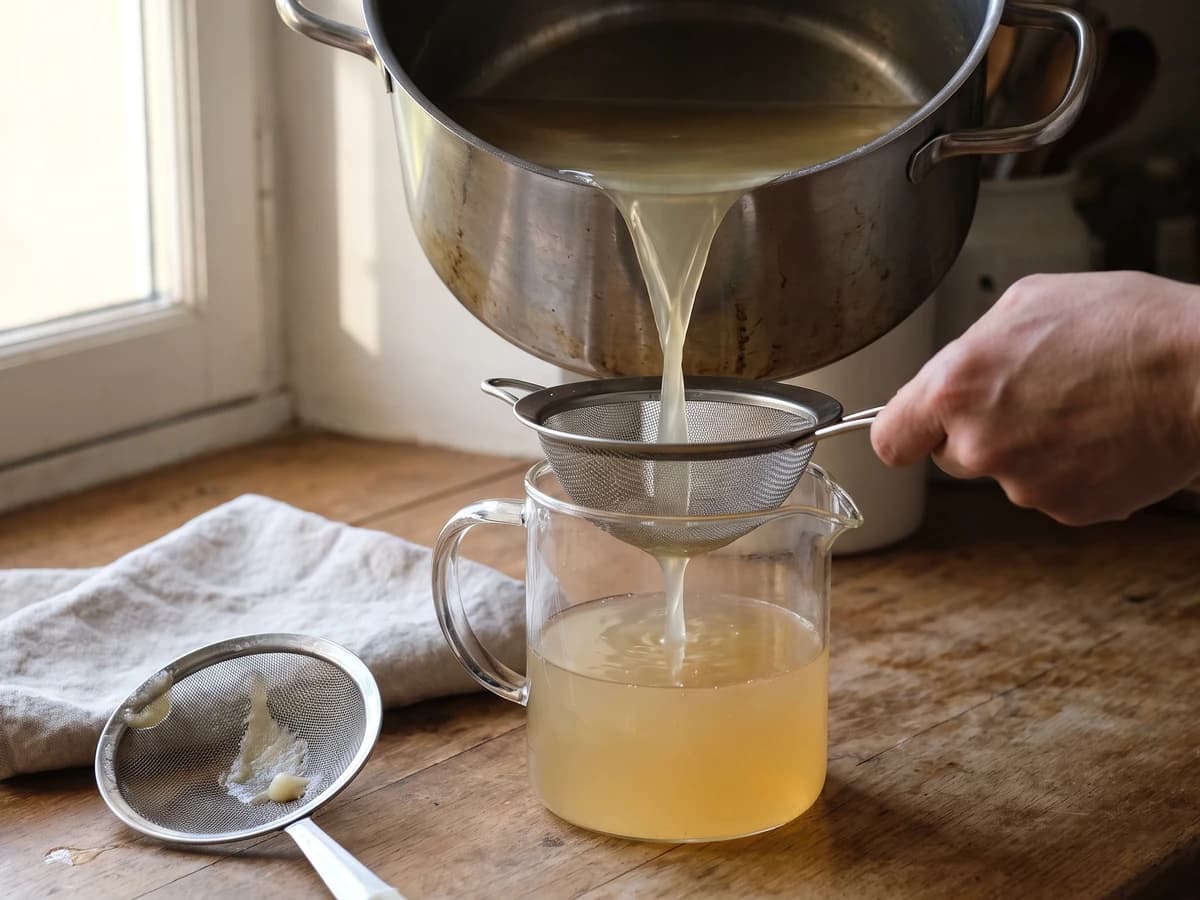
Break the veal bones small, then give them eight hours at a bare tremble. This pale, gelatinous fond becomes the quiet foundation beneath velouté, blanquette, and every sauce that must stay light.
Chef Juliette
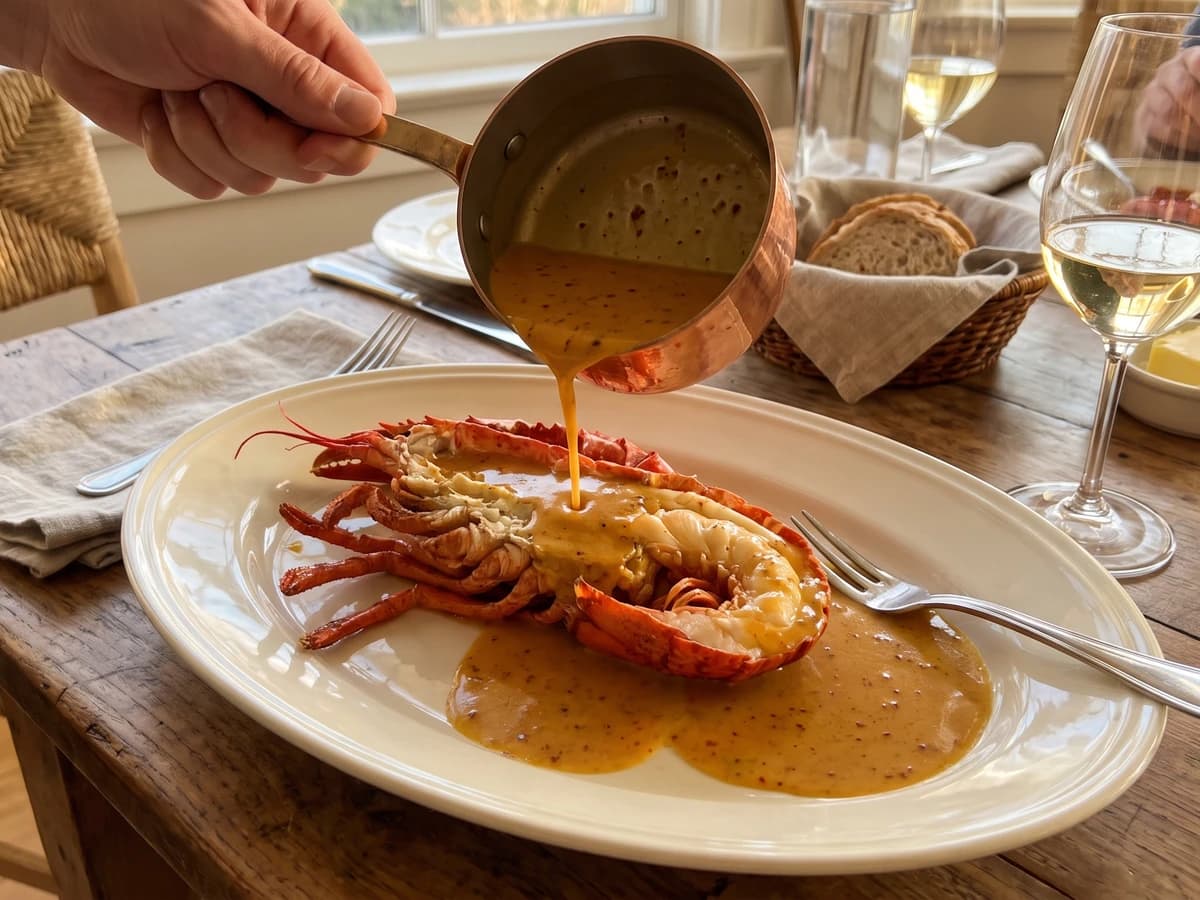
Sauce Orientale concentrates lobster-rich American Sauce with curry, then folds in cream away from the fire: a glossy, gently spiced derivative made for lobster, crayfish, and firm fish.
Chef Juliette
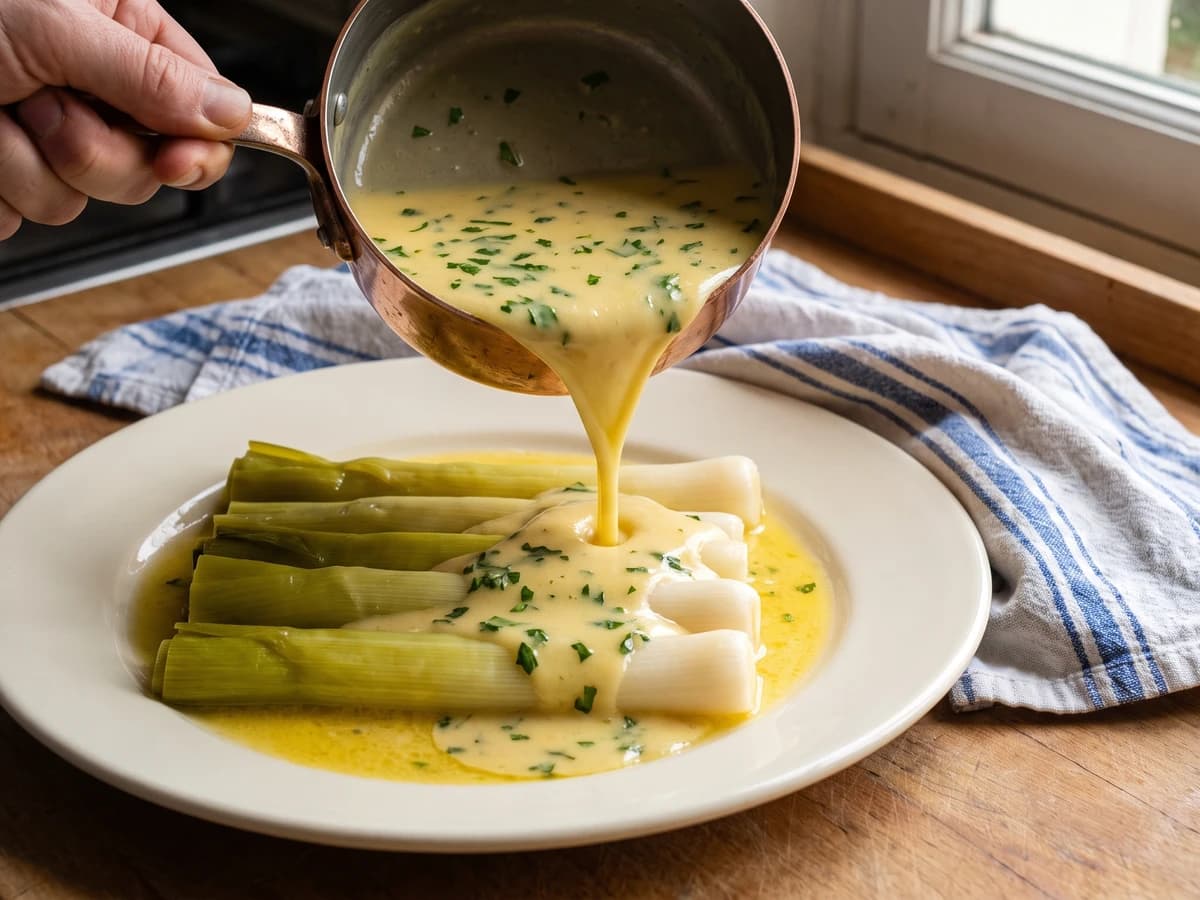
An old lesson in sauce families: Sauce Allemande takes mushroom liquor, then butter, lemon, and parsley, becoming a glossy Poulette for sheep's trotters, leeks, cauliflower, and anything needing gentle richness with a bright edge.