Chef Juliette
Plain Stewed Fruit
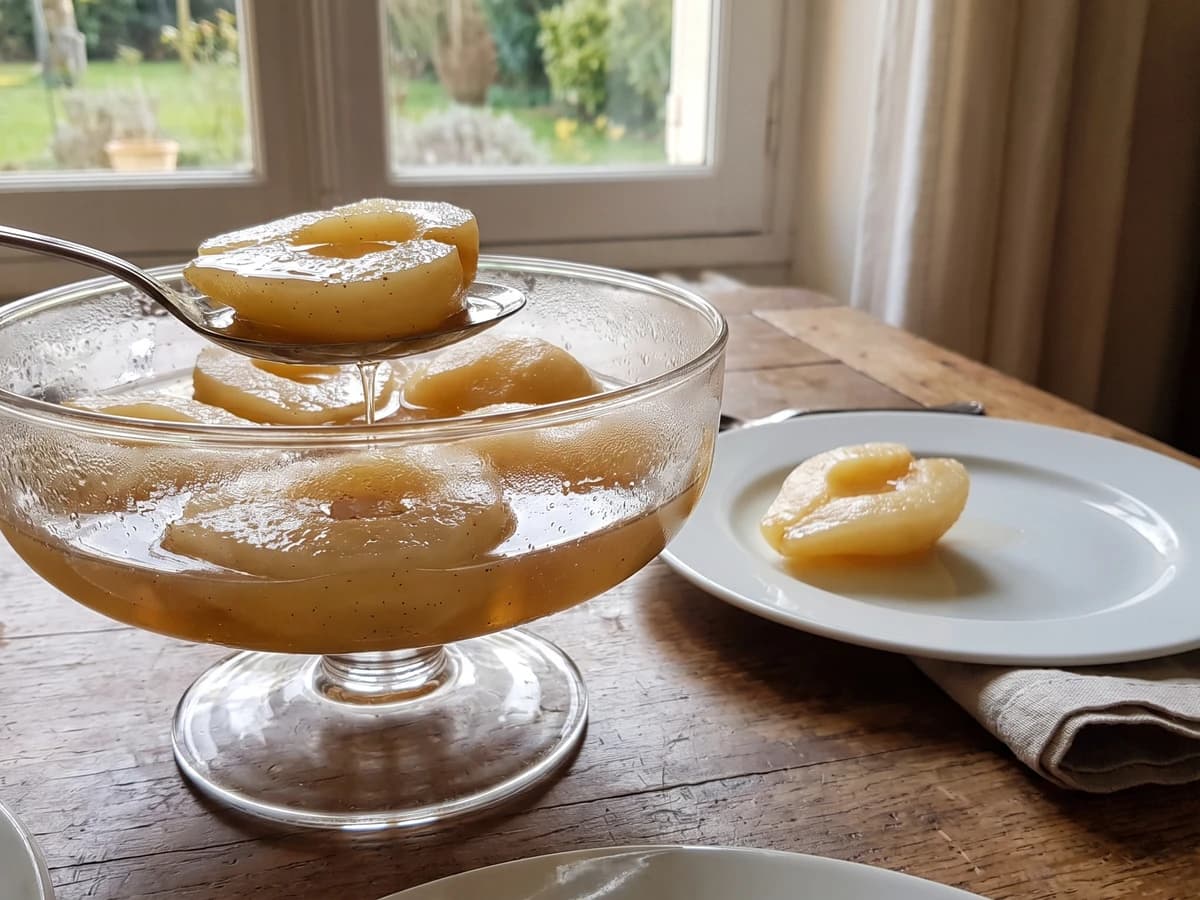
Compote de fruits keeps firm pears intact in a clear vanilla-lemon syrup, tender enough for a spoon but never collapsing, with the liquor reduced to a bright gloss and served hot or cold.
A cooking platform built around craft, culture, and the stories behind what we eat.
Created by Chef Juliette
Based on No. 2959, Orange Marmalade, from Le Guide Culinaire (1907) by Auguste Escoffier
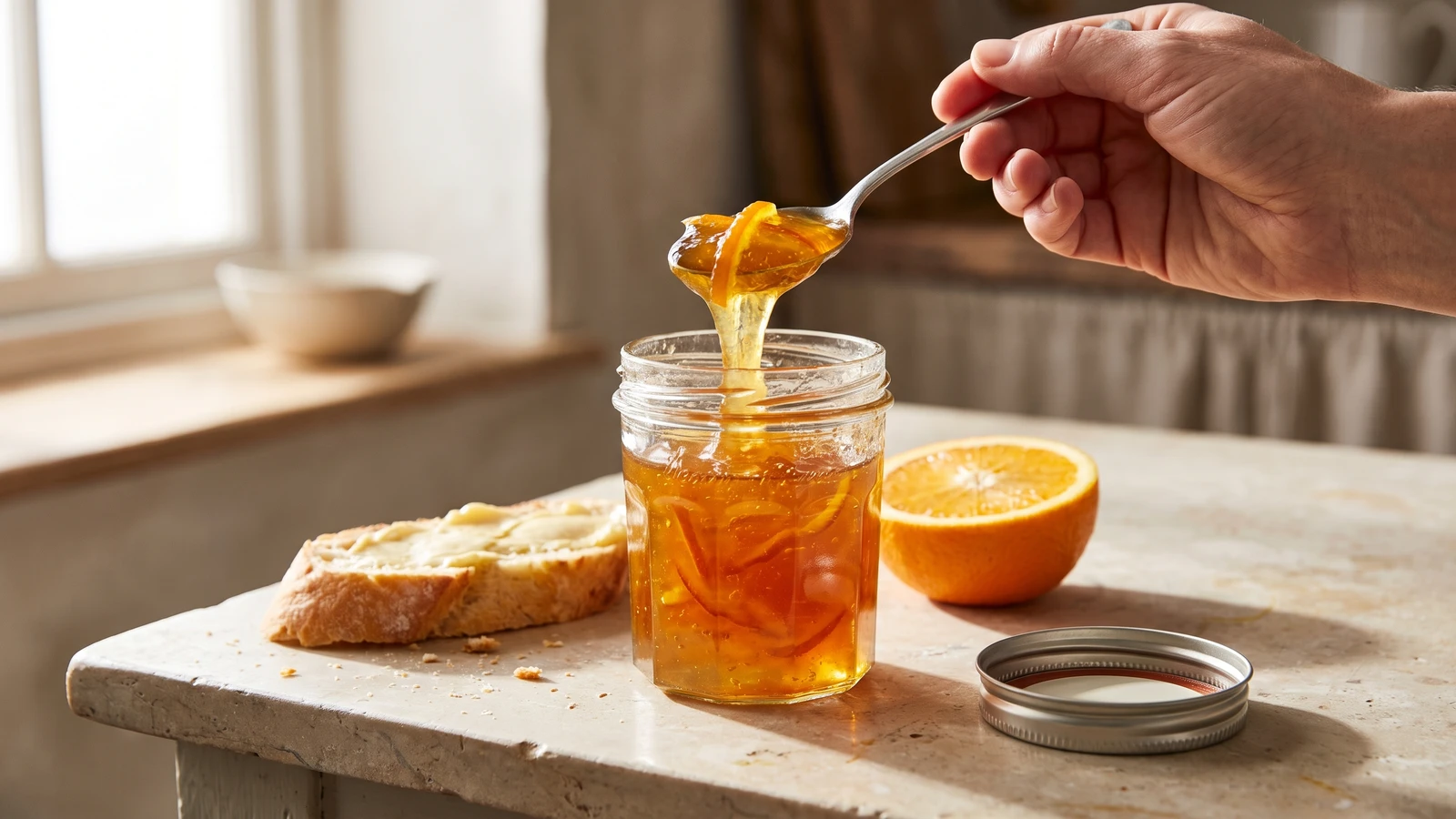
Thick-rinded oranges parboiled, soaked until their bitterness softens, forced through a coarse sieve, then cooked with equal-weight sugar and apple juice to a clear, softly set preserve. The soak is the dish.
Marmelade d’oranges teaches patience before heat. Know this before you touch the pan: the soak is the dish. The sugar cook lasts minutes, but the half-day under cold water softens the whole rind and draws its blunt bitterness into something fragrant, measured, and welcome. Shorten that extraction and no quantity of sugar will put the marmelade right.
The original formula assumed a preserving kitchen with a broad copper bassine, a coarse sieve, a tap left running, and jars closed beneath paper and glycerine. A home kitchen gets a wide stainless-steel pan, a food mill, lidded jars kept cold, and a batch scaled to about two quarts. The brigade scaffolding goes. The thirty-minute parboil, the long soak, equal weights of purée and sugar, and the precise apple-juice ratio remain because they are the marmelade itself.
When it is right, the preserve is clear amber-orange, glossy but not rubbery, with the softened rind distributed through every spoonful. The decisive finish is nappe, the sheeting stage, when two heavy drops gather and fall together from the spoon. Learn that fall before you begin; it decides the set.
Marmalade takes its name from Portuguese marmelada, a quince paste, while orange marmalade became most closely associated with Britain’s breakfast table and the trade in bitter Seville oranges. In the French classical kitchen it sits within confiserie, the preserving-pan craft, rather than belonging to one French region. This formula corrects a common assumption: it does not depend on Seville oranges, but develops measured bitterness from thick-rinded oranges through parboiling and soaking, then borrows apple juice for the set.
Quantity
7 to 8 (about 4 lb / 1.8 kg)
scrubbed
Quantity
1 cup (240 ml / 240 g), plus more as needed for parboiling and soaking
Quantity
7½ cups (1.8 L / 1.5 kg), or exactly the same weight as the sieved orange purée
Quantity
2 cups (470 ml / 490 g), or ⅔ cup (160 ml / 165 g) for each 1.1 lb / 500 g orange purée
Quantity
1 method: The Cooking, Potting, and Sealing of Jams (No. 2955)
| Ingredient | Quantity |
|---|---|
| medium thick-rinded oranges, uniform in size and blemish-freescrubbed | 7 to 8 (about 4 lb / 1.8 kg) |
| cold water | 1 cup (240 ml / 240 g), plus more as needed for parboiling and soaking |
| granulated sugar | 7½ cups (1.8 L / 1.5 kg), or exactly the same weight as the sieved orange purée |
| unsweetened apple juice | 2 cups (470 ml / 490 g), or ⅔ cup (160 ml / 165 g) for each 1.1 lb / 500 g orange purée |
| referenced preserving method | 1 method: The Cooking, Potting, and Sealing of Jams (No. 2955) |
Choose oranges as equal in size as possible, with thick, supple rinds and no soft spots. Scrub them well, then prick each orange deeply in fifteen to twenty places with a clean wooden skewer, piercing through the rind without driving through the opposite side. These openings let the boiling water reach the rind evenly, so the fruit softens without bursting.
Bring a large pot of water to a full boil and lower in the oranges. Keep them submerged with a small heatproof plate if they insist on floating, then boil steadily for thirty minutes. Drain and cool them until they can be handled. The rind should yield under a thumb but remain whole enough to quarter cleanly.
Set the oranges in a deep bowl beneath a very thin stream of cold running water for at least twelve hours, turning them occasionally and keeping the basin drain completely clear. This is extraction, not idle waiting. At the end, cut a tiny piece from one rind and taste it. It should retain a firm citrus bitterness without the harshness lingering at the back of the tongue; if it is still aggressive, continue the soak in fresh cold water for another two to four hours.
Drain the oranges thoroughly, quarter them, and remove every pip and the tough central filaments. Pass the peel and pulp together through the coarse plate of a food mill, or force them through a sturdy coarse sieve. Do not peel the fruit and do not blend it smooth; the softened rind supplies the marmelade’s body. Weigh the finished purée. For every 1.1 lb / 500 g of purée, measure exactly 1.1 lb / 500 g sugar and ⅔ cup (160 ml / 165 g) apple juice.
Wash the jars and lids thoroughly. Keep the jars hot in a pan of hot water so the glass will not crack when filled, and place two small saucers in the freezer for testing the set. Set a skimmer, a long heatproof spatula, and a clean second pan within reach. Preserving moves quickly at the finish, and this small mise en place is what one cook uses instead of extra hands.
Put the measured sugar and 1 cup (240 ml / 240 g) cold water in the wide preserving pan. Heat gently, stirring only until every crystal dissolves, then bring the syrup to a clear boil and cook for five to six minutes. Skim away any grey froth, though refined sugar may produce very little. Once boiling, do not stir. If crystals gather around the sides, cover the pan for one minute so the moisture washes them down. Ça se rattrape. Remove the lid and continue without allowing the syrup to colour.
Carefully add the orange purée to the syrup, followed by the precisely measured apple juice. The syrup may seize around the cooler fruit and the mixture may spit, so use a long spatula and stir over moderate heat until it becomes uniform. Bring it back to a brisk boil. Skim carefully during this first stage, removing foam without carrying away the marmelade beneath it.
As the marmelade thickens and the bubbles become slower and more visible, begin stirring almost constantly, scraping the entire floor and corners of the pan. Test frequently. At nappe, marmelade clinging to the spoon gathers toward its centre and falls slowly in two heavy drops that join into a short sheet; a dab on a frozen saucer should wrinkle softly when pushed and leave a clean path behind your finger. A thermometer will commonly read 220°F / 104 to 105°C at sea level, but the spoon and cold plate have the final word. If the bottom begins to catch, stop stirring and immediately pour the unscorched marmelade into the clean pan without scraping the first one. If caught before the burnt smell spreads, ça se rattrape.
Take the pan off the heat as soon as nappe is reached and let the marmelade settle for seven to eight minutes. The source sends the cook to The Cooking, Potting, and Sealing of Jams (No. 2955) for the linked preserving method. For this home translation, ladle the marmelade into the hot clean jars, leaving ¼ inch / 6 mm headspace, wipe the rims, and apply clean lids. Paper-and-glycerine coverings are brigade scaffolding and are not used. Cool the jars for no longer than two hours, then refrigerate; a lid drawing down does not make this formula shelf-stable.
Leave the marmelade undisturbed in the refrigerator for a full day before judging it. If it remains loose, return it to the wide pan and boil again until nappe, then refill clean hot jars. If it is too firm, warm it gently and stir in boiling water one tablespoon (15 ml / 15 g) at a time until the spoonful relaxes. Ça se rattrape. Serve with buttered bread, brioche, or croissants. À table!
1 serving (about 20g)
Culinary guides, cultural storytelling, and the editorial depth that makes cooking meaningful.
Discover Culinary ExplorerChef Juliette
Compote de fruits keeps firm pears intact in a clear vanilla-lemon syrup, tender enough for a spoon but never collapsing, with the liquor reduced to a bright gloss and served hot or cold.

Chef Juliette
Compote de Fruits Mélangés keeps pears, plums, apricots, two fruit purées, quince jelly, and candied fruit distinct on one generous platter. Poach each fruit alone, or the composition becomes one sweet blur.

Chef Juliette
Confiture turns fruit and sugar into a clear, spoonable preserve by one governing rule: match tart fruit nearly pound for pound, then boil fast enough to keep its flavour alive.
Chef Juliette
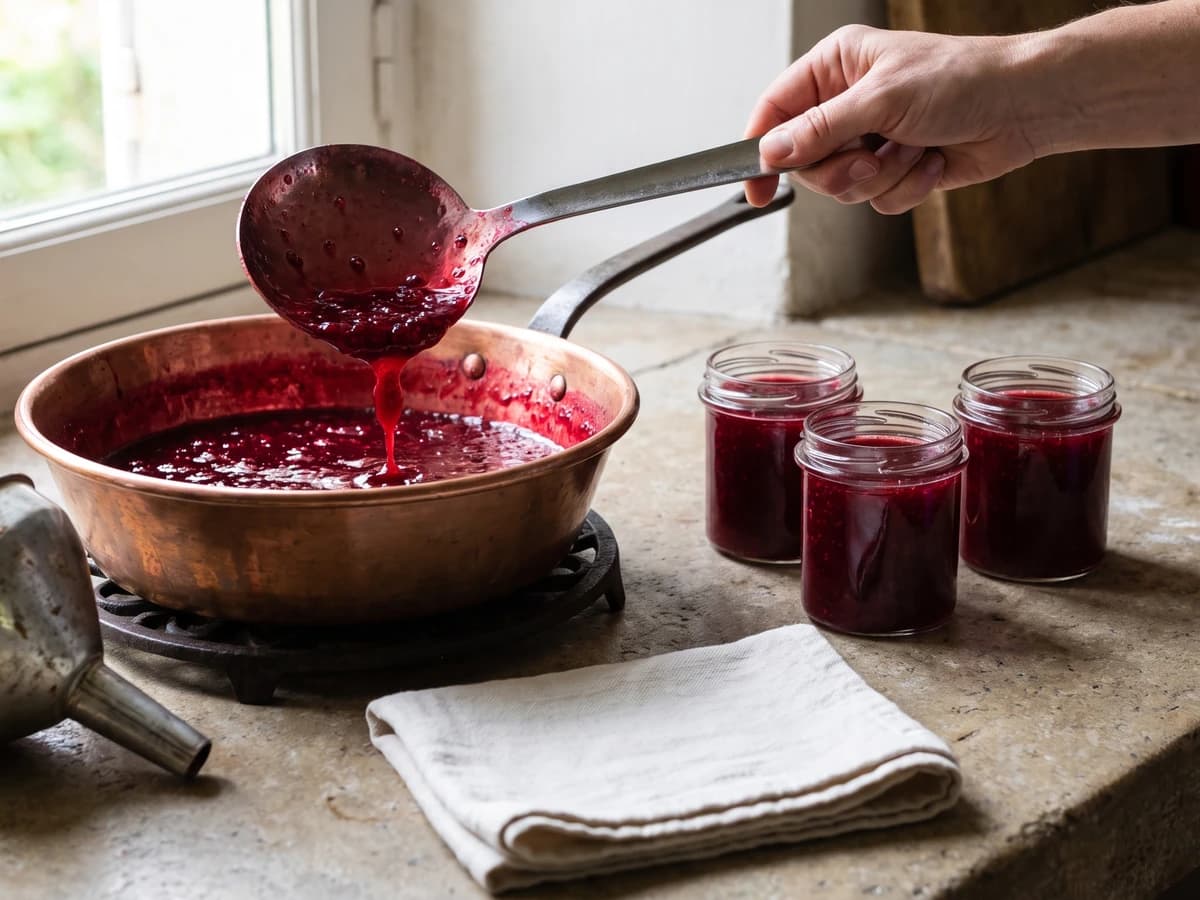
The nappe tells you when jam is done: it gathers at the skimmer’s centre and falls in slow, heavy drops. Keep the cooking quick, then pot hot and seal it safely for the pantry.