
Chef Juliette
Flan aux Carottes
A pale short-paste shell holds silken, lightly sweet carrot purée beneath neat glazed half-discs, their butter syrup catching the light: a classical tart poised between vegetable course and sweet.
A cooking platform built around craft, culture, and the stories behind what we eat.

Created by Chef Juliette
Based on No. 2578, Pêches Meringuées, from Le Guide Culinaire (1907) by Auguste Escoffier
Pale pastry, pralin-rich frangipane, syrup-poached peaches, and a softly gilded meringue crown: a generous celebration tart whose success depends on baking the almond cream thoroughly dry.
Pêches Meringuées (meringue-crowned peach tart) teaches the architecture of a composed French pastry: crisp shell beneath, dry almond cream in the middle, tender fruit above, and meringue protecting it all. One truth decides whether those layers remain distinct. The pralin frangipane must bake until thoroughly set and dry before a peach touches it, or trapped moisture will turn the cream soft and make it weep.
The source assumed a pastry section with pale flawn shells, poached fruit, Pralin (No. 2352), and Ordinary Meringue (No. 2382) already waiting. This dish has no need of a saucier or perpetual stockpot; its brigade luxury was a pâtissier managing each component and a salamander ready to color the meringue. At home, a 23 cm tart tin, an ordinary oven, and a watchful half-minute beneath the broiler do the same work. I have reduced the quantity to one tart while keeping the original sequence intact. Separate station work was scaffolding. Dry frangipane, well-drained peaches, and the meringued finish are the dish.
When it is right, the crust is pale biscuit-gold, the pralin smells of toasted almond and caramel, and the peaches sit beneath a high ivory crown touched with gold and little glints of apricot and red-currant jam. Before you touch a pan, remember the step that matters: bake the frangipane until its center is matte, firm, and utterly free of wet shine.
Pêches Meringuées belongs to the Paris-centered classical pâtisserie repertoire, where fruit flans and meringued entremets moved easily between grand household tables and pâtisserie windows. Its structure joins a flawn shell, nut-enriched cream, poached fruit, and the decorative oven finish borrowed explicitly from Abricots Meringués (No. 2555). Here, flawn means a shallow flan or tart shell, not a custard filling, and the pale baking preserves delicacy rather than leaving the pastry raw.
Quantity
1¾ cups (420 ml / 225 g)
Quantity
¼ cup (60 ml / 30 g)
Quantity
½ teaspoon (2.5 ml / 3 g)
Quantity
½ cup plus 1 tablespoon (135 ml / 125 g)
cubed
Quantity
1
Quantity
1 tablespoon (15 ml / 15 g)
Quantity
4
halved and pitted
Quantity
4 cups (960 ml / 960 g)
Quantity
1½ cups (360 ml / 300 g)
Quantity
6 tablespoons (90 ml / 85 g)
Quantity
¼ cup (60 ml / 50 g)
Quantity
¾ cup (180 ml / 75 g)
Quantity
2 tablespoons (30 ml / 16 g)
Quantity
1
Quantity
1
Quantity
about 3 cups (720 ml / 175 g) Ordinary Meringue (No. 2382)
prepare a one-quarter home batch
Quantity
2 tablespoons (30 ml / 15 g)
Quantity
1 tablespoon (15 ml / 20 g)
Quantity
1 tablespoon (15 ml / 20 g)
Quantity
1 linked finishing method from Abricots Meringués (No. 2555)
| Ingredient | Quantity |
|---|---|
| plain flour for the crust | 1¾ cups (420 ml / 225 g) |
| icing sugar for the crust | ¼ cup (60 ml / 30 g) |
| fine sea salt | ½ teaspoon (2.5 ml / 3 g) |
| cold unsalted buttercubed | ½ cup plus 1 tablespoon (135 ml / 125 g) |
| large egg for the crust | 1 |
| cold water (optional) | 1 tablespoon (15 ml / 15 g) |
| large ripe but firm yellow peacheshalved and pitted | 4 |
| water | 4 cups (960 ml / 960 g) |
| granulated sugar | 1½ cups (360 ml / 300 g) |
| softened unsalted butter | 6 tablespoons (90 ml / 85 g) |
| caster sugar | ¼ cup (60 ml / 50 g) |
| finely ground almond flour | ¾ cup (180 ml / 75 g) |
| plain flour for the frangipane | 2 tablespoons (30 ml / 16 g) |
| large egg for the frangipane | 1 |
| large egg yolk | 1 |
| Pralinuse the nougat-powder form | ½ cup (120 ml / 70 g) Pralin (No. 2352) |
| Ordinary Meringueprepare a one-quarter home batch | about 3 cups (720 ml / 175 g) Ordinary Meringue (No. 2382) |
| icing sugar for the meringue | 2 tablespoons (30 ml / 15 g) |
| smooth apricot jam | 1 tablespoon (15 ml / 20 g) |
| smooth red-currant jam | 1 tablespoon (15 ml / 20 g) |
| Abricots Meringués finishing method | 1 linked finishing method from Abricots Meringués (No. 2555) |
Mix the flour, icing sugar, and salt. Rub in the cold butter until the mixture resembles coarse sand with a few pea-sized pieces remaining, then add the egg and press the dough together. Add the cold water only if dry crumbs remain. Knead once or twice, no more, flatten into a disc, wrap, and chill for 45 minutes. Rest gives you tenderness; extra kneading gives you a crust with opinions.
Combine the water and granulated sugar in a wide saucepan and heat gently until the sugar dissolves. Bring the syrup to the barest simmer, add the peach halves, and cover them with a circle of parchment so they remain submerged. Poach for 5 to 10 minutes, turning once, until a small knife enters with slight resistance. Lift them out before they become soft enough to collapse, peel away the skins while warm, and place them cut-side down on a rack over a tray. Let them drain for at least 30 minutes, then blot every surface dry. If one half softens too far, keep it for the center where the meringue can support it. Ça se rattrape.
Heat the oven to 170°C (340°F). Roll the chilled dough to about 3 mm thick and line a 23 cm loose-bottomed tart tin, pressing it into the flutes without stretching. Trim the edge, prick the base, and chill for 15 minutes. Line with parchment, fill completely with baking weights, and bake on a heated sheet pan for 18 minutes. Remove the weights and parchment, then bake for another 6 to 8 minutes, until the base has lost its raw shine but remains ivory rather than brown. If the rim colors early, shield it with a narrow collar of foil.
Lower the oven to 165°C (325°F). Beat the softened butter and caster sugar until smooth, not aerated, then mix in the almond flour and plain flour. Beat in the egg and yolk just until absorbed, followed by the Pralin (No. 2352), using the nougat-powder form specified in its own entry. Spread the cream evenly in the pale shell and bake for 22 to 28 minutes. This is the step that decides the tart: the center must be risen, matte, and firm beneath a fingertip, with no trembling or greasy shine. If it still glistens, return it to the oven in 5-minute turns and shield the pastry edge. Dry it now, because fruit and meringue cannot repair an underbaked cream.
Set the tart on a rack and let the frangipane cool completely. Press a clean piece of paper towel lightly against the peach halves and replace it if it comes away wet. The fruit should feel supple but dry on the surface. Wet peaches make the meringue slide and feed moisture into the cream; this small check protects all the work underneath.
Arrange the poached peach halves cut-side down over the cooled pralin frangipane, fitting seven around the outside and one in the center. Press only enough to steady them. Keep the domes distinct rather than crushing the fruit into a flat layer, because their shape gives the meringue crown its generous height.
Prepare the Ordinary Meringue (No. 2382) according to its own entry, using the one-quarter home quantity listed here. Cover the peaches and the exposed filling completely, shaping the meringue into a low dome with strong ridges rather than a thin skin. Following the finishing method from Abricots Meringués (No. 2555), sprinkle with the icing sugar and bake at 160°C (320°F) for 12 to 15 minutes, until the outside has set. A brigade could give the final color beneath a salamander; at home, pass the tart beneath a preheated broiler for 20 to 45 seconds, watching without looking away, until only the ridges turn pale gold. If the meringue begins to slide before baking, lift it back, blot the exposed peach, and cover again.
Warm the apricot and red-currant jams separately until just fluid. Use the tip of a teaspoon to place small touches of jam alternately along the gilded decorative ridges, preserving the apricot-and-red-currant finish of Abricots Meringués (No. 2555). Let the tart settle for 20 minutes before removing the tin and cutting with a clean serrated knife. Serve the first slice while the crust is crisp and the meringue still tender within. À table!
1 serving (about 210g)
Culinary guides, cultural storytelling, and the editorial depth that makes cooking meaningful.
Discover Culinary ExplorerChef Juliette
A pale short-paste shell holds silken, lightly sweet carrot purée beneath neat glazed half-discs, their butter syrup catching the light: a classical tart poised between vegetable course and sweet.
Chef Juliette
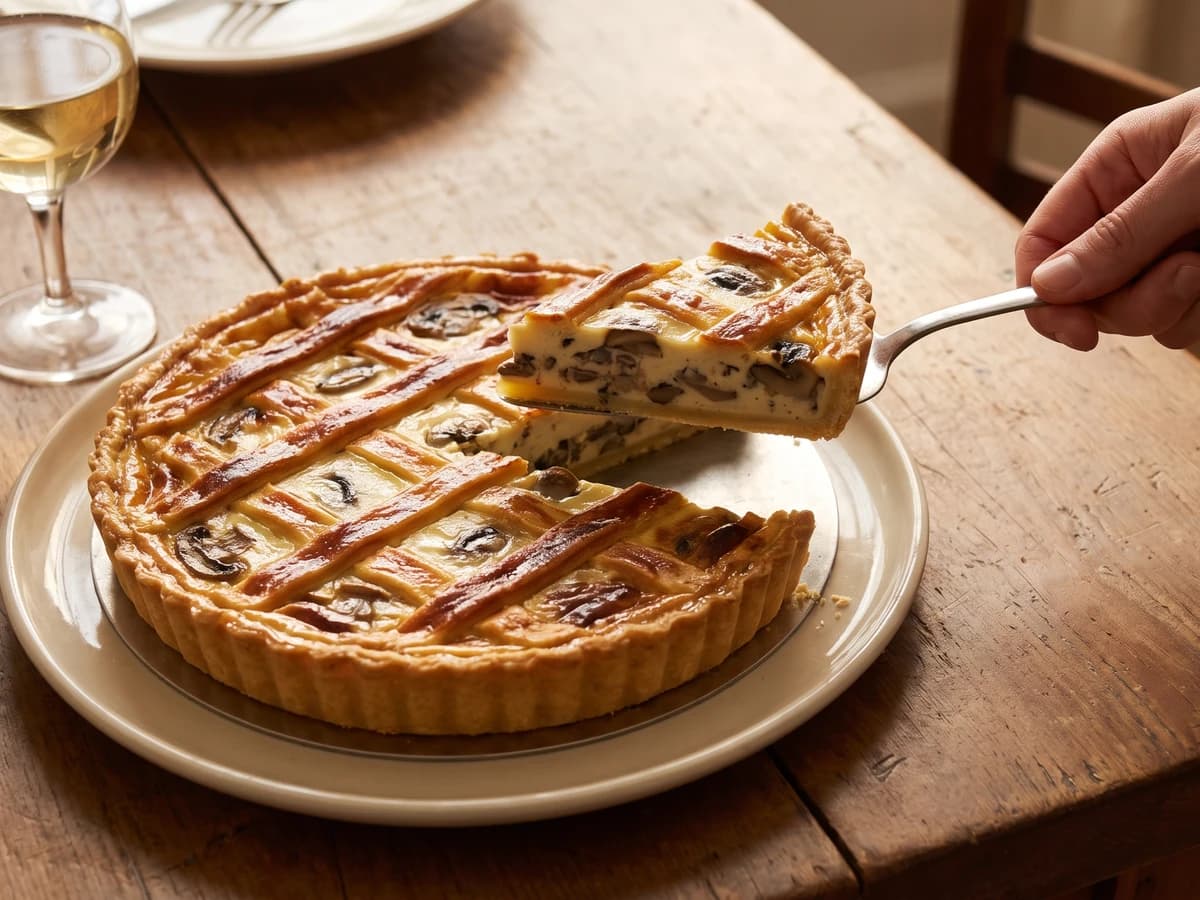
A hot mushroom flan under a butter-gold lattice, with cream reduced close around barely opened caps and a crisp short-paste base protected by one discipline: cool the filling completely.

Chef Juliette
Four little mushroom flans, latticed and gilded, baked hard and fast until butter-gold: a classical garnish scaled to the meat it accompanies and served before its crispness has time to fade.
Chef Juliette
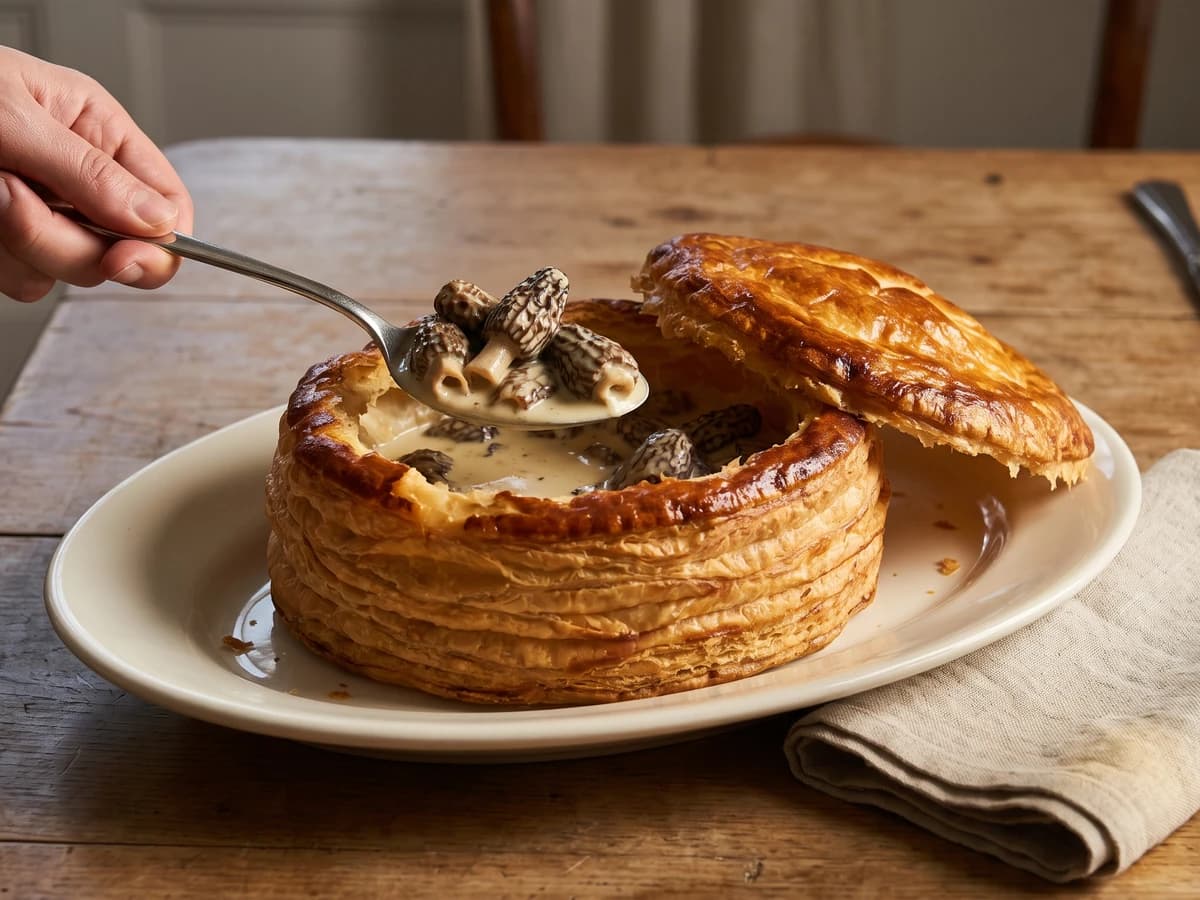
Morels surrender their liquor, then take it back as a glossy cream-and-butter sauce inside burnished puff pastry. The lesson is simple and absolute: reduce with patience, then heat gently and never boil.