
Chef Juliette
Carottes Glacées pour Garnitures
Carottes Glacées prove that a garnish can teach a whole sauce lesson: carrots cook in butter, sugar, salt, and water until their own liquor reduces to a brilliant, clinging coat.
A cooking platform built around craft, culture, and the stories behind what we eat.
Created by Chef Juliette
Based on No. 2063, Flan aux Carottes, from Le Guide Culinaire (1907) by Auguste Escoffier
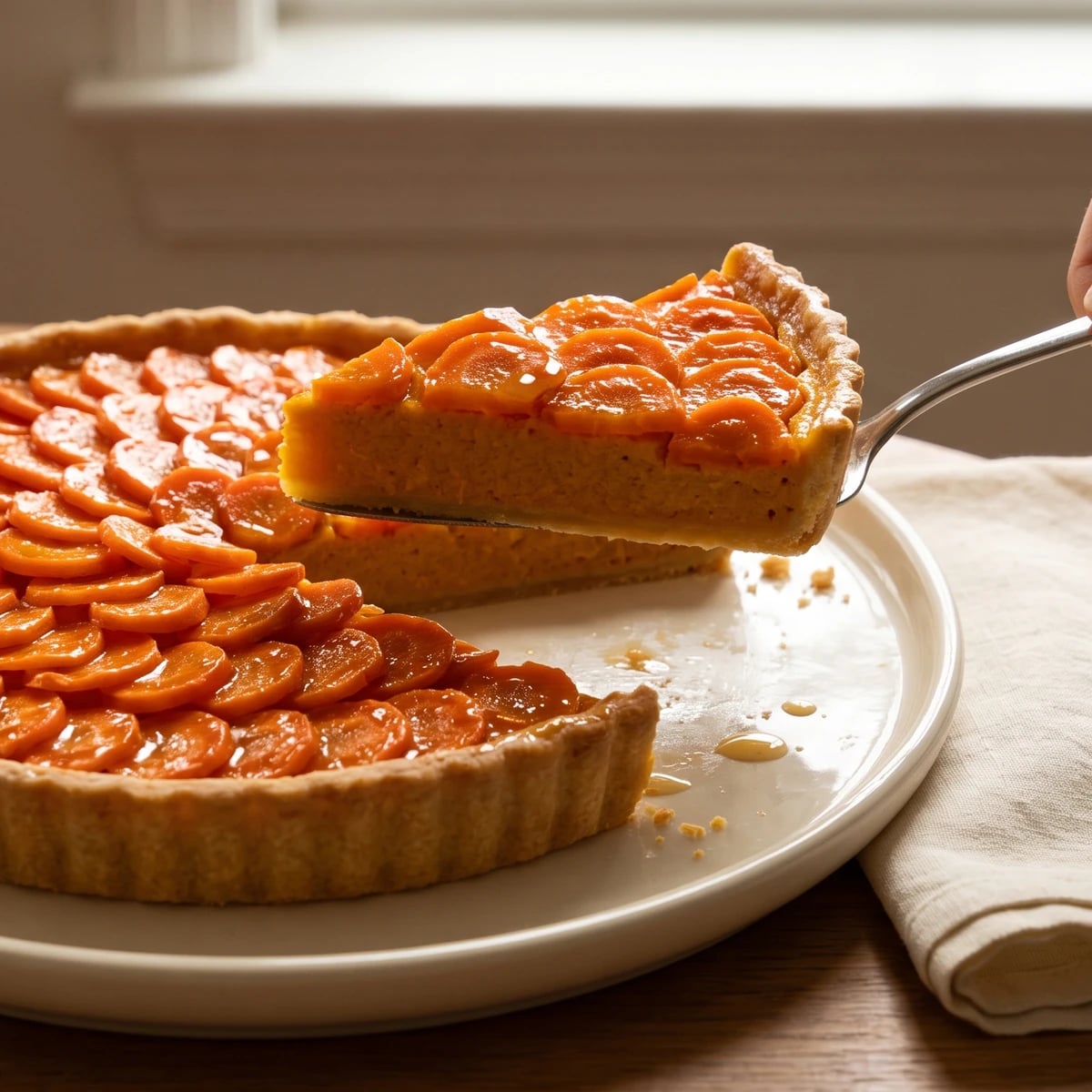
A pale short-paste shell holds silken, lightly sweet carrot purée beneath neat glazed half-discs, their butter syrup catching the light: a classical tart poised between vegetable course and sweet.
Flan aux Carottes (carrot flan tart) teaches moisture control. The shell must stay pale yet crisp, the purée only lightly sugared and dry enough to hold a furrow, the glazed half-discs whole. Before touching a pan, know the one true thing: water is the enemy beneath pastry. Drive it from the purée before filling, and the tart stays itself.
The original entry assumed two finished preparations could arrive from separate stations: Fine, Short or Flawn Paste (For Fruit Tarts) (No. 2358) and Carottes Glacées pour Garnitures (No. 2059). It also assumed a flawn ring, sheets of paper, and a bin of rice or split peas waiting for blind baking. At home, a 23 cm removable-bottom tin, parchment, and reusable baking weights do the same work. Here the tart is scaled to six servings and only the brigade scaffolding goes; the pale blind bake, smooth purée, intact carrot roof, and five-minute oven finish stay, because they are the dish. One cook, one stove, one evening.
When it is right, the shell is blond, the filling is dense and silken, and the sugar-butter liquor catches on every orange half-disc. The decisive step is drying and cooling the purée before it meets the shell. If a spoon cannot leave a clean path through it, return it to low heat and keep stirring.
Flan aux Carottes belongs to the classical Parisian table, where flan can mean a pastry-lined ring as readily as a custard. Its lightly sweetened filling and butter-glazed roof allow the same preparation to sit with vegetables or move to the sweet course, showing how classical service defines a dish by placement as well as seasoning. English cookbooks preserve the pastry-shell meaning in the word flawn; by construction, this is a tart, not the trembling custard many cooks expect from flan.
Quantity
1½ cups (355 ml / 370 g) Fine, Short or Flawn Paste (For Fruit Tarts) (No. 2358)
chilled
Quantity
4½ cups (1.06 L / 680 g)
peeled and evenly sliced for the purée
Quantity
3 cups (720 ml / 720 g)
Quantity
2 tablespoons (30 ml / 25 g)
Quantity
½ teaspoon (2.5 ml / 3 g)
Quantity
2 cups (475 ml / 400 g) Carottes Glacées pour Garnitures (No. 2059)
prepared as unbroken half-discs with their cooking liquor reserved
| Ingredient | Quantity |
|---|---|
| Fine, Short or Flawn Paste (For Fruit Tarts)chilled | 1½ cups (355 ml / 370 g) Fine, Short or Flawn Paste (For Fruit Tarts) (No. 2358) |
| carrotspeeled and evenly sliced for the purée | 4½ cups (1.06 L / 680 g) |
| water | 3 cups (720 ml / 720 g) |
| granulated sugar | 2 tablespoons (30 ml / 25 g) |
| fine salt | ½ teaspoon (2.5 ml / 3 g) |
| Carottes Glacées pour Garnituresprepared as unbroken half-discs with their cooking liquor reserved | 2 cups (475 ml / 400 g) Carottes Glacées pour Garnitures (No. 2059) |
Heat the oven to 180°C (350°F). Roll the Fine, Short or Flawn Paste (For Fruit Tarts) (No. 2358) to an even 3 mm (⅛ inch) thickness and line a 23 cm (9-inch) removable-bottom tart tin. Press the paste gently into the corner without stretching it, trim the rim, and prick the base sparingly. If the paste tears, patch it with a thin cold offcut and press the edges together without water. Chill the lined shell for 20 minutes so the butter firms and the sides hold their shape.
Line the cold shell with parchment, letting the paper rise above the rim, and fill it completely with dried rice, split peas, or ceramic weights. Bake for 18 to 20 minutes, until the rim is set but still blond. Lift out the paper and weights, then bake for another 5 to 7 minutes, just until the base feels dry and loses its raw shine. Do not let it brown. If the base puffs after the weights come out, press it down at once with a folded clean cloth while it is still pliable.
While the shell bakes, put the sliced carrots, water, and salt in a medium saucepan. Cover partially and hold at a gentle simmer for 18 to 22 minutes, until a slice crushes without resistance. Reserve ½ cup (120 ml / 120 g) of the cooking water, drain the carrots thoroughly, then return them to the dry saucepan over low heat for 2 minutes, shaking often, to drive off surface moisture. Purée until smooth, pass through a fine sieve, and beat in the sugar. The purée must hold the track of the spoon. If it spreads like soup, return it to low heat and stir until dense; if it is too stiff to spread, add the reserved water one teaspoon (5 ml / 5 g) at a time. Ça se rattrape. Cool it uncovered to room temperature.
Warm the Carottes Glacées pour Garnitures (No. 2059) over the lowest heat only until their cooking liquor flows again. Lift the unbroken half-discs onto a plate in a single layer and keep the liquor in the pan. If the liquor runs thinly, reduce it alone until it coats a spoon in a translucent buttery sheet. If it has set too firmly, loosen it with one teaspoon (5 ml / 5 g) of the reserved carrot water. Do not boil the carrots again; their shape is part of the dish.
Spread the cooled purée evenly in the pale shell, smoothing it just below the rim. Beginning at the outside edge, arrange the half-discs from the Carottes Glacées pour Garnitures (No. 2059) in close overlapping rows, like roof tiles, and work toward the center. Spoon or brush the reduced cooking liquor over them. Coat every piece, but do not leave a puddle around the pastry.
Return the assembled flan to the 180°C (350°F) oven for exactly 5 minutes, just long enough to unite the filling, shell, and glaze. Let it settle in the tin for 10 minutes before releasing the rim. Serve warm as a vegetable course beside roasted poultry or veal, or let it reach room temperature and serve it as a sweet. Cut with a fine serrated knife so the carrot roof remains neat. À table!
1 serving (about 220g)
Culinary guides, cultural storytelling, and the editorial depth that makes cooking meaningful.
Discover Culinary Explorer
Chef Juliette
Carottes Glacées prove that a garnish can teach a whole sauce lesson: carrots cook in butter, sugar, salt, and water until their own liquor reduces to a brilliant, clinging coat.

Chef Juliette
Carottes à la Crème teaches the order that makes the dish: glaze the carrots to a syrup first, add the cream boiling, then reduce until each piece wears a shining ivory coat.

Chef Juliette
Carottes à la Vichy prove that a glaze is made by reduction, not decoration: even carrot coins cooked until tender and brilliant, then finished with parsley at the last moment.

Chef Juliette
Purée de Carottes turns humble carrots and rice into a butter-glossed, perfectly stable purée: sieve it fine, dry it fiercely, then loosen it until the spoon leaves one soft furrow.