Culinary Explorer
A cooking platform built around craft, culture, and the stories behind what we eat.
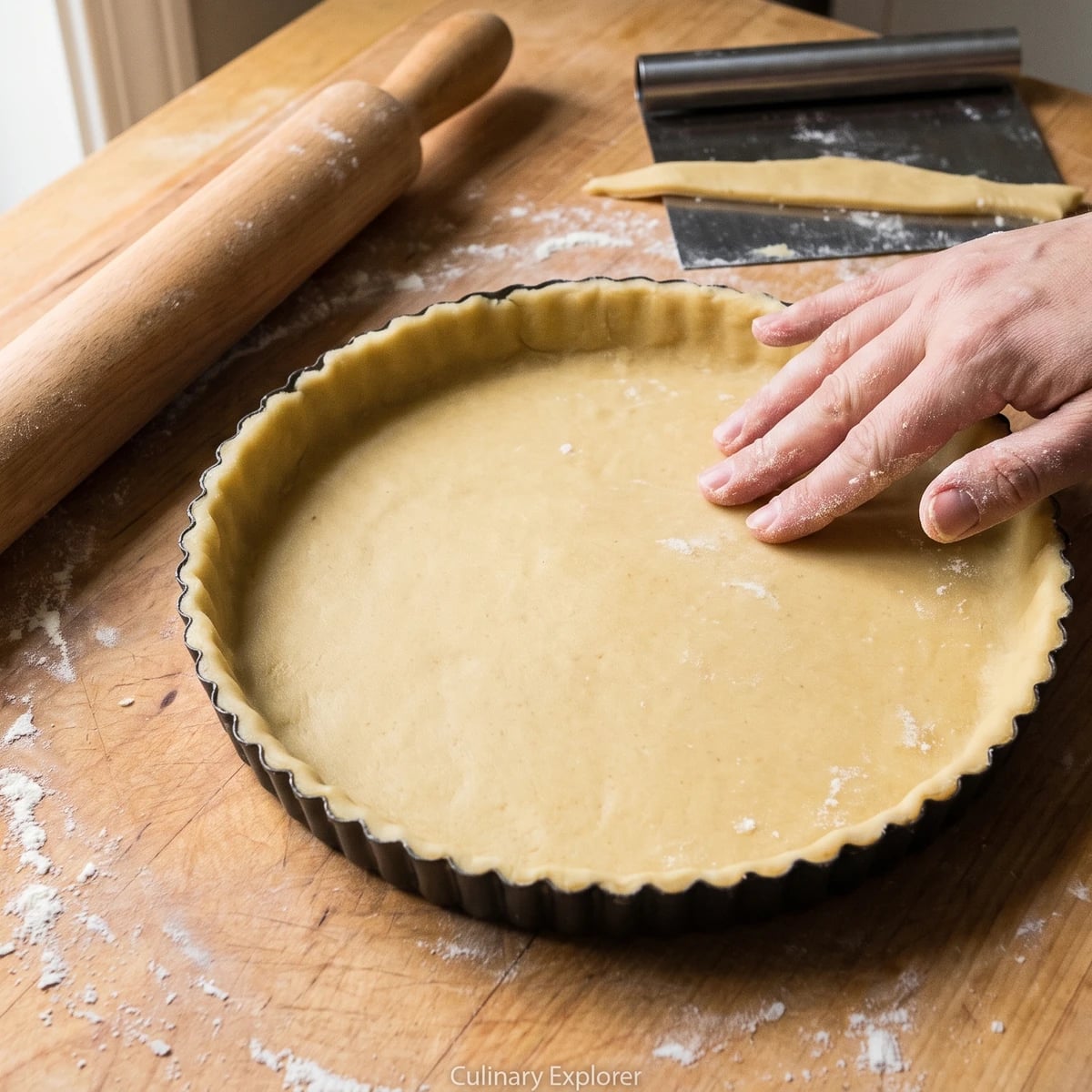
Fine, Short or Flawn Paste (For Fruit Tarts)
Created by Chef Juliette
Pâte à foncer fine begins with butter, egg, cold water, sugar, and salt, then takes its flour last. Two brief fraisages make a tender, clean-rolling fruit-tart crust without waking too much gluten.
Pâte à foncer fine (fine short paste for fruit tarts) teaches the order that keeps pastry short: butter, egg, cold water, sugar, and salt meet before the flour. Short means tender enough to part cleanly under a fork, not fragile as dust. Flour last, then stop; that is the one true thing to know before your hands touch the bowl.
The source formula assumed a broad mixing board, a one-pound mound of flour, and enough paste for several tarts in service. This version quarters every quantity for one 23 cm tart shell and uses a large bowl to contain the liquid center. The open flour well is brigade scaffolding and can go; the sequence and two brief fraisages, heel-of-hand presses that finish the mixing, are the dish and they stay.
When it is right, the dough feels cool, supple, and faintly satiny, with no dry veins and no greasy shine. It may look curdled before the flour joins and a little rough afterward, which alarms people for no reason. The moment that matters is incorporation: bring the flour in gradually, knead only until the mass holds, and let the rest do what more handling never can.
Ingredients
all-purpose flour
Quantity
¾ cup plus 3 tablespoons (225 ml / 113 g)
sifted
fine sea salt
Quantity
⅜ teaspoon (1.9 ml / 2.4 g)
powdered sugar
Quantity
1½ tablespoons (22.5 ml / 11 g)
| Ingredient | Quantity |
|---|---|
| all-purpose floursifted | ¾ cup plus 3 tablespoons (225 ml / 113 g) |
| fine sea salt | ⅜ teaspoon (1.9 ml / 2.4 g) |
| powdered sugar | 1½ tablespoons (22.5 ml / 11 g) |
Where cooking meets culture.
Culinary guides, cultural storytelling, and the editorial depth that makes cooking meaningful.
Discover Culinary Explorer