Chef Juliette
Suet Dumpling
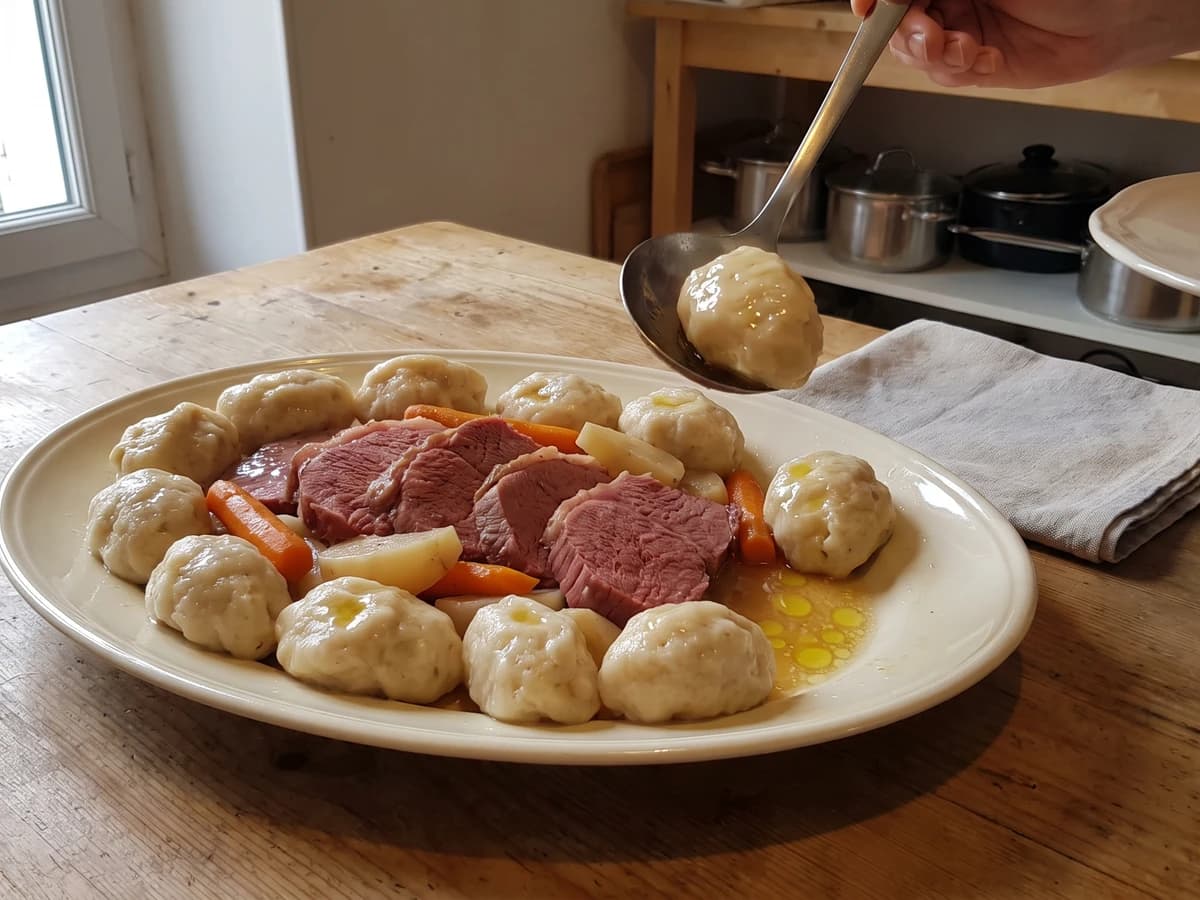
Boulettes au suif, poached beside salt beef, turn equal weights of flour and finely chopped suet into tender, rich dumplings. Keep the beef liquor at a bare tremble and the old garnish works beautifully at home.
A cooking platform built around craft, culture, and the stories behind what we eat.
Created by Chef Juliette
Based on No. 2059, Carottes Glacées pour Garnitures, from Le Guide Culinaire (1907) by Auguste Escoffier
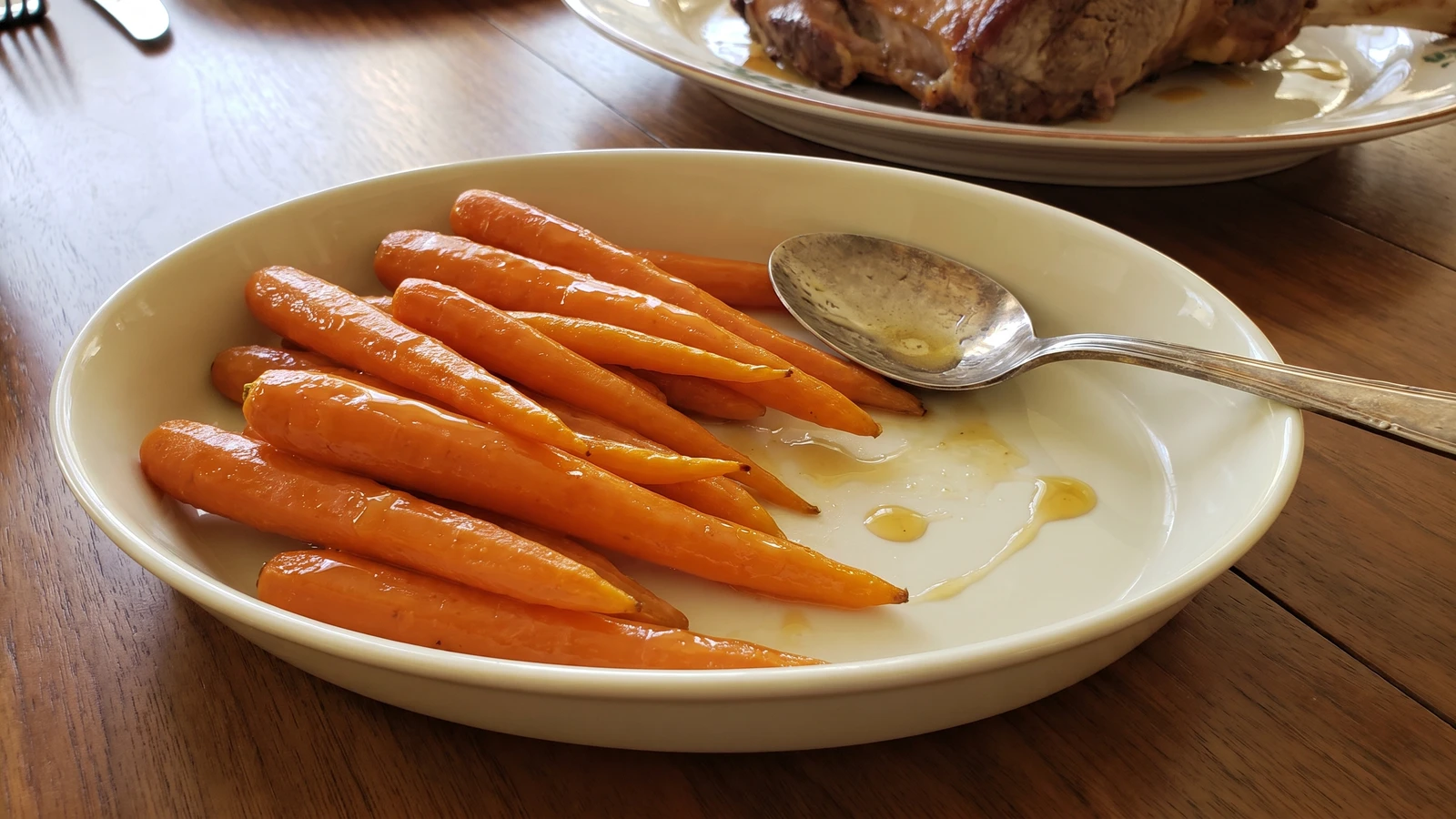
Carottes Glacées prove that a garnish can teach a whole sauce lesson: carrots cook in butter, sugar, salt, and water until their own liquor reduces to a brilliant, clinging coat.
Carottes glacées pour garnitures (glazed carrots for garnishes) teach reduction in its clearest form. The one true thing to know before you touch the pan is this: the cooking liquor is not discarded. Water, butter, sugar, salt, and the carrots' own sweetness reduce together until nothing remains but a clear, brilliant coat.
The source assumed a brigade hand for tournage (turning each carrot into a neat tapered shape) and a saucier free to watch the final spoonful of liquid. At home, a paring knife and one snug sauté pan do the work. Unlike many brigade garnitures, this preparation needs neither a stock never off the fire nor a salamander. The seven-sided tournage is presentation scaffolding and may go; equal sizing and the final reduction are the dish and must stay. The pint-based proportions have been scaled to four servings without changing their balance. One cook, one stove, one evening.
When they are ready, the carrots are tender but intact, vivid orange, and glossy enough to catch the light. Stay beside the pan when the bubbles become slow and syrupy. That final minute decides the glaze.
Carottes glacées pour garnitures belong to the classical French garniture repertoire, particularly the grand Parisian kitchen and the tables of cuisine bourgeoise, where vegetables were cooked separately so each reached the platter at its proper point. The grand kitchen made their shapes uniform and arranged them around roasts, while the home table kept the same economical one-pan method. Glacées here means coated in their reduced cooking liquor, not candied, caramelized, or covered with a separate sauce.
Quantity
About 5 cups (1.2 L / 680 g)
scrubbed or peeled, trimmed, then left whole or halved or quartered lengthwise to equal thickness
Quantity
2⅓ cups plus 1 tablespoon (570 ml / 570 g)
Quantity
2⅓ teaspoons (12 ml / 14 g)
Quantity
2 tablespoons plus 1 teaspoon (35 ml / 28 g)
Quantity
4 tablespoons (60 ml / 57 g)
| Ingredient | Quantity |
|---|---|
| young slender carrotsscrubbed or peeled, trimmed, then left whole or halved or quartered lengthwise to equal thickness | About 5 cups (1.2 L / 680 g) |
| water | 2⅓ cups plus 1 tablespoon (570 ml / 570 g) |
| fine sea salt | 2⅓ teaspoons (12 ml / 14 g) |
| granulated sugar | 2 tablespoons plus 1 teaspoon (35 ml / 28 g) |
| unsalted butter | 4 tablespoons (60 ml / 57 g) |
Keep very slender carrots whole. Halve or quarter thicker ones lengthwise, then trim the pieces into even tapered shapes so they cook at the same rate. A full seven-sided tournage is handsome but unnecessary at home; uniform thickness matters more than perfect geometry.
Arrange the carrots snugly in a single layer in a 10-inch (25 cm) sauté pan or wide saucepan. Add the measured water, salt, sugar, and butter. The water should cover the carrots well; if it does not, use a slightly smaller pan rather than diluting the carefully scaled proportions. Bring just to a boil, then lower the heat to a steady uncovered simmer.
Cook uncovered for 20 to 30 minutes, rolling the carrots gently from time to time, until a knife enters with little resistance and the liquid has almost entirely evaporated. Watch the two clocks, tenderness and reduction. If the carrots become tender first, lift them out and reduce the liquor alone before returning them; if the pan dries while they are still firm, add hot water a tablespoon at a time. Ça se rattrape.
When only 2 to 3 tablespoons of liquid remain and the bubbles look broad, clear, and syrupy, raise the heat to medium. Sauté the carrots, tossing or rolling them through the reduction for 1 to 2 minutes, until every surface wears a brilliant butter sheen. Do not wait for caramel colour. If the glaze separates into greasy puddles, take the pan off the heat, add 1 teaspoon of hot water, and swirl briskly until it comes together again.
Transfer the carrots to a warmed serving dish or arrange them beside the roast they are garnishing. Spoon every drop of glaze over them and serve promptly, while the coating is fluid and bright. They need no herb confetti and no second sauce. À table!
1 serving (about 190g)
Culinary guides, cultural storytelling, and the editorial depth that makes cooking meaningful.
Discover Culinary ExplorerChef Juliette
Boulettes au suif, poached beside salt beef, turn equal weights of flour and finely chopped suet into tender, rich dumplings. Keep the beef liquor at a bare tremble and the old garnish works beautifully at home.

Chef Juliette
Bread, flour, frangipane, and rice become four cool, supple panades for binding forcemeats, each changing body and flavor while preserving tenderness. The finest Mousselines need none, and knowing that distinction is the lesson.

Chef Juliette
Panade au pain is bread, milk, salt, heat, and attention: stir until the paste releases cleanly, butter it against a skin, and you have the quiet binder behind tender French farces.

Chef Juliette
Panade de farine teaches the drying stroke behind pâte à choux: flour meets boiling buttered water, then stays over the fire until the paste gathers, smooths, and quits the pan cleanly.