
Chef Juliette
Flan aux Carottes
A pale short-paste shell holds silken, lightly sweet carrot purée beneath neat glazed half-discs, their butter syrup catching the light: a classical tart poised between vegetable course and sweet.
A cooking platform built around craft, culture, and the stories behind what we eat.
Created by Chef Juliette
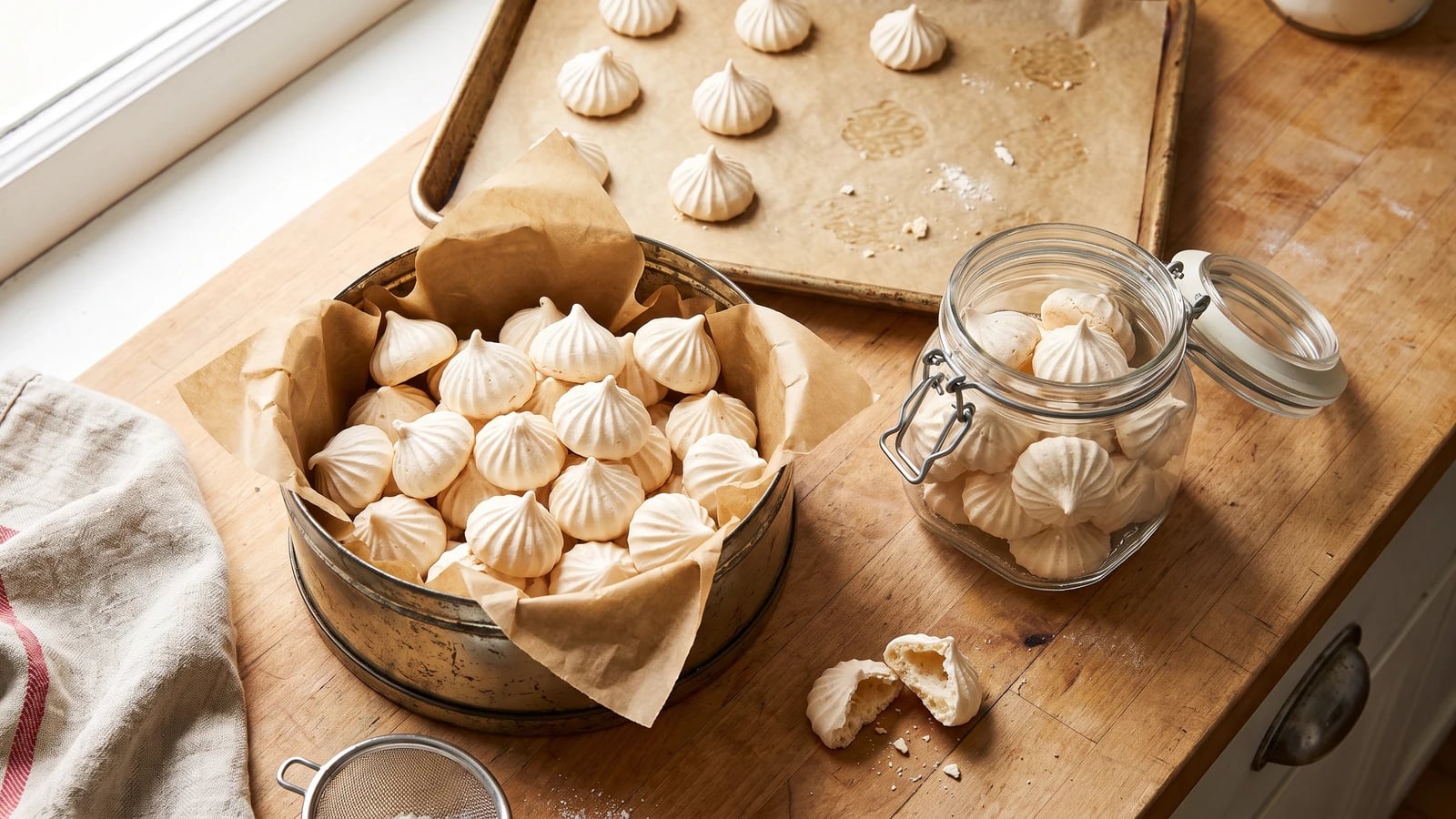
Based on No. 2382, Ordinary Meringue, from Le Guide Culinaire (1907) by Auguste Escoffier
Meringue ordinaire turns two ingredients into crisp, pale kisses: beat the whites as stiff as they will go, then shower and fold the sugar without stirring away the lift.
Meringue ordinaire (ordinary meringue) teaches the cleanest law of pâtisserie: air is an ingredient. Before you touch the bowl, know this one true thing. Beat the whites fully first, then sprinkle and fold the powdered sugar. Stir it in and you press out the very thing you worked to build.
The source entry stops at the bowl because a pastry brigade already knew where the mixture was going, and eight whites made sense on a service bench. For one home cook, the batch is halved to four whites while the exact proportion of two ounces of sugar per white stays in place. An electric mixer replaces the balloon-whisk labor, and parchment with the lowest steady heat of a domestic oven turns the mixture into small cookies. The large batch and unwritten shaping routine were brigade scaffolding. The fully whipped whites and the sprinkle-and-fold sequence are the dish, and they do not move. One cook, one stove, one evening.
The finished meringues should be pale and dry, with thin crisp shells and airy centers that dissolve under the teeth. The decisive moment comes before the oven: shower the sugar over the surface in small additions, then fold only until each disappears.
Across France, meringue ordinaire belongs to the shared pâtisserie repertoire rather than any one regional larder; the same cold-whipped family is now commonly called meringue française. Ordinaire never meant inferior: it distinguished whites whipped without heat from meringue suisse, warmed over water, and meringue italienne, set with cooked sugar syrup. From pastry workrooms it passed naturally into household ovens, where it turned whites left from yolk-rich creams and custards into dry confections that kept well.
Quantity
4, about ½ cup (120 ml / 120 g)
at room temperature
Quantity
1¾ cups plus 2 tablespoons (450 ml / 227 g)
sifted
| Ingredient | Quantity |
|---|---|
| large egg whitesat room temperature | 4, about ½ cup (120 ml / 120 g) |
| powdered sugar (confectioners' or icing sugar)sifted | 1¾ cups plus 2 tablespoons (450 ml / 227 g) |
Heat the oven to 100°C / 210°F, or 90°C / 195°F with convection. Line two light-colored baking sheets with parchment. Separate each cold egg over a small cup before transferring the clean white to the mixing bowl, so one broken yolk cannot spoil the entire batch. Let the whites stand for about 20 minutes while the oven settles. The bowl and whisk must be completely clean and dry, because even a trace of grease prevents the whites from reaching their full volume.
Whisk the whites at medium speed until evenly foamy, then increase to medium-high and continue until they are as stiff as they will go without becoming dry or clumpy, about 5 to 8 minutes. Lift the whisk. The peak should stand straight, and the mass should remain in place when the bowl is gently tilted. Stop there. Whites that look rough and cottony have gone too far and will resist the sugar.
Sift the powdered sugar again if it has gathered any lumps. Sprinkle one-sixth of it in a light, even shower over the whites. With a large flexible spatula, cut down through the center, sweep across the bottom, lift the mixture over itself, and turn the bowl. Repeat only until the visible sugar disappears, then add the next shower. Do not beat, mash, or stir. The mixture should remain high and hold a rounded mound when the spatula lifts.
Immediately spoon or pipe the mixture into mounds about 4 cm wide, leaving 2.5 cm between them. Two teaspoons make honest little peaks; a piping bag fitted with a 1.5 cm plain or star tip gives a tidier shape. Transfer the mixture gently and never pack the bag tightly, since pressure pushes out the air you have preserved.
Bake for 1 hour and 30 minutes, rotating the trays after 45 minutes if the oven colors unevenly. The meringues are ready when they lift cleanly from the parchment and a test piece breaks open dry rather than sticky. If the centers remain tacky, continue in 15-minute intervals. If the peaks begin to color, reduce the oven to 90°C / 195°F; meringue ordinaire should remain pale.
Turn off the oven, prop the door open by about 2 cm, and leave the meringues inside for 1 hour so the remaining moisture can escape gradually. Cool them completely before packing them into an airtight tin or jar. Serve them plain with coffee, crumble them over fruit and cream, or pass the tin around the table. À table!
1 serving (about 9g)
Culinary guides, cultural storytelling, and the editorial depth that makes cooking meaningful.
Discover Culinary ExplorerChef Juliette
A pale short-paste shell holds silken, lightly sweet carrot purée beneath neat glazed half-discs, their butter syrup catching the light: a classical tart poised between vegetable course and sweet.
Chef Juliette
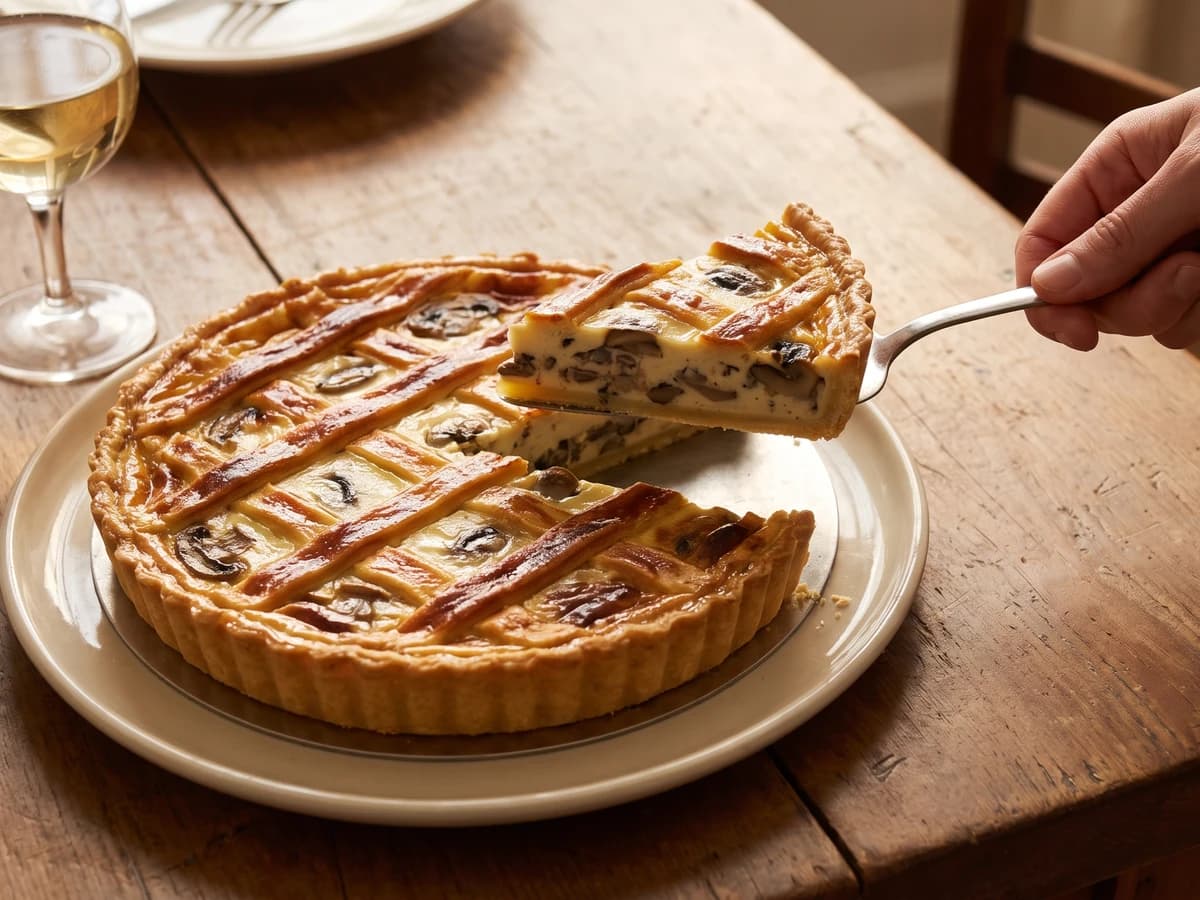
A hot mushroom flan under a butter-gold lattice, with cream reduced close around barely opened caps and a crisp short-paste base protected by one discipline: cool the filling completely.

Chef Juliette
Four little mushroom flans, latticed and gilded, baked hard and fast until butter-gold: a classical garnish scaled to the meat it accompanies and served before its crispness has time to fade.
Chef Juliette
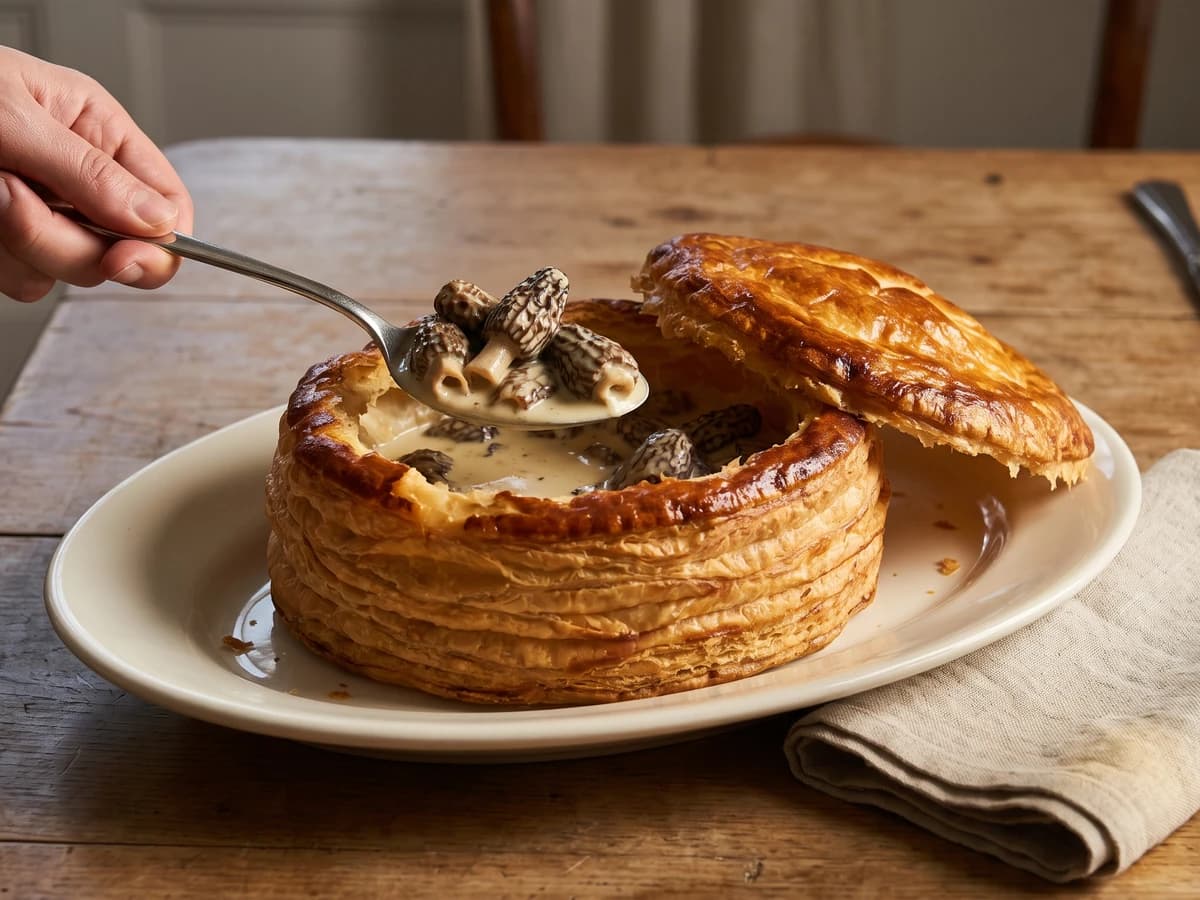
Morels surrender their liquor, then take it back as a glossy cream-and-butter sauce inside burnished puff pastry. The lesson is simple and absolute: reduce with patience, then heat gently and never boil.