Chef Juliette
Ordinary or White Consommé
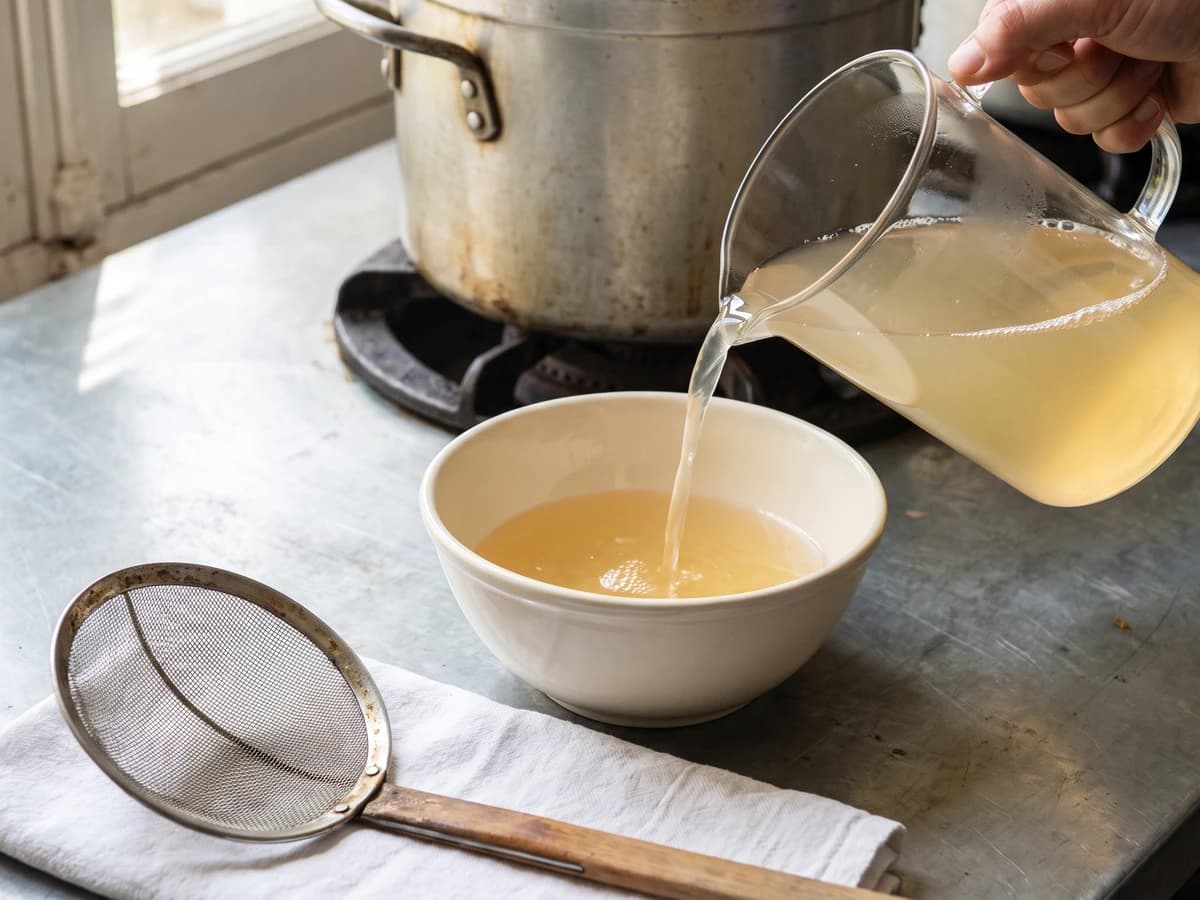
Beef shin, lean beef, and fowl begin in cold water and rise slowly toward a tremble. Skim before the boil, and you learn the quiet discipline that gives every clear French broth its backbone.
A cooking platform built around craft, culture, and the stories behind what we eat.
Created by Chef Juliette
Based on No. 2569, Nectarines, from Le Guide Culinaire (1907) by Auguste Escoffier
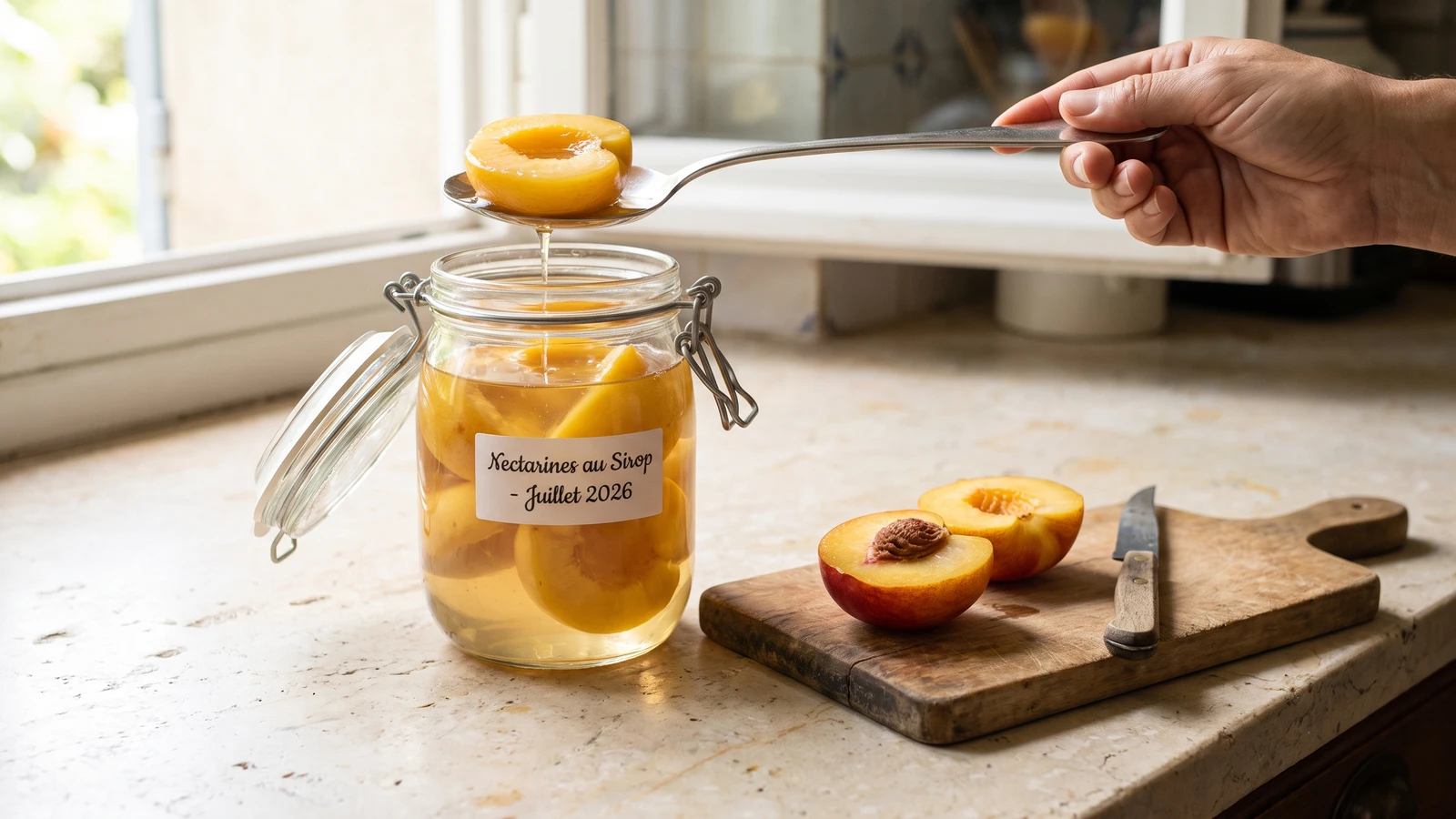
Nectarines au Sirop proves the peach method needs no amendment: peel, poach gently, and preserve ripe fruit in a light syrup while its golden flesh still holds.
Nectarines au Sirop teaches the quiet discipline of preserving fruit at the edge of ripeness: the syrup supports, but the fruit must still stand on its own. The one true thing to know before touching a pan is simple. Choose yellow-fleshed nectarines that smell ripe yet remain firm at the shoulder. Soft fruit will taste lovely, but after poaching and processing it belongs in compote, not in a jar of clean halves.
The source entry gives nectarines no separate formula. It assumes the cook can turn to the complete peach repertoire and use every method unchanged, which is exactly the right instruction: a nectarine is a peach without fuzz, and it peels and poaches the same way while holding slightly firmer. For one cook, the honest home equivalent is one peach preparation, au sirop, reduced to four 500 ml jars in an ordinary deep pot. The brigade catalogue is scaffolding; the unchanged peach technique is the dish. One cook, one stove, one evening.
Nothing is improved by cooking the fruit to tenderness before it is sealed. Bring it only to the point where a knife meets a little resistance, then let the water bath finish the work. That restraint decides the batch.
The real home of Nectarines au Sirop is the household preserving pantry of the Rhône valley and Roussillon, where stone fruit moves from market crate to preserving pan before it softens. The classical repertory gives the nectarine no formula of its own and directs the cook to peach preparations, because the smooth skin is a botanical variation, not a different fruit. From orchard household to pâtisserie pantry, fruit held in syrup became a ready garnish for compotes, tarts, and chilled desserts.
Quantity
12 to 14 (about 4½ lb / 2 kg)
firm-ripe and washed
Quantity
4 cups (950 ml / 950 g)
Quantity
1½ cups (355 ml / 300 g)
| Ingredient | Quantity |
|---|---|
| medium yellow-fleshed nectarinesfirm-ripe and washed | 12 to 14 (about 4½ lb / 2 kg) |
| water | 4 cups (950 ml / 950 g) |
| granulated sugar | 1½ cups (355 ml / 300 g) |
Wash four 500 ml canning jars, their bands, and the lids. Prepare the lids as their maker directs. Set the jars upright on a rack in a deep canning pot, cover them with water, and hold them hot at about 180°F (82°C) while you prepare the fruit. The jars need to be clean and hot so they neither crack nor cool the filled syrup.
Combine the water and sugar in a wide stainless-steel saucepan. Bring them gently to a simmer, stirring only until the sugar dissolves, then simmer for 5 minutes. The syrup should be clear and fluid, not reduced or sticky; its work is to carry the nectarine flavour, not smother it.
Bring a separate pot of water to a boil and prepare a large bowl of ice water. Cut a shallow cross at the blossom end of four nectarines, lower them into the boiling water for 30 to 60 seconds, then transfer them to the ice water. Slip off the skins, halve the fruit, and remove the stones. If a skin clings, return that nectarine to the hot water for another 15 seconds; do not pare away good flesh in frustration. Quarter clingstone fruit if clean halves won't release.
Bring the syrup back to a gentle boil and add the peeled fruit in batches. Return it to a simmer and poach each batch for 3 to 5 minutes, turning once, until the flesh is heated through but a small knife still meets resistance. Nectarines generally hold a little firmer than peaches, but don't test their patience. If one piece softens and begins to collapse, lift it out and refrigerate it for compote; continue preserving only the firm pieces.
Lift one hot jar from the canner and drain it. Pack the hot nectarine halves cavity-side down, arranging them snugly without crushing them. Ladle in the hot syrup, leaving ½ inch (1.25 cm) headspace. Slide a clean nonmetallic utensil around the inside to release trapped air, adjust the headspace, and wipe the rim clean. Centre the lid and tighten the band only until fingertip-snug. Repeat with the remaining jars.
Lower the filled jars onto the canner rack. The water should cover their lids by at least 1 inch (2.5 cm). Cover the pot, return the water to a full boil, and begin timing only then. Process 500 ml jars for 20 minutes at elevations from sea level to 1,000 feet (305 metres), 25 minutes from 1,001 to 3,000 feet (305 to 915 metres), 30 minutes from 3,001 to 6,000 feet (915 to 1,830 metres), or 35 minutes above 6,000 feet (1,830 metres). Keep the water boiling throughout.
Turn off the heat, remove the canner lid, and wait 5 minutes before lifting out the jars. Set them upright on a towel with space between them and leave them undisturbed for 12 to 24 hours. Check that each lid is concave and does not flex when pressed, then remove the bands, label the jars, and store them somewhere cool and dark. If a jar has not sealed, ça se rattrape: refrigerate it at once and eat the fruit within 7 days.
1 serving (about 500g)
Culinary guides, cultural storytelling, and the editorial depth that makes cooking meaningful.
Discover Culinary ExplorerChef Juliette
Beef shin, lean beef, and fowl begin in cold water and rise slowly toward a tremble. Skim before the boil, and you learn the quiet discipline that gives every clear French broth its backbone.
Chef Juliette
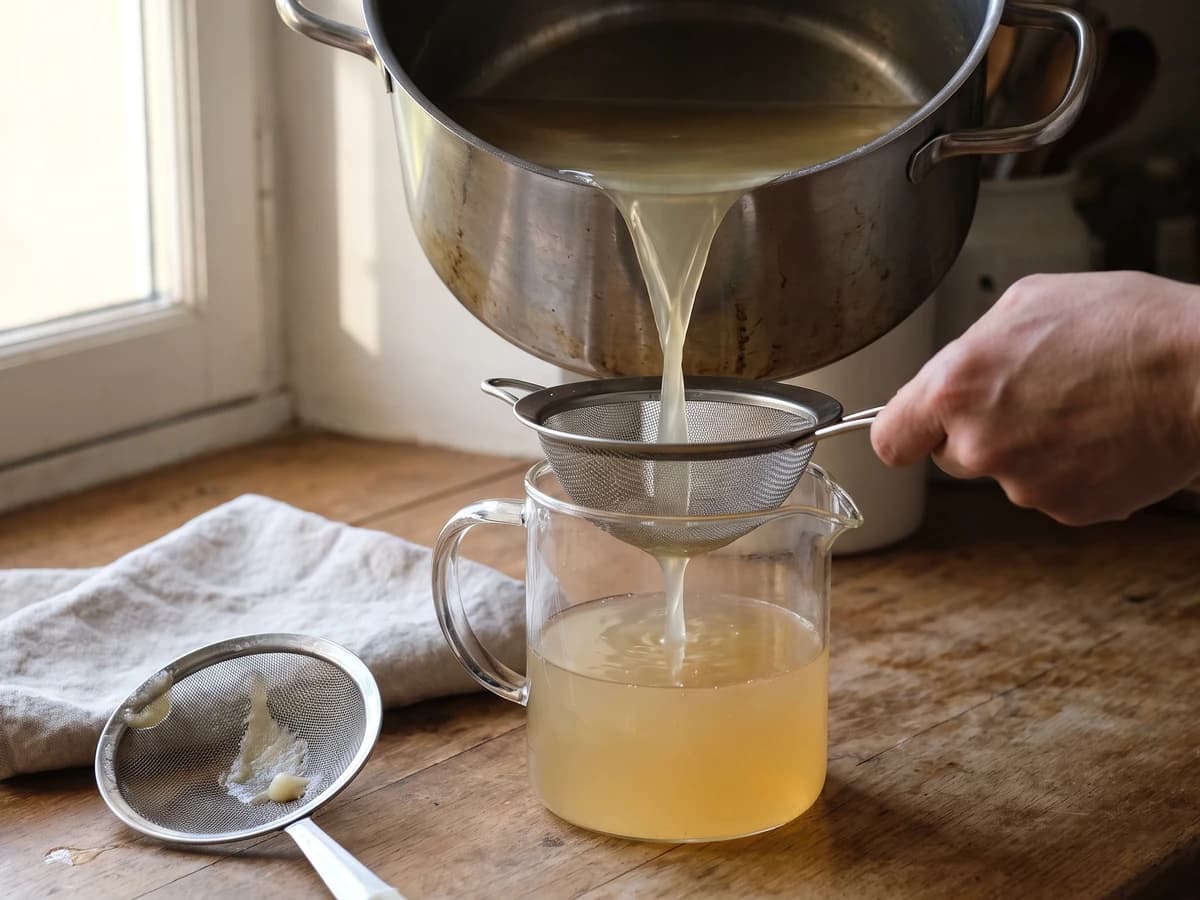
Break the veal bones small, then give them eight hours at a bare tremble. This pale, gelatinous fond becomes the quiet foundation beneath velouté, blanquette, and every sauce that must stay light.
Chef Juliette
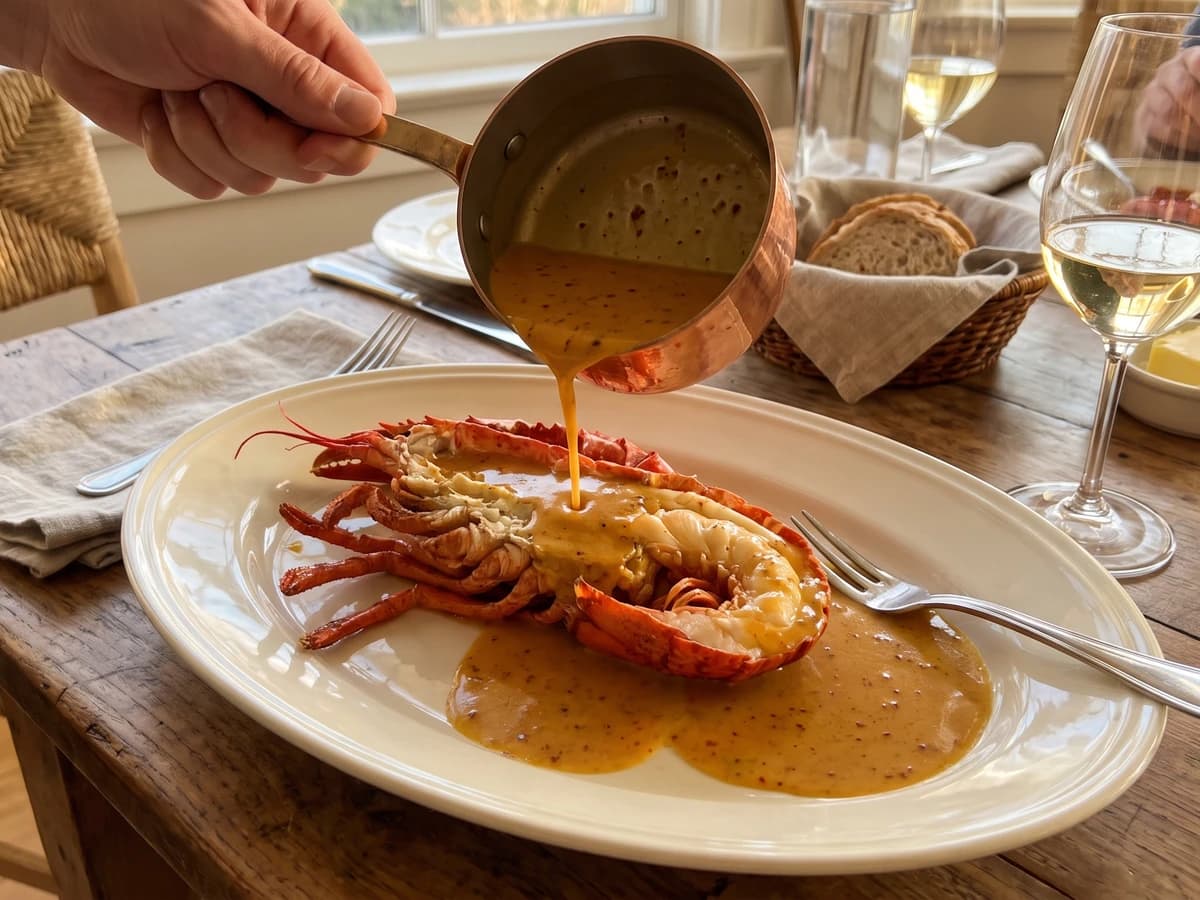
Sauce Orientale concentrates lobster-rich American Sauce with curry, then folds in cream away from the fire: a glossy, gently spiced derivative made for lobster, crayfish, and firm fish.
Chef Juliette
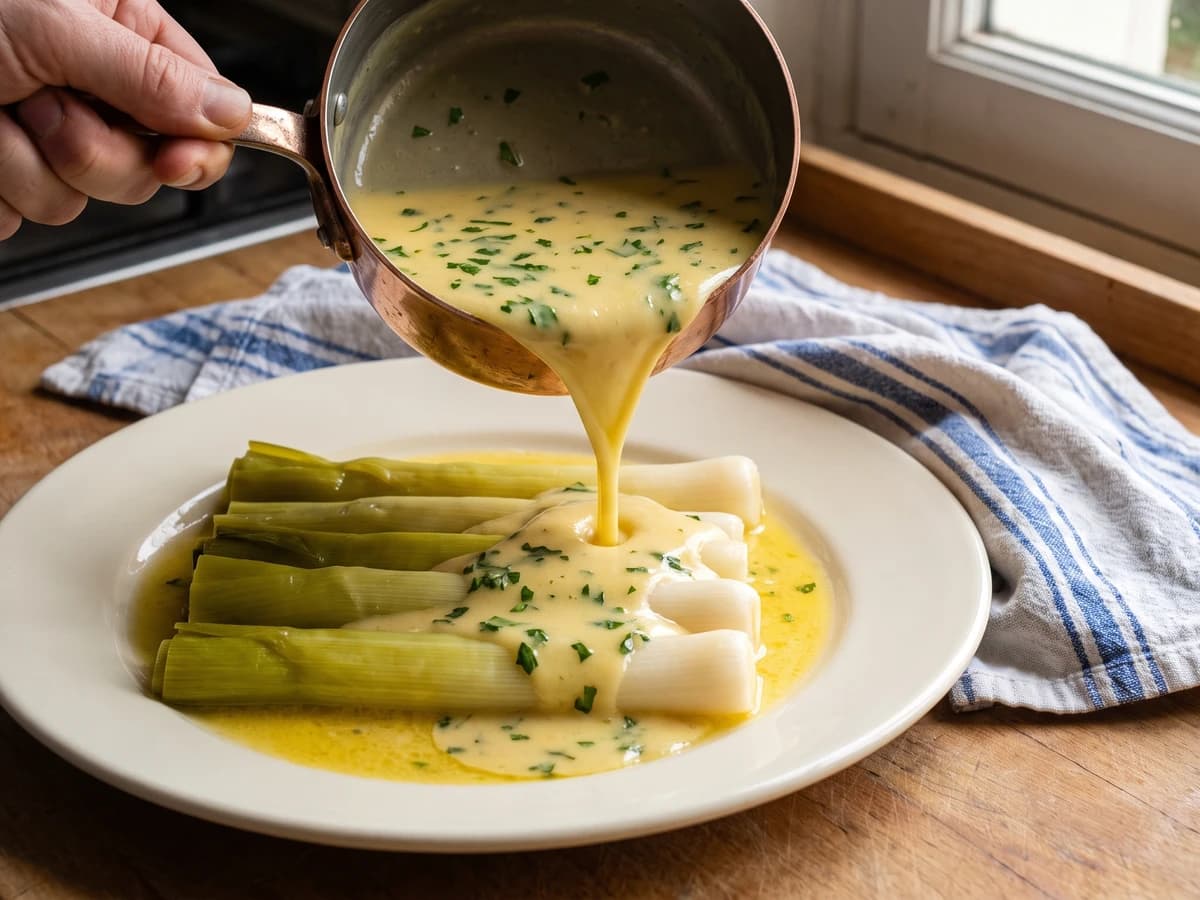
An old lesson in sauce families: Sauce Allemande takes mushroom liquor, then butter, lemon, and parsley, becoming a glossy Poulette for sheep's trotters, leeks, cauliflower, and anything needing gentle richness with a bright edge.