
Chef Juliette
Flan aux Carottes
A pale short-paste shell holds silken, lightly sweet carrot purée beneath neat glazed half-discs, their butter syrup catching the light: a classical tart poised between vegetable course and sweet.
A cooking platform built around craft, culture, and the stories behind what we eat.
Created by Chef Juliette
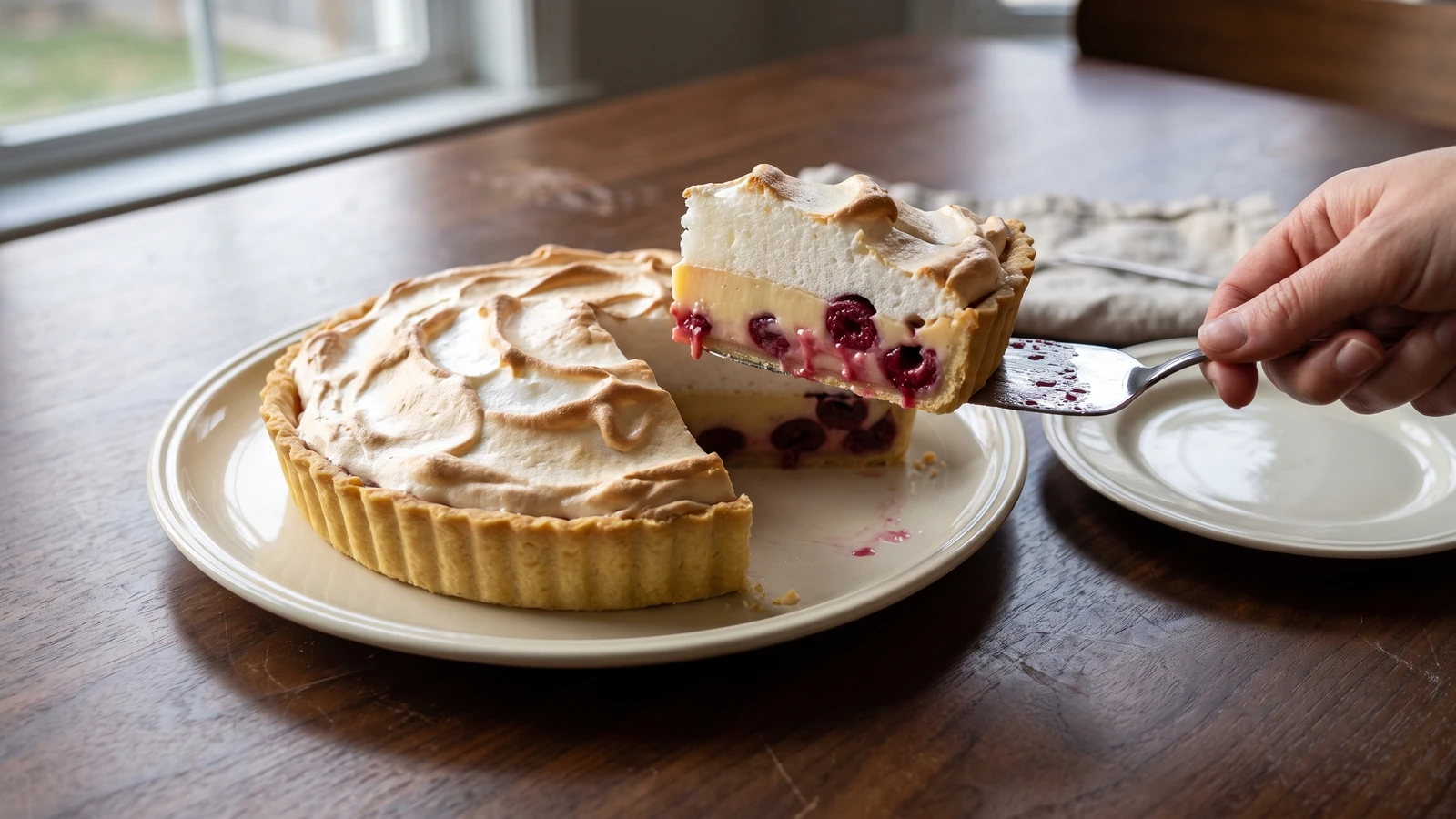
Based on No. 2568, Meringued Cherry Flawn, from Le Guide Culinaire (1907) by Auguste Escoffier
Fine pastry, cherries, soft vanilla custard, and a cloud of meringue meet in one generous flawn, baked in the old sequence and scaled for one cook at a home table.
Flan meringué aux cerises (meringued cherry flawn) teaches the discipline of layers: fine pastry stays crisp beneath cherries and softly set custard, while the meringue waits until the tart is baked. Know one true thing before touching a pan. Prick every inch of the pastry base. Leave a pocket of air and the bottom lifts, then custard slips underneath and steals the crisp foundation.
The formula assumed separate pastry hands supplying pâte fine (fine pastry), Crème Anglaise (No. 2397), and Ordinary Meringue (No. 2382), a loose flawn ring, and a salamander that could bronze the top in moments. Your honest equivalents are a 23 cm removable ring on a heavy sheet and a closely watched home broiler. The separate hands are brigade scaffolding and can go; the sequence is the dish and stays untouched: dock, cherries, custard, bake, unmold, meringue. The quantities here make one generous tart. One cook, one stove, one evening.
When it is right, the shell cuts cleanly, the cherries stain the pale custard ruby at their edges, and the meringue rises above them in toasted ivory folds. Give the docking your full attention before the cherries go in. It is the step that keeps every layer where it belongs.
Meringue-coated fruit flans belong to Parisian pâtisserie and the formal entremets table, where an open custard tart could be returned to fierce top heat beneath a sweet white cap and carried whole to the dining room. The word flawn is an English rendering of the French flan, but this preparation is a pastry-shell flan rather than a crustless baked custard. Cherries suit the method because they cook with the shell; strawberries and grapes were excluded from this family because their ordinary flans received the fruit only after baking.
Quantity
1⅔ cups (400 ml / 200 g)
Quantity
⅓ cup (80 ml / 40 g)
Quantity
¼ teaspoon (1.25 ml / 1.5 g)
Quantity
7 tablespoons (105 ml / 100 g)
cut into small cubes
Quantity
1
Quantity
1 to 2 tablespoons (15 to 30 ml / 15 to 30 g)
Quantity
2 teaspoons (10 ml / 10 g)
for the ring
Quantity
2¾ cups (660 ml / 450 g)
stoned and dried well
Quantity
1¼ cups (300 ml / 300 g) Crème Anglaise (No. 2397)
prepared according to its linked entry in the form intended for baking
Quantity
3 cups (720 ml / 260 g) Ordinary Meringue (No. 2382)
freshly prepared according to its linked entry
| Ingredient | Quantity |
|---|---|
| all-purpose flour | 1⅔ cups (400 ml / 200 g) |
| confectioners' sugar | ⅓ cup (80 ml / 40 g) |
| fine sea salt | ¼ teaspoon (1.25 ml / 1.5 g) |
| cold unsalted buttercut into small cubes | 7 tablespoons (105 ml / 100 g) |
| large egg yolk | 1 |
| ice water | 1 to 2 tablespoons (15 to 30 ml / 15 to 30 g) |
| softened unsalted butterfor the ring | 2 teaspoons (10 ml / 10 g) |
| fresh cherriesstoned and dried well | 2¾ cups (660 ml / 450 g) |
| Crème Anglaiseprepared according to its linked entry in the form intended for baking | 1¼ cups (300 ml / 300 g) Crème Anglaise (No. 2397) |
| Ordinary Meringuefreshly prepared according to its linked entry | 3 cups (720 ml / 260 g) Ordinary Meringue (No. 2382) |
Mix the flour, confectioners' sugar, and salt. Rub in the cold butter with your fingertips until the mixture resembles coarse crumbs with no large pieces remaining. Add the yolk and 1 tablespoon of ice water, then press the crumbs together without kneading. If dry flour remains, add the second spoonful of water a teaspoon at a time. Flatten the dough into a disc, wrap it, and chill for 45 minutes. Rest makes the pastry tender and keeps it from drawing back in the oven.
Heat the oven to 190°C / 375°F. Butter a 23 cm by 3 cm removable tart ring and set it on a parchment-lined heavy baking sheet. Roll the pâte fine about 3 mm thick, line the ring without stretching it, and press the dough firmly into the bottom corner. Leave the rim slightly proud, then prick the entire base at 1 cm intervals with a fork. These small holes release trapped air before it can lift the crust. If you find a tear or thin place, press on a scrap of dough and dock around it. Ça se rattrape. Chill the lined ring for 15 minutes.
Check the stoned cherries carefully for any missed pits, then blot them until their cut surfaces are dry. Arrange them closely across the chilled pastry in a single layer. Do not macerate or sweeten them first. Loose cherry syrup would thin the custard before it has time to set.
Give the Crème Anglaise (No. 2397) one gentle stir, without beating air into it, and pour it slowly between the cherries. Stop about 5 mm below the pastry rim. If the custard starts escaping through a tear, stop pouring, spoon back enough filling to expose the damage, patch it with a scrap of chilled dough, and refill carefully.
Bake for 15 minutes at 190°C / 375°F, then reduce the oven to 175°C / 350°F and continue for 25 to 30 minutes. The pastry rim should be deep gold, the cherries tender, and the custard set around the edges while the centre gives a small, unified quiver. It must not slosh. If the pastry colors before the custard sets, cover only the rim with narrow strips of foil. If the custard begins to dome, lower the heat by 15°C / 25°F; a slight swelling will settle as it rests.
Let the baked flawn stand on its sheet for 3 minutes, then pass a slim knife around the inside of the ring and lift the ring straight upward. Work while the tart is still warm, but do not tug at the pastry. Leave the flawn on the baking sheet for its meringue finish.
Increase the oven to 200°C / 400°F. Spread the Ordinary Meringue (No. 2382) over the warm flawn, carrying it fully to the pastry edge so the cap is anchored all around. Shape broad folds with the back of a spoon; piping belongs to brigade presentation and contributes nothing to the eating. If cherry juice has pooled on top, lift it away first, then spread a thin anchoring layer of meringue before adding the rest. Bake for 7 to 9 minutes, until the surface is set and its highest folds are pale gold.
If the meringue needs more color, set the sheet about 15 cm below a hot broiler for 20 to 60 seconds, turning it as the tips deepen to hazelnut brown. Do not look away. Cool the flawn for at least 45 minutes so the custard can settle, then slide it onto a low serving plate. Cut with a thin knife wiped between slices and serve cool or barely warm. À table!
1 serving (about 160g)
Culinary guides, cultural storytelling, and the editorial depth that makes cooking meaningful.
Discover Culinary ExplorerChef Juliette
A pale short-paste shell holds silken, lightly sweet carrot purée beneath neat glazed half-discs, their butter syrup catching the light: a classical tart poised between vegetable course and sweet.
Chef Juliette
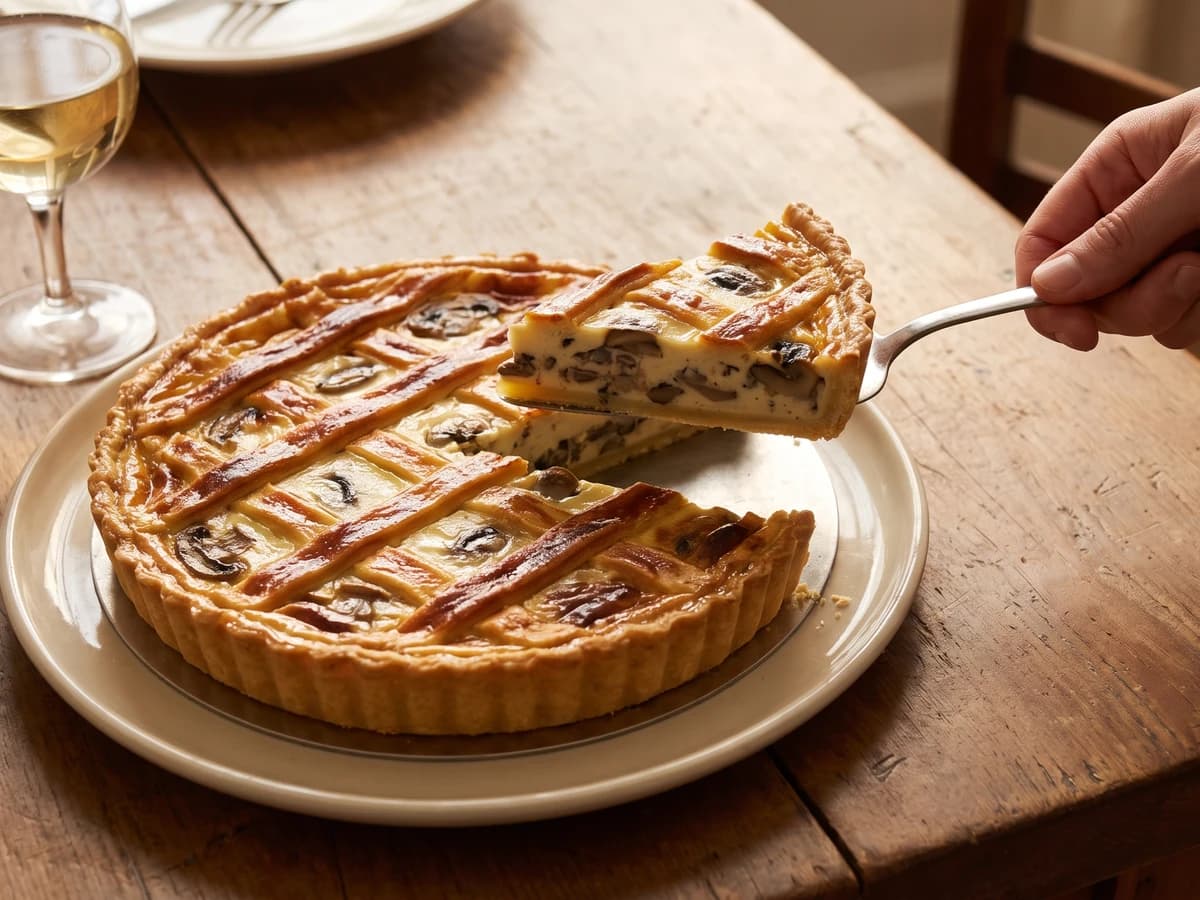
A hot mushroom flan under a butter-gold lattice, with cream reduced close around barely opened caps and a crisp short-paste base protected by one discipline: cool the filling completely.

Chef Juliette
Four little mushroom flans, latticed and gilded, baked hard and fast until butter-gold: a classical garnish scaled to the meat it accompanies and served before its crispness has time to fade.
Chef Juliette
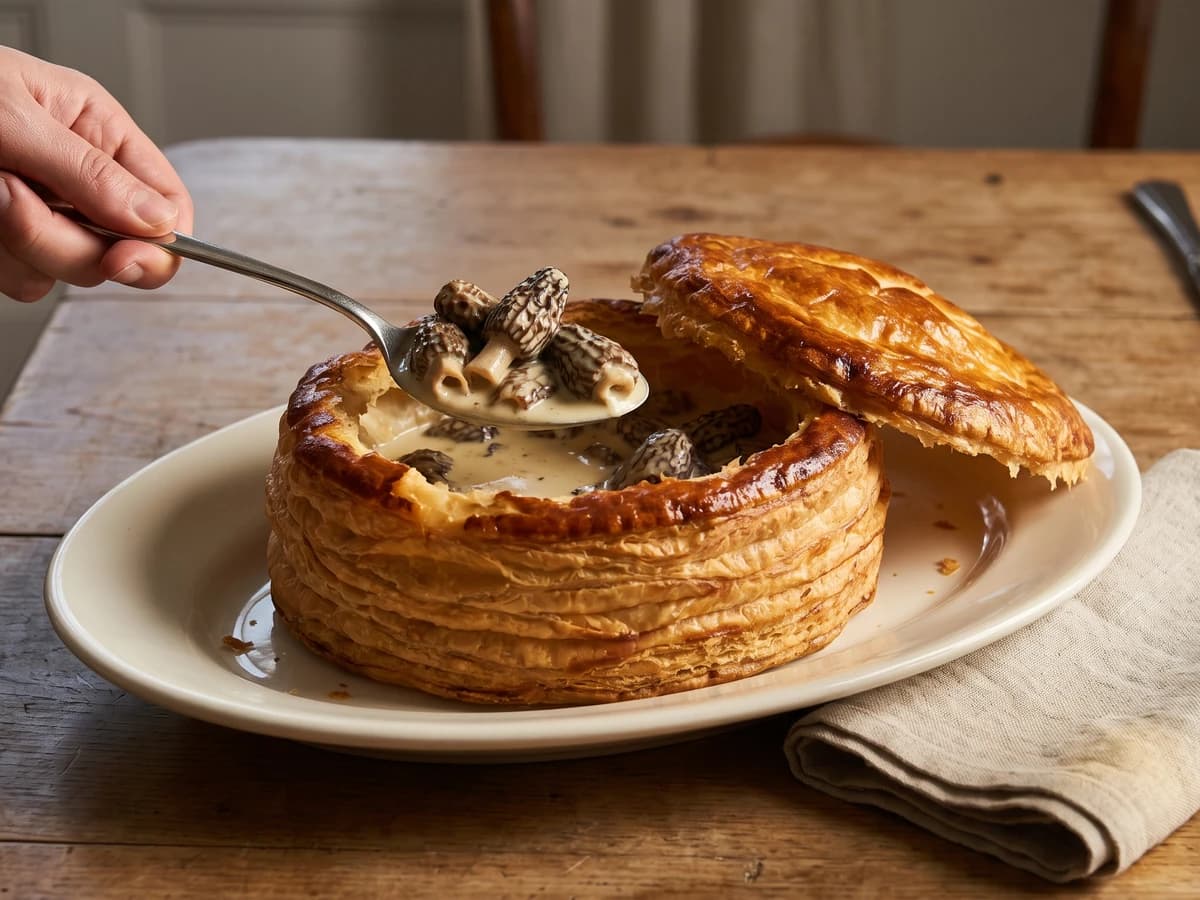
Morels surrender their liquor, then take it back as a glossy cream-and-butter sauce inside burnished puff pastry. The lesson is simple and absolute: reduce with patience, then heat gently and never boil.