Chef Juliette
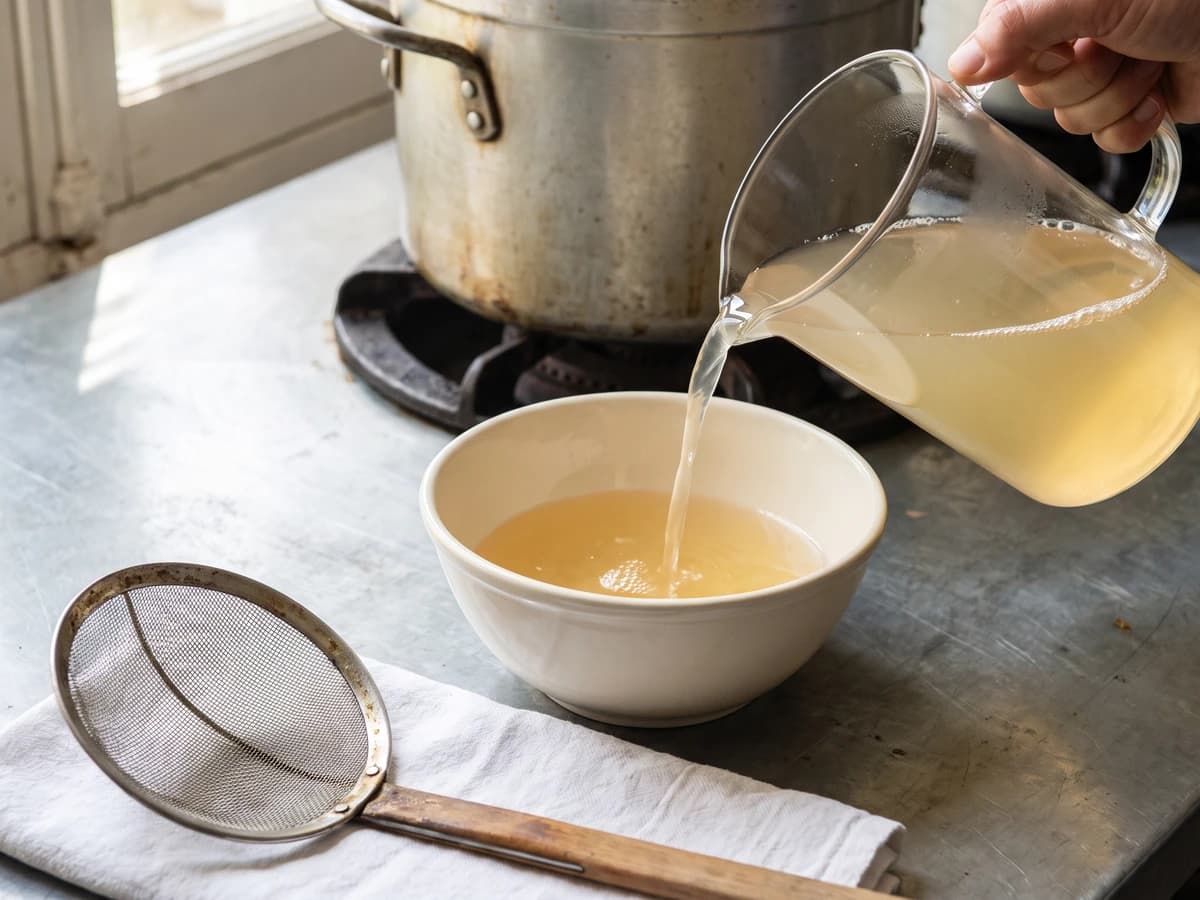
Ordinary or White Consommé
Beef shin, lean beef, and fowl begin in cold water and rise slowly toward a tremble. Skim before the boil, and you learn the quiet discipline that gives every clear French broth its backbone.
A cooking platform built around craft, culture, and the stories behind what we eat.
Created by Chef Juliette
Based on No. 2397, Crème Anglaise, from Le Guide Culinaire (1907) by Auguste Escoffier
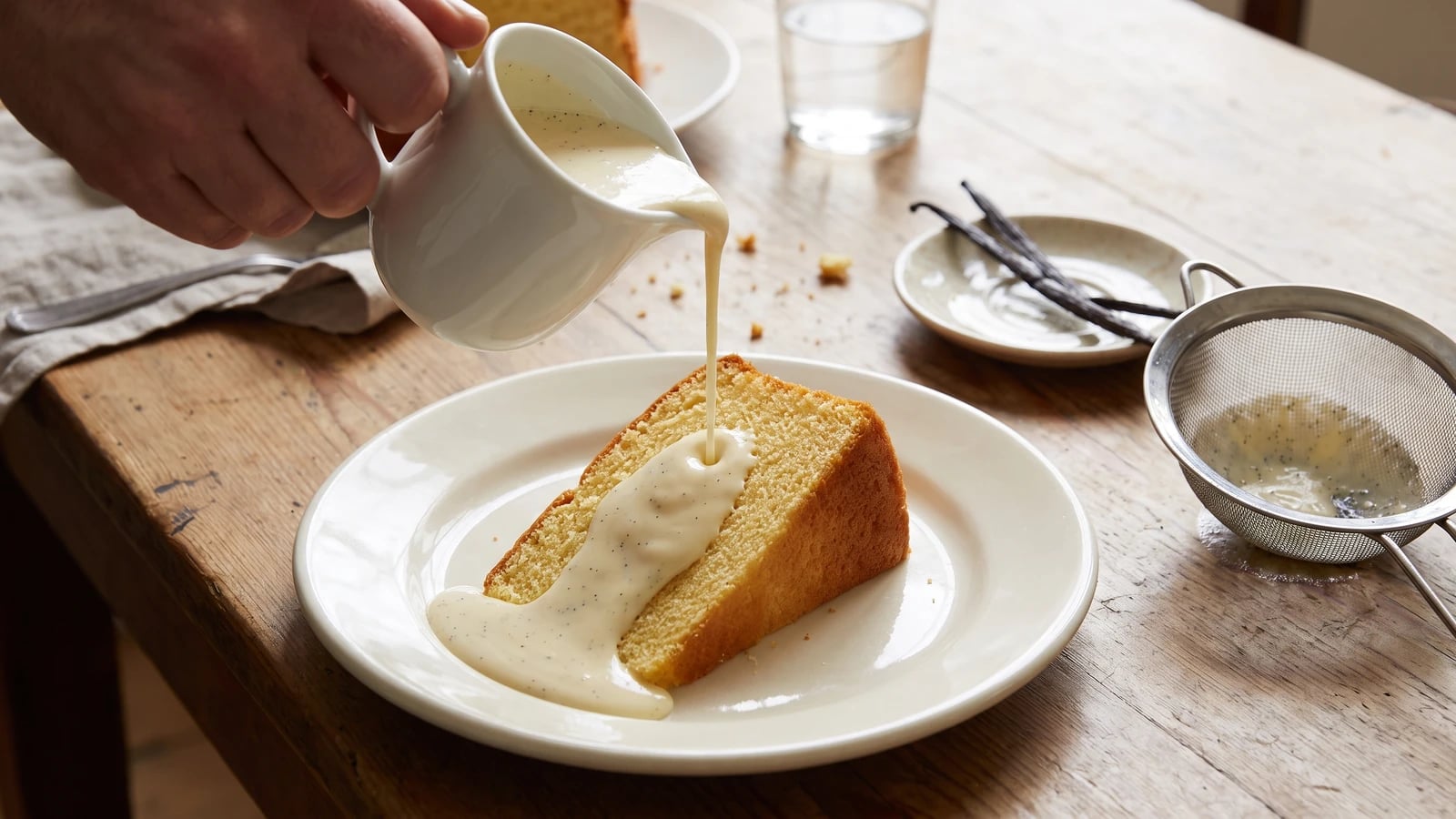
Crème anglaise turns milk, yolks, sugar, and vanilla into a silken sauce that veils the spoon. Stir gently, stop before the boil, and you hold the mother of the sweet-sauce family.
Crème anglaise (pouring custard) teaches the central discipline of every stirred egg sauce: heat gives yolks their silken body, then steals it the instant the pan boils. The one true thing to know before touching the stove is simple. Stop while the sauce merely veils the spoon, because the saucepan's stored heat will finish the work.
The original gives two professional routes and assumes a saucier free to stir at the stove, then watch a broad enamel basin while the sauce cools. This version follows Recipe B, keeping its medium ratio exactly, twelve yolks and six ounces of sugar for each quart of milk, and multiplies it to the requested two-quart party batch. The ribbon-stage mixing belongs to the alternate Recipe A, so omitting it isn't a shortcut. One heavy saucepan, a flexible spatula, a fine sieve, and an ice bath replace the extra hands. Only the brigade's watched cooling has changed; constant stirring over gentle heat remains the dish.
When it is right, the crème anglaise is pale ivory, glossy, and fluid enough to fall from the spoon in a broad ribbon. Watch the bottom and corners of the pan, not the clock. If the first fine grains appear, lift it from the heat immediately. Ça se rattrape, and the rescue is waiting in the method.
Crème anglaise belongs to the French pâtisserie and entremets table, where it became the chief liquid custard for cakes, poached fruit, molded creams, and frozen desserts. Its name acknowledges the English custard tradition, but French practice defined it precisely as a stirred, unboiled sauce, distinct from custards poached in deep dishes or molds. Generations of pastry kitchens carried it from a household accompaniment into a family of preparations that includes ice creams, butter creams, Bavarois, and charlottes.
Quantity
8 cups (1.9 L / 1.95 kg)
Quantity
24 (about 1 1/2 cups / 430 g)
Quantity
1 2/3 cups (400 ml / 340 g)
Quantity
2
split lengthwise
Quantity
2 tablespoons (30 ml / 16 g)
for hot service
| Ingredient | Quantity |
|---|---|
| whole milk | 8 cups (1.9 L / 1.95 kg) |
| large egg yolks | 24 (about 1 1/2 cups / 430 g) |
| superfine sugar | 1 2/3 cups (400 ml / 340 g) |
| vanilla beanssplit lengthwise | 2 |
| arrowroot (optional)for hot service | 2 tablespoons (30 ml / 16 g) |
| Pralin (optional)use in place of vanilla | 3/4 cup (180 ml / 100 g) Pralin (No. 2352) |
| Pâte à Génoise Fine (optional)baked and cooled, for serving | 1 Pâte à Génoise Fine (No. 2376) |
If using the optional arrowroot for a sauce that must remain hot, reserve 1/2 cup of the measured cold milk. Combine the remaining milk, sugar, and split vanilla beans in a heavy 5-quart saucepan. For the nut variation, omit the vanilla and add the finished Pralin (No. 2352) instead. Bring the milk just to a boil while stirring to dissolve the sugar, remove it from the heat, cover, and infuse for 20 minutes. This rest draws the aroma into the milk without reducing the measured quantity.
Place the yolks in a large heatproof bowl and whisk only until smooth. Recipe B dissolves the sugar in the milk, so there is no ribbon stage here and no need to beat air into the yolks. Air makes foam, foam hides the surface, and the surface is where the first warning of overcooking appears.
Return the infused milk to the heat and bring it just back to the boil. Remove the vanilla beans, then pour the hot milk over the yolks little by little, whisking briskly throughout. Begin with a thin trickle so the yolks warm gradually; once half the milk is incorporated, the rest can follow more steadily. If using arrowroot, whisk it smooth with the reserved cold milk, then stir that slurry into the tempered mixture.
Return everything to the clean saucepan and cook over low to medium-low heat, stirring constantly with a flat heatproof spatula. Scrape the bottom, sweep the corners, and keep the sauce moving until it reaches 175 to 180°F (80 to 82°C) and nappes the spoon, meaning it leaves an even veil on the back. Draw a finger through that veil; the track should remain clean. Never let the sauce boil. If fine grains appear, lift the pan from the heat at once, strain the sauce into a chilled bowl, and blend it briefly with an immersion blender. Ça se rattrape. Firm scrambled curds mean the heat went too far and cannot be made silken again.
For cold service, strain the crème anglaise immediately through a fine-mesh sieve into a wide metal bowl set over ice and cold water. Stir frequently until the sauce is thoroughly cool, then press reusable wrap or parchment directly against its surface and refrigerate. The ice bath replaces the original large enamel basin and the cook assigned to stir it during cooling. For hot service, strain it into a heatproof bowl set over a warm bain-marie (hot-water bath), stirring occasionally and never allowing the water beneath to boil.
Stir the crème anglaise gently before serving. It should pour in a smooth ribbon and settle into a glossy pool rather than stand like pastry cream. Serve it cold or warm with poached fruit, molded entremets, or slices of Pâte à Génoise Fine (No. 2376), spooning the sauce around the cake so its crumb remains distinct. À table!
1 serving (about 80g)
Culinary guides, cultural storytelling, and the editorial depth that makes cooking meaningful.
Discover Culinary ExplorerChef Juliette
Beef shin, lean beef, and fowl begin in cold water and rise slowly toward a tremble. Skim before the boil, and you learn the quiet discipline that gives every clear French broth its backbone.
Chef Juliette
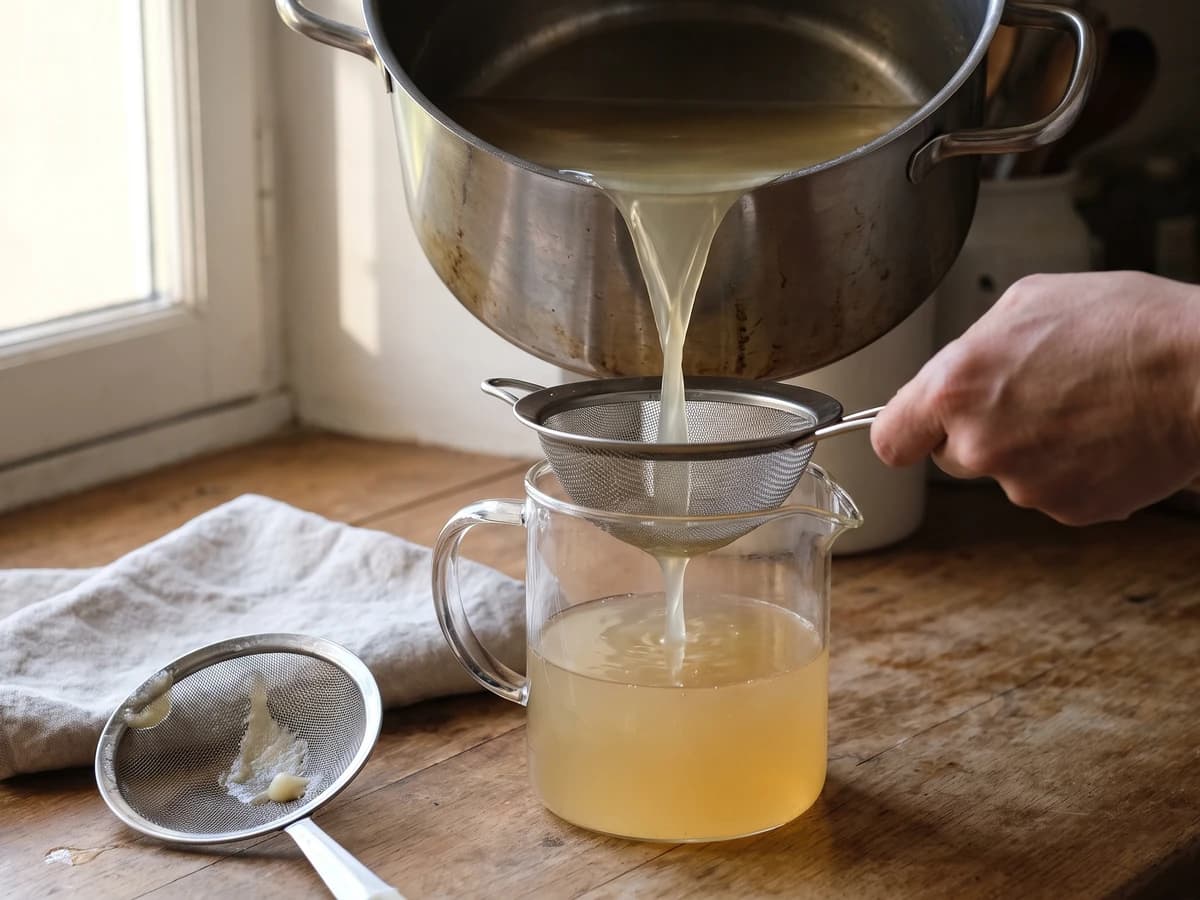
Break the veal bones small, then give them eight hours at a bare tremble. This pale, gelatinous fond becomes the quiet foundation beneath velouté, blanquette, and every sauce that must stay light.
Chef Juliette
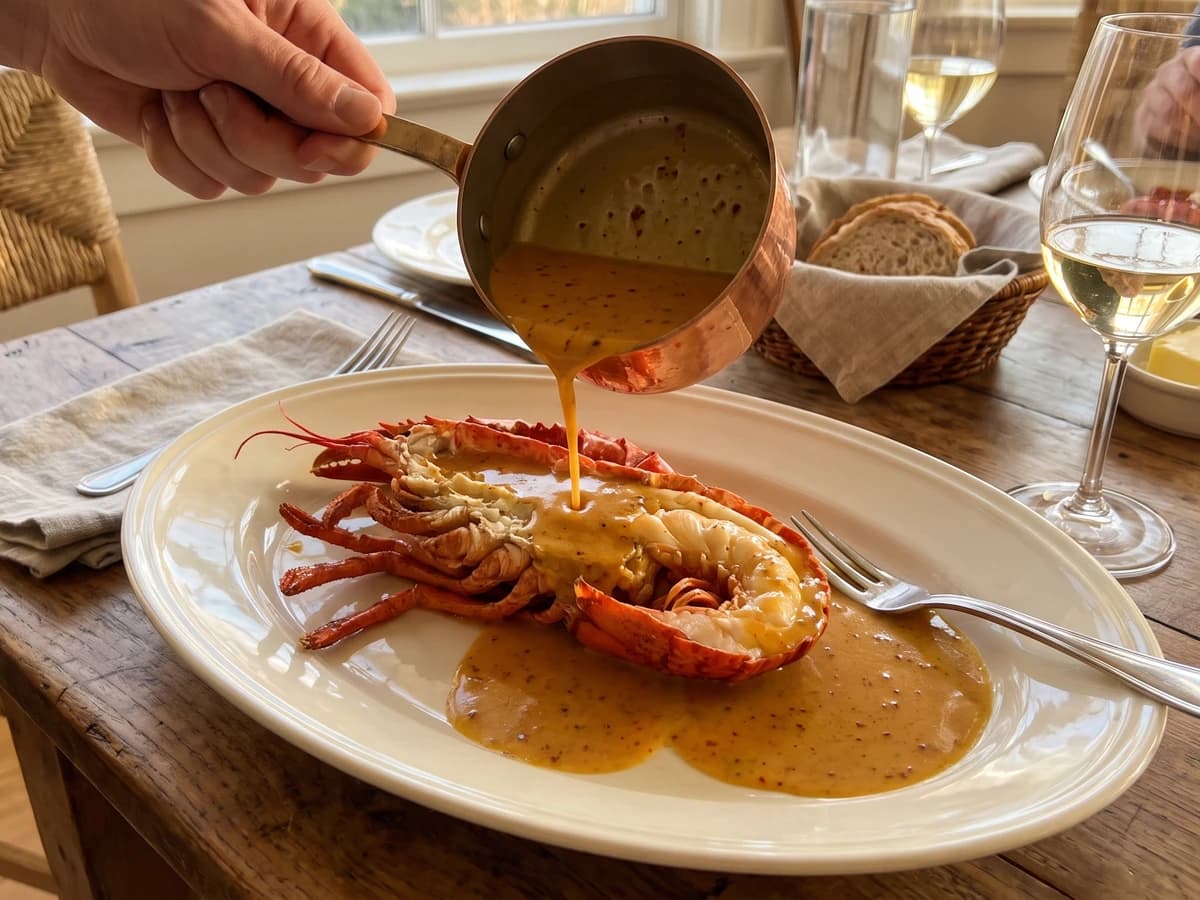
Sauce Orientale concentrates lobster-rich American Sauce with curry, then folds in cream away from the fire: a glossy, gently spiced derivative made for lobster, crayfish, and firm fish.
Chef Juliette
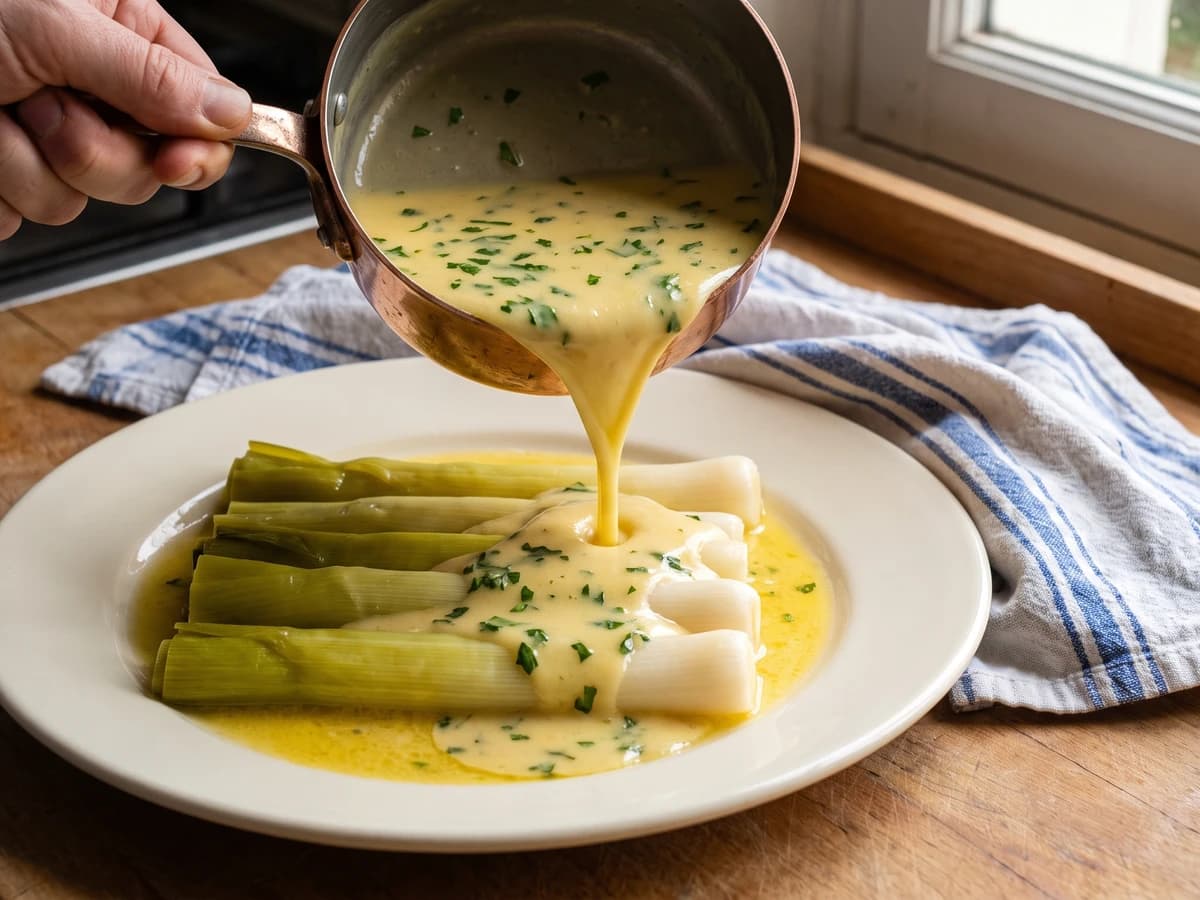
An old lesson in sauce families: Sauce Allemande takes mushroom liquor, then butter, lemon, and parsley, becoming a glossy Poulette for sheep's trotters, leeks, cauliflower, and anything needing gentle richness with a bright edge.