
Chef Juliette
Various Almond Preparations
Five almond preparations, one discipline: remove the skins cleanly, dry every kernel through, then cut, toast, or cloak it in pale caramel without letting its fragrant oils escape.
A cooking platform built around craft, culture, and the stories behind what we eat.
Created by Chef Juliette
Based on No. 2545, Montmorency Timbale, from Le Guide Culinaire (1907) by Auguste Escoffier
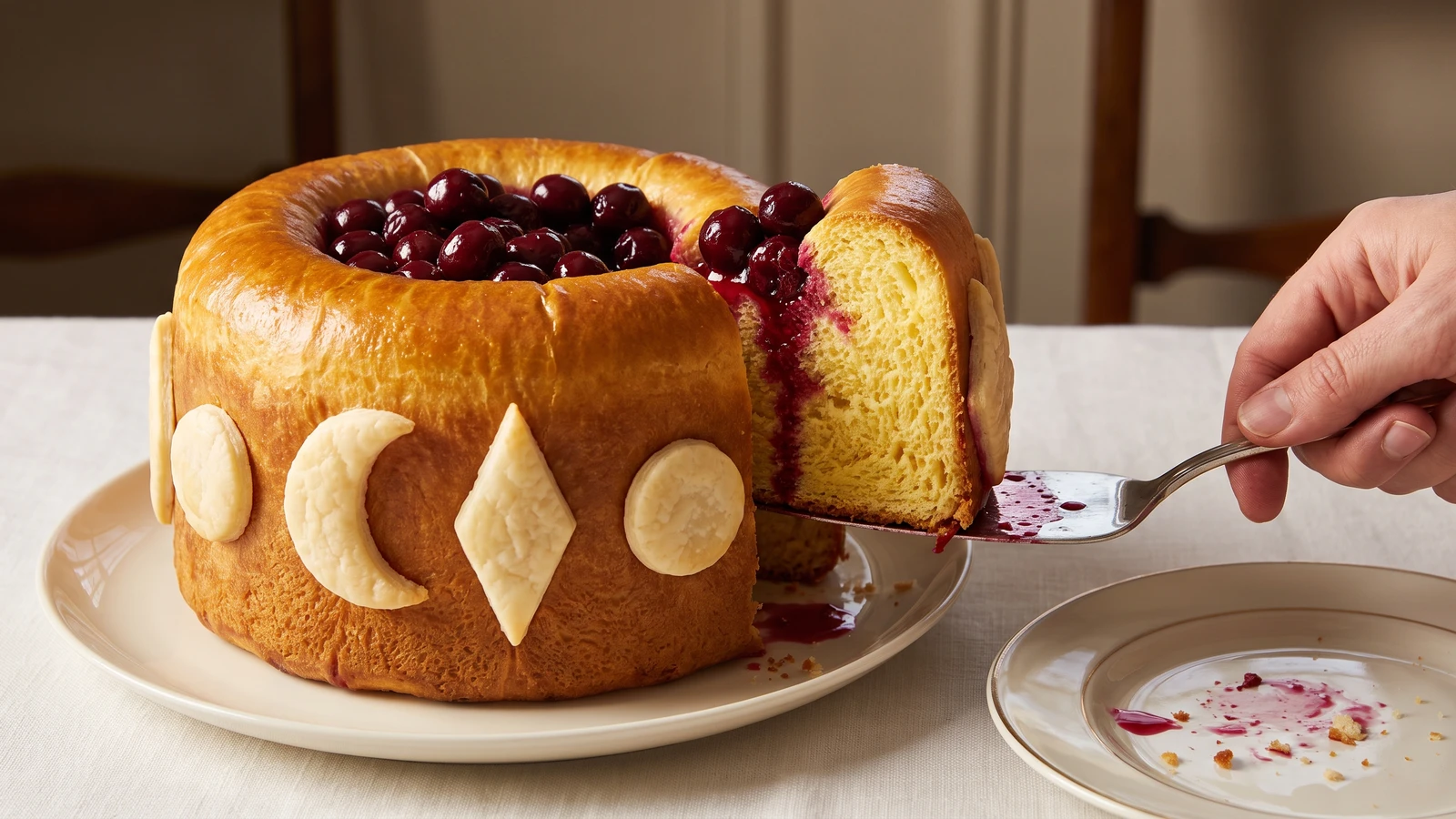
A glossy crown of sour cherries inside hollow brioche, apricot-brushed and ringed with pale puff-pastry ornaments: a celebration dessert whose success depends on filling it at the final moment.
Timbale Montmorency (a hollow brioche case filled with sour cherries) teaches timing. The one true thing to know before touching a pan is this: don't fill it until the table is ready. The cherry syrup begins soaking the tender brioche within minutes, which is exactly the pleasure, but wait too long and the proud little case becomes pudding.
The original assumes a pastry bench with baked brioche waiting, scraps of puff paste beside it, a sugar cook who recognizes the small-thread stage by touch, and enough hands to assemble as service begins. At home, make one 18 cm brioche, use a small sheet of purchased all-butter puff pastry, and trust a digital thermometer instead of putting fingers near hot sugar. A blend of redcurrant jelly and seedless raspberry preserve replaces the raspberry-flavoured redcurrant jelly once kept ready in the pastry pantry. The brigade's stock of components is scaffolding and can go; the hollow shell, its 2 cm wall, the apricot glaze, pale ornaments, sour cherries, and last-minute filling are the dish and must stay. One cook, one stove, one evening.
When it lands correctly, the brioche gleams under apricot, the pastry shapes sit pale against its butter-gold sides, and garnet syrup begins creeping into the cut crumb as the first slice is lifted. Make every component calmly, then guard the final assembly. That last minute decides the timbale.
Timbale Montmorency belongs to the Parisian grand-pastry repertoire and takes its name from the sour cherry associated with the Montmorency valley north of Paris. Montmorency became a classical designation for cherry garnishes, while the timbale form turned brioche into an edible mould, glazed and ornamented before fruit was poured inside. Its last-minute filling is practical rather than theatrical: brief soaking enriches the inner crumb without leaving enough time for the case to collapse.
Quantity
2 cups (475 ml / 250 g)
Quantity
1½ teaspoons (7 ml / 5 g)
Quantity
2 tablespoons (30 ml / 25 g)
Quantity
1 teaspoon (5 ml / 5 g)
Quantity
3
at room temperature
Quantity
2 tablespoons (30 ml / 30 g)
at room temperature
Quantity
½ cup plus 1 tablespoon (135 ml / 125 g)
softened
Quantity
1 tablespoon (15 ml / 14 g)
softened
Quantity
1 large egg plus 1 tablespoon (15 ml / 15 g) water
beaten together
Quantity
1 small sheet (125 g)
kept cold
Quantity
⅔ cup (160 ml / 200 g), prepared to the small-thread stage according to The Cooking of Sugar (No. 2344)
Quantity
3 cups (710 ml / 500 g)
pitted; fresh or frozen
Quantity
¾ cup (180 ml / 180 g)
Quantity
½ cup (120 ml / 100 g)
Quantity
⅓ cup (80 ml / 110 g)
Quantity
2 tablespoons (30 ml / 40 g)
| Ingredient | Quantity |
|---|---|
| bread flour | 2 cups (475 ml / 250 g) |
| instant yeast | 1½ teaspoons (7 ml / 5 g) |
| granulated sugar | 2 tablespoons (30 ml / 25 g) |
| fine sea salt | 1 teaspoon (5 ml / 5 g) |
| large eggsat room temperature | 3 |
| whole milkat room temperature | 2 tablespoons (30 ml / 30 g) |
| unsalted buttersoftened | ½ cup plus 1 tablespoon (135 ml / 125 g) |
| unsalted butter for the mouldsoftened | 1 tablespoon (15 ml / 14 g) |
| dorurebeaten together | 1 large egg plus 1 tablespoon (15 ml / 15 g) water |
| all-butter puff pastrykept cold | 1 small sheet (125 g) |
| smooth apricot jam | ⅔ cup (160 ml / 200 g), prepared to the small-thread stage according to The Cooking of Sugar (No. 2344) |
| Montmorency or other sour cherriespitted; fresh or frozen | 3 cups (710 ml / 500 g) |
| water | ¾ cup (180 ml / 180 g) |
| granulated sugar for the cherry syrup | ½ cup (120 ml / 100 g) |
| redcurrant jelly | ⅓ cup (80 ml / 110 g) |
| seedless raspberry preserve | 2 tablespoons (30 ml / 40 g) |
Combine the flour, yeast, and sugar in the bowl of a stand mixer. Add the eggs and milk, then mix with the dough hook on low speed until no dry flour remains. Add the salt and knead at medium-low speed for 6 minutes. Feed in the softened butter a spoonful at a time, allowing each addition to disappear before adding the next, then knead for another 7 to 9 minutes. The dough is ready when it is glossy, elastic, and pulls from the bowl in long strands.
Gather the dough into a smooth ball, place it in a lightly buttered bowl, and cover it. Let it rise in a comfortably warm place for 60 to 90 minutes, until visibly aerated and about half again its original size. Rich brioche rises with composure rather than drama, so don't wait for it to balloon. Press out the largest gas pockets and chill it for 20 minutes, just long enough to make the butter firm and shaping tidy.
Butter a 1.5-litre, 18 cm charlotte mould or straight-sided soufflé dish thoroughly. Shape the chilled dough into a tight ball and set it seam-side down in the mould. Cover and prove for 45 to 60 minutes, until the crown reaches about 2.5 cm below the rim and springs back slowly when touched. Brush the top gently with the dorure (egg wash), keeping it away from the sides of the mould so the loaf can rise freely.
Bake at 350°F (175°C) for 30 to 35 minutes, until the brioche is a deep butter-gold and sounds hollow when tapped beneath. If the crown colours before the centre is baked, lay a loose sheet of foil over it. Rest it in the mould for 10 minutes, turn it onto a rack, and let it become completely cold. Don't hollow warm brioche. The crumb tears and compresses, and no amount of decoration gives that structure back.
While the brioche cools, roll the cold puff pastry about 3 mm thick. Cut small crescents, lozenges, and roundels, keeping them between 2 and 3 cm across. Arrange them on parchment, prick each once, cover with a second sheet of parchment, and place a light baking sheet on top to keep them neat. Bake at 350°F (175°C) for 15 to 18 minutes, until dry, layered, and still pale. Cool on a rack.
Set the cold brioche upright and slice off its domed top level with the mould line. With a small serrated knife, cut a circle 2 cm inside the outer wall, stopping 2 cm above the bottom. Pull out the centre crumb in pieces, then tidy the cavity with your fingers so the sides and base remain an even 2 cm, the three-quarters of an inch required by the dish. If the knife nicks the wall, press a fitted piece of crumb into the hole from inside with a dab of apricot jam. The patch will hold once glazed.
Bring the water and sugar to a gentle boil in a wide saucepan, stirring only until the sugar dissolves. Add the sour cherries and poach at a bare simmer until tender but still whole, 4 to 6 minutes for fresh fruit or about 7 minutes for frozen fruit. Lift the cherries into a bowl with a slotted spoon. Whisk the redcurrant jelly and seedless raspberry preserve into the syrup, simmer for 1 minute, then return the cherries and remove the pan from the heat. The syrup should lightly veil a spoon while remaining pourable.
Prepare the apricot jam to the small-thread stage exactly according to The Cooking of Sugar (No. 2344), using a digital thermometer in place of the old finger test. While the glaze is fluid, brush it over the entire exterior and cut rim of the brioche in a thin, even coat. Press the pale puff-pastry crescents, lozenges, and roundels onto the tacky glaze in a loose repeating pattern. If the glaze stiffens before you finish, warm it gently with a teaspoon of water.
Set the decorated brioche on its serving platter before the filling goes anywhere near it. When everyone is ready, warm the cherry garnish over low heat only until the syrup loosens, then pour the cherries and their raspberry-redcurrant syrup into the hollow case. Carry it directly to the table and cut generous wedges while the walls still hold and the inner crumb has only begun to drink the syrup. This last-minute filling is not optional ceremony. It is the timbale. À table!
1 serving (about 280g)
Culinary guides, cultural storytelling, and the editorial depth that makes cooking meaningful.
Discover Culinary ExplorerChef Juliette
Five almond preparations, one discipline: remove the skins cleanly, dry every kernel through, then cut, toast, or cloak it in pale caramel without letting its fragrant oils escape.

Chef Juliette
A pastry pantry lesson in one tray: filberts warmed only until their red skins release, rubbed clean, cooled, and chopped into a fragrant mise-en-place for cakes, creams, pralines, and petits fours.

Chef Juliette
The smallest pâtisserie discipline decides whether a cake leaves its mould intact: clarified butter in every corner, followed by the lightest veil of dry flour or fécule.

Chef Juliette
Four whites, one spotless bowl, and a patient change of speed: whisk gently until loosened, then briskly to glossy stiffness, with powdered sugar waiting if the foam begins to granulate.